 88f39e91291f7f24.html
After the short introductory section which comes next (in a smaller
text size) this long (and wide) page has five main sections. Click on
a highlighted link to go to the section (if using a mouse and monitor.)
(1) Design, construction and growing projects in 2026, including a
new United States Patent Application for a Window-Door System,
which offers dramatic environmental benefits as well as non-
environmental benefits, including fire safety, security, protection
against theft and arson and protection against some hazards
arising in riots, war zones and other situations.
To go to the section, click here.
(2) Earlier material showing my use of the rented growing areas from
very different periods, with material from other settings, including my
workshops and the home. Includes many innovations.
To go to the section, click here.
(3) Interlude: Controversies, constructive criticism and activism in
very varied spheres. Includes strong criticism of the Green Party and
includes the project 'Shambolic Sheffield.'
To go to the section, click here.
(4) A very large number of general images, with reduced text. The most
varied section of the site.
To go to the section, click here.
(5) Text almost exclusively (including text in image form) on a very wide
range of subjects. Followed by the Logo of the Site.
To go to the section, click here her to the section, click
Introductory comments
PHD-C (Paul Hurt Design - construction) has never been a business. It's financed entirely from my own very restricted resources.
None of the products, including ones on this page, have ever been for sale. When an innovation is described below as 'cheap'
or 'very cheap,' this relates to the cost to myself, for the materials and equipment used to construct the product, in prototype or
finished form, not the cost to any buyer. Any advice or information I provide is free of charge. I've an interest in all the things
I design and construct but some aren't very important to me at all, e.g. camper vans. None of the fruit and vegetables and other
produce from the land I rent has ever been sold.
Material on some issues is dispersed. It can appear on different pages and sometimes many different pages. This Home Page
sometimes contains quite detailed material. It can supplement the material on other pages or become the main source. Material
on the site can 'flow.' It can be transferred from this page to an existing page or a completely new page.
About this site includes brief information about some of the policies I follow, including ones on profiles and possible removal of
profiles from the site. Most will remain.
The British Library, the national library of the United Kingdom, has selected all of this site for (very) long-term preservation,
in the Arts and Humanities / Literature archive and the Computer Science, Information Technology and Web Technology archive.
All pages of the site use my innovation in Web navigation, 'the rail,' the long, thin band on the left margin. Clicking anywhere
on the rail gives a very quick way of reaching the top of the page. There are also horizontal navigation rails for other purposes.
More: Page Travel, Web Design. The rail is very useful when viewing content on a computer system, not usable when viewing it on a phone.
Clicking on a link on any page can be viewed as taking a flight: there are 'internal flights' to visit content on the same page and
long distance flights to visit other pages, including hub-pages.
The material on this page has been here for a long time or very long time in very many cases but it also contains a great deal of
recent and very recent material. All the material maintains its relevance and is here for a purpose.
(1) A new section of this Home Page: developments in growing and
construction in 2026, a very difficult year for growing. And, also, a
very recent system, the Paul Hurt Design-Construction [PHD-C]
Window-Door System, which incorporates 'Windoors.'
This is information provided not by me but by Google Overview:
The Newest Window-Door System developed by independent
scholar and designer Paul Hurt is a sophisticated, multi-purpose
replacement for his previous window system design. Featured on
his website linkagenet.com, the design represents a radical departure
from traditional window blueprints to provide active, flexible adaptation
to extreme climate variations, security and fire safety.
Core Design Differences
Hurt's Newest Window System eliminates conventional constraints like
U-channel sliding tracks and outer metal frameworks while offering high
scalability from single windows to floor-to-ceiling setups and flexible
material options, including unglazed configurations.
Key Functions and Advantages
Climate Adaptation: Supports thick insulating layers for seasonal
adjustment, and ventilation.
Security and Safety: Can accommodate wire mesh, ballistic or
explosion-resistant glass [for use in war zones and areas potentially
at risk of becoming war zones, which include large parts of Europe] and
unglazed emergency escape-routes during fires.
Multi-Purpose and Acoustics: Panels are sturdy enough to double as
furniture or shelving, and can incorporate acoustic-blocking panels.
Renewable Energy: South-facing external panel surfaces can mount
photovoltaic solar cells for power generation.
Intellectual Property Status
Following previous agricultural patent success, Hurt is advancing
documentation and prototypes to pursue a new United States Patent
application for this system's configurations.
United States Patent Law, unlike UK Patent Law, offers a 12-month grace period,
allowing inventors to file within one year of public disclosure. Public disclosure
of information about the project I refer to here, the PHD-C Window-Door System,
would not make it ineligible for a United States patent, then, within the one-year time
scale - but I need to restrict information about the Newest System for quite some time,
for a variety of very good reasons.
More on the PHD-C Window-Door-System (and the PHD-C
Roof-Wall System) below, after some contrasting material.





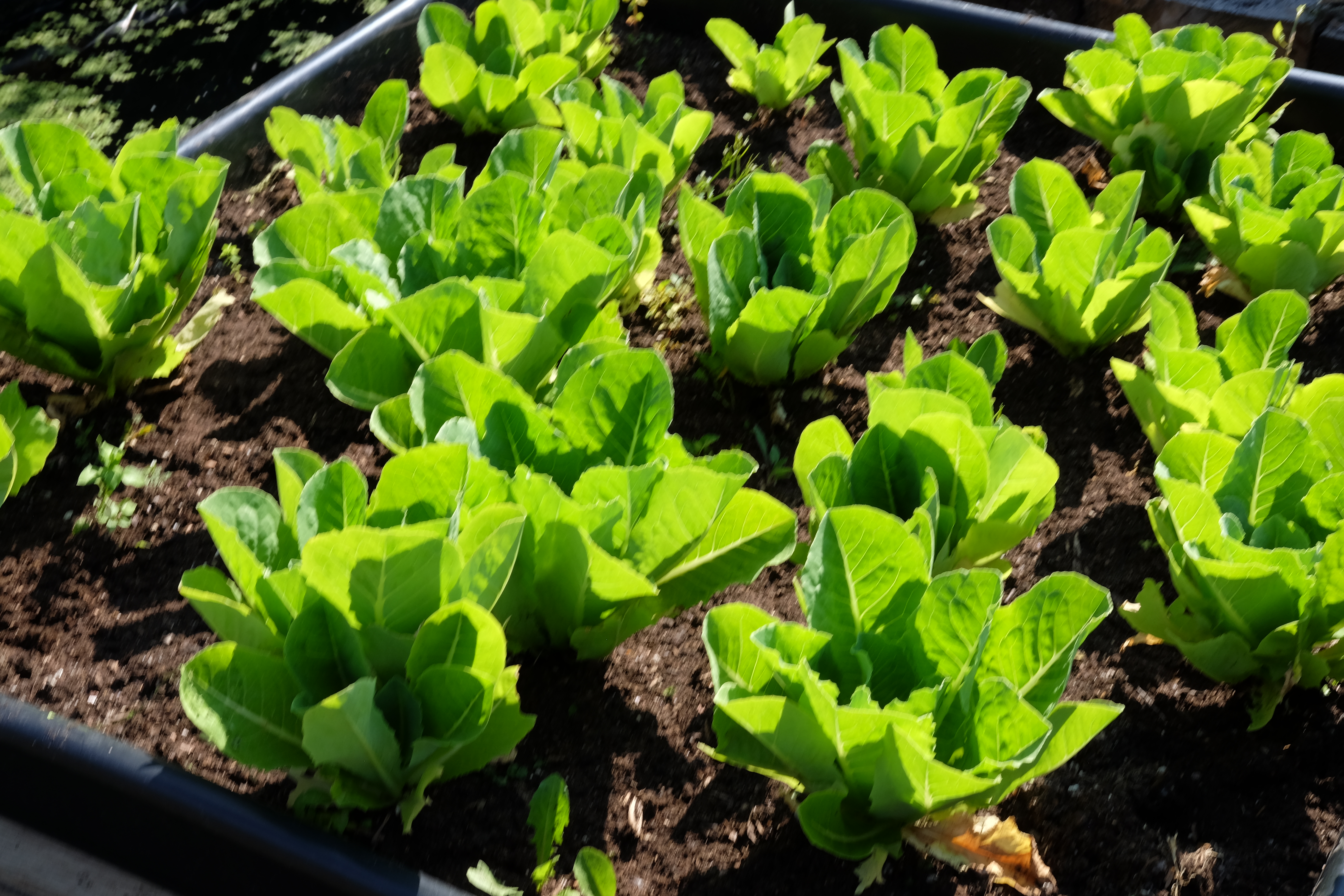
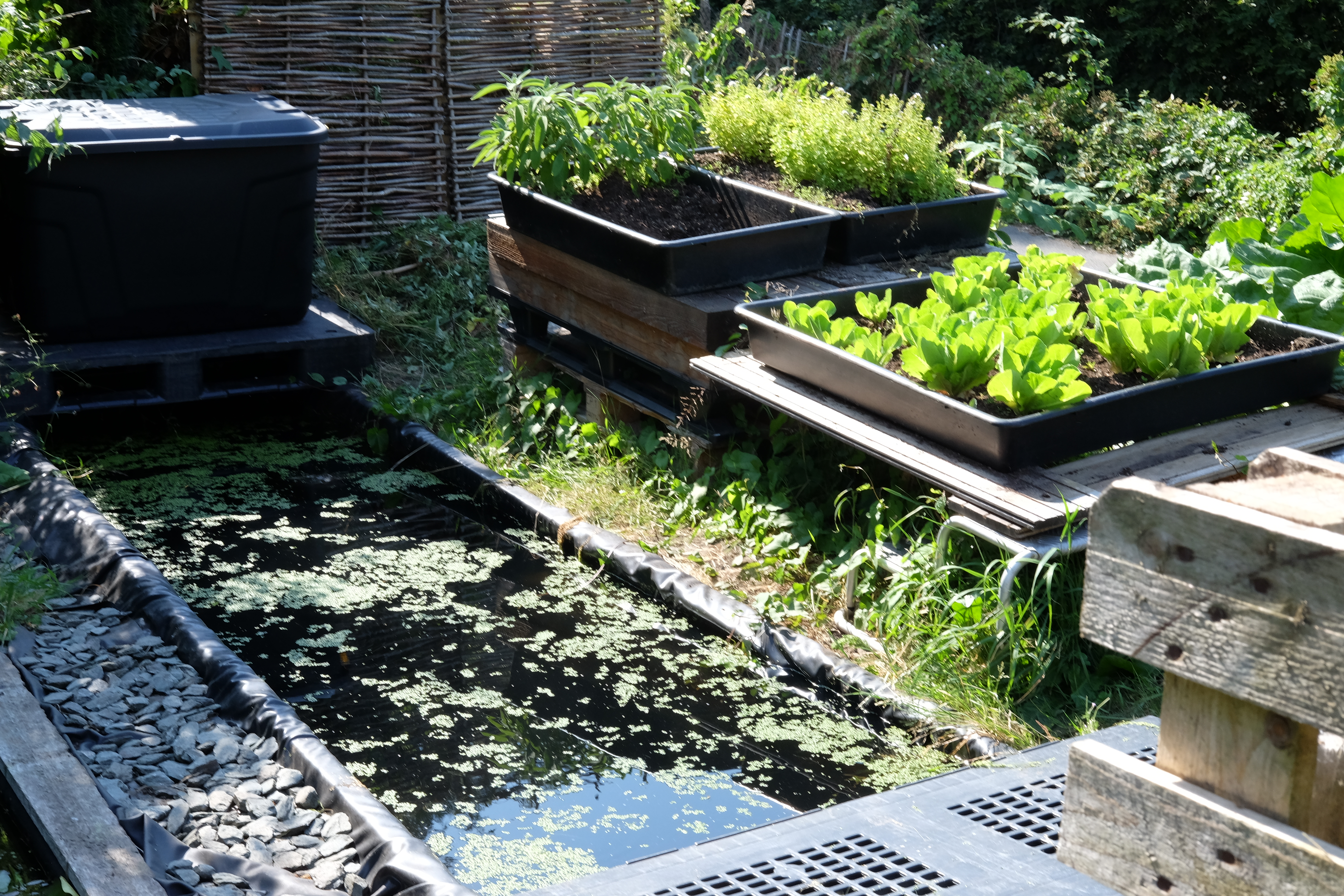

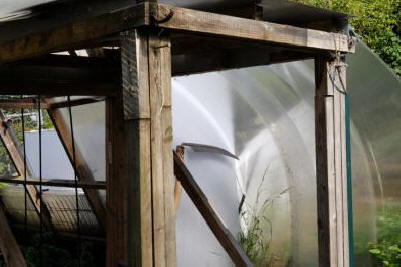
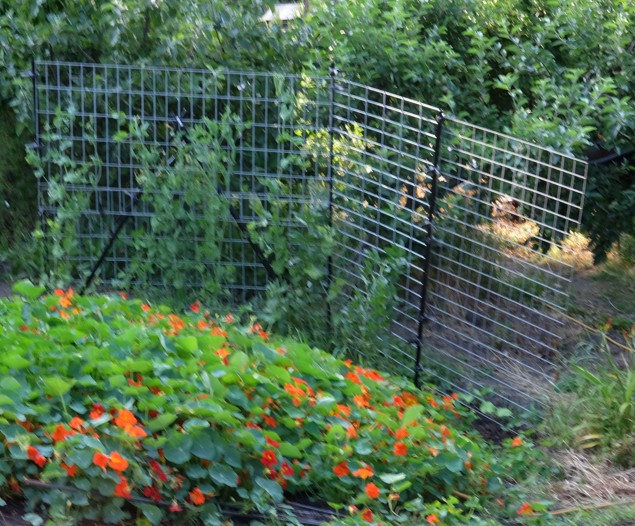
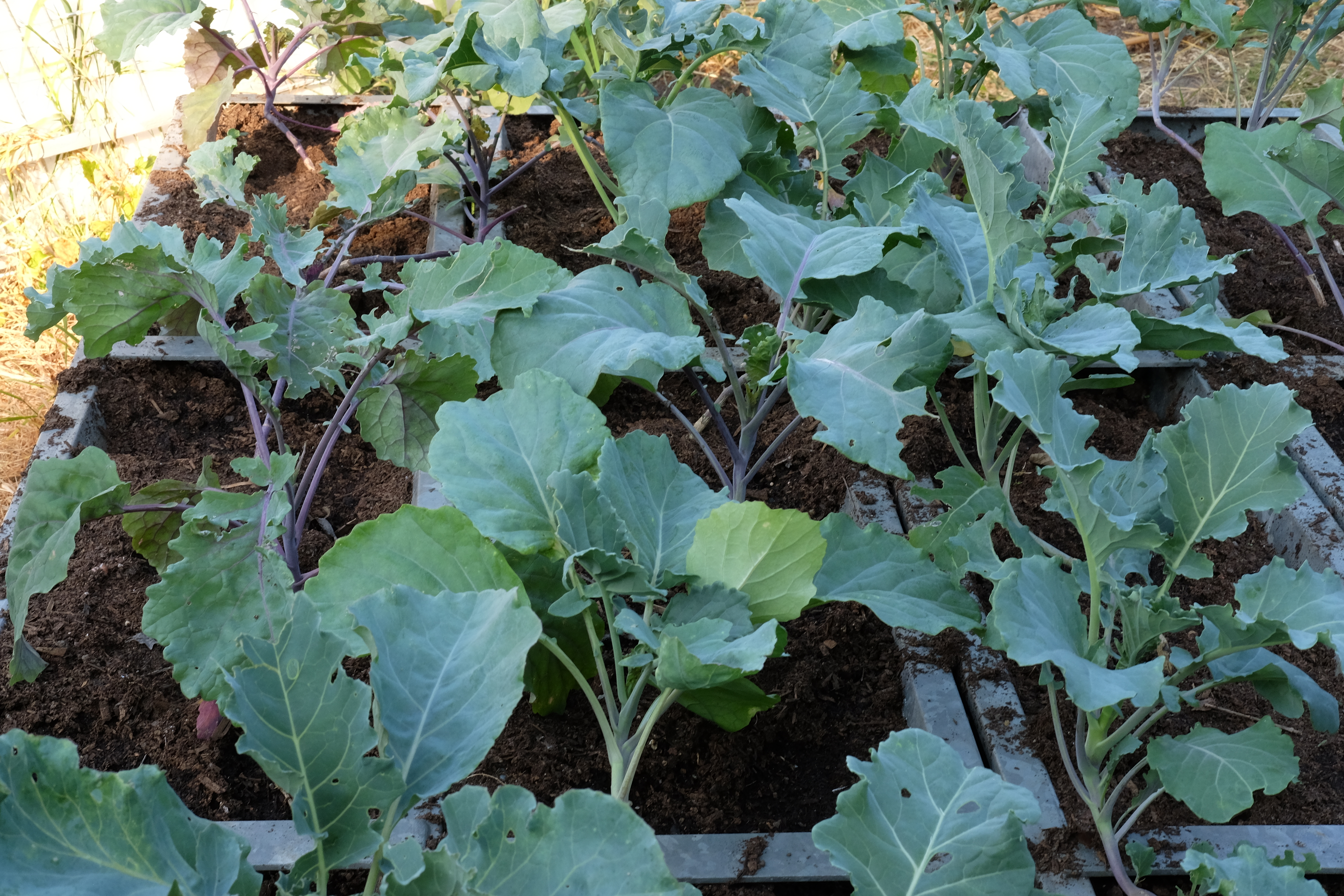
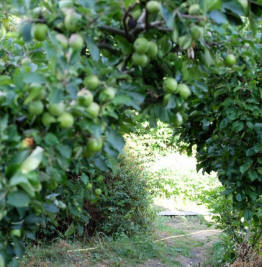




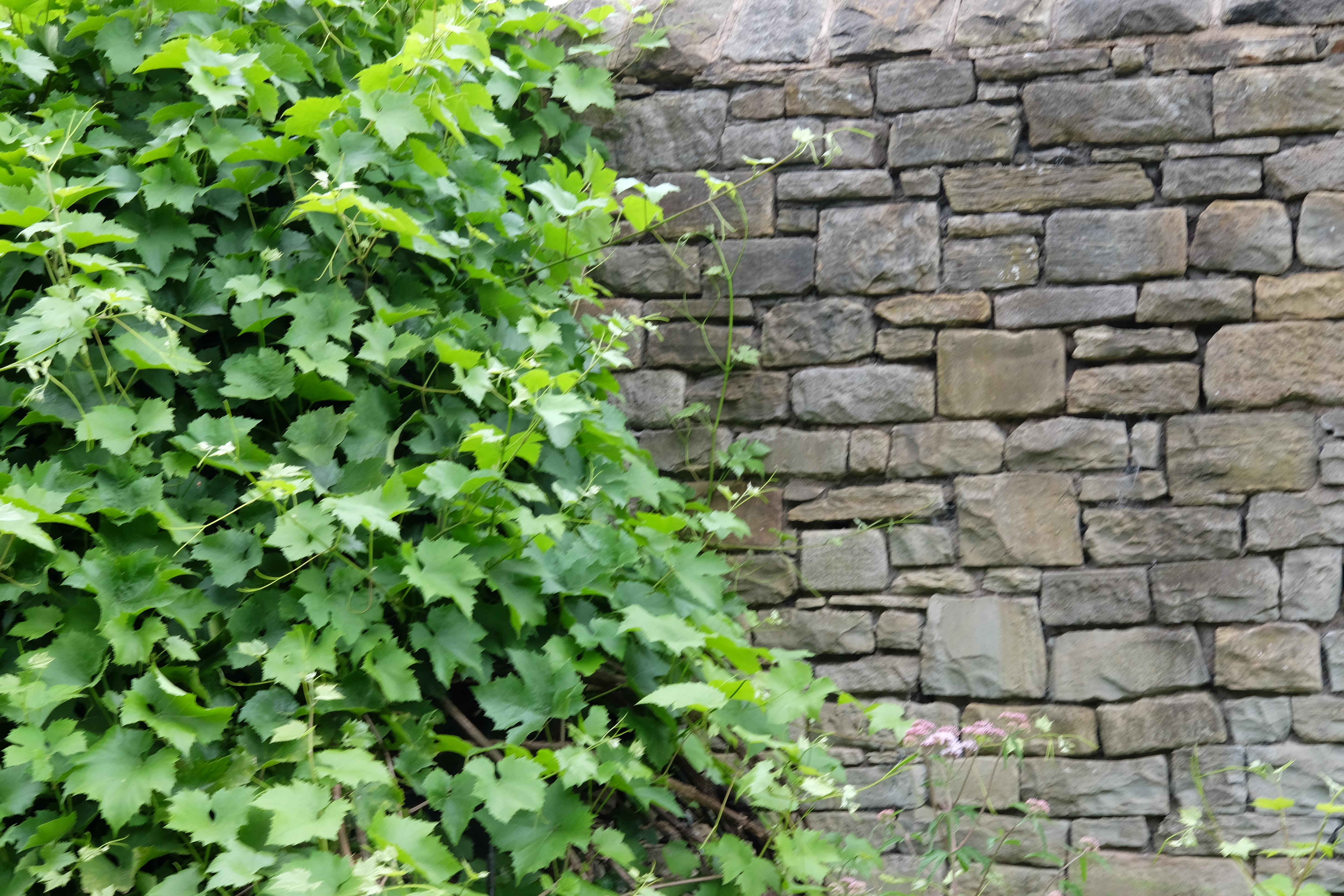


The Paul Hurt Design-Construction [PHD-C] Window-Door System
The section after this [please click here to reach the section] outlines my
designs - supported by prototype construction - in my own words. The
section is followed by a section on the (environmental) deficiencies of
many buildings in very well known areas, including New York City and
the City of London, together with comment on some individual buildings,
including the Bauhaus Dessau buildings, the Diamond, a University of
Sheffield Engineering Department Building, and some features of buildings.
The section mainlymakes use of comments and criticisms made by academics
and others, not identified here.
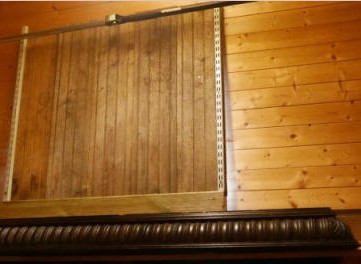
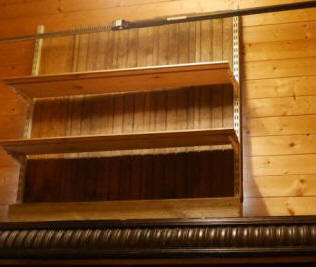
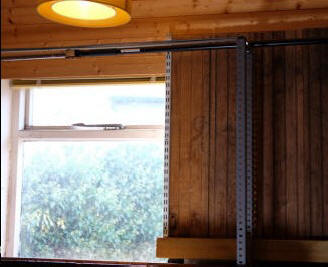
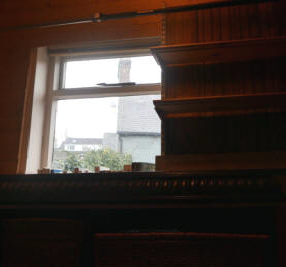
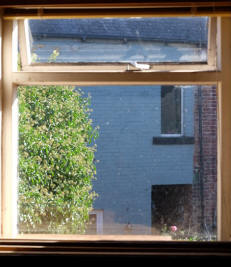
The photographs in the window row immediately above show the 'New Window System,' now superseded,
installed in an inadequate window area. This simple system can serve to introduce the newest system and the
reasons for its superiority. There are images showing the superseded system in the 'open' position (window
glass visible or concealed by a blind). The first two images show the closed position (the window glass
concealed by a wood panel.) Obvious in the open positions: only the upper part of the window can be opened
for ventilation, a very common feature of windows, of course. The ventilation in this and other glazed windows
is inadequate in hot weather. The glass increases the temperature of the interior by the greenhouse effect.
There are so many other drawbacks of established window designs, including double glazed and triple glazed
windows. The blinds in the third image of the row are attractive, I think, but they contribute next to nothing to
functionality. When the blinds are open, the view is affected and again, the blinds are without a useful function.
This is a bedroom window. In summer, light streams through the window, at times when it can affect sleep -
darkness is preferable then. Shutters have similar disadvantages and further disadvantages. Curtains are often
very attractive but very limited in usefulness.
Development work has led to a replacement for the New Window System, the 'PHD-C Window-Door System'
which is far more sophisticated, with a far wider range of applications and many more benefits - allowing, a
mongst many other things, the use of blinds and shutters and even curtains, if preferred, as a very small part
of a system with massive flexibility. The closed and open positions in the newest system has so many more
alternative options than the very few shown components above. The previous system lacked an adequate
means to move panels and the choice of panels was drastically limited. The newest system makes available
various mechanisms and other methods of moving panels and allows massive panels to be moved into
position, making the system suitable for large factories and farms as well as for small-scale domestic use.
The 'PHD-C Window-Door System' has linkages with my well-established New Greenhouse System, which
solves critical problems arising in traditional greenhouses (in my view a very flawed, hopelessly inflexible
design.) The faults are impossible to ignore in seasons like the 2026 growing season, which has also
confirmed my view that traditional - and ultra-modern - windows have similar problems. The large
modernist buildings with massive glazed areas which dominate so many modern cities have similar problems.
When the external temperature reaches 30 Celsius or 35 Celsius or higher, plants in greenhouses are in no
need of glazing to increase the temperatures inside a greenhouse. Application of shading material is not
very effective - in most cases, not at all effective. These greenhouses have facilities for increasing ventilation
to a greater or lesser extent but the ventilation they provide is completely ineffective during heatwaves.
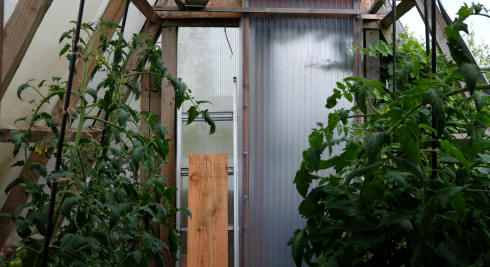
My greenhouse design makes use of large polycarbonate panels, six in number in this application. Some
or all of these panels can be removed in very hot weather and installed again when the light-transmitting
material can actually achieve something - raising the internal temperature when the external temperature
is too low for optimum growth. Then there is the issue of watering. Why water plants inside a greenhouse
with a watering can or hosepipe? When it rains, removal of panels allows the crops in the greenhouse
to be watered effortlessly.
Windows - single-glazed, double-glazed and triple-glazed - have this disadvantage. Insulation is no longer
needed when the temperature reaches 30 Celsius or 35 Celsius or higher. My Window System has the
radical option of a window with no glazing whatsoever, but the option of re-installing glazing very quickly,
by installing glazed panels, which can be single glazed, double glazed or triple glazed. The user has the
choice.
Windows very often allow ventilation, but generally only a small area can be opened to increase ventilation.
In my design, the ventilation possible is the maximum possible. The system installed in my house - the more
limited 'New Window System' - keeps the original single glazing but makes it possible - makes it completely
easy to install - panels which have similarities with shutters but which are much more effective.
Traditional external shuttering is often very attractive but has severe disadvantages. It fails to achieve
significant control. In this newest design, the shuttering - or the replacement for shuttering - can be
attractive - I make use of oak for this purpose, but there are many alternatives - whilst avoiding the
disadvantages of traditional shuttering, such as damage by weathering, difficulty of installation,
the high cost of installation.
It seems almost heartless to criticize curtains, but smaller curtains - and blinds - have various disadvantages.
There are much more efficient methods of achieving results for some applications, in particular, curtains on
windows. Smaller curtains in some applications and large and very large curtains, as used in theatres and
opera houses, aren't subject to the same criticisms, but these very large curtains aren't used in window
applications.
Double and triple glazing installations have a limited life span. After this, they present problems of recycling
and disposal. The components used in this system will vary in their longevity but most will have much less
limited longevity, reducing waste substantially. Air conditioning units are marvels of technological
achievement but whenever possible, simple alternatives should be used, surely. Air conditioners lead to
higher energy consumption and a massive growth in the global demand for electricity. Heat generation is
a by-product of their use, contributing to the problem. They also contribute to pollution and are difficult
to repair. The separation of plastic from metal at the end of the life cycle of an air conditioning unit is
costly and may not be possible, so that units are often simply scrapped.
If use of material resources to construct the air conditional units can be avoided, if the electrical energy
needed to run the units can be put to other uses, if the waste from no longer usable air conditioning units
can be avoided, then simpler, less wasteful methods are preferable in many, many applications.
For the purposes of insulation, this system provides the opportunity to use a wide range of insulating
materials, very thick or less thick, ranging from sheep's wool to a wide range of synthetic materials,
including ones which are usable for a very long time.
The panel used in the system I've installed - the superseded New Window System - has benefits
which go well beyond the advantage of shielding from the sun. The newest system retains all these
benefits and extends them. For example, it allows a bedroom to be dark in the summer, an aid to
sleeping. It can be a superior replacement for curtains. The system I installed in a room of my house
was for the purposes of prototyping, to test and develop the invention, but I find it really convenient
and useful - and I use it every day.
The components and configurations of the newest system will be very varied. Ground floor and first
floor installations (in the UK - in the US, these refer to 1st and 2nd floor installations) will often be very
different. A business with expensive equipment used or stored on the ground floor would be able to protect
the equipment and deter burglary with the most secure security panels available when necessary, in general,
outside business hours.
A private house would need simpler panels, at the basic level, simple wire mesh panels, using thick wire
mesh. The panels would be moved into position at night time or when the people living there are away
from home. At other times, businesses and private houses would generally need to present a welcoming
face to the world and could dispense with the security panels. In these respects, as in so many others, this
system offers unrivalled flexibility.
Windows and doors are the most vulnerable parts of houses, offices, factories and many more buildings.
In very many cases, burglars gain entry through a front door or ground floor window. This system can make
buildings much less vulnerable and can deter criminal activity.
Any changes to panels could be made for very short periods or for much longer periods - in the case of
thermal control, installations for cold periods differing from installations for very warm or hot periods.
Catering for a short heatwave is just as easy as catering for a prolonged heatwave. The system is for
both weather control and for climate control, for diurnal flexibility and seasonal flexibility.
The shutter panel in the original design and the newest design has a closed position (blocking the existing
window space) or the open position (in storage nearby, ready to be used when necessary.)
In the original design, this is achieved by simply sliding the panel into the window space, a very quick and almost
effortless operation. In the new design, the method is very different but very convenient. The shutter panel can
be equipped with shelving, with obviously many different uses, or to display pictures or a whiteboard. The
'shutter panel' is in fact a multi-purpose panel, which can be very strong, strong enough to hold a computer and
large monitors, a workstation or many kinds of factory assembly or other equipment.
The newest system makes it easy to install a wide range of panels. Some have uses on the outward-facing
side. Others have uses which are usable and visible as seen from the interior of the room. If mounted on the
South-facing side of the building, panels can be used to house photovoltaic panels to generate electricity. Panels
can be used to mount components which have important uses for security and safety - metal grilles to protect
the property against burglary, and specialist components to protect against the risks which occur in war zones
or areas which could potentially become war zones. Large parts of Europe are potentially at risk of invasion from
Russia. The system can house panels of bullet-proof glass, panels capable of withstanding explosions but
obviously not massive explosions.
No area can be guaranteed freedom from risks such as rioting and violent protest in the future. Installation of
protective materials can minimize the risks. Panels can be installed to protect properties from graffiti or to
make removal of graffiti much easier.
The non-glazed windows, the empty openings (or openings which can quickly be made empty in this system)
can save lives in the event of fire. Rescue from a burning building is difficult or impossible if there is the barrier
of glass. An unglazed opening allows the rescue services easy access. Alternatively, rope ladders or similar
appliances can be let down from the room where the window is situated.
An unglazed window has advantages for some very different applications, for example, for drying washing or
air drying herbs and some other produce. A support structure for the clothes or a drying rack for the produce
can be erected in the window space, with attachments to the basic structure.
All of these advantages - and others - can be achieved with aesthetic benefits. There is the possibility of
painting or decorating the shutter panels, making use of many woods which are practical and pleasing.
I have no interest in stained glass but this system allows stained glass panels to be installed easily and
changed easily. Glass panels can easily be replaced with polycarbonate panels if wished. Polycarbonate
has significant advantages for many uses. These panels have a limited period of usability, if used for
purposes of light transmission - not much more than 10 years - but they have many other uses. I've
devised a wide range of uses. I have structures incorporating polycarbonate panels which are much older
than 10 years. In greenhouses, effective light transmission and heating by the greenhouse effect are the
primary considerations but in the window-door system, other properties are important and the period of
usability is much longer.
kinds are too fixed, insufficiently flexible. The drawbacks of many can be overcome in part, the drawbacks
of many others can't be remedied. We are stuck with them. They fail in one very important way - they are
exorbitant, greedy, energy guzzling entities. There are many reasons why reaching net-zero by 2050 is
doomed to failure, just as reaching net-zero by 2030 was doomed to failure, but one reason is the stock
of buildings which can't be made to work efficiently, not without desperate measures with severe disadvantages.
They include buildings which are beautiful or attractive, buildings which serve useful or essential purposes,
buildings which include Hardwick Hall in Derbyshire, 'more glass than wall,' one of the country's greatest
buildings, despite the low R-ratings of the windows, or the Bauhaus building at Dessau, very significant in
the history of architecture but with atrocious environmental ratings.
London, New York City, Chicago and an enormously long list of other cities - and towns - are full of
technologically advanced structures with modernist sophistication but gross environmental failings.
'Dinosaur,' a metaphorical meaning: 'an outmoded thing which fails to adapt to modern conditions.' Vast
numbers of modern buildings are not adapted to modern conditions of extreme climate change and could
be regarded as 'dinosaurs.' Humble, vernacular buildings, a particular interest of mine - together with the
splendours of great houses - can be much easier to adapt, certainly as regards windows and doors.
The system makes it much easier to protect the interiors of historic and modern interiors - in particular,
fabrics, carpets and furnishings from ultraviolet light damage. UV radiation breaks down chemical bonds
in textile dyes, leading to rapid loss of colour. Prolonged exposure makes fabric threads brittle, causing
damage to upholstery. For certain applications, there are Museum Standards for conservation of materials
limiting visible illumination and UV radiation. Established protective systems offer limited protection in very
many cases. The panels and other materials which are available can be used far more conveniently by
incorporation in this system, such as specialized glazing. Such measures as lined curtains, which are
drawn in peak sunlight hours, are no longer needed. Their disadvantages are too many. The established
use of external shading - exterior awnings or louvres - also has many disadvantages, the inconvenience of
installation, the problem of costs.
Adapting inflexible buildings to the requirements needed to further net zero is impossible. Net zero is an
impossible objetive, certainly, net zero by 2050. Those people who still imagine that net zero is possible by
2030 can dream on.
The newest system has many more possibilities, amongst them this specialist option - installation of
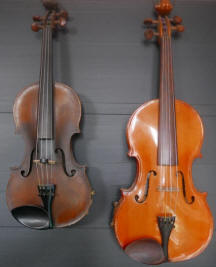
materials to reduce sound transmission. I no longer play the violin and viola (the cello was my instrument
before switching to violin and viola.) Over a long period, I practised for two hours a day on most days. Now,
the demands on my time make it impossible to be a string player any longer. If I did resume playing, I wouldn't
want to disturb my neighbours in any way.
Soundproofing a room for musicians practising their instrument (or singers practising their singing) requires
blocking - realistically, drastically reducing - sound transmission through windows, doors, walls and floors. The
materials required do not include acoustic foam. This only reduces internal echo. This is a complex
field. The materials used for blocking sound transmission in the case of violinists aren't the same as the
ones for cellists, but whatever the instrumentalist (or singer) this system allows installation of the best
materials for the job, at least in the case of windows and doors. Blocking sound transmission through floors
and walls is not possible using this system but windows and doors are a very important part of the problem
and attending to windows and doors offers substantial benefits.
All the panels discussed so far have been in the vertical position and the panels have all been movable and
installable from inside the room. Other components are installed outside the window space or partly indoors
and partly outdoors. In all these cases, the window must be unglazed. An example of a panel installed
outside the window is a wind-deflector panel. The prototype of the earlier design, the 'New Window System,'
not the Newest Window System, is installed in a small room. The window in this case is glazed and only the
upper part can be opened for ventilation. This room is south-facing. The front room of the property is north-
facing. The house is a terraced house on an East-West axis. When the Newest Window System is
installed, then it becomes possible to have a window opening without glazing, allowing maximum ventilation
when required, for example, to dry washing. The fact that the small room faces North is a disadvantage for
ventilation. The prevailing winds in this area, as generally in this country, are from the West far more often than
from the North. This disadvantage can be corrected to some extent by installing a wind deflector outside
the window which changes the direction of wind from the West in this particular area so that the air flow is
through the open window and into the room. No further information is provided here concerning the deflector.
Panels which are partly inside the room and partly outside are installed in a horizontal, not a vertical position.
Again, no further information is given here, except for a few details. One use for horizontal panels is as
platforms, installed in an upper room. These can be very strong, capable of supporting the weight of a person.
An anchorage system maintains the panel in the horizontal position, no matter where the person is on the
platform. Safety considerations are paramount here. One use for a platform of this kind is in case of fire, to
escape from the property or for the use of fire rescue services. Without such a platform, these actions would
be very difficult or impossible. Strong fixings are provided for attachment of rope ladders, used when escape
from the property is the aim.
An unglazed window on a ground floor can be used to launch a boat, of the kind used in my boat system for
flood mitigation - it has other uses as well. The boat can be constructed inside the room - it takes very little
time to build - and launched through the window space. A wide or fairly wide window space will be needed.
The boat will be constructed on a panel large enough for the purpose which may be horizontal or sloping. A
sloping panel is likely to make launching easier. When the boat is used to save personal property from the
damaging effects of flooding, the personal property will often be heavy and bulky. I don't provide here
information about how transferring the property to the boat is achieved. There's more than one method of
achieving the same result.
I don't provide here very much comment on the door replacements in this system. The replacements are
still doors, but doors with far more flexibility than traditional doors, the ones in established designs. The
doors in this system, like the windows, have multiple environmental benefits and benefits of other kinds.
There are other uses for these horizontal panels, for example for installing window boxes. This is a more
convenient method than the methods used to install traditional window boxes. Plants, such as geranium
plants (more accurately referred to as Pelargonium plants) can be managed and looked after far more
easily using this system. Fail-safe systems will ensure that no plant containers or any other items can
fall off the platform. A system is available to install safety handrails on the platform very quickly. For
some uses, a gap will obviously be needed - the gap is created with a hinged component.
When the system is used in a war zone, or an area which is potentially a war zone, it offers far more
than purely defensive measures, such as protection from blast damage and small arms fire. It offers
opportunities for attacking aggressors with weapons - obviously, these must be weapons which are
authorized and legally held, used for legitimate purposes in drastic and dangerous circumstances. So,
to mention an uncomfortable topic but one which is important when members of a democracy must
take part in armed conflict, the system allows for use by snipers, with specialized facilities for their
protection. The provision of these and other military facilities is above all intended for deterrence.
If the deterrence is successful, then the facilities will not be used in attack and defence, but the option
of using the facilities is obviously necessary. Many military activities will generally be carried out on
the upper floors of a building, with more extensive views. Mention of these uses supports my claim
that this system is immensely flexible, with a wide spectrum of uses. It has to be hoped that the
military uses of this system will never be needed, but there are other dangers which can't possibly
be excluded, such as situations of temporary or longer-lasting mass disorder, rioting. The system
can play a part in reducing damage and protecting people and property.
This system is not only intended for use in this country, or in the United States, but for a wide range of
countries, including ones potentially or actually facing great risks, such as countries with a border with
Russia. The need to resist invasion of their territory by meeting force with force will be necessary when
a democracy finds that diplomacy or other measures have failed or are out of the question - although
countries may ignore the threats to their survival as free countries or rely on other countries to defend
them - permissible in the case of small or very small states, but not in other cases, in general.
I take the view that windows can merge with doors, as 'windoors.' Windows have various advantages over
doors. They tend to be wider than doors. If a window, or windoor is at ground level and is wide or quite
wide, bigger loads, such as bulky furniture, can be brought into the building through the wide opening.
The dual-purpose, or rather multi-purpose 'windoor' allows ready acess to the building. For some purposes,
restricting access to buildings or slowing down access to buildings is important. One example is crowd-
control, to prevent potentially dangerous situations where there are far too many people in a limited space.
If the panels in the close position on a windrow are on either side of the windoor space, the symmetrical
arrangement, then they can be moved into the open position to give a completely open position or a partially
open position. The exact width of the opening can be controlled in a very flexible way.
The wide windows / windoors which are easily constructed in this system have many advantages for
industrial and other uses. The system is optimized (in many of its possible configurations) for pallet use.
Extracts from the Wikipedia page on pallets:
'Organizations using standard pallets for loading and unloading can have much lower costs for handling
and storage, with faster material movement than businesses that do not.' 'The lack of a single
international standard for pallets causes substantial continuing expense in international trade. A single
standard is difficult because of the wide variety of needs a standard pallet would have to satisfy.' The first
one mentioned is 'passing doorways.' Another comment: ' ... organizations already handling large pallets
often see no reason to pay the higher handling cost of using smaller pallets that can fit through doors.' This
new system offers wider window / door / windrow openings, sufficient to take pallets of any size.
Below, in this section, I include material on the possibilities of incorporating boats in some configurations of
the system. Also on this page, an extensive section on the Paul Hurt Design-Construction Boat System. The
boats are very easy to build and quick to build and are very cost-effective. They are also very versatile. The
boats can be easily disassembled and the components used to build other structures, including ones for use
in container gardening. All the boats have smooth, level surfaces, including the upper surface. They are well
suited to pallet transportation and handling. Pallets have smooth, level surfaces. From the Wikipedia entry:
'Containerization has spurred the use of pallets because shipping containers have the smooth, level surfaces
needed for easy pallet movement.'
The panel, or panels of a window or windoor can be placed in a partially open position for a very different
purpose - it may be that the view from a window or windoor is pleasing but spoilt to an extent by some ugly
feature. A particular placing of the panel or panels can block the feature. If a completely pleasing view is
spoilt by a change in the environment, such as a large monstrosity, then looking at an oak or larch or pine
panel or a panel of some other kind my well be preferable to seeing the monstrosity.
This system is now a primary interest, together with another environmental interest, water collecting and
storage. I've constructed a large new water storage pond next to the greenhouse in the upper growing area.
One side of the pond is supported by the south-facing wall of the greenhouse. The facilities I've built in
recent years now amount to three water storage ponds as well as new water collecting surfaces. There's
further information in the next section. There are also two composters with an alternative use, as
'enclosed water storage ponds.' The wildlife pond is still available as a source of water but there
will be no need to use it for this purpose.
Water storage ponds in close proximity to buildings with windows or windrows as used in this system
have many possibilities. The ponds will often be narrow, taking the form of canals, usually short or very
short canals but sometimes part of a much more extensive system. These canals, like the ones in
various Dutch towns and cities, can be used for transport of goods, including heavy goods. The windrows
can be part of unloading bays. The water in the canals can be used in emergencies, in particular, as a
convenient source of water for fire-fighting. The water can be used for watering plants in the area. It can
enhance the surroundings, be beautiful, perhaps.
I give next to no information about a practical matter. So far, all the panels have been internal panels, but
panels can also be external panels - but only at ground floor level, where their handling is much safer. The
canals can be use to move panels by boat to the place where they will be fixed securely in position. For these
operations and others, by far the most convenient kind of boat to use will be the boats in my design which
make use of larch or oak beams. This boat system is very flexible, allowing boats of many different dimensions
to be constructed very quickly. For the purpose of transporting goods, the flat upper surface is an important
advantage - all the surfaces are straight rather than curved, of course. I mention briefly the fact that lifting
heavy components can be achieved by raising the water level, so that the beam-boat is raised.
Next, some images, with
explanatory text, to complement
the text above, and some semi-technical
information
relevant to the text, in the form of extracts from
Google Overviews and from other sources.
Images
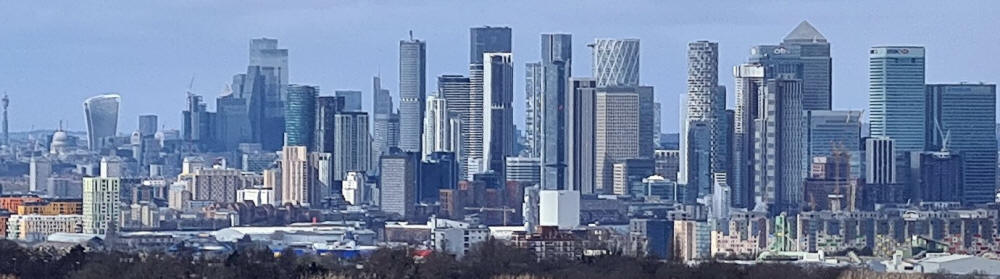
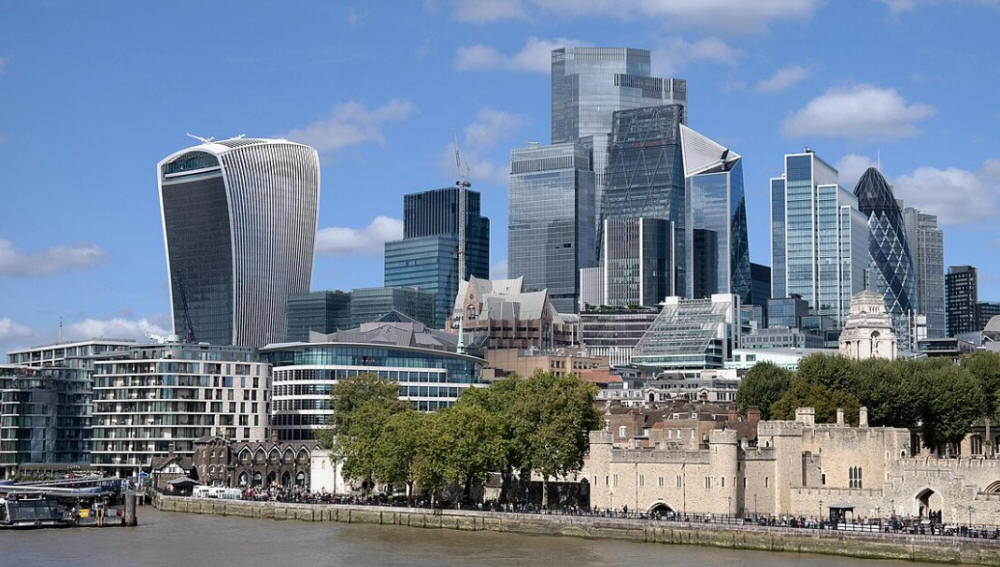
Below, mid-Manhattan skyline, two images of
the City of London skyline,
followed by critical remarks on
skyscrapers as 'tall greenhouses:' their
environmental costs,
the failures of 'iconic' buildings, which may not fail
in
aesthetic terms, which may be examples of good or even outstanding
architecture - although opinions will differ - but which
are clearly defective
in other ways. The need for acomprehensive
((survey)) of advantages and
disadvantages.

Comments - not my own, but I'm in agreement with the criticisms.
1. Architectural & Insulating Glass Units (IGUs)
units (double/triple glazing and vacuum-insulated glass). However, their environmental
downside stems from how they are built:
- High Embodied Energy: Glass manufacturing requires sand, limestone, and soda ash
- to be melted in furnaces at extreme temperatures (often exceeding 1,500°C), which
- releases significant greenhouse gases.
- The "More is Better" Carbon Debt: Moving from double to triple glazing to achieve
- better insulation adds an extra layer of glass. This creates a "carbon debt" that requires
- roughly 15 years of energy savings just to offset the carbon produced during manufacturing.
- The Recycling Barrier: While pure glass is endlessly recyclable, modern window units are
- glued together with plastic laminated interlayers, polymer spacer bars, and silicon sealants.
- Separating these components is incredibly difficult, meaning most architectural glass is
- downcycled or dumped into landfills.
- Short Lifespans and Gas Leakage: Traditional double and triple glazing units rely on inert
- gases (like argon or krypton) pumped between panes. These seals often fail or leak within
- 20 to 30 years. When the gas escapes, the insulation value drops, forcing building owners
- to replace the glass prematurely and restarting the carbon cycle.
- Urban Overheating and "Greenhouse" Effects: Large expanses of high-performance modern
- glass can turn buildings into traps for solar heat gain. In warmer climates or during heatwaves,
- this forces a massive reliance on energy-intensive air conditioning systems, worsening the
- urban heat island effect.
Extracts from the page
https://www.vontobel.com/en-ch/insights/why-glass-skyscrapers-are-bad-for-the-environment-18167/
page
pConventional glass skyscrapers are just tall greenhouses. [My realization that conventional
greenhouses - the vast majority - are defective designs in environmental terms, impossible to
defend, led to my work in designing and constructing a vastly superior design, with advantages
which go beyond the environmental advantages. The further realization that skyscrapers and
similar modern buildings are defective designs in environmental terms has led to my work on
windows and doors, design and prototype construction, a vastly more flexible and versatile
system, which eliminates the disadvantages of the 'tall greenhouses,' the not-so-tall greenhouses
and the windows and doors of humble dwellings, including my own - with a range of advantages
which go well beyond environmental advantages, including security and safety, and with a strong
interest in aesthetics.
The amount of energy used for cooling has more than doubled since 2000, and it will double again
by 2040 if we don't curb our reliance on air conditioning, according to the International Energy Agency.
'Even in a moderate climate, cooling issues are becoming more and more severe, and the proliferation
of glass buildings is accentuating that fact.'
Cutting down cooling isn't enough to redeem these glass structures. This facade is designed to
reduce cooling load but the problem with it is it's very high in embodied energy ... Embodied energy
is the energy it takes to make the material. Timber has a low embodied energy because it actually
pulls carbon out of the air as it grows, whereas glass is very energy intensive ... glass doesn't last
a lifetime. The glazing needs to be replaced every 30 to 40 years ... and the glass panels are stuck
together with plastic, so even recycling them is difficult ... even with innovative solutions, it [glass]
can't compete as a sustainable material.
The Shard in London has been widely praised for its sophisticated environmental techniques, which
include cellular glass insulation and 'associated membranes ... adhesive bonded directly onto the
metal structure to eliminate thermal bridging' and many more advanced measures, But The Shard fails
decisively in environmental terms for reasons to do with embodied energy. An overall survey of The
Shard will show environmental strengths and weaknesses but the weaknesses surely outweigh the
strengths. A comprehensive survey would take into account its vulnerability, shared with countless
other buildings, to power cuts. Electric power - in massive quantities - is needed to ensure the
continued running of so many of its environmental facilities, but it's likely that power cuts will
become increasingly common. At the very least, it can't be safely assumed that the advanced
support network which includes the provision of electric power will continue, for a whole range
of reasons, including terrorism, power overload, amongst others.
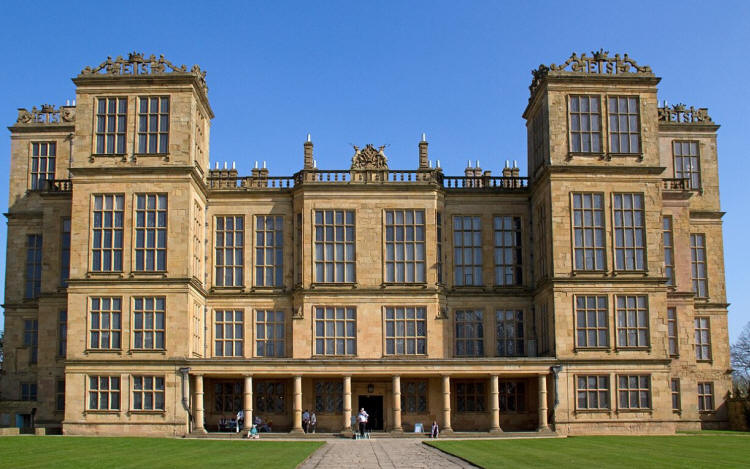
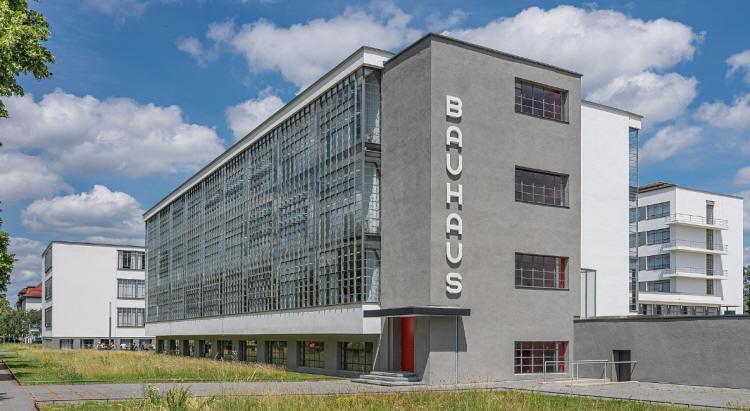
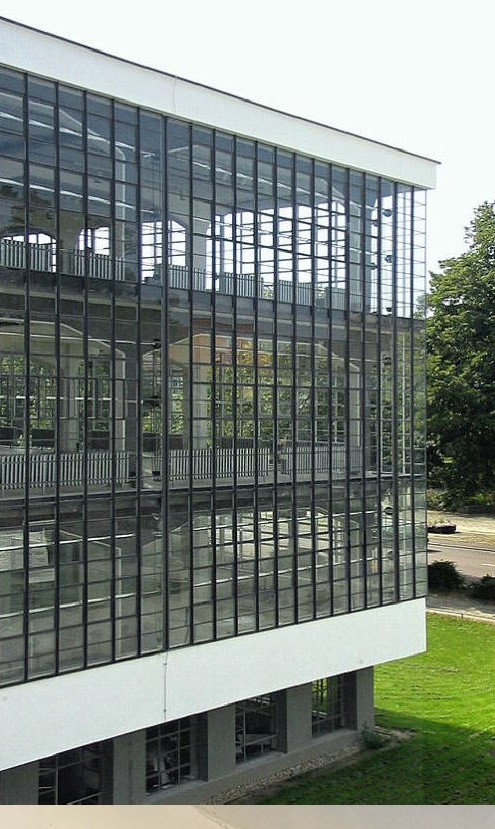

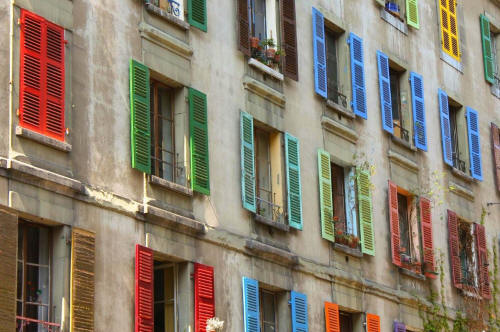

Above,
Hardwick Hall, Derbyshire: 'More glass than wall.' Built 1590 - 1597. Built at a
time when it was no longer necessary to fortify domestic buildings against
aggressors. In our times, in many parts of the world, domestic and other buildings
do need protection from aggressors.
A Bauhaus building in Dessau, Germany and a window wing of a workshop.
The glass curtain walls had severe disadvantages for climate control. Curtains
were installed to alleviate some of the problems but blocked light and the view,
of course. Slatted windows provided insufficient ventilation. Insulation was
insufficient and in winter, a high level of heating was needed.
Shuttering with bright colours in Romania.
A dilapidated building in Switzerland, windows with shutters. One set is in the
closed position, the others in the open position. Exterior shutters are vulnerable
to the effects of weather.
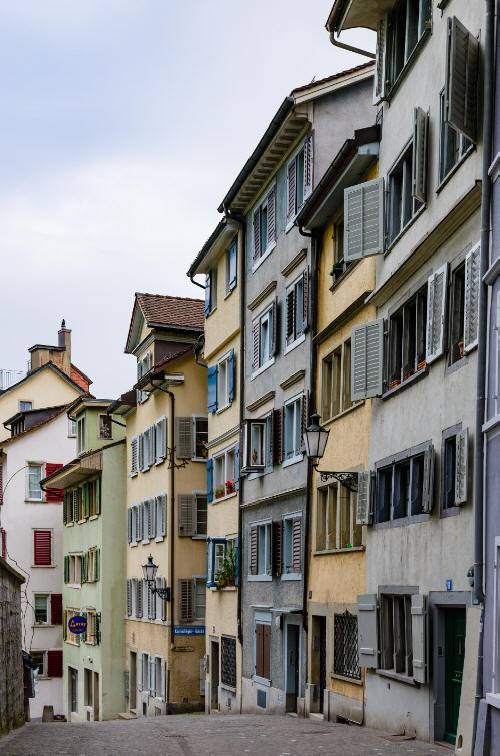
Houses in Zurich, Switzerland with shutters, some open, some closed.
Pelargonium zonale plants outside a window of a residential block. Watering and
general care of the plants is difficult in this setting.
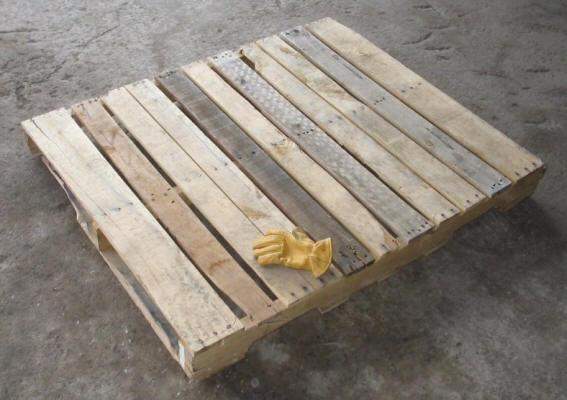

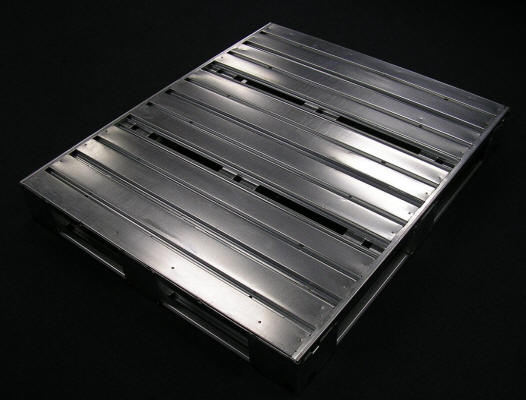
Above, wooden pallet, with glove to show scale, plastic pallet, which can be lifted
from all sides, a galvanized steel pallet.
Overview: The Problem with Glass in a Warming Climate
Extract: Modern Engineering Solutions
Advanced Glazing Techniques: Recent renovations at sites like the Bauhaus Weimar and Bauhaus Dessau
have balanced historic monument preservation with energy efficiency by installing thin, specialized restoration
glass ... paired with internal panes featuring thermal insulation coatings.
Noble Gas Cavities: Modern retrofits reduce the space between panes and inject noble gases such as krypton
to drastically improve insulation without altering the delicate, historical steel profile framing.
My comment:
And after all these Modern Engineering Solutions, such as injection of krypton, the buildings are still inadequate.
The attempted improvements fail The buildings do retain some of their 'iconic' status, or most of it, but the status
is compromised. Opinions will differ in this regard. To continue to construct very sophisticated but very inadequate
buildings seems to me inadvisable. We're stuck with the deficiencies of the non-iconic and the iconic buildings for
the foreseeable future. Demolition would bring major problems.
Evaluation of Environmental Design Strategies for University Buildings
https://eprints.whiterose.ac.uk/id/eprint/149558/1/Evaluation%20of%20Environmental%20Design%20Strategies%20for%20University%20Buildings.pdf
The buildings surveyed:
Arts Tower; Western Bank Library; Reid Building;
Benzie Building; Information Commons; The Diamond; Potterrow.
The Diamond engineering building is the focus of attention in these extracts.
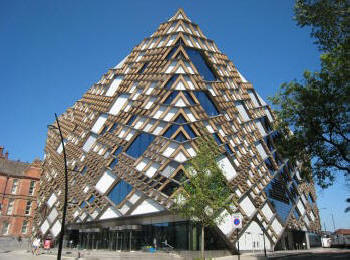
Overview:
balances mechanical climate control with natural ventilation. While designed to be exceptionally eco-friendly -
earning a BREEAM "Excellent" rating—post-occupancy evaluations and studies highlight distinct performance
challenges concerning heating efficiency, ventilation control, and internal thermal comfort.
conditioning in closed, specialized spaces (like its engineering laboratories) and natural stack ventilation
through the central atrium. However, architectural and engineering research from the University of Sheffield
highlights a notable ''performance gap' between the building's digital design models and real-world behavior.
environment. Post-occupancy evaluations showed that comparable campus buildings with manual control options
(such as the nearby Arts Tower, where users can freely open windows) actually achieve higher user satisfaction
and often consume less heating energy relative to their size.
labs (such as the Thermodynamics and Heat Transfer Lab), lecture theatres, and a public café.
- Dynamic Occupancy: The fluctuating volume of students throughout the day creates unpredictable, massive
- internal heat loads.
- Process Heat: Industrial-based compressors, engines, and thermodynamic equipment generate substantial
- localized heat that the ventilation systems must constantly work to flush out.
- Zoning Conflicts: Trying to maintain a uniform "Standard Effective Temperature" across an open, multi-story
- atrium adjacent to high-heat laboratory spaces strains the automated balancing dampers, leading to pockets
- of thermal discomfort.
strict energy-saving interventions. The reliance on natural ventilation without deep reliance on traditional,
high-emission air conditioning makes the building more vulnerable to external climate variations. In recent
years, balancing the need to reduce carbon emissions with keeping the building adequately cooled during
peak periods has proven difficult, even prompting the university to adjust building accessibility hours
overnight to cut back on HVAC system energy consumption.
than the more recently constructed buildings
In summer it is notable that the Information Commons, the Diamond and
Potterrow are perceived to be almost equally too warm. With projected increases in
temperature due to climate change in coming decades, there is a danger that these new
buildings, which rely on mechanical HVAC systems with spaces largely sealed off from the
outside, may cause greater discomfort as users struggle to adapt.
Performance issues: The Information Commons and the Diamond are responsible for the highest
carbon emissions of the seven buildings included in this study, with artificial lighting operating
extensively throughout for 24 hours a day, and narrow temperature set point ranges
maintained by mechanical HVAC systems
The inflexibility of the environmental strategy and control systems in these buildings
contrasts with the ambitions of their designers: to create ‘flexi-spaces’ which are
‘user configurable’ in the Information Commons (Lewis 2010); and ‘flexible’ and ‘adaptable’
spaces for informal study in the Diamond (Arup n.d.). Arguably the ‘flexible’ occupancy and
use patterns desired for both buildings have led to a lack of user interface with the
environment, leading to complaints as users struggle to adapt. This supports previous
research that shows that occupants show more ‘forgiveness’ for naturally variable indoor
conditions which they can control (Leaman and Bordass 1999), and where the environmental
design intent is more legible (Leaman and Bordass 2007).
The theoretical justification for the complex automated systems incorporated into these
buildings are that they are necessary to easily adjust to the varying demands of heterogeneous
patterns of occupancy and use over both diurnal and seasonal cycles, exacerbated by periods
of intensive student activity around exams and long transient periods outside of term.
However research has shown that increased automation of environmental systems is only
efficient when buildings approach near maximum occupancy, which is often not the case in
HE institutions.
Specifically, this research has highlighted the following key issues:
1. The perceived need for ‘flexible’ open-plan spaces in HE buildings has led to increasing reliance on
automated control systems, with negative consequences in terms of perceived occupant comfort.
2. The naturally ventilated buildings in this study suggest that alternative passive environmental
strategies can be as effective as technological solutions in providing comfort, particularly when
these are in tune with the local climate.
3. There is little evidence that improvements to building fabric as a result of recent changes to
building regulations have had any impact on energy performance in HE buildings.
4. HE buildings that rely on mechanical HVAC systems perform poorly in energy terms during
periods of low occupancy, despite automated control ...
Newest roof-wall system
Documentation, prototyping and other activities are in progress for the newest roof-wall system. A page on
an older project with the paradoxical name 'New roofing-walling system' is at New roofing - walling system
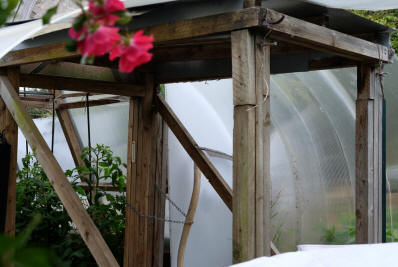
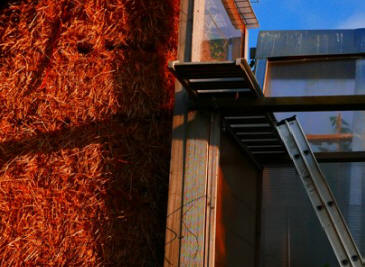
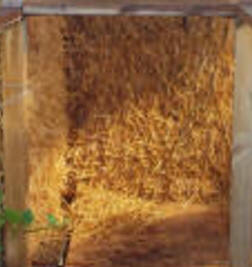
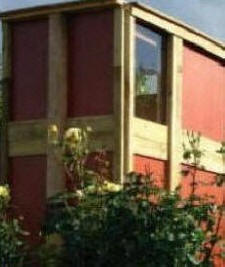
The preliminary images above in the field of 'design, construction, gardening, 2026' need some explanation.
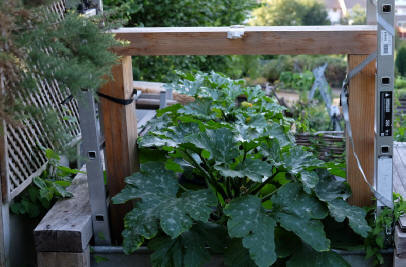
This year has been a very difficult one for growing but none of the crops (or other useful plants) have
been harmed by lack of water, although some have had their development harmed by the damaging
effects of very high temperatures.
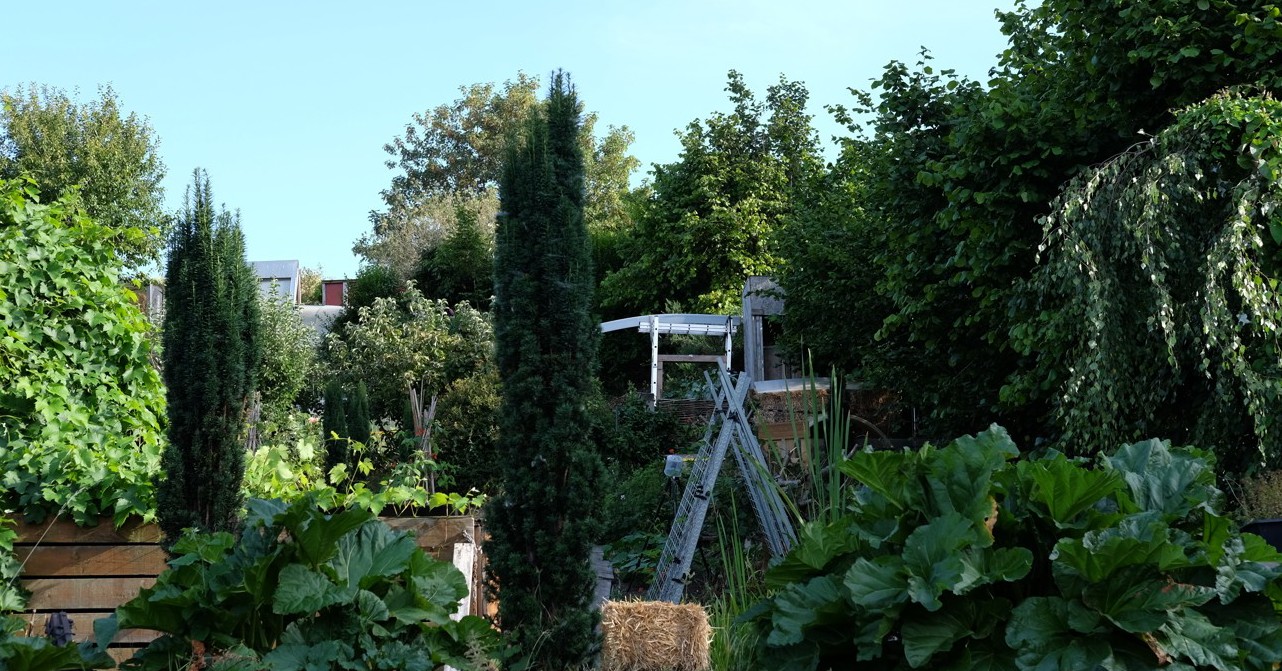
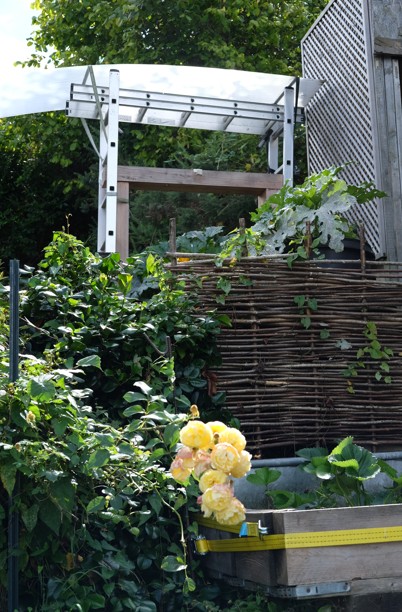
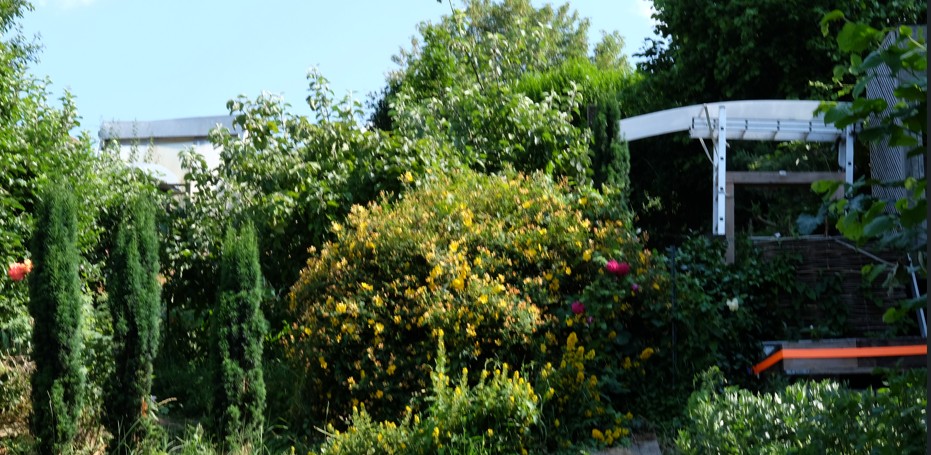
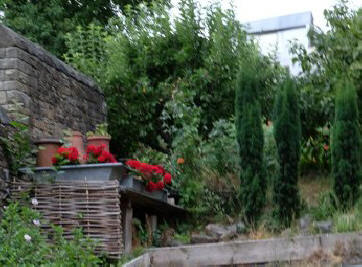
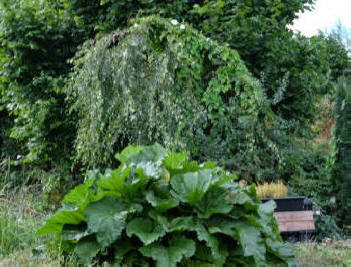
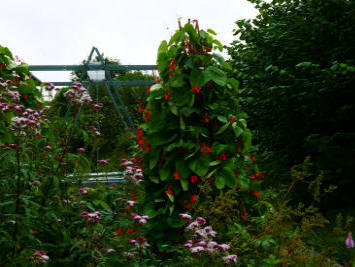
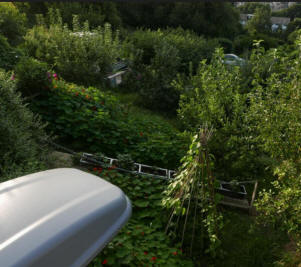
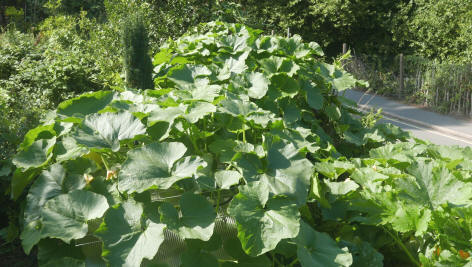
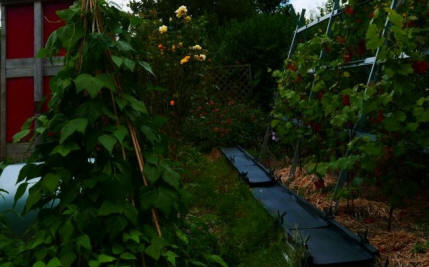
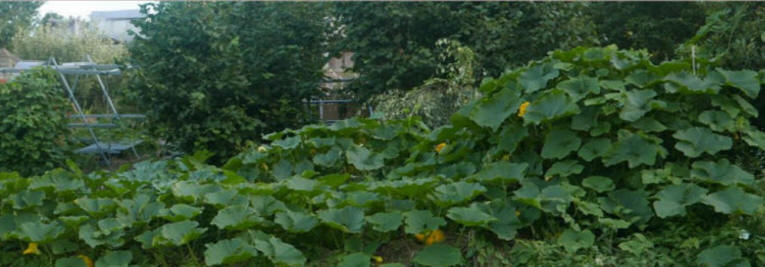
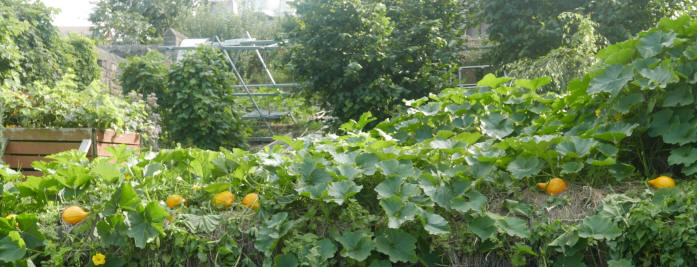
The largest photograph above, the first row, is a view towards the South in part of the lower growing area as seen in mid-August 2026 from the street
(which is Morley Street, Sheffield.) Not visible: many things, including the wildlife pond and lower water storage pond and most of the crops growing
in this area, such as maincrop potatoes (in various growing areas), brassicas (assorted kale and purple sprouting broccoli plants in large numbers),
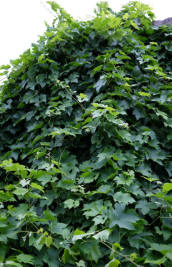
runner bean and raspberry plants, most of the courgette plants and all the squash plants. On the left, some of the very large Vitis vinifera Brandt plant,
a prolific producer of grapes.
To the right of the Vitis plant, the large composter which was the first construction I attempted after taking on my two 'rented growing areas'
(a.k.a allotments.) Composting is now carried out in other structures. This composter will have a different use from now on: production of leaf mould,
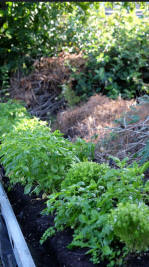
making use of the abundant autumn leaves and other material. In the foreground: rhubarb plants and a bale of straw - for seating, and as a reminder
of 'fields of gold,' the golden fields of barley blighted this year by drought. Very prominent: two of the larger yew trees in the area and further away
some of the smaller yew trees, all specimens of Taxus baccata 'Fastigiata Robusta.' These yew trees are very easy to manage. Their size, like that of
the yews, can be controlled very easily. Visible in the distance: some of the buildings in the upper growing area, the greenhouse and small storage
building. The growing area as seen from the road, externally, conveys a different impression from the views available inside the area, the view from
the road one of fullness amounting to clutter, perhaps, the interior view one of spaciousness, as I see it. Looking from a more or less fixed viewpoint
and the freedom to walk around the area with changes of viewpoint give rise to very different impressions.
The information here is given in enough detail to explain some of the images above, in particular, images of things which are likely to be
simply puzzling without this explanation. What is their purpose?
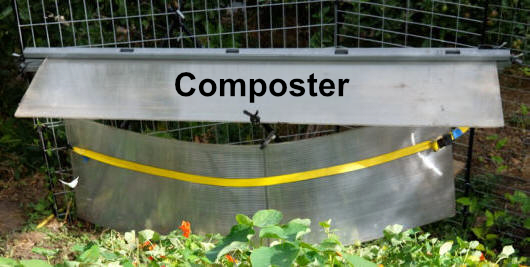
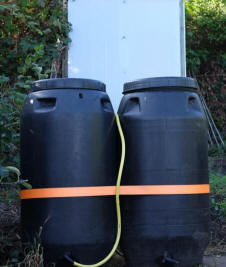
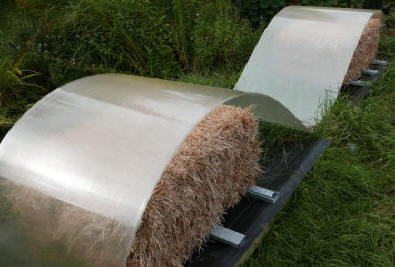
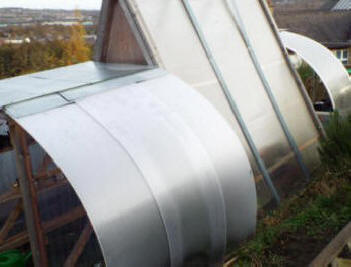
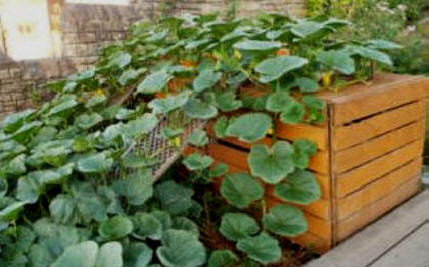
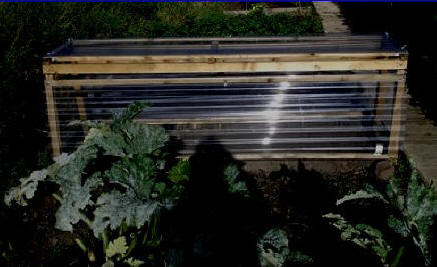
In row 9 above is a structure with multiple uses but in use at present as a composter, incorporating some wire mesh panels, a straight polycarbonate
sheet, a curved polycarbonate sheet and the yellow ratchet strap, and the images of a water storage pond recently completed in the upper growing
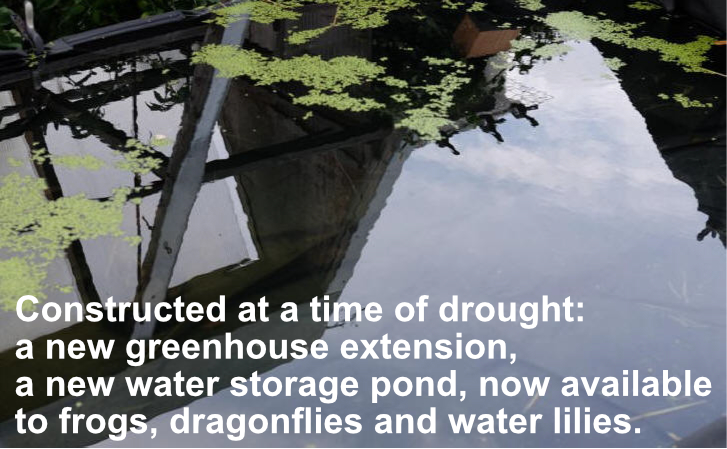
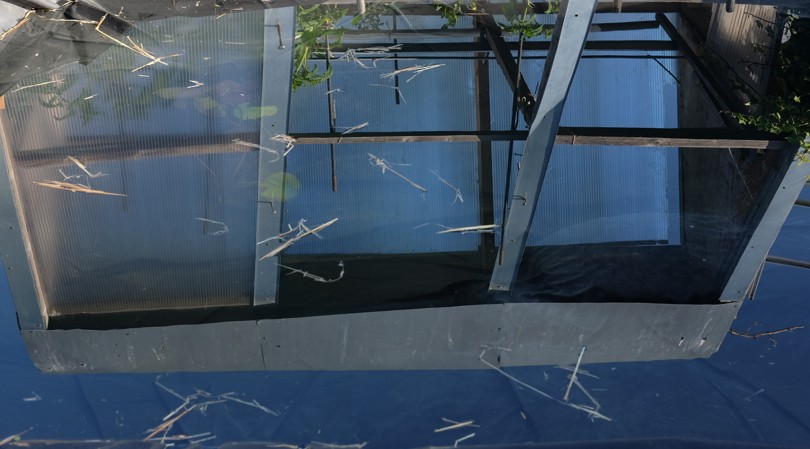
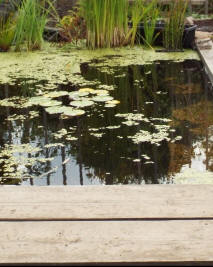
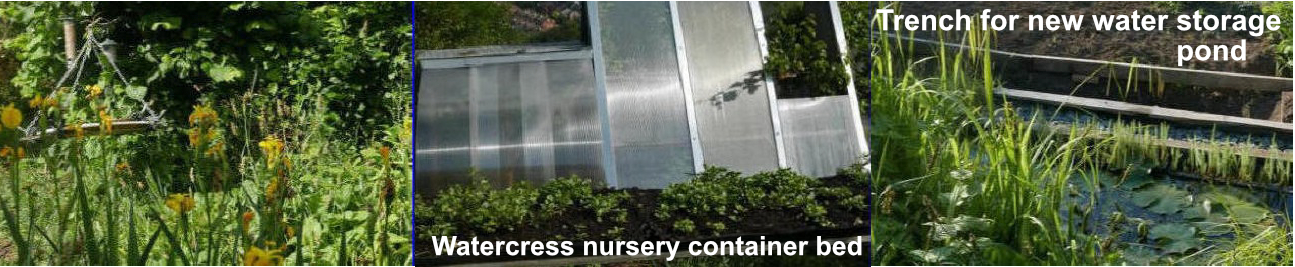
area. The photographs of this new water storage pond are of details only, aspects of this large structure. These images appear in row 8 above,
and show reflections in the water - an inverted image of this side of the greenhouse - and very new uses for pond liner, with a similar, smaller image
in row 7.
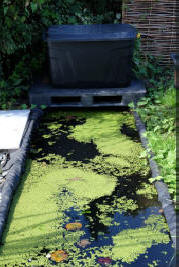
To me, the undisturbed surface of water in a pond on a windless day - flat calm conditions - a water surface with no vegetation, is a fine sight,
but the surface has to be very different in a pondwhich has a practical purpose, water storage. Evaporation of water from the surface on warm
days reduces the water holding capacity. The lack of shading encourages the growth of blanket weed, which has to be removed regularly.
Beneficial shading can easily be achieved. In this pond, and other ponds in the growing areas, I've planted water lilies, the native water lily in the
wildlife pond and other water lilies in the smaller ponds. The large leaves of the water lilies provide the necessary shade. The other main source
of shade is duckweed, troublesome in excess, beneficial when controlled. These plants, the native common duckweed, Lemna Minor, the other
native species and introduced species, reduce the evaporation rate and have other benefits, including suppression of blanket weed. Duckweed
will easily colonize a new pond and I've every reason to encourage it in this new pond, before taking steps to discourage it and to stop it
from taking over. At this stage, seeing striking reflections of the greenhouse and the water storage containers in the water will be a thing of the past.
I've a strong interest in the practical issue of storing water, for use in drought conditions and at other times - using water from one of the storage
ponds in the growing areas, none of the growing areas far from a pond - is much more convenient than fixing a very long piece of hose to the
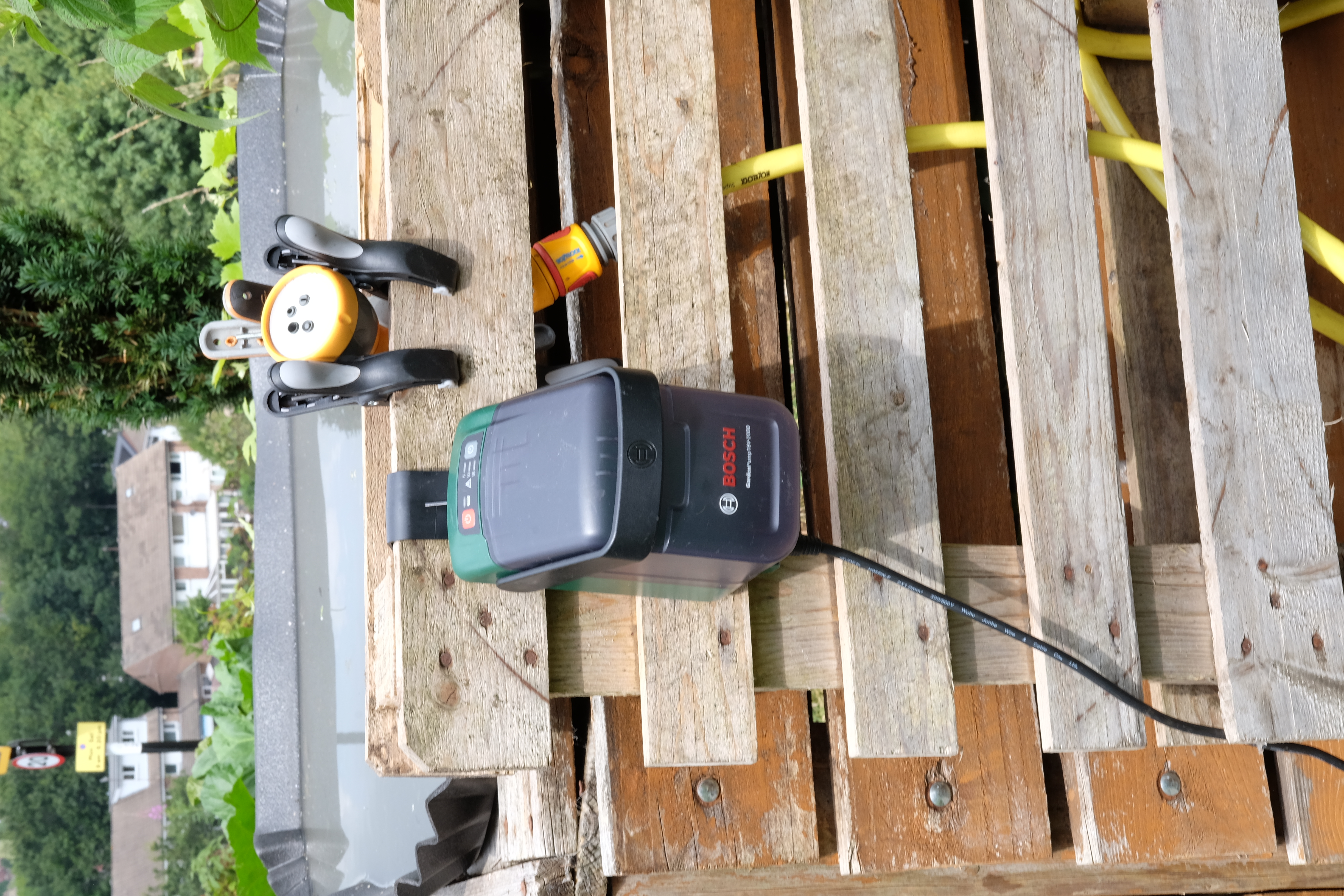
mains water tap which is quite far away. I can use a watering can as well as a battery-powered pump for this purpose. I also have a strong interest
in other practical uses of water in artificial systems, for transportation and other uses. In this case the interest is theoretical as well as practical. The
first water storage pond I constructed is next to the much earlier wildlife pond and is narrow as well as quite long, with a resemblance to
(a linkage with) a section of a canal. Transportation of material on a small boat on this section, and moving in person on a small boat, is possible
but not usable to a great extent. Even so, the wider possibilities seem to me very interesting. Internal combustion engines are amongst the most
important of human inventions, but there are areas where heavy loads can be moved in boats without engines. I do have available for use a
small and very simple boat, not used as yet and not likely ever to be used, but potentially very useful. There are tasks involving the ponds which
are difficult to carry out from the edge of the pond and much easier to carry out if a boat can be use - tasks such as control of invasive or
intrusive growth of water plants, and recently, the trimming and shaping of pond liner in this newest pond. Some of the liner is easy to reach
without the use of a pond but some is much more awkward. Maintaining water gardens, like maintaining other gardens, requires ready access.
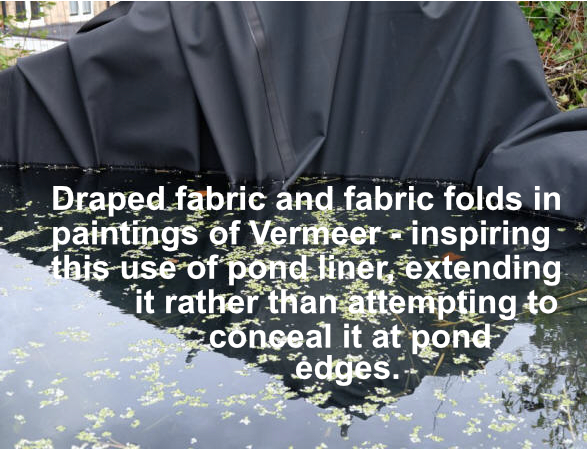
The black pond liner in rows 3 and 6 is at one edge of the new water storage pond, the West-facing side. The liner is supported by sheet material
which is hidden by the pond liner. The liner is quite high, reaching the water level in loose drapes. Below the water, the liner is pressed against
the surface of the sheet material by water pressure. The purpose of the sheet is to withstand the water pressure and of course the purpose of
the liner is to prevent loss of water from the pond. Beneath the liner is a layer which acts as underlay, preventing puncture of the liner. In some
places, there's reinforcement, a much thicker layer of underlay material. I've used straw from a straw bale, but not the straw bales which form
one wall of the greenhouse extension. I've also made use of flexible waste plastic material such as thin PVC for this purpose. There's a similar
arrangement on the opposite side of the pond, the East-facing side, but the peak of the underlay is lower in this case. The pond is supported
on the South-facing side by the sloping South-facing wall of the greenhouse. I make frequent use of an existing very strong structure to support
a structure in need of support, eliminating the need to construct a wall or other surface on this side. A 'similar but very different example' from
my work in furniture design: a bookcase I built which is supported on one side by an existing bookcase. This design has further features which
make construction particularly easy. To return to the pond, there are further strengthening structures in place, all of them very easy to implement.
From inside the greenhouse, the expanse of water can be easily seen next to this wall of the greenhouse, the water level not reaching
eye level, of course, but still high. I've installed a battery-powered pump in the lowest water storage pond of the lower growing area. This is shown
in photograph 5 of row 3 above. There's another water storage pond in this area at a higher level, as well as two structures used as composters
which can easily be converted into 'enclosed water storage' ponds (and with other functions as well.) This pump can easily be brought to the
new water storage pond. In fact, it was first tested at the site in the upper growing area. I can now water all the crops in the upper
growing area and the top part of the lower growing area with the pump here. All the other crops in the lower growing area can be watered from
the lower pond which is situated there. All that has to be done is to press a button and the flow of water begins, with no need for the
time-consuming processes and inconvenience of using mains water and very long hosepipes. I can also use a watering can dipped directly
into the water contained in the ponds.
Support for the pond liner at the North-facing side of the pond is provided by a very simple method. The pond is situated on a slope. The
ground falls away from this side so that the depth of water, at its deepest near to the greenhouse, here becomes less and less. Any newts
or other wildlife which find their way to this pond (not intended to be a wildlife pond but likely to attract some wildlife - newts are particularly
likely to be found) can exit the pond easily.
So far as I know, this is the first time that pond liner has ever been used deliberately to gain height at the sides of the pond, the two sides
already mentioned. Why has this been done? The usual practice is to minimize the pond liner visible above water level at the sides of a pond.
The reason has to do with the difficulties of concealing pond liner completely and the wish to make something of this practical difficulty,
to turn it into an advantage. Working alone to build a pond of any size involves difficulties. The pond liner has a weight of 19kg, which
takes me beyond my comfort zone - as someone in the older age group. Moving the liner, finding the best possible position for the liner,
attempting to avoid or eliminate too many folds, to avoid excess of material in some places, not enough material in others - these and other
aspects aren't easy to manage. Arranging the liner so that no liner at all can be seen above the water level is difficult but of course, when
water evaporates from the surface, as it surely will, when water is taken from the pond to water plants, the main intended use for the pond,
then pond liner will be clearly visible.
When the lower, or lowest, water storage pond is filled to the maximum, some pond liner can be seen. I've no intention of draining the pond
and relaying the pond liner to avoid this. In the case of this pond, I've changed the surroundings to emphasize the colour black, so that the
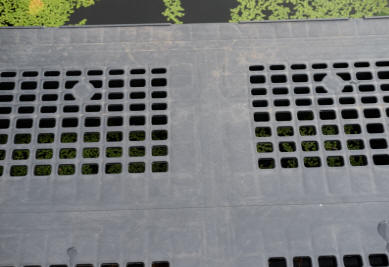
pond liner now forms a harmonious place in the surroundings. I've installed large plastic paletts at both ends of the long axis. The plastic is
sturdy, very long-lasting and enhances the area, in my view at least. This is a co-ordinated solution (in my view at least) to the practical
problem. I planted the water lily Nymphaea James Brydon here, a free-flowering plant with striking red-pink flowers which I think complement
(and contrast with) the black expanses and the black liner. Also shown, a leaf and flower of the native water lily Nymphaea alba growing in
the wildlife pond. I've planted only British natives in the wildlife pond and a great variety of these.
My solution to the practical problem in the upper water storage pond is very different. I've emphasized the pond liner on the West- and
East-facing sides. The materials used in my project 'Paul Hurt Design-construction' include fabrics. Fabrics form a very interesting subject
for study and practical work, with a vast range of materials and uses. For this particular design, it was essential to make use of liner of good
quality. PVC liner is the cheapest but is unattractive for this use and is also the least durable liner material.
The arrangement of the visible liner can be very, very varied and offers opportunities which could be called aesthetic - which are certainly
aesthetic, I think. There are many linkages with fields apparently unrelated (or 'unlinked.') This involves amongst other aspects attention
to draping. Drape is the way that a fabric hangs under its own weight. The paintings of Vermeer are rich sources of aesthetic interest,
aesthetic joy and passion. They show many examples of the drape of fabrics, not in the least a purely incidental feature. Examples of
paintings by Vermeer which show the draping of fabrics: The Procuress, Girl Asleep at a Table, The Astronomer, The Geographer,
The Art of Painting, Woman and Two Men, The Concert, Lady seated at a Virginal. Of course, the depiction of fabrics and the other
'components' (or wonderful, miraculous elements) to be found in a painting by Vermeer are at an exalted aesthetic level. At other levels,
plainness has its uses, often significant ones.
As in the case of the lower water storage pond (or lowest water storage pond) I've planted Nymphaea James Brydon. To me, the flower
colour of this water lily forms an effective contrast and counterpart to the black liner. The leaves of these water lilies, as of other water
lilies, contribute to effective shading, helping to suppress the growth of blanket weed and other undesirables. It's certain that the water
surface of this new pond, as in the case of the older ponds, will be the habitat of duckweed, a plant with some undesirable features
but many advantages, in particular, making a very appreciable contribution to shading. In row 5, a photograph showing leaves and a
flower of Nymphaea James Brydon.
As for pond liner - my view is that so far from pond liner (and pond underlay) being humdrum, utilitarian materials, they are miracles
of organic chemistry and engineering. The fact that products of chemical science and industry are indispensable in creating these
habitats for wildlife and wild plants, the natural worlds, is a fact which is unappreciated by many green people. This isn't a contradiction
or a paradox but yet another aspect of strong contrast, in the vast field of linkage and contrast. (Another example from a very different field:
high altitude mountaineering involves venturing into the world's pristine natural places (or places that used to be pristine before the advent
of mass mountaineering.) But surviving and achieving in these remote places depends upon science and technology - for the products of
organic chemistry used in the manufacture of the synthetic materials used in tents, clothing and many other things, for transportation of food
and other necessities. An ascent of a mountain using only natural materials and natural food - no freeze-dried food - would be heading for disaster.
I see the importance of using simpler methods wherever possible - as in my use of hazel panels instead of panels of non- natural materials.
That's my preference - but simpler methods may have too many disadvantages to be used in so many applications. So, I often use
galvanized steel or structural steel or sections of oak or larch beams. The material is a natural material but the methods used to fell the trees
and shape the timber are far from natural, making use of powered machinery.
Before constructing the composter, I had constructed one incorporating straight and curved polycarbonate sheets which was originally
intended to be a water storage pond (after adding a pond liner) but which has been used instead as the main composter of the two growing
areas. The structure is versatile and flexible. In rainy periods, more often than not in winter, it can be used to stored collected water. In less
rainy periods, predominantly in summer and part of spring and autumn, it can be used as a composter. The newer structure can be used for
the same purposes but has additional uses. The wire mesh panels, without any polycarbonate panels, can be used to grow climbing plants.
This year, some of the wire mesh panels were used to grow tall pea plants, variety 'Alderman.' Panels not incorporated in the new structure
have been used since then to grow runner beans. In colder periods, the complete structure shown in the image can be used for protective
cropping, as a small greenhouse. The plants can be grown to maturity in this position or transplanted, allowing the structure to be used for other
purposes, which include water storage - after incorporating a pond liner - or as a composter. When used to store water, some of the water can
be collected from the straight polycarbonate sheet forming the roof, which is sloping. The structure is now being used as a composter.
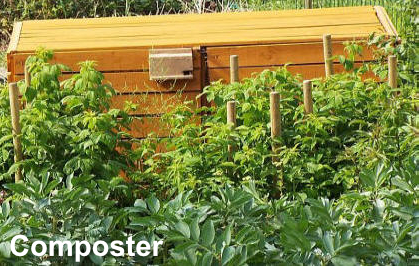
The main composter is now full and another composter was needed. This newer composter can
take compostable material from the upper allotment as well as from the lower allotment. Transfer of material from the upper to the lower allotment
is easy - gravity aids the transfer, of course.
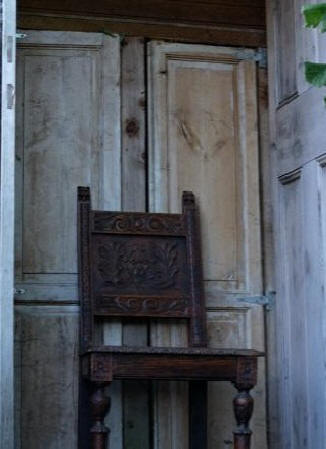
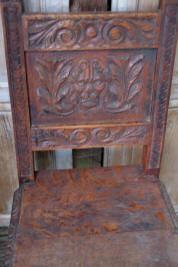
The chair in the photograph in row 8 above needs some explanation. It's inside a small shelter I constructed as part of a much larger platform
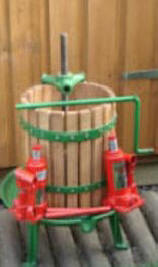
structure, with many different uses. The platform incorporates the structure with wooden larch beams and metal components in row 6. This is
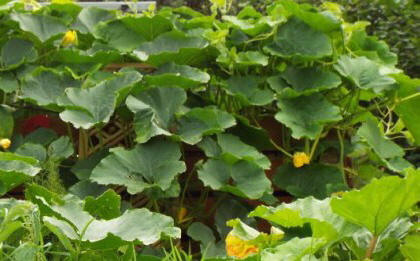
a hydraulic apple press but the hydraulic actuator is not in place. The photograph shows use of the structure for container growing, in this case
for growing a courgette plant. The plant is growing in compost added to a large galvanized container. This can also be used, after emptying the
compost, as a storage container for water. The chair is useful. Not surprisingly, it can be used for sitting on, but is not actually a very comfortable
chair. Addition of some softer material solves the problem. The view from this platform structure, like the views from the other platforms I've built,
gives a new perspective. Aspects of the garden are revealed which can't be seen at ground level. This particular viewpoint is important to me.
It enables me to view the performance of the water collecting surface which can be laid on the main paths of this growing area when it rains or
when there's the prospect of rain. I viewed its performance from ground level when it was raining heavily and the behaviour of the water stream
was interesting. Changes to the surface can lead to more efficient collection of water. This is a place for some simple experimentation. The chair
in the shelter at a height makes the process of viewing much easier and more comfortable. My camera is waterproof but the lens is not waterproof.
Obviously, during heavy rainfall, a sheltered place is a necessity for photographic documentation of the behaviour of water as it runs towards
and is directed towards the water storage pond and / or wildlife pond.
A main function of the chair in the shelter is aesthetic. Aesthetic considerations are very important to me, not just practical considerations.
The chair was bought from an antiques shop and was very good value for money. The wood carving, not apparent in the photograph, is
accomplished - to me, very pleasing. It was placed in the shelter because at the time I constructed the shelter, or not so very long afterwards,
I decided to make the shelter an instance of an interior visible from outside. The wooden panelling was also bought from an antiques shop
and cost very little. At that time, it looked very good but the colour has faded a great deal since then. The wood is in need of varnishing,
like so much wood I use in construction, and the wood needs planing before varnishing. I plead the demands on my time for failure to
improve the appearance of the wood. Wood in a rough, unfinished state is quite often preferred to wood which is stylistically sleek, but my
preference is for wood which has been properly finished, even if my practice is very different. I see the need for closer linkage between interiors
and exteriors in many cases, for interior design to play a significant part in garden design, design of exteriors.
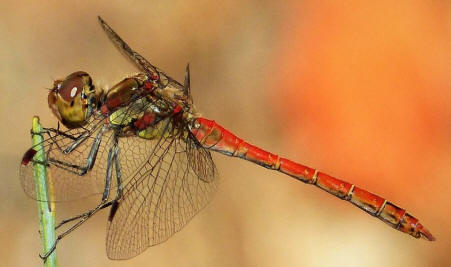
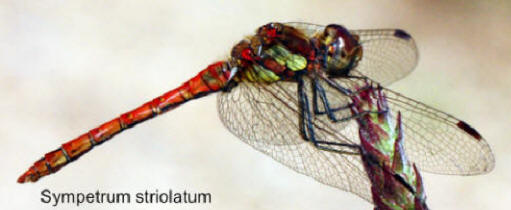
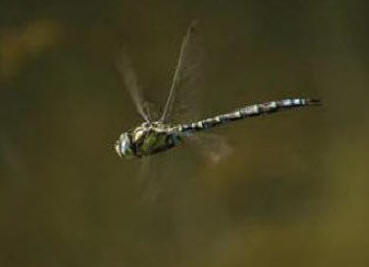
The dragonfly in row 7 (the photograph not taken by me) is a Common Darter (Sympetrum striolatum). This is a very recent visitor to the wildlife
pond, to add to the species which has visited regularly for many years, the Southern Hawker and an occasional visitor, the Broad-bodied Chaser.
There may well be some conflict in the future. Common Darters are much smaller than Southern Hawkers but a Common Darter is able to confront
and eject a Southern Hawker from the territory. The Common Darter seen is an immature male and almost certainly not capable of doing that.
(2) Below, earlier material showing my use of the rented growing areas
from very different periods, with material from other settings, including
my workshops and the home. Includes many innovations.




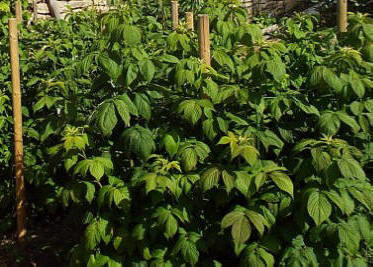
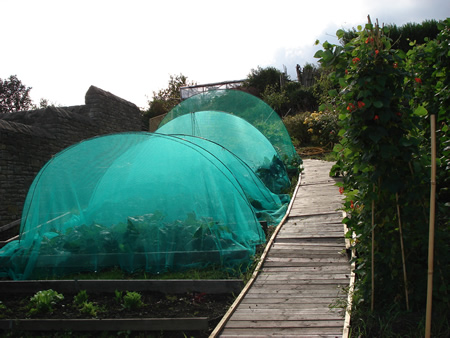



Link: PHD new

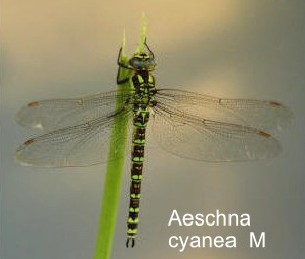
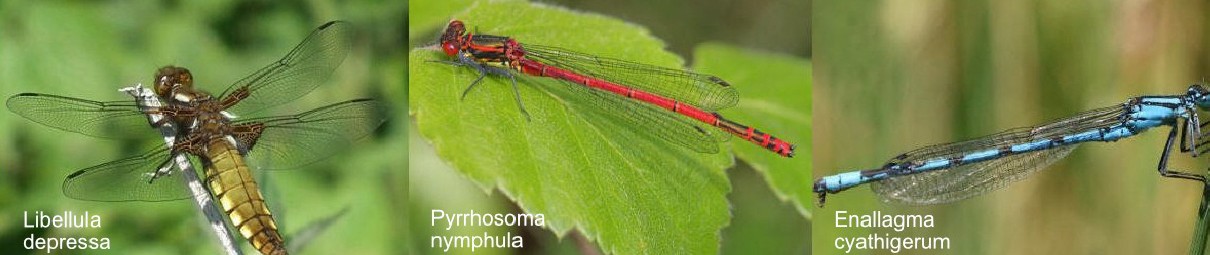
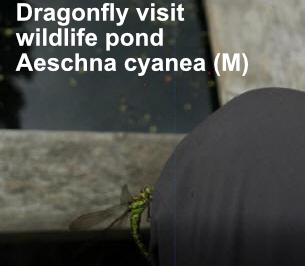
Below, Some regular visitors to the wildlife pond in the summer / early autumn, dragonflies (images 1, 2, 3) and damselflies (images 4, 5). These photographs not taken by me.

















 t
t
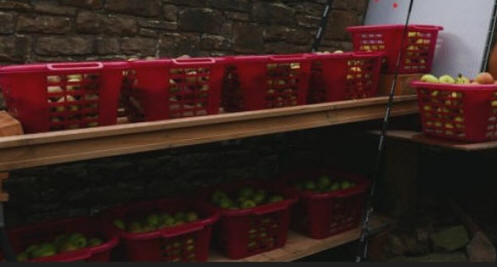
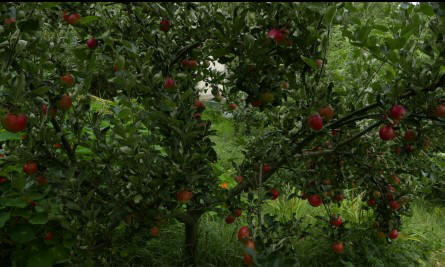
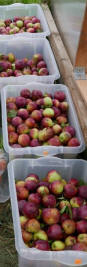
Photograph 2, row above: Not long after this
photograph was taken, intruders, or a single intruder, scattered apples
taken from this store on the ground and threw apples into the wildlife
pond at the bottom of the plot. I've lost count of the number of cases of
vandalism and theft of tools and equipment which have taken place here - but
only one case of threatening behaviour.
This plot is very hard to
secure, for reasons to do with the extensive boundaries, but I've worked to
improve security. There can be no guarantees of complete success, but I
think, or I'd like
tto
think, that the problem is under control. A worrying development has been
visits by thieves obviously equipped with some quite sophisticated tools,
used to break into the smaller upper
plot, which is much easier to secure
than the larger plot shown here. There's an Anderson Shelter in this plot, a
reminder of the Sheffield Blitz. The Anderson Shelter in the
neighbouring plot,
a very heavy structure made with thick corrugated metal, was stolen by thieves. There was a murder in an allotment not far away, many years ago. A garden fork was the murder weapon.


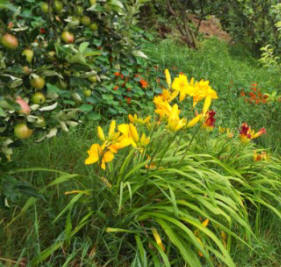
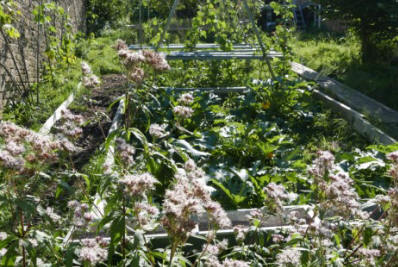
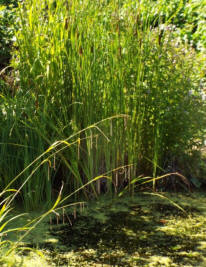
Below, images of
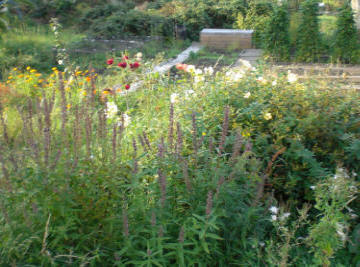
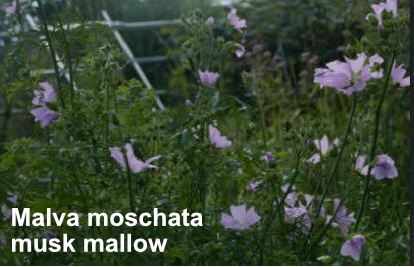
flowers of native British plants in the land I rent, most of
them growing there due to my active encouragement.
There are just two
exceptions. Solanum crispum isn't a British native. Pilosella aurantiaca
isn't a British native but s widely naturalized in this country.
I'm
never in the least danger of neglecting food production in the land I rent
but without neglecting other plants, the 'ornamental plants' - but I'd
rather think of them as the 'sensuous' plants or the
'beautiful' plants,
although many of the edible plants are sensuous, beautiful as well. And
there are so many plain, unobtrusive, even drab plants which interest me so
much, plants which I view
with a degree of affection. Encouragement of wildflowers, sowing of wildflowers, isn't exempt from considerations of reality and practicality. The more space I devote to wildflowers, the less space
I can devote to growing food plants, vegetables and fruit. The more space that farmers devote to wildflowers, the less space they can devote to growing food plants, including wheat, barley,
vegetables and fruit. If very large areas of Britain suitable for growing crops are used instead for growing wildflowers and for rewilding, then the food needed for this overpopulated island will have
to be imported - many more food miles. More on these issues on the page www.linkagenet.com/themes/don'tvoteforthegreenpartydon'tdonatetothegreenparty.htm#councillor-gilbert
I





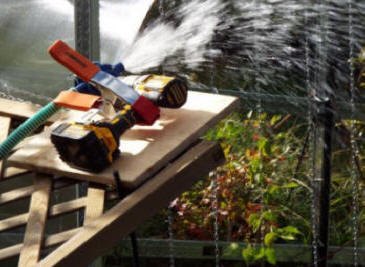
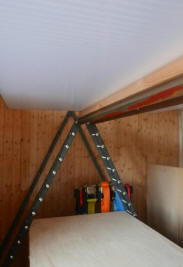

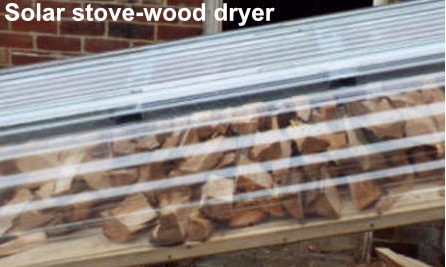
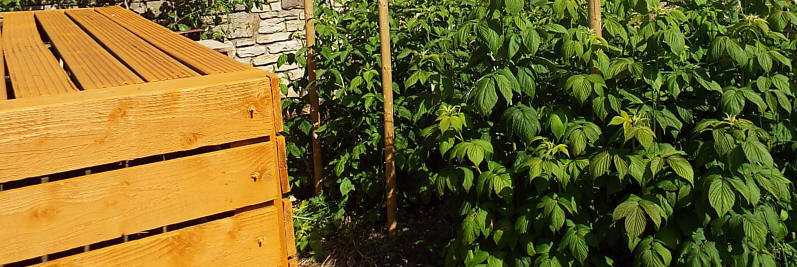
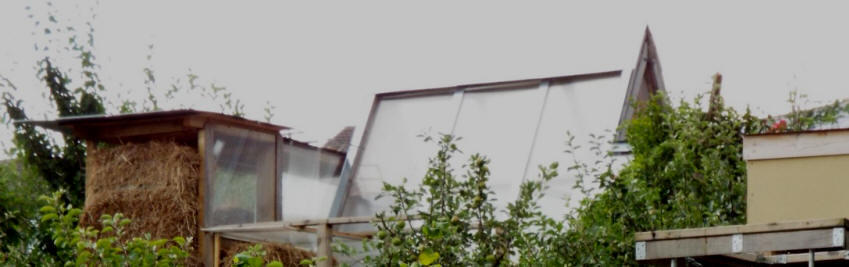
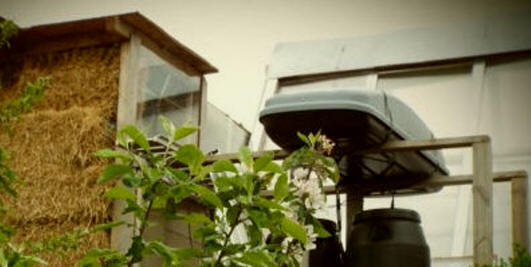
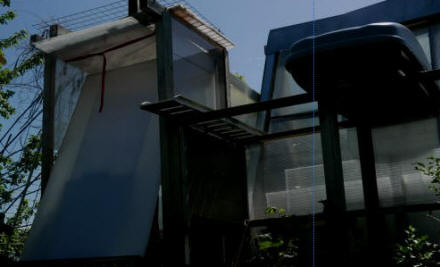
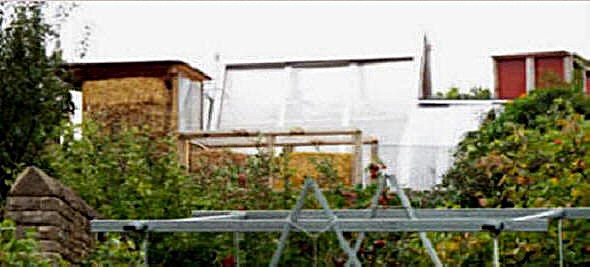


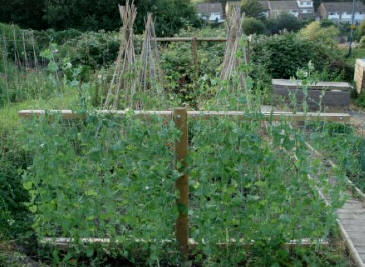
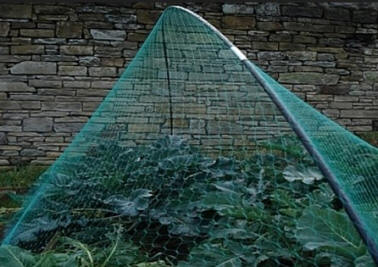
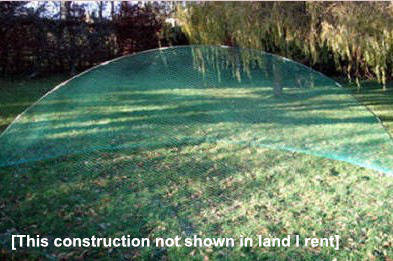





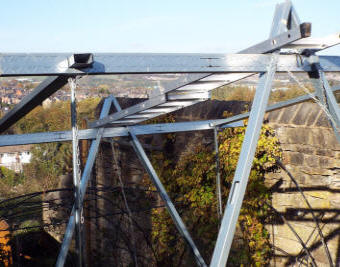


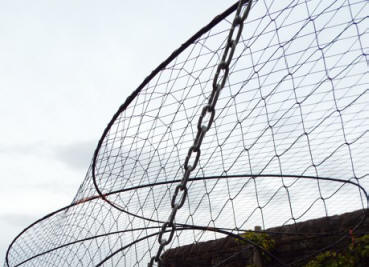




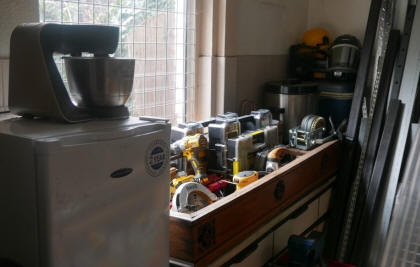

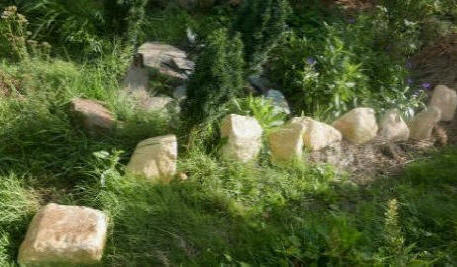


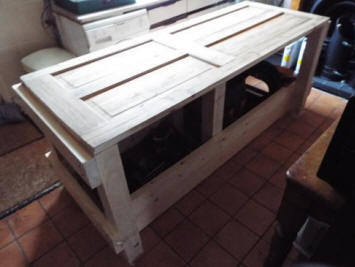
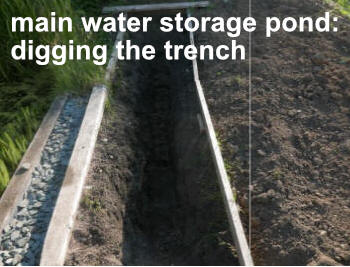

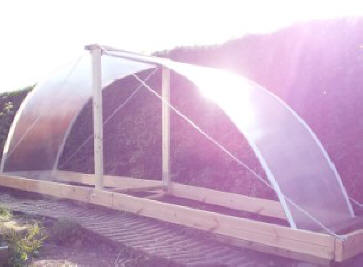
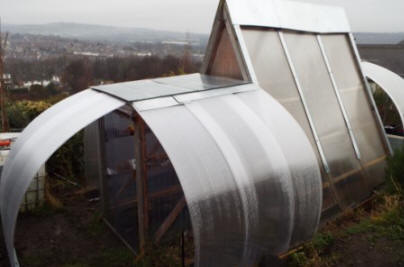
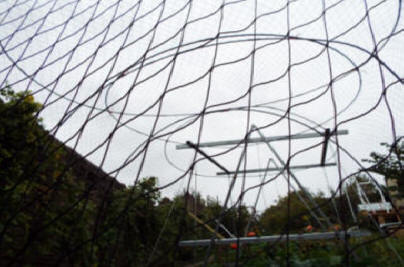
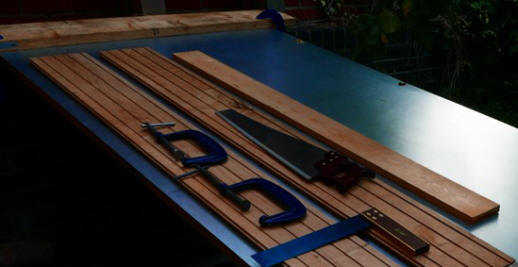
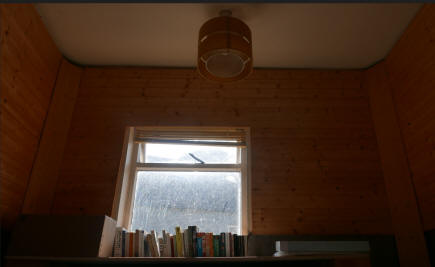
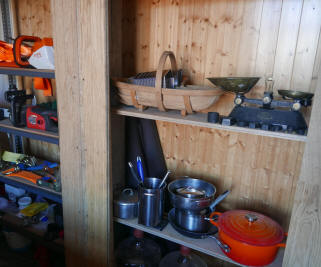
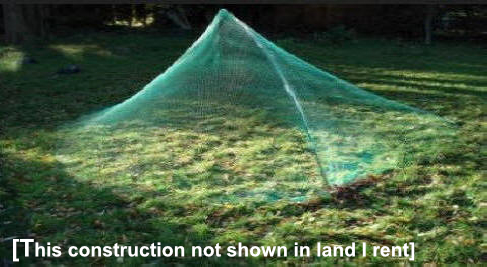
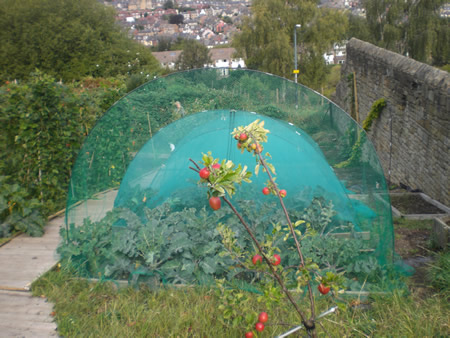
Row above, photograph 1: the large versatile structure I constructed using lightweight galvanized steel beams, used here as supports for netting. This netting cage and other
cage designs have been used to protect a range of crops over the years from damage by pests, including white and purple sprouting broccoli and Oriental vegetables, eg Mizuna.
My 'New Growing System' ['Trellising System constituting
integrated dual layer structural units for growing crops']
awarded United States Patent



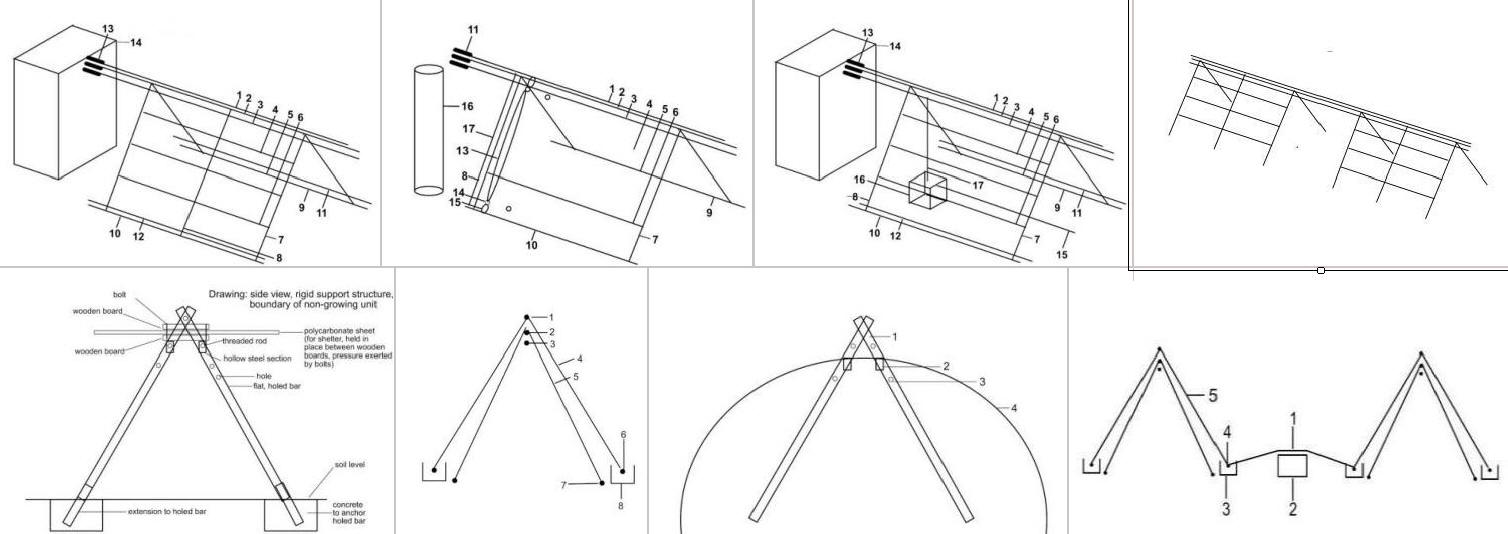
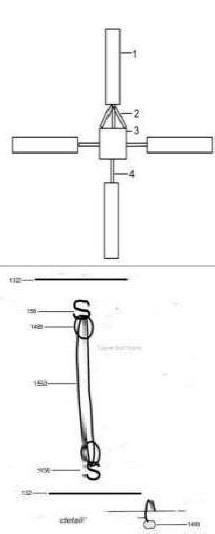
Click on official U.S. patent document
to view the pdf document on this site. Zooming in will be advisable in most cases to
obtain a text size suitable for reading, to a magnification of 150% or more.
The document can also be viewed on the Website of the United States Patent and Trademark Office.
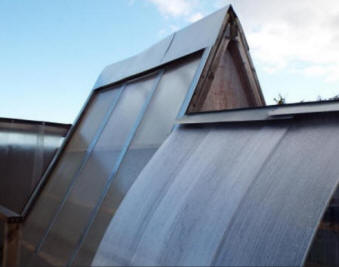
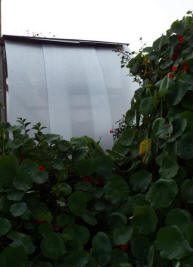
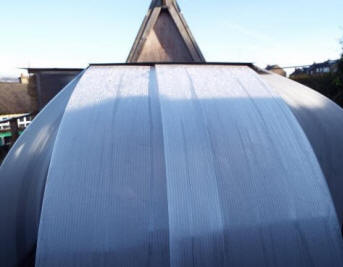
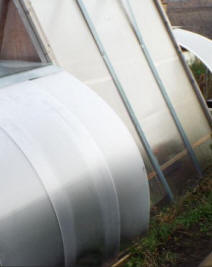
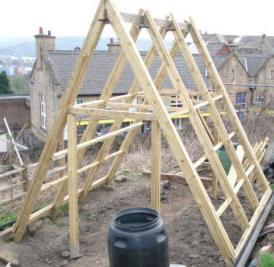

Above, 1st photograph shows New Greenhouse Design. The
core structure takes the form of a triangular prism (a shape with great
structural strength.) Around the core structure are
extensions, here
with curved panels. Three straight panels of the core structure are visible
on this North-facing side. There are 3 panels on the South-facing side. The
system has great
versatility. With all the panels in place, gutters and
pipes at the base can divert water collected from the roof to water storage
containers and ponds (dual-function, for water storage and to
benefit
wildlife). Panels can be removed and put back very easily. When most or all
of the panels are removed, crops inside the greenhouse can be watered with
natural rainfall. The system
has many advantages for water conservation.
It reduces reliance on mains water. It has many other benefits, e.g. for
temperature control. Ventilation is very important, to reduce or
eliminate overheating when external temperatures are high and for other
reasons. One or more panels can be removed and all the panels can be
removed, to give maximum
ventilation. Plastic coverings don't enhance
the appearance of a site, for most people. When polycarbonate sheets aren't
needed, none need be visible. One of the panels on the South-
facing side
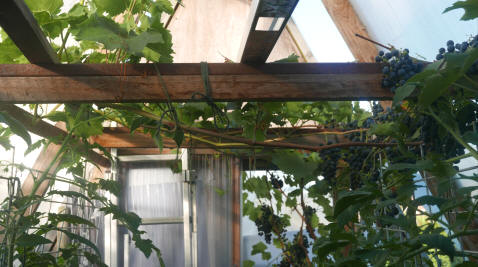
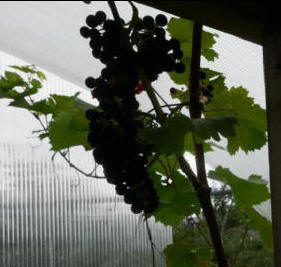
has been removed permanently. A grape vine in the greenhouse grows inside
the greenhouse, at roof level, and outside, higher up, above the roof.
The extensions shown
below, on the West side, include a 'solar
composter,' which speeds up the production of compost by the greenhouse
effect, a wildlife / water storage pond and other growing areas.
There's a much larger wildlife / water storage pond outside the greenhouse
and other water-collecting surfaces and water storage facilities.
An extension on the East side includes a
storage area for e.g. tools and supplies
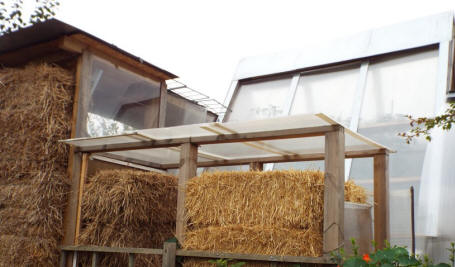
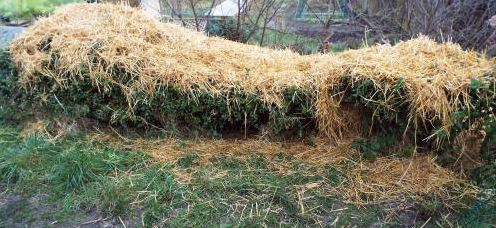
and a working area for e.g. propagation. A straw bale wall has been a
feature of this extension (shown above, also with a straw bale storage
area.)
The greenhouse has
been featured in an article I wrote for the magazine of the National Allotment Society.
My New Growing System for farms has the advantages of the New Greenhouse Design as well as many other features. From the official U.S patent document: ' ... the present invention
is a trellising system with modifiable components and configurations for growing, protected cropping, protected working, materials handling, water collecting and water conservation for
use in vineyards and orchards and as a polytunnel
substitute.' The New System has aesthetic advantages. The plastic sheeting
which forms part of the system is needed to secure
environmental advantages
but is unnecessary when external temperatures are high and no water can
be collected. Unlike the plastic of polytunnels, the plastic used in this
system can
be retracted. The plastic need not be visible when not needed.
The plant growth on the unobtrusive supports will be seen all the more
clearly.





 aaaaaaaaaaaaaaaaaaaaaaaaa

 \
\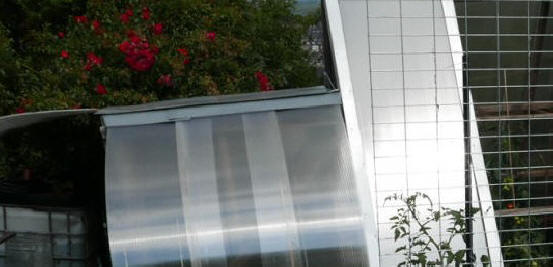
Row of Images above: Image on left, some Geranium
(Pelargonium) flowers in a container on the wall platform high above the
large growing area, some of it shown in the Image. The
crop being grown:
variety Kestrel. The same variety is shown in two images above, with much
more of this growing area to be seen.
Image in centre and Image on right:
red flowers of climbing rose, variety 'Olympic flame.' This was
planted next to a privet hedge on the lower boundary of the upper growing
area,
Plot 112, which is growing in a very awkward
sloping area, difficult to reach and keep in check by pruning. The rose
plant is very vigorous, competing very well against the privet and
now
suppressing its growth. I planted a climbing perennial sweet
pea, which has been able to suppress growth of a much smaller privet hedge
at the upper end of the lower allotment,
Plot 111. I also planted
hawthorn hedging in front of the privet hedge. This has grown well, allowing
the privet hedge be removed completely. I planted blackthorn hedging on part
of the
boundary with the neighbouring allotment. When I began to
cultivate this land, there was no hedging at all, and nothing to prevent
intruders from walking into the land I rent. I planted
gorse hedging which has grown very well. Its spines
effectively deter intruders. These hedging plants only cover a fraction of
the long boundary between this plot and the neighbouring
plot. I planted
five hazel trees along the boundary. These leave no gaps. The hazel trees
have many advantages, not least for wildlife. They produce hazel nuts in
abundance, support over
250 insect species - the male catkins provide an
early source of pollen for bees and other pollinators in late winter and
early spring - and very good nesting sites and shelter.
The multi-stemmed
growth habit offers the advantages of a hedge, forming an effective
barrier to intruders, with some additions, which are very easy to provide.
I don't coppice the
trees but coppicing provides wood which has many
uses in the garden and for traditional crafts. A short section of privet hedge
by the allotment path leading to the entrance to Plot 112 will
be left
for the time being. I encouraged two beech saplings in front of the hedge to
grow, and they've grown well. I intend to convert these trees into beech
hedging. I like native hedging
plants and have taken a strong dislike to
privet. A long length of privet hedge forms the boundary between Plot 112
and neighbouring allotments. My very small vineyard is next to
this
privet hedge. I've devised a method to partially suppress growth of the
privet without compromising the boundary. Without supplying any detail, I
intend to to construct a long solar
composter with one long, sloping
wall, made using some of the used polycarbonate sheets I have. These are
easily removable, for appearances' sake. Compost
materials will be placed
in the composter. Conditions in the composter will be favourable for the formation of compost but not favourable for the growth
of the privet plants. Increase in the width of the hedge,
on this side, will
be checked. It's likely that the privet hedge has been having an
unfavourable effect on the grape vines. This method is intended to reduce
its competitive advantage.
The polycarbonate sheets are easily
removable.
Below, image on the far right. This isn't a recent structure. In fact, it was the first structure I designed and constructed after taking on this rented land: a composter. It was used as
a composter for some time but then I began to use 'informal' compost heaps and the structure was used for a different purpose, storage. There are two composters up the hill,
not far away. The original composter is now available for the production of leaf-mould, to make use of the abundant autumn leaves in the area. Making leaf mould was amongst
the earliest gardening activites of mine, at a time when I had no allotments, simply a very small garden established on a small gardenless backyard. Leaf-mould is very low in
plant nutrients but makes very useful seed compost and can make a contribution to any soil.


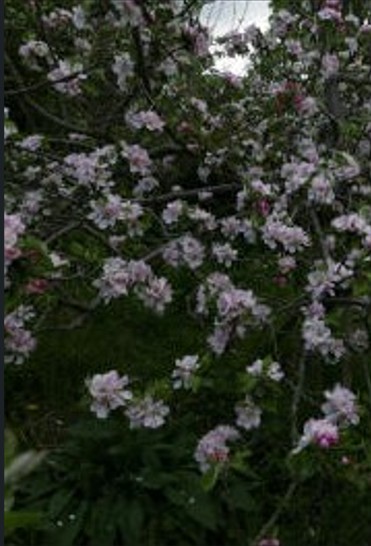
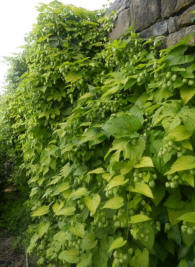
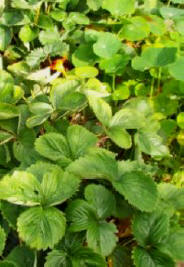
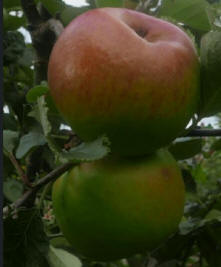
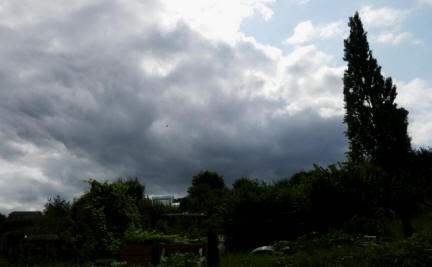
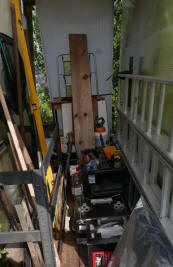


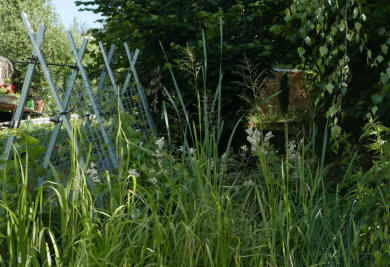

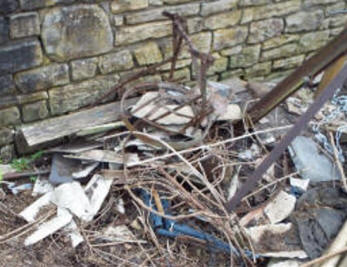
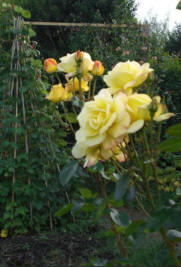
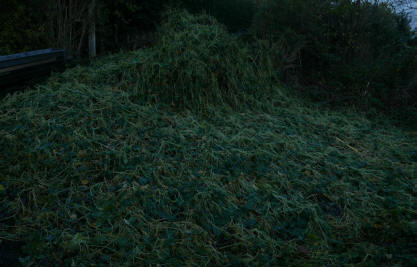
.Images in the row above: Images 1 and 2: the wreckage left after very strong winds destroyed the very old greenhouse which occupied this area for many decades before I took on this land.
Image 3, the debris to be found in one corner of the same allotment when I took on the land. Image 4, a Floribunda rose, 'Abraham Darby' which I planted in the upper allotment.
Image 4, the area occupied by Nasturtium, Tropaeolum majus, on a North-facing slope, shown in flower in some other images. The slope was steeper before planting, corrected with earthworks.[]]]]]
I cleared the site where the greenhouse had stood,
precariously, before it fell, and had all the debris removed in a
skip. I designed and constructed a greenhouse of radically new design.
I
ensured that the new greenhouse would withstand winds of any force,
except for exceptionally violent winds, the kind that would cause damage to buildings of brick, stone or concrete.
The main growing area makes use of straight polycarbonate sheets,
similarly one of the two large extensions, but the extension at the
other end makes use of curved polycarbonate
sheets. I've long experience
of using curved (and straight) polycarbonate. Proper use of curved
polycarbonate sheets allows the construction of surfaces with great
structural strength
and remarkable resistance to wind damage. I've
provided quite detailed information on the site about these features, the
flexibility of the system. It allows the removal of one one or
more of the
straight (as well as the curved) panels. All of them can be removed if
necessary - when the external temperature is higher than 30 Celsius, then no
heating by the greenhouse
effect is needed. Removal of panels allows natural rainfall to water the
crops inside the greenhouse, avoiding a great deal of unnecessary work. The
panels can be replaced as easily as
they are removed.
I cleared and removed a great deal
of the debris shown in Image 3 but I found that the debris went down to quite a depth and
that there was a great amount of asbestos sheet. Fragments
of asbestos sheet
can be seen in the photograph. I planted a vigorous
grape vine, Vitis vinifera Brandt near to the area shown, which produced grapes - small grapes in large quantities,
well worth having. The vine
has grown as far as the composter nearby and covers the roof of the
composter, which was the first structure I built after taking on these
plots. I now use the
composter for storage.
Below, some images taken in the summer and autumn of 2025: projects undertaken, land use, miscellaneous images, accompanied in some cases by more than minimal text.

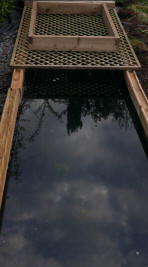

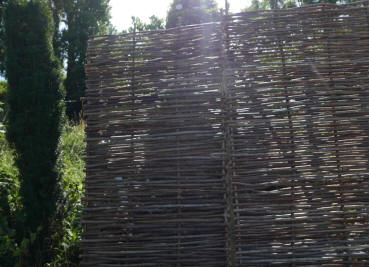


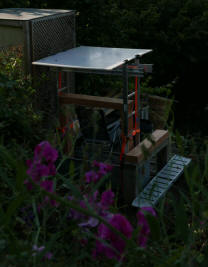

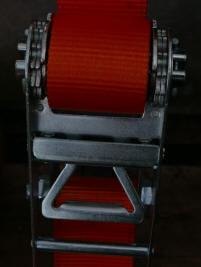
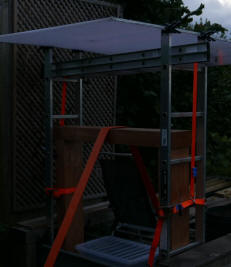
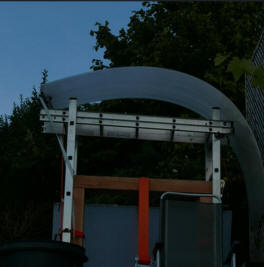


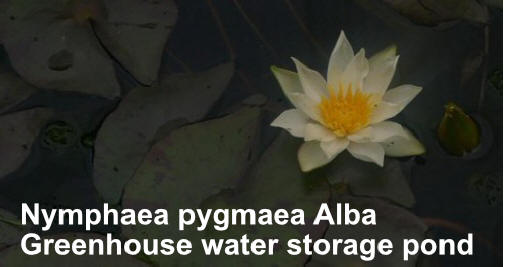


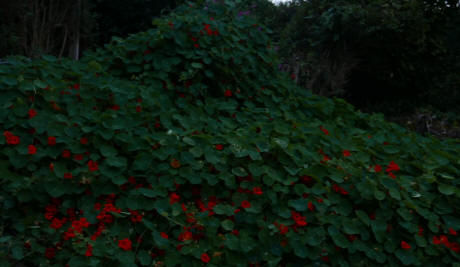
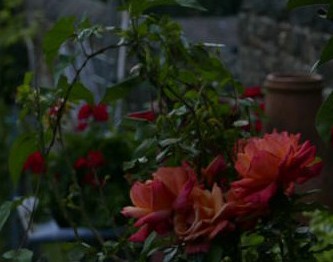
The Paul Hurt Design-Construction [PHD-C] Boat Project
This project makes it possible to build boats quickly, easily and cheaply. The boats have many possible uses.
In the section above on the PHD-C window-door system, there's information on the use of these boats for
moving pallets and other loads. The smooth, level surfaces of the boats are an advantage for these uses. I
explain below how the boats can be used in flood mitigation. They also have recreational uses and can be
used for maintaining water gardens. The boats can easily be disassembled and the components used for other
purposes, including: container gardening (with protected cropping), shelving, storage units, workbenches, tables,
display / presentation / publicity units. Like other PHD-C systems, this is a very versatile and flexible system.

1

2

3

4
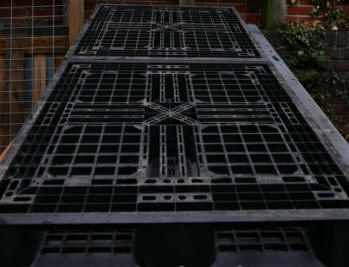
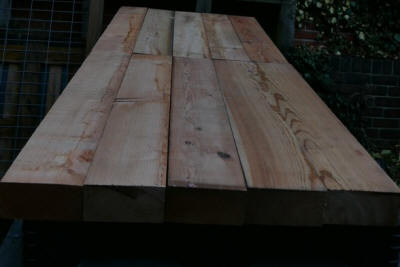
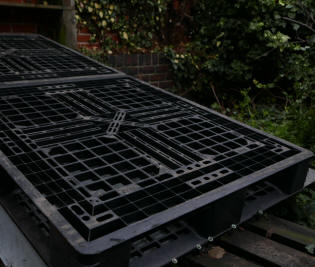
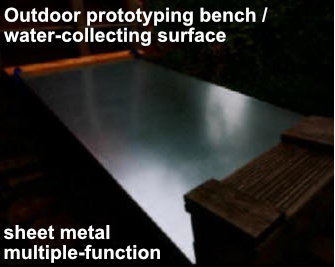
5
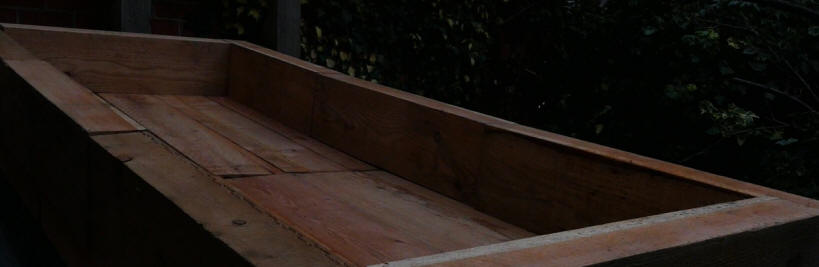
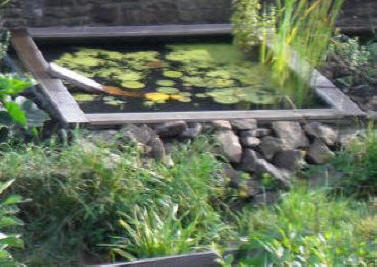
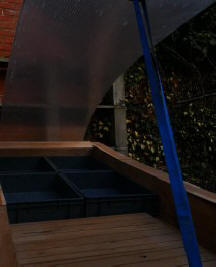
6
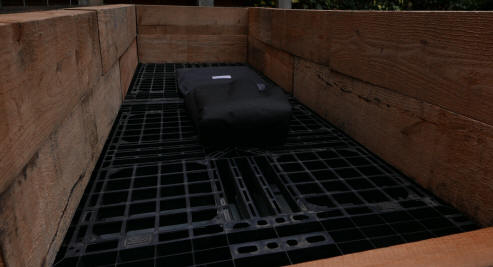



7

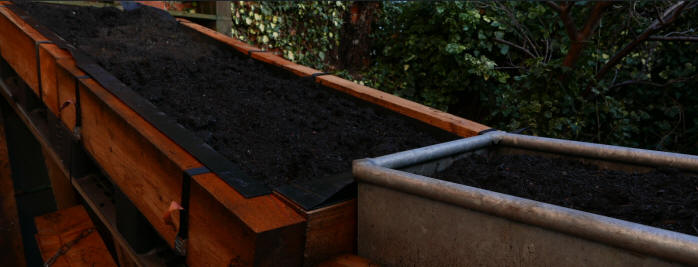
The extensive material on flooding and the use of boats of new design to help the victims of flooding is now on a new page Building boats and much more: a versatile, flexible system
Above, some of the images from the page. ROW 1: showing flooding scenes, rescue, damage. ROWS 2 AND 3: prototypes, examples of dual-unit boats with contrasted units. Only one
unit is based on larch (or oak) beams. The other unit is structurally very different. ROW 4: prototyping on the sloping prototyping bench (the slope has advantages in viewing and
working on prototypes.) The images show Dual-unit bases and dual-unit boats in a very basic, preliminary form, simply larch beams placed on the bases. These are the longer
beams used in this design.
Image shown in ROW 5: shorter larch beams and a thin surface material fixed to the longer larch beams have important functions in the design. The
'thin surface material' is galvanised sheet metal, not visible here. This has multiple functions. The functionality can also be achieved by other means. The small larch beams are
clearly visible at the perimeter of the structure. When the structure is used as a boat, this raised section prevents water from entering the boat in water which isn't flat calm.
This is the 1 layer configuration. To deal with rougher waters (but not very rough waters) another layer can be added. Not shown and not yet installed on this prototype, the methods
I've devised to prevent these perimeter components from moving. These methods allow these smaller larch to be quickly removed and quickly replaced, on one side or more than
one side. They will need to be removed on one side when bulky materials are brought on board, to give free access.
The second image in Row 5
shows the raised
wildlife pond I constructed many years ago, in the area now occupied by a
water-storage pond, as well as a growing area. This was the first
pond I
constructed in the land I rent. The pond which can be constructed according
to this much newer design is larger and much easier to construct than the
older pond. The sloping
board visible in the photograph is to allow
animals, in particular frogs, to get out of the pond. There's a similar
board in the water storage pond inside the greenhouse, which is frequented
by frogs.
The third image in Row 5 shows some work on the
issue of provision of shelter, for weather protection, of people and also
property. This is a further use for curved polycarbonate
sheets. For this
preparatory work, only one sheet has been used. Two overlapping sheets would
be necessary here. A second sheet was available but one sheet is sufficient
to obtain some
useful findings. This is a demanding application. Previous
experience and previous uses, which include various applications as
greenhouse extensions, have made it possible for me
to build structures which can withstand very strong winds without any damage. If a boat is used in a static or semi-static capacity, as during flooding, then methods are available to
incorporate shelter without too much difficulty. The movement of the boat can be constrained, to prevent lateral motion and allow only upward and downward movement. When the boat is
used as a sailing boat, then the problem is much more challenging. The polycarbonate sheets can act as sails and the effects can be extreme. The situation becomes more manageable
when the boat is carrying a large, heavy load, one which is of appreciable height. This kind of load has great inertia and can provide gives and secure fixings for attachment of straps
or chains which can prevent flexing and other distortions of the sheet. In practice, sheltered or fairly sheltered conditions would be needed and the sheets would be taken down if the
wind is obviously excessive. The sheets could be stored along the sides of the boat. They could be added to polycarbonate sheets which form the bows of the boat., if these are being used.
When the sheets are being used above the deck and in contact with the deck at one end, the curvature of the sheets can easily be adjusted, to give a longer but lower protected area or a
shorter but higher protected surface. However, the length can easily be almost doubled by linking a second sheet to the first sheet, with some overlapping of the sheets. This is a procedure
I've used for other projects.
Other methods prevent movement of any chairs and tables on the deck, fix the rowing seat in position and allow for the installation of oarlocks to take the oars when the boat is propelled
by rowing. The containers, visible also in one of the photographs in row 3 above, can be increased in number or decreased. Oak panels, visible in the photograph in Row 4, can be
increased in number - they can also be varnished. Varnishing of the larch beams, some or all of them, is also easy to carry out, or relatively easy.
When additional components have been added, when
some modifications have been carried out, then this will look more like a
boat, less like a plain box structure, but function
determines structure
to a large extent. This is, after all, a flat-bottomed boat, with the
advantages of a flat-bottomed boat, such as the ability to sail into shallow
- very shallow - water.
This boat is designed to carry heavy loads, not
to win races. The modifications necessary for installing an outboard motor
at the stern (but either end of the boat can become the stern,
or the
bows) would make it clear that this is a boat, and no longer a garden-based
structure. The addition of oarlocks and oars, or a mast and sail, would
similarly remove any doubts.
When the structure in these photographs is used for other purposes, rather than as a boat, then the same components are used, or a selection of these, sometimes with a few more components.
ROW 6, Photograph 1. This shows part of the plastic base, with no horizontal larch beams in place. The vertical front of the structure, which is identical to the vertical rear part, clearly visible
at here, has been removed. This allows a better view of the interior of the structure, which now contains, just for display, a PVC pond liner, further back, and underlay, nearer the front. This
shows the configuration for container growing. For this use, the floor beams are unnecessary and can be used for other purposes. When the underlay and pond liner are installed, then this
makes a large raised container bed, suitable for growing a wide range of crops. This large bed is made up of two units, with two bases. More units can be added, to give a bed two, three or four
times as large. Alternatively, a smaller bed made up of one unit, with one base, can be built. Any bed can be divided to give two smaller beds, of varying sizes, by installing one or more divider
beams. Liners and underlay of a different size from the ones shown here are readily available. The liner and underlay can be arranged to cover this divider or a larger number of dividers.
When the liner and underlay have been installed, compost (or soil, or a mixture of the two) is added.
I've already designed an add-on bow structure, installed on the end of the boat acting as the bows, which makes the boat much more streamlined. The bow is of the kind named 'straight-
stem bow and is yet another use for polycarbonate sheets, here with a sharp bend rather than curved. The polycarbonate sheets shown in the second diagram in make up
double layers, for additional rigidity and structural integrity, with the sheets brought to a sharp frontal line. Bows with more than two layers can easily be constructed. There's insufficient
room on the prototyping bench to include an add-on bow to the prototype boat.
A polycarbonate sheet, straight or curved, can be
installed on the container bed. The curved bed can be made resistant to wind
forces more easily than the straight sheet, but the problems
aren't
substantial in the least. The polycarbonate sheets have these main benefits:
they allow for
protective
cropping, making use of the
'greenhouse effect' to raise temperatures inside the
structure, extending the growing season, making possible the growing of tender crops. They also achieve shielding of the compost from heavy rain, preventing it from turning into mud.
There are no drainage holes in the liner. It would be easy to make drainage holes, but in most circumstances, unwise - an intact pond liner is needed when the system is converted into a pond.
A further use is as a water collecting surface. This structure is on a slope and water is carried down to a water collecting / storage container outside the structure. For structures which are
non-sloping, a slope is easy to arrange. An additional row of horizontal shorter beams installed at one end, on top of the existing layers. The water collecting surface can be extended, if the
space is available. The space is unavailable in the
case of this prototype, which is installed in my very small backyard, with a
plum tree growing very near. There was no garden when I moved
into the
house. Extended water collecting surfaces can be constructed using more
polycarbonate sheets, or flexible polythene sheet material, generally
requiring a lightweight galvanized
steel support or more than one support, or black surface protection sheets which can be easily opened out or folded back in and which work very well when used for this different purpose,
water collection. There are various examples of this use in the photographs towards the top of this page, most of them laid on what were originally paths, and which can easily become paths
again by removal of the sheets.
The configuration for a wildlife or water storage pond is very similar - the pond liner and the underlay are installed on the base, but in this case, the thin sheet mentioned above is installed
on the plastic base. On this sheet the larch beams, longer and shorter, are installed and the pond liner and the underlay are added. The polycarbonate sheet (or sheets in the case of larger
systems) is unnecessary as a water collecting surface. Rainwater and other forms of precipitation can fall directly on to the water in the pond. However, polycarbonate acting to promote
the greenhouse effect will be useful in the case of more tender water plants, if any are grown. The polycarbonate will obviously not be used as a permanent fixture. It can be removed easily.
When the structure is used for growing plants, vegetables and fruit or non-edible plants, the plants grown can be perennial or annual. Growing perennial plants will need the structure, or
part of the structure in the case of a larger multiple-unit structure, to be available for years in many or most cases. If annual plants are grown, then changes of use are easy. For example,
amongst food plants, courgettes (but not strawberries), bush tomatoes, cordon tomatoes, broad beans, dwarf French beans, climbing French and runner beans, lettuces, cabbages and
potatoes could be cultivated. There are many other possibilities, of course. At the end of the growing season (which can be extended by using the protected cropping facilities), then
the structure can be put to an alternative use, such as water collecting and storage. Rain in late autumn and winter can be collected and stored, available for use in watering the plants
grown in the next season. The compost is easily
removed from the structure. I find a scoop, as used by bakers to transfer
flour, very useful for this and similar purposes. The compost can
be
stored for future use, with additions to restore full soil fertility before
use. A wildlife pond has to be regarded as a permanent fixture, although a
wildlife pond can occupy just part of a
multiple-space structure. A
water-storage pond is different. It can be drained, without wasting the
water, and then used for a different purposes, such as growing crops in
spring, summer and
early autumn.
If the structure is used as a viewing platform, then the pond liner and underlay are unnecessary, but can be kept in position. It will be necessary to move out of the way their topmost part,
to allow for installation of short horizontal beams placed on the vertical beam layers making up the rectangle, and at right angles. The same configuration is used to build a storage box.
As with all the applications of this very versatile and flexible system, smaller and larger structures can be built, from a size corresponding to 1 base, 1 unit to multiple bases, multiple units.
The storage box requires a door, or more than one door in the case of larger boxes. I don't provide the information for inclusion of these.
iIf the 2-unit structure shown above is increased, to give a 4-unit structure, then the water surface area becomes 3.52 square metres, which is more than sufficient for dragonflies as well as
damselflies to visit the pond. However, the depth of the pond is
important.
Dragonflies ideally need water no more than about 30 cm deep
and the pond as shown here is much deeper than
that. Dragonflies do not
need shallow water in all the pond. Larch beams placed on the base over a
proportion of the area before the pond liner and underlay are put in place
will give a
shallow area. If the main use of the pond is for water
storage, then the deeper pond can be constructed. If a larger multiple-unit
pond is built, there can be vertical walls only at the perimeter,
to give a pond with a single undivided space, or the internal space can be made up of two separate spaces, four different spaces, or a different number of spaces. Again, the system has the
flexibility to choose from alternatives. In this case, one space can be used
for water storage and another space, with a lower water level, to attract
wildlife such as dragonflies. Water lilies
can be planted in water
storage ponds as well as wildlife ponds, but these need to be non-native
plants. The native water lily, Nymphaea alba, is very demanding. It needs
water which is at least
1 metre deep and has a spread of approximately
120cm. The much larger ponds needed to accommodate Nymphaea alba can be
constructed according to this system but techniques are
needed which enable the walls of the pond to withstand the varying water pressures, including pressures much greater than the ones which are taken into account in these ponds with lower sides.
The third image shows a fork lift truck, which makes moving complete,
assembled structures very easy, provided the surface is suitable - firm and
level. The fourth image shows a hand truck.
A hydraulic hand truck is
capable of moving heavy structures and substantial quantities of components,
such as larch beams. They generally have a capacity of 2000 - 2500 kg, 2 -
2.5 tonne.
Hand pallet trucks can be bought for as little as £275.
ROW 7. I used the prototyping bench which supports the base and the layers of
this system - some possible configurations of the new system. There were
some problems which required
solutions, not problems to do with the main
system but problems to do with aspects of the system, but important aspects.
I found solutions which satisfy me and which I've tested. The bench is
in my yard. When I took on this terraced house, there was no garden, only the backyard. In the neighbouring backyard are the outside toilets which were used before the luxury of indoor toilets.
I grew up in a terraced house without an inside toilet or a bathroom. This
was no hardship. We brought the metal bath up from the cellar o Friday
night, bath night, and we had a bath one after
the other in the same
water. For use in the outside toilet, there was no toilet paper (or toilet
tissue). We had the use of squares of newspaper. There's a Monty Python
sketch about growing up
in poverty, with more and more exaggerated accounts. I had no interest
in gardening when I moved in, but in time, I began to take in interest. I
used a great many containers and filled them
with a mixture of things:
soil I bought and had delivered (very, very poor, infertile soil, with many,
many stones), compost I made, and leaf mould I made from autumn leaves
collected in the
area. I grew a wide range of vegetables and I planted a
plum tree, variety Opal, in the centre of the new garden. The fruit tree is
still there, still producing fruit, but when I took on my two
allotments, I felt no need to continue container gardening in the yard.
Now, I want to resume container gardening after an interval of so many
years. The main container is the single system container shown above, now
used as a raised bed, with the perimeter
walls constructed from larch
beams resting on the two plastic bases. There are two similar views of the
raised bed in the photographs of Row 7, containing compost which I bought in
bulk.
To the right in the photographs is a galvanized metal container, not part of 'the system.' This is filled with some of the compost bought recently. There's another, larger galvanized metal
container not visible in either photograph, at a lower level - resting on
the asphalt surface of the yard. I've chosen the crops I intend to grow in
each of these containers. They include herbs
as well as vegetables. I
intend to recycle the compost in these containers eventually, by adding the
compost to the soil which covers most of the garden. The soil needs
increased depth,
although the plum tree and the hedge on one side of the garden have grown very well in the soil available. I can fit in a vegetable crop (a very vigorous one) in the soil available, on the side
opposite the hedge. to
Next, some miscellaneous, supplementary information.
ROW 6 shows a forklift truck. Range is an important concept
for me. Range includes, of course, the small and the large, the very small
and the very large. I carry out work relevant to small-
scale gardening,
gardening on a larger scale and farming. The system which can be used to
build so many useful structures - a wide range of useful structures - can
accommodate carrying
of components using simply muscle power, by hand, or
by using a trolley or wheelbarrow, but it can also incorporate machine
handling, industrial methods. The units which make up the
boats, the
container growing structures and the rest, can also be moved in bulk, by
forklift truck. I don't own a forklift truck but for commercial operations,
the fact that the design includes
this facility is important.
The plastic bases are essential in these designs. The number of bases determines the number of units. The number of units can be increased to give larger boats, wider and / or longer.
A smaller one-unit boat can be constructed. All the boats shown here are one layer boats, with a single layer of larch (or oak) beams. Multi-layer boats can also be easily constructed, with
two or more larch layers, capable of carrying bigger loads, but one-layer boats can carry a substantial load. Each of the bases shown has a rating of 1 tonne. When used in boat form, when
the boat is floating, then the upthrust from the water changes the rating appreciably, allowing heavier loads to be carried.
u
If the dual structure here were to be launched in a suitable pond, lake or river (not the sea), then obviously, the two units would quickly separate. The beam-superstructures would remain
on the bases only if the water were perfectly calm or very calm. I don't provide information about the 'binding' methods I've devised to ensure that the components of a boat constructed
according to this design stay together. I'll be providing only the most basic information about any of the additional structures and the necessary fittings and equipment added to the
decks. These would differ markedly, depending upon the intended use or uses. I don't provide information about the fixing methods I've devised to ensure that the additional structures,
fittings and equipment stay in place. The page 'Building boats and much more: a versatile, flexible system' does supply some information about these matters in connection with dual-unit
boats with contrasted units, the boats illustrated in rows 2 and 3.
in
The boats which can do something to mitigate some of the effects of flooding can also be used in very different ways and propelled in different ways., including propulsion by punting.
One of the various uses for the boats is maintenance of ponds and smaller lakes. These do need maintenance - for example, correction of plant overgrowth. Water lilies, despite their
beauty, can become too much of a good thing. They need taking up and periodic division. This work needs a boat but the boat won't be used very often for this purpose, although a
boat would be very useful for other purposes. This design allows the components to be used for other gardening work as well as non-gardening work. A large and sturdy table which
lasts a very long time and can withstand any weather conditions can easily be constructed using some of these components. The table can be quickly built using the larch beams
which are smaller in length (but with other dimensions the same as the longer beams). These beams are used as uprights, supporting one or more of the bases, which now act as the
table top, with the thin surfacing material fixed to the table top. This arrangement gives a table with a convenient height for very many purposes. Instead of acting as a table, this makes
a very strong and useful workbench, again, at a convenient height for very many purposes. (The workbenches illustrated on this page were constructed years ago, before this system.)
Other configurations make it easy to construct platforms. I find that viewing platforms and sitting platforms in a garden enhance the experience so much. So much more can be gained
by viewing the garden from above. The fact that the increase in height is very modest doesn't impair the experience. The components can also be used to construct the basic framework
of garden sheds. The plastic bases used in this system make very good bases for sheds.
The page
Building boats and
much more: a versatile, flexible system will
contain much fuller information about the structures which can be built using the
components bases
and beams, together
with other components, generally few in number. I
don't give information on this page about use of this system to build -
quickly and easily - storage units and shelving units. The shelving
system referred to in an image on this page is an earlier system, making use of different components, oak panels and straps - nothing else. No screws, nails or other fixings are used and
there are no woodworking joints. This is a radical design. Facilities for presentations, displays and publicity are described in quite a detailed way on this page, below, but don't embody this
design system - but these different systems can be integrated.
Below, an image which shows an integrated system. To the left, a piece of furniture which was been in place for a long time. Here, it supports a colour ink-jet printer and a monochrome laser
printer but the structure has many uses. Some images on this page show the structure after installation of a mechanism and cutting head. After installation of a hydraulic jack, it becomes
a log-splitter, useful in providing firewood for the stove in this room. To the right, a much newer structure, which belongs to the same system as the one which generates such different
constructs as boats, container growing units, raised water storage ponds, raised wildlife ponds and furniture, amongst others. The structure in the image below has many possible functions.
One use is as a counter / bar table, in conjunction with a counter / bar stool, for eating and drinking. Another use is as a small workbench. The structure is very sturdy but can be assembled,
disassembled and moved very easily. After installation of some additional components, including a hydraulic jack, this structure, like the one next to it, can be used to split logs and as a
fruit press. The conversion process takes very
little time. The upper surface of the structure clearly visible is made up
of grooved oak boards, not the upper surface of the larch beams. These
boards are unvarnished. The beams are unplaned and unvarnished, as in all my use of
these beams.
I appreciate varnished surfaces very much but realistically, I don't have
the time to
carry out varnishing.
of

B
Boats in the new system described above would make good
punting boats - and modifiable, to make different sizes. Below, Image 1,
punting on the River Avon - not the British River
Avon but the River
Avon at Christchurch, New Zealand. Other images: views of 'The Backs' and the River Cam at
Cambridge, with punts. Image 2: Clare College building and King's
College Chapel seen from The Backs. Image 3: Clare Bridge. Image 4: Trinity Bridge. Image 5: Mathematical Bridge, Queens College. Images 6 and 7: The Bridge of Sighs, St John's
College. Image 8: View of the River Cam near Trinity College. These photographs not taken by me.
For more on Cambridge University, see my page Cambridge University: mediocrity and stupidity (which now includes comment on some other universities) and the very new page
Cambridge University Updates. (the updates include / will include 'Personal experience, Cambridge excellence and more on Cambridge mediocrity and stupidity.)
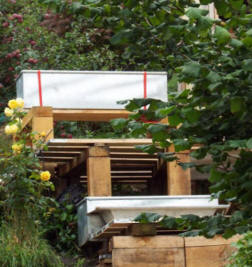

The third photograph in the row shows a new solar composter, with significant advantages. Small quantities of compostable material are easily inserted in the semi-circular
opening just below the apex of the curved
polycarbonate sheets. The opening can be closed by inserting a smaller
polycarbonate sheet, if it's preferred that there shouldn't be
any gap. The photograph gives a view looking
South. The fourth photograph also shows a view looking South but also shows the East facing
side of the
composter. A vertical panel of woven hazel conceals the entrance to the composter. By removing the panel, which takes hardly any time, and lifting the edge of the curved
po/ycarbonate, bulk materials can be brought into the composter. A wheelbarrow can be brought into the composter for this purpose. The large white component ,
only one side visible here, is a large box which is placed over large water storage barrels on trolleys. Its main function is to protect the wheelbarrows from rain.
The structure was originally intended to be a raised water storage pond. It can easily be used for this purpose, by inserting pond liner and underlay to give a rectangular
water storage space, the outward force exerted by the water resisted by the opposite force exerted by the wire mesh panels and polycarbonate sheets.
The site chosen for the solar composter is next to the platform, of various levels, shown in the first photograph above. I built it a long time ago. Later, I added more platforms,
smaller. I built an extension to the platform for storage, of produce and materials. The pond has been installed in front of the extension. Years after the extension had been built,
I placed a straw bale wall in front of the extension and in contact with it. This is shown in the second photograph above. There are strong straps to prevent the bales from falling
forwards. Before I put the wall in place, I planted a yew tree in front of the wall with a distance of 90cm between the two. The columnar yew tree, one of eight, and the smallest, is
Taxus baccata Fastigiata robusta. Together, these trees occupy a very small area of land, not in the least significant, but the trees themselves have great significance for me.
The platform in the first photograph has been modified radically since it was constructed. The large galvanized container on the highest level is still there. It was used for
water storage but now forms part of the apple / grape press
shown on this page in various images. The two large water storage
barrels are on the lowest of the three levels. In
the photograph, another
galvanized container can be seen on the lowest level. This is still there
and has its original function, water storage.

com
Image above, a new water storage pond, but not the newest pond. This is a water storage pond, not a wildlife or wildflower pond but I did plant a water lily, not the native water lily,
Nymphaea alba, the water lily I planted in the large wildlife / wildflower pond lower down. Instead, I planted a water lily with a similar appearance but more suited to this smaller pond,
Marliacea albida. A dragonfly, the Southern Hawker which visits the wildlife pond, is now a visitor.

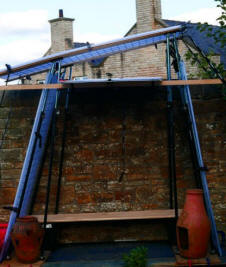
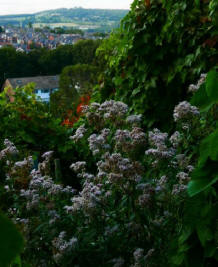

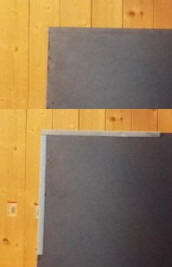
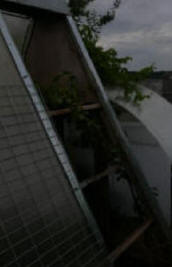


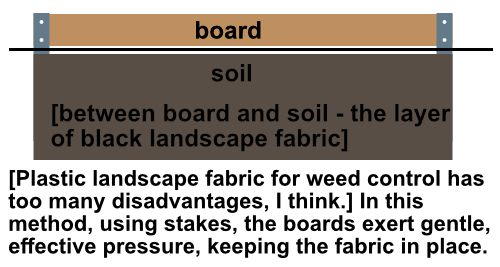
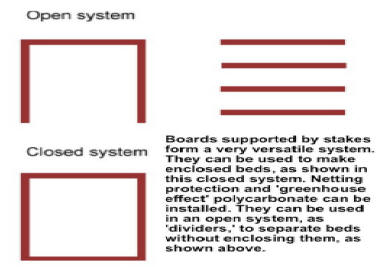


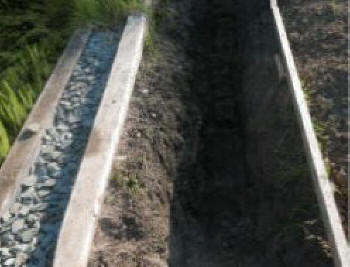

Above, some diagrams and photographs showing the uses of boards supported by stakes. The stakes are easily attached to the boards at both ends by using screws located
in the holes of the stakes. A primary
advantage is that the boards last for much, much longer than boards resting
on the soil, the usual method, as the boards are far less
exposed to
water in the soil and water on the soil. Enclosed beds can be made without
the need to join the boards with any woodworking joints. Even the use of
screws is
unnecessary in many cases. Boards can be used as 'dividers,'' one or more boards placed end to end, standing with simply the stakes for support. (In some of the photographs
below, there are boards placed flat on the
soil as well - these were placed temporarily or were placed on
water-draining surfaces. In the case of the path shown below, the boards
are placed on a ladder laid on the ground, to give a 'raised path,' with
advantages in very muddy conditions. ) Boards forming 'closed systems' can
become cloches, if solar
plastic tops are put in place to give
warming by the greenhouse effect. They can become beds for protected
cropping, if netting tops are put in place. Landscape fabric for weed
control is easily moved (or can be blown away) by wind. This system gives a
neat way to keep it in place. Landscape-fabric-beds can become growing beds
when the weeds have
been eliminated. Closed and open units incorporating
stakes can be moved very easily. The boards can be removed very easily and
relocated simply by removing the stakes
from the soil and pushing them into the soil in the new location. The stakes can also be easily removed from the boards and the boards can then be used for different purposes,
for different projects. A system of narrow beds can be replaced by a different system, of larger beds or much larger beds. It allows land use to become much more free,
allowing for much more experimentation, with far more possibilities.
(3) Interlude: Controversies, comment at very different levels -
international, national, regional, local - activism in very varied
spheres. Includes the project 'Shambolic Sheffield: Something
is rotten in the Shambolic City of Sheffield.' Beginning with the
Green Party: Sheffield branch, the current Green Party MPs, two
Green Party 'national treasures.'


Above: MP1, Hannah Spencer; MP2, Carla Denyer; MP3, Siân Berry; MP4, Ellie Chowns ; MP5, Adrian Ramsay
Above: Green Party MP6, Caroline Lucas; Natalie Bennett, a Green Party member of the House
of Lords (unelected); Jonathan Bartley, formerly co-leader of the Green Party with Caroline
Lucas, then co-leader with Siân Berry (until July 2021.) In preparation: a profile of Jonathan
Bartley, to be added to this section.
Below, some sparse comments on a Green Party Grandee (or the Green Party Grandee) Baroness
Bennett of Manor Castle, based in Sheffield, and slightly longer comment on Caroline Lucas, who
used to be a Green Party MP - without transforming the political landscape.This material can safely
be omitted. To proceed, bypassing this material,please click here. I show that these aren't people to be
taken seriously. There's far more important material to follow, in image and text - not the material
which concerns other Green Party people but evidence which shows that they are hopelessly
mistaken and misguided.
I know enough about the history of Manor Castle to know that the Bareness's choice
of 'Manor Castle' was arbitrary. The Bareness's views are nothing special - predictable, Standard
Stuff, like the views of the slightly more substantial Caroline Lucas. The Bareness supports - but
of course - 'the boycott of Israeli artists, musicians and academics.' As does Caroline Lucas.
'Bareness: 'the state of being empty.' This applies to Caroline Lucas as well as the Baroness.
If the illusions and delusions and automatic reflexes which are substitutes for thought - all of
them plagiaristic - are stripped from these people, what we have left, in political terms, is a
blank, a hollow persona.
Natalie Bennett! Gordon Bennett! Boredom Bennett. 'Gordon Bennett is an English-language idiomatic
phrase used to express surprise, contempt, outrage, disgust, frustration or exasperation' (Wikipedia)
These are my feelings as regards the Green Party in general. I've learned by long experience to
expect nothing good from these people. These feelings include boredom. These people are tedious
types - types rather than individuals, with slight exceptions, such as Caroline Lucas, the author of
'Another England: How to Reclaim our National Story.' The slight exceptions include people with
ignorant, grotesque, bizarre views and severe limitations, such as Caroline Lucas, whose tolerance of,
support for Jeremy Corbyn makes it obvious that this is a past politician indifferent to political realities.
Caroline Lucas shows not the slightest interest in such realities as ones to do with security and defence.
She seems to think that 'progressive' views are ones with no disadvantages, intrinsically virtuous.
'Progressive' countries are vulnerable. Countries which make insufficient provision for defence are
vulnerable to invasion. Invasions do nothing to bring a country nearer to 'Net Zero.' After invasion,
the occupiers are free to neglect all environmental measures and the occupied have lost their freedom
of action. The occupiers are free to deport, torture, execute, to institute forced labour and slave labour.
Caroline Lucas emphasizes the natural world, but Caroline Lucas, like other Green Zealots, depends upon
advanced technology for safe drinking water, such as the chlorine 'ecocide' which kills harmful organisms.
She uses advanced technology to provide heating in cold weather - alternative natural sources of energy,
heating by peat or heating by wood, have environmental disadvantages, including pollution. This is counter-
intuitive but there are many other instances. Again and again, Green Party 'thinking' practises 'Alignment.'
By which I mean, putting all the claimed advantages on one side, all the claimed disadvantages on the other
side, and making claims which stress only the advantages, when in fact strengths have very often a close
linkage with weaknesses, good ideas a close linkage with bad ideas - and supposedly ethical, advanced,
'progressive' people may well be badly mistaken, catastrophically misguided - making excuses for or
indifferent to barbaric regimes such as Iran.
Green Party luminaries such as Caroline Lucas have failed to think things through on a massive scale. I'd
claim that the light shed upon our problems and our condition provided by such people as Caroline Lucas
is very, very limited. In some respects, these people are at a Stone Age level. Tools made with stone involve
use of a natural material, stone: Good. Tools made with steel involving industrial processes which create
pollution: Bad. But steel tools are essential, and machines made largely with steel are essential: not just
for such things as scythe blades but for combine harvesters. The agricultural methods which make use
only of hand tools are completely incapable of feeding large populations. Tools made only with natural
materials far more so.
Caroline Lucas seems to have no interest in steel, in steel production, the uses of steel. As a (very critical)
Sheffielder, I have a strong interest in steel. Whenever Caroline Lucas or other Green Party types travel,
in this country or beyond, they are dependent upon objects made with steel: trains and buses and ships
(the more 'green' options) or planes. But they live to a large extent in a narrow dream world.
These considerations are obvious, elementary, but Caroline Lucas ignores them. We can safely ignore
the ignorant and superficial opinions of Caroline Lucas and other Green Party types, generally more
ignorant and superficial than Caroline Lucas - even more ignorant and superficial than Caroline Lucas.
Obviously, not all the opinions of Caroline Lucas are ignorant and superficial, far from it.
Animal welfare issues are well down the Green Party's List of Important Issues but Caroline
Lucas has a strong interest in animal welfare. My own interest in animal welfare and activism
in the field is one of the reasons why I strongly support Israel.
Take a look at this video, showing some scenes on the streets of Gaza.
https://www.theguardian.com/world/video/2013/
dec/12/cattle-abuse-gaza-video
The video comes with this information:
Australian RSPCA makes this
comment:
... It is some of the most shocking and distressing footage we have seen.
The footage documents Australian cattle:
-
Tethered to poles, trees, and trucks on the streets
-
Being beaten and dragged by ropes off trucks without unloading ramps
-
Being dragged, man-handled and chased along streets by crowds of youths in a frenzy ...
-
Being stabbed in the eyes
-
Being kicked, pushed, pulled and tripped over with ropes to be forced onto the ground ...
-
Having their necks hacked, sawn and stabbed at with blunt knives
-
Being strangled by neck ropes while bleeding out
-
Israel hasn't taken the attitude that, faced by enormous threats, it can neglect every other
consideration but survival and protection. It recognizes that civilization requires care for
animals. Israel was one of the first countries in the world to ban the use of wild animals
in circuses, in 1995. Britain still has no national ban, but there are local bans.
Israel used to be the fourth largest producer of foie gras in the world. Unlike, of course,
France or Spain, it banned the production of foie gras, recognizing that the ethical objections
were unanswerable. I'm a vegetarian but not a vegan. My anti-vegan page has a section on the
cruelties of foie gras.
There are many other developments: animal rights / animal welfare activity in Israel has
developed enormously. Vegans in the Israeli Defence Force are given vouchers to buy vegan
food and aren't required to wear leather boots. Boots made with synthetic materials are
provided. Israel has never had a whaling industry but it joined the International Whaling
Commission so as to vote against any resumption of whaling.
It seems to me that Caroline Lucas has practised alignment. She has aligned Palestinians
with intrinsic virtue, neglecting to consider the objections to this view, completely unaware
of the many objections to this view, I'm sure. She has failed to examine the issues carefully,
she has neglected a wide range of relevant evidence. The context is far wider than she imagines.
She has neglected a wide range of relevant evidence in connection with environmental matters.
Here too, the context is far wider than she imagines - and consigns various views of hers to irrelevance.
More on Caroline Lucas and others, with a very brief extract from the writing of Caroline Lucas,
after an extended discussion of the Holocaust and genocide, with images.


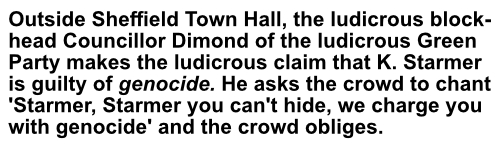

The result for the Walkley ward election: The Labour candidate, Hannah Cawley, beat the Green Party candidate,
Seb Van Bilsen Irias by a margin of 1,066 votes. Throughout, I regarded the Green Party candidate as unelectable.
Link: Green Party Feeble Fanatics. My view is that Councillor Alexi Dimond is an extreme pretend-politician. He's a supporter and
associate of the underwhelming candidate for election to Sheffield City Council in the by-election of September 17,
data analyst Sebastian Van Bilsen Irias, who would do well to examine and scrutinize much more carefully
the data he uses to arrive at his political opinions and political ambitions. I regard him as yet another
indoctrinated ideologist, no matter how sophisticated may be his use of data in his exacting day job.
He's venturing into a very different, less tidy, much rougher world. He chose to stand as a Green
Party candidate. The Party is subject to examination and scrutiny in the public domain and he
has to be prepared for comment and criticism - elementary, surely obvious considerations
but ones which are so often overlooked, neglected, disregarded or regarded as minor.
In Green Party circles, Confirmation Bias is rampant - they reject or neglect data
casting doubt on their views or showing that their views are irresponsible,
not at all realistic, their views reinforced by those of other believers.
Whether Seb Van Bilsen Irias is elected or not on September 17
the content concerning him will remain - be extended, in fact.
[Written before the result announced: not elected.]
[Below, left to right: Photo 1, Lauren Jones, campaign organizer for Andrew Davies (Photo 2), elected Green Party
concillor for Walkley Ward, Sheffield, May 2026 election, resigning from the post after 3 months; Photo 3, unknown
Green Party supporter; Photos 4 and 5, Baroness Bennett ('Boredom Bennett'), Green Party member of the House of
Lords - unelected.
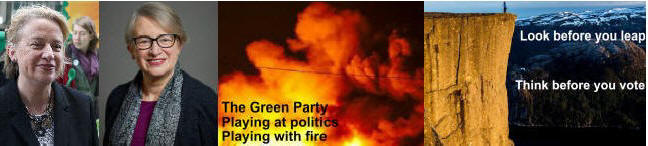


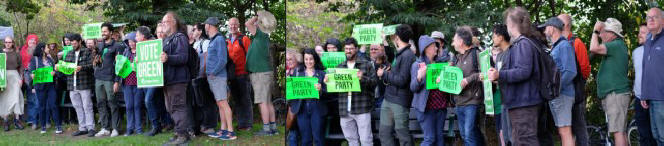





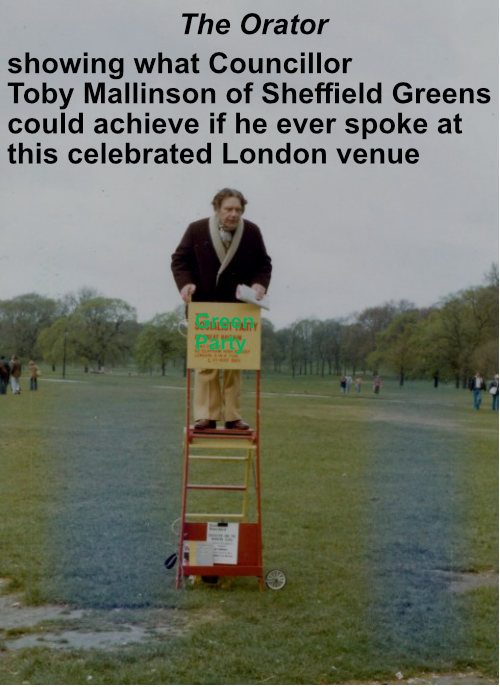


Amnesty International continues to document and publicize themassive use of the death penalty in Iran but for
all its good work, this is a tainted organization. Amnesty is far weaker - ineffectual amounting-to-useless in many
cases - in its attempts to stop or reduce the abuses it documents. The document below includes these calls for
action - which rely upon a completely naive estimate of the possibilities of diplomatic pressure in this case,
a completely naive estimate of the hopelessly compromised UN General Assembly (preoccupied with opposition
to Israel), the unreality of the fond hope that Iran will halt 'all planned executions. Amnesty:
'the urgent need for coordinated diplomatic pressure on Iran to halt all planned executions ... the establishment
of an international criminal justice mechanism for Iran through the UN General Assembly.'
Amnesty is justified in making such claims as these:
... a frightening and familiar pattern: denial of access to lawyers during interrogations, refusal to investigate
defendants’ claims of torture and other ill-treatment, accusations of involvement in the killing of members of
security forces and other violent and non-violent acts during protests, the use of televised forced ‘confessions’
as evidence, and trials before Revolutionary Courts that are inherently unfair ... Iranian authorities have executed
at least 34 individuals in relation to the January 2026 uprising, during which security forces used unlawful lethal
force on a massive scale, killing thousands of protestors and bystanders on 8 and 9 January.
It seems that Hannah Spencer, Green Party MP for Gorton and Denton, is the only Green MP to approve of the
hideous claim that Zionism is racist but wasn't around to vote for it at the party conference. The fatuous 'Joint
Statement' issued by Zack Polanski, Siân Berry MP, Ellie Chowns MP, Carla Denyer MP, Adrian Ramsay MP, Hannah
Spencer MP and others shows that their accusations of genocide, apartheid and other supposed Israeli crimes amount
to abysmal ignorance of the evidence against. Do they really believe that Israel is a far less humane state than Iran,
that Israel poses a far greater threat to the world than Iran? Can they not recognize realities? Have they no shame?
Below, a succession of photographs (with text) showing the genocide carried out by the Nazis.
This is real genocide: the killings in the Nazi extermination and other camps, the mass shootings
carried out by the Nazi Einsatzgruppen.
The Green Party candidates, councillors, MP's, functionaries, members and others who equate
Israeli action to defend themselves with these and other Nazi atrocities are hideously mistaken,
grotesquely ignorant. So is the equation 'Israel = racism' but the accusation that Israelis are guilty
of genocide, i.e, are mass-murderers, seems to me much worse. The Green Party 'moderates' who
make this accusation of genocide - routinely - are much worse than simply 'misguided.' In this section,
an examination of killing of civilians during military action, which has occurred countless times,
during military action carried out by Israel, Britain, the U.S. and other democracies: the military
realities. This is the real context, not understood in the least by Green Party people and so many
others. Their simple-minded deception and self-deception amount to a colossal failure to understand
complexities and realities: a form of reflex action, which by-passes the mind.
Caroline Lucas, writing at
https://x.com/CarolineLucas/status/2072285312953266283
'I've spent my entire political life as an ardent critic of the occupation,of the persecution of the
Palestinians ... The idea that I would suggest holding back now, when a genocide is ongoing, is ludicrous.
But just to say that we're adults in a political party ['adults:' is she aware of the overwhelming evidence that
these people are infantile?] - we're big enough to have slight differences of opinion [ so she claims that there
only slight differences of opinion between herself and Zack Polanski, and so many other pathetic, posturing
people.] She adds, ' ... we don't have to lose our minds every time a journalist tries to divide us with totally
misleading headlines that don't reflect what was actually said.' It's her views which are more than misleading,
ones which amount to abject falsification and misrepresentation. She is showing solidarity with ineffectual
misfits, deluded ideologists, people who could never form a responsible government. Caroline Lucas is
herself ineffectual, deluded, irresponsible.
But just to say that we're adults in a political party - and we're big enough to have slight differences of opinion & we don't have to lose our minds every time a journalist tries to divide us with totally misleading headlines that don’t reflect what was actually said 3/4
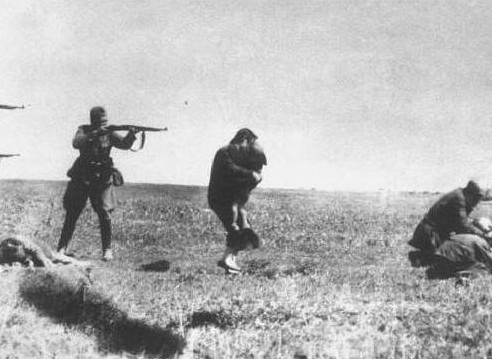
Row 1: Image 1, Ivanhorod, Ukraine. A member of an Einsatzgruppe shoots a mother and child.
Between 1941 and 1945, the Einsatzgruppen and their agencies murdered more than two million
people, mainly by shooting, including 1,300,000 of the 5.5 to 6 million Jews killed in the Holocaust.
Image 2, scene at Bergen-Belsen concentration camp, liberated by British troops, too late for many.
Image 3, scene at Buchenwald concentration camp, Weimar, after liberation by US forces.
Row 2: Image 1, Mizocz, Ukraine. A Nazi officer shoots women who survived a mass execution.
Image 2, Storow, Ukraine. Jews forced to dig their own graves before execution.
Image 3, Zboriv, Ukraine. A boy standing by the bodies of his family before being executed himself.
Row 3: Image 1, Auschwitz II, Jewish women and children from Hungary walking towards the gas chamber.
565,000 Hungarian Jews were murdered by the Nazis during the Holocaust.
Image 2, Auschwitz-Birkenau, Jewish children walk towards the gas chamber. 230,000 children, the vast
majority Jewish, were murdered there.
Image 3, showing women at Auschwitz after the liberation of the camp.
Row 5, Image 1. Part of the long column of children from the Lodz Ghetto, Poland, starting their journey to the
Chelmno Extermination Camp.
Image 2. Jews on the selection ramp at Auschwitz II, men and older boys on one side, women and young children
on the other. About 20 % were selected for forced labour. The rest were gassed. Of the approximately 1.1 million
Jews deported to Auschwitz, about 900,000 were killed almost immediately in the gas chambers.
Row 6, Image 1. Lietūkis garage, Kaunas, Lithuania, June 1941. After entering Kaunas, the Einsatzgruppe
released criminals from the local gaol and encouraged them to take part in the massacre of Jews which was
under way: 4,000 Jews were murdered in Kaunas. Approximately 190,000 to 195,000 Jews (out of a pre-war
population of roughly 208,000 to 210,000) were murdered during the Holocaust in Lithuania, a killing rate
of over 95% In this garage area in Kaunas, one man beat each Jew to death with a metal bar. The crowd
cheered as each Jew was beaten and killed.
Image 2. The man who carried out the beatings, identified as Juozas Surmas. A detail: he has blonde hair
but in Row 4 Image 1 is wearing a dark cap which conceals it. They are the same man.
Below, the Holocaust in Poland. Approximately 3 million Polish Jews were murdered during the Holocaust,
about 90% of Poland's pre-war Jewish population. The Holocaust, the Nazi attempt to kill all Jews: genocide.
Above, Hungarian Jews walking to the gas chamber.
From 15 May to 9 July 1944 the Germans deported
437,402 Jews from Hungary. Most of these were sent
to Auschwitz-Birkenau and most were murdered.
An SS man called Otto Moll played a prominent part in the
deportation of the Hungarian Jews. He served as the
chief of the crematorium at Auschwitz from 1943 - 1945p
The victims who were gassed were burned in ovens,
Usually, gassing was only used for groups larger than 200
people. In other cases, they were executed by shooting and
burned in very large burning pits. He repeatedly threw
children alive into the burning pits.
An Auschwitz survivor, Shlomo Dragon: 'Once we found a baby
who'd been stufferd into a pillow and was still alive.' The bundle
was taken to Moll, who was informed that the baby was alive.
'Moll took the kid to the edge of the pit, put him on the ground,
stepped on his neck, and threw him into the fire.'
From the Wikipedia entry:
'Moll would also place naked women at the edge of the pits, shoot
them in the stomach so they would fall over, and watch them burn to
death, beat people with clubs and iron bars, douse people with petrol
and set them on fire, set dogs on them, throw them against electric
fences, and smash children into concrete walls in front of their mothers.'
Below, Otto Moll:
Above, Auschwitz
Above, Henio Zytomirski, a Polish Jew who was 9
years old when he was gassed at Majdanek
extermination camp, 25 March 1942. This killing
centre and other killing centres went on killing.
On 3 November 1943 the mass extermination of all the
remaining Jewish prisoners in Majdanek and the Lublin
district of Poland took place. On that day, 18,400 Jews
were killed at Majdanek. After this, it was declared that
no Jews were left in the Lublin area: genocide
in the most complete form possible, the killing of
everyone in the target group, men, women, children
and babies.
Above, Jews from the Warsaw Ghetto who died
inside sealed railway waggons before reaching
Treblinka extermination camp, August 2042
Above, homeless children in the Warsaw Ghetto
Above, Jews killed during the Warsaw Ghetto Uprising

Above, ruins of the Warsaw Ghetto in 1945: the complete destruction ordered by Hitler after
the crushing of the Warsaw Ghetto Uprising
Above, left: Traumsee, a large lake in mountainous Upper Austria. On the shore is the market town
of Ebensee: Ebensee am Traunsee. The SS set up a concentration camp near Ebensee, part of the
Mauthausen network. Mauthausen was horrific and the Ebensee camp was horrific, with very, very
high death rates, mainly caused by malnutrition, starvation and exhaustion. Prisoners were worked
to death, digging huge tunnels to store armaments and to shield rocket and missile research from
Allied air raids. In this small area, then, the conjunction of contrasts - beauty, serenity, brutality,
cruelty, advanced scientific and technological practice. The camp was liberated by American troops
very late in the war, in May 1945.
Above, right: view of Mauthausen, on the banks of the River Danube, Austria and the site of
Mauthausen concentration camp.
-
Above, left: Naked Soviet prisoners of war in Mauthausen camp. In the short period between June 1941
and January 1942, the Nazis killed an estimated 2.8 million Soviet prisoners of war.
Right: Heinrich Himmler visiting Mauthausen, June 1941, shown talking to Franz Ziereis, camp commandant.
Mauthausen was an exceptionally brutal camp. It contained, in the quarry, the 'stairs of death.' Prisoners were
forced to carry blocks of stone weighing up to 50 kg up 186 stairs for most of the day, being whipped on by guard.
Prisoners were killed by being forced to take a cold shower, after which they were left outside in icy conditions.
They were drowned in barrels, thrown against the electric barbed wire fence, beaten to death - and killed in many
other ways.
Above, Block 11, a brick building in the Stammlager (main camp) at Auschwitz. To the right, the interior.
The building was used for executions and for torturing prisoners. To the left, between block 10 and
block 11, a view of the 'death wall,' reconstructed after the Second World War. A photograph of
SS-Hauptscharführer Gerhard Palitzsch, who carried out a very large number of executions at Auschwitz.
In some rooms, the 'Stehzelle,' very small, only a square metre in area, four prisoners were
confined, standing for up to twenty nights, in the day time forced to work. It was in Block 11 that
Zyklon B was first used to gas prisoners in September 1941, before being used in mass killings.
Extreme torture was practised in Block 11.
Palitzsch was probably the man responsible for the most killings at the death wall. He claimed that
he had shot some 25,000 people in the back of the head. A prisoner, Boleslaw Zbozien testifed how
he shot five family members, including the information that 'the mother kept the youngest, a baby,
tight to her chest. Palitzsch shot the baby in the head first. Then Palitzch shot the child standing
between his parents. The man and the woman stood motionless like statues. Then Palitzsch seized
the oldest child ... he threw the child to the ground, and standing on his back, Palitzsch shot him ...
Finally he shot the woman and then the man.'
A Polish resistance fighter, Witwold Pilecki, who volunteered to enter Auschwitz in September 1940,
reported that 'In block 11, Palitzsch, a particularly dedicated torturer, would hunt children. He told girls
to run around a closed yard an would shoot at them, killing them like rabbits. He would snatch a child
from its mother's embrace and would smash its little head against a wall, or a stone.'

Above, Czesława Kwoka, a Polish non-Jew, murdered 12 March 1943 at Auschwitz at the age
of 14, by an injection of phenol to the heart. Approximately 230,000 children under the age of 18
- and babies - were killed in the extermination camp after being deported.
Most Green Party MP's objected to the "Zionism is racism" text but all the Green Party MP's have
attitudes to Israeli-Palestinian issues which are ignorant and harmful. After the 'Zionism' vote, they
issued a joint statement with Zack Polanski and others - a bad mistake. For one thing, they were
aligning themselves with a leader who has been receiving strong criticism from many different groups
and individuals, for many, many reasons. Distancing themselves from such a figure would have been
the sensible course of action. Most importantly, in the statement, they affirmed that they would 'continue
to stand in opposition to genocide, ethnic cleansing, apartheid and the illegal occupation.' This is the
result of 'reflex thinking,' thinking which is hardly thinking at all, an automatic response which bypasses
thinking, a statement which is simply a quiet form of slogan-shouting.
The claim is that Israel and so many Israelis are mass-murderers, like the Nazis, that they are like white
South Africans of the apartheid era, when the facts show that Arab Israelis face nothing like apartheid.
They are claiming in effect direct links between Israelis and Nazis.
The position of these Green Party MPs is untenable. To claim that the Israelis have been practising
'genocide' is claiming, in effect, a linkage between the Israeli state and the Nazi state. To imagine that
not endorsing the equation Zionism = racism they are taking a 'sensible,' moderate approach overlooks
their insistence that Israel is guilty of genocide.
But the European Greens are guilty of the same disastrous error. The page
https://europeangreens.eu/news/egp-position-on-motion-on-the-middle-east-at-gpew-congress/
gives the 'EGP position on motion 'Zionism is racism' at GPEW [Green Party of England and Wales]
Congress. Their position is that the members of the European Greens 'unequivocally distance
ourselves from it' but the next paragraph unequivocally states,
'We condemn in the strongest terms the genocide against Palestinians and the human rights abuses
committed by the current Israeli government and have consistently called for EU sanctions against
Israel's government.'
This is yet another statement which treats the claim of genocide as obvious fact, without providing
any evidence for the claim. The European Greens have to be challenged. They are not what they
seem. This is yet another organization which assumes that Israel is the foremost offender against
civilized values, yet another organization which ignores the realities of the situation.
The statement includes this, ' ... the fight against antisemitism and for human rights is an essential
part of our political agenda.' But their ignorant assumption that Israel is a nation of mass-murderers
encourages anti-semites.
A very important reality ignored by the Green Party MPs and the European Greens and many, many
others is this - a Palestinian state would be vulnerable to invasion by one of the many terrorist
organizations in the Middle East or a state such as Iran. A Palestinian state would not have the
resources to defend itself. As a matter of strict fact, it is only Israeli power which has protected
Gaza and the West Bank from incursions. In the Second World War, it was British power which
protected the Republic of Ireland from invasion by Nazi Germany.
In the case of Nazi genocide, armed conflict to defeat Nazism was ethical and realistic. Do the
Green Party MP's take the view that violence and armed conflict are ethical and realistic ways
of defeating Israelis? Their claims do nothing to discourage Hamas and other terrorist organizations
supported by Iran. Their claims are harmful and not based on evidence. They haven't produced
detailed evidence for their claims so far. Are they able to provide the evidence needed to support
their claims now? If not, why not?
More images, a very small sample of the very large number available, concerning allied military
action during World War II which had a very high cost in terms of civilian lives and property, in
the successful effort to defeat Nazi Germany and Japan. Bombing operations were carried out
for a large number of very good reasons, for example, to reduce the number of allied military
and civilian casualties, to bring an end to the hostilities as quickly as possible. The Nazi and
Japanese forces and their governments were determined to go on fighting as long as possible,
under the illusion that they could still win a war which had already caused catastrophic harm
and which they were certain to lose. Some of the allied bombing was excessive, it can be
claimed - but any claim that for this reason, the allied forces and governments were 'just as bad as
the Nazi and Japanese forces and governments' is hideous misinterpretation.
Above, left. The German city of Cologne was bombed in 262 air-raids by the Allies in World War II. There
were 20,000 civilian casualties. On the night of 30-31 May 1942 there was a thousand bomber raid. In 1942,
Cologne was a central site for the detention and deportation of Jewish men, women and children to the
extermination camps. W. G. Sebald gives the information that 'at the end of the war ... there were 31.1
cubic metres of rubble for everyone in Cologne' ... and 42.8 cubic metres for every inhabitant of Dresden ...'
('On the Natural History of Destruction.')
Above, right. Bombing of Hamburg, the damage in just one small area of the city, the Eilbek district.
Hamburg's shipyards, U-boat installations and oil refineries were attacked throughout the war - and
civilian housing was destroyed. In a single operation, 'Operation Gomorrah,' in July 1943, an estimated
45,000 people were killed in Hamburg, wounding 180,000 others. At the beginning of World War II,
Hamburg had one of the largest Jewish communities in Germany. Between 1941 and 1945, Jewish
residents were deported to ghettos and extermination camps. The last deportation train from Hamburg
was on February 19, 1945.
The Germans killed 51,509 British civilians by bombing during World War 2. It was the Germans who
began the bombing. If the Germans had been unopposed or the opposition to their war aims had failed,
there would have been the consequences familiar to the peoples of the European countries which were
invaded and occupied - executions, mass killings of Jews and non-Jews, deportations. It was essential to
defeat Nazi Germany but to defeat Nazi Germany at the time by use of the British army was out of the
question. It would be a long time before the allies were strong enough to return to Europe and defeat
Germany - and when that was possible, it was impossible to avoid killing many, many civilians. So, the
RAF began to bomb Germany, at first taking great care to avoid civilian casualties - but it was found
impossible to maintain this policy. Realism required its abandonment. Follow a 'higher ethical code'
and fail to defeat a barbaric enemy for certain. Follow a realistic ethical code and have a realistic
chance of defeating a fanatical and barbaric enemy. The United States followed a restrained policy
in the air war in Europe - bombing by day, minimizing civilian casualties, but ineffectual by comparison
with the British policy of night bombing, but to defeat Japan, which was continuing to resist after the
surrender of Germany, America turned to bombing with far less restraint. Japanese civilians were
killed on a massive scale. Japan continued to resist. If America had invaded Japan with land forces,
American casualties and Japanese casualties would have been on a massive scale. America dropped
an atomic bomb on Hiroshima and there were still Japanese calls for continued fighting. The second
atomic bomb, on Nagasaki, settled matters. Japan surrended. The long, bloody series of battles was over.
Above, left. A section of the heavily bombed city of Nuremberg. In one night alone, 2 January 1945, bombers
dropped 6,000 high-explosive bombs and a million incendiary devices. The city was an important economic
and infrastructure hub and the city of the Nazi Nuremberg rallies. Throughout the war, Jews were deported
from Nuremberg. Not all were murdered in the gas chambers. Others were worked to death or shot.
Above, right. Destruction in the French city of Caen after allied troops had landed in France.
From the Wikipedia entry:
- Strategic Importance: Caen was a vital road, rail, and river junction in Normandy that the Allies needed to
- secure quickly for airfields and to break out into open country.
- Scale of Destruction: Roughly 70% to 80% of the city was completely destroyed by heavy Allied aerial
- bombardments and artillery fire, including massive raids on D-Day ...
- Casualties: Thousands of French civilians died during the bombardments and fighting (estimated around
- 2,000 to 3,000 deaths), and tens of thousands were left homeless.
-
Duration of the Battle:
While the Allies originally hoped to capture Caen on D-Day (June 6,
1944), fierce
resistance from German Panzer and Waffen-SS divisions meant the city was not fully liberated until July 19, 1944.

Above, the 'Batle of the Bulge:' the bombing of the Belgian town of St Vith by the RAF. Nazi Germany
occupied Belgium from 28 May 1940, following invasion of the country and defeat of the Belgium army.
Germany had invaded and occupied most of Belgium during World War 1. Belgium was liberated by
allied forces between September 1944 and February 1945. As in the case of other countries occupied
by the Nazis, liberation was an immensely difficult and generally long process, and costly in lives,
including civilian lives. The Nazis fought with fanatical determination, in many cases up to their
general surrender.
St Vith was a road and rail junction, an important one. The Battle of the Bulge began with an offensive
on 16 December 1944 by the German army at a time when already, the war was irretrievably lost for the
Germans. St Vith was an important road and rail junction. The United States army defended St Vith
against German assault, delaying the German attack but was forced to retreat. The Germans occupied
the town. To weaken the German forces there and to liberate the town, it was decided that there was
no alternative to carrying out bombing - by the US Army Air Forces on 25 and 26 December and by
RAF Bomber Command with 300 planes on 26 December. St Vith was almost completely destroyed
by aerial bombardment and the destructrive ground battle to regain the town, which was liberated
on January 23, 1945.
Battle of the Bulge: below, left: US soldiers of the 117th Infantry Regiment, Tennessee National Guard
advance in St Vith past a destroyed American tank, January 1941.
Right, the aftermath of the Malmedy massacre. More than 84 American Prisoners of War were shot by
SS troops.
agG
Above, left. Charred remains of Japanese civilians after aerial bombing. Approximately 672,000
Japanese civilians were killed in the home islands of Japan as a result of Allied bombing during
World War 2. Above, right. An area of Tokyo after bombing.
During World War II and the Second Sino-Japanese War (1937 - 1945) Japanese armed forces killed
many millions of civilians and prisoners of war. Estimates vary, but the most likely figure is one close
to 6 million. In the Nanjing massacre, Japanese forces killed between 413,000 and 841,000 civilians
and disarmed combatants. In the Manila massacre in the Philippines, 90,000 to 100,000 civilians were
killed by the Japanese. Between 600,000 and 1.61 million Asian labourers died whilst building
infrastructure. Japanese biological and chemical units killed an estimated 200,000 people. About
138,000 to 200,000 Allied prisoners of war and civilian internees died in custody from starvation,
executions and other causes.
Above, left. Japanese forces executing captured soldiers of the British Indian Army.
Above, centre. An Australian Prisoner of War, Leonard Siffleet, moments before his beheading by
a member of the Japanese army.
Above, right. Prisoners being buried alive in Nanjing.
These MP's appear not to realize that the armed forces of democracies - such as the British and American forces in World War 2 - have
again and again killed many, many civilians, fighting a fanatical opposition which went on fighting until the last day of the war - in
isolated cases, longer. The land occupied by the Nazis was liberated only after very costly military operations. There was no way of
winning the war which avoided civilian casualties. These civilian casualties were not evidence of Allied 'genocide.' Israel has been
fighting fanatical opposition, Hamas and other terrorist organizations. The Nazi genocide took the form of mass gassings and other
executions and mass shootings and other forms of execution. The killings of October 7 took the form of slaughter of civilians which
resembled the Nazi war crimes, but not in scale. The literature on genocide and killing of civilians in war is vast. These naive MP's
would benefit from doing some hard research but that would not be congenial. They prefer slogans to detail. They prefer lazy-minded
activity which brings them benefits, the approval of some very uncritical and naive people - people just as uncritical and naive as
themselves. The refusal of four of them not to join the circus of condemnation and subscribe to the idiotic claim that Zionism = racism
was heartening to an extent but left them in the grip of many more delusions and illusions.
Green issues are not a priority for the Green Party, even if some members think differently. The party's main interests
are very different and are pursued obsessively. To avoid misleading the public, the electorate, the name would have to
be changed. That will never happen, of course. A significant number of Green Party candidates, councillors and MP's
spend a significant amount of time preoccupied by alleged Israeli misdeeds, neglecting events in other countries.
Again and again, Green Party election literature and other publications pump out propaganda aimed at Israel. Time
spent attacking Israel is time not spent on looking after their wards or constituencies. Issues which should concern
them, which have claims upon their limited time, are given a low priority or met with complete indifference. So often,
Green Party politicians have divided loyalties, ideological baggage, monumental biases - and there's abundant
evidence that this is so. The Green Party would defend itself vigorously against fair-minded, determined criticism -
or would if it could but it can't and it won't.
Urgently needed: a much closer look at Palestinian society and Palestinian attitudes on the part of Green Party MPs
and Green Party members generally. A few scattered remarks and findings, after two images of Gay Pride events in
Tel Aviv, Israel. [A note: I happen to be heterosexual and I've no personal interest in Gay Pride events.]

Th
The Pew Research Center. Data from Pew Research Center's major global studies showed an
overwhelming rejection of homosexuality in the Palestinian territories.93% of Palestinians
surveyed believed that homosexuality should be rejected. Meanwhile, in Israel, the situation
is in complete contrast.
Punishment for adultery. A significant majority of Palestinian Muslims expressed support
for making Sharia the official law of the land and amongst this group, 84% supported stoning
to death the legal punishment for adultery, the highest level of support for this punishment in
the Islamic world.
Can suicide bombings and other violence against civilians sometimes be justified? In most
Islamic countries, clear majorities say that these acts are rarely or never justified. The
highest level of support at the time of the Pew Research Center's poll was in the Palestinian
territories: 40% Since the 1970's, an enormous number of posters and murals have glorified
Palestinian terrorists.
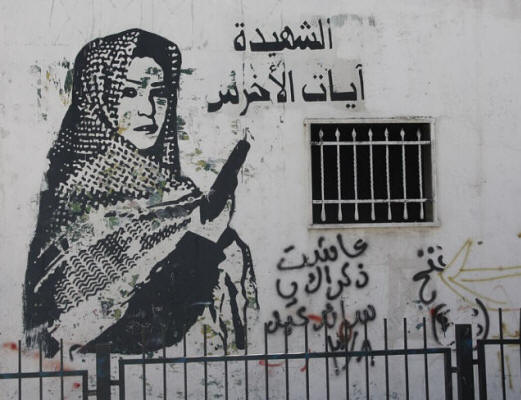

Above, left: Izz al-Din Shuheil al-Masri, suicide bomber.
Above, centre: A mural showing Ayat al-Akhras, a Palestinion teenage suicide bomber
who killed two Israeli civilians, including a 17 year old Israeli girl. She was driven to the
place where the bomb was detonated by Ibrahim Sarahne. He suggested that she should
throw the bomb - after that, she could go home. She replied, 'I'm not afraid. I want to kill people.
Above, right: A poster showing suicide bomber Ashraf Sallah Alasmar
For a very long time, when a Palestinian has committed an act of terror against the Israeli government
or civilians, such as a bombing or murder, the terrorist or the terrorist's family (in the case of suicide bombers)
has received a generous salary from the Palestinian Authority - which has not discriminated. Terrorists from
every group - Hamas, Fatah, Islamic Jihad - has received funding and the amounts have been substantial, more
than the average pay in the Palestinian territories. The worst offenders, those committing mass murder, have been
paid the most, up to ten times the average pay.
On 10 February 2025, the Palestinian President, Mahmoud Abbas signed a decree to end this 'Martyrs' Fund.'
It had received so much unfavourable publicity. Donors to the authority had protested that their money
was funding terrorists and encouraging terrorist action. There is evidence that the fund is still active, that
the fund is still operating under a different name.
The call to 'come and kill' the Jew has been made repeatedly in Gaza. This is what happened after Palestinians
carried out an attack on a pizzeria in Jerusalem in 2001. It killed 15 Jews, including children, and injured 130
others. From the Associated Press report:
''Palestinian university students opened an exhibition that included a grisly re-enactment of that mass murder.
The students built a replica of the Sbarro pizzeria, with fake blood, splattered pizza, a plastic hand dangling
from the ceiling, and a fake severed leg wearing jeans ...
A Palestinian, Mohammed Tarayra, stabbed to death Hallel Yaffa Ariel, a 13-year old Israeli girl, as she was
asleep in bed. His mother told a local news outlet:
'My son is a hero. He made me proud.'
She will have benefitted financially from the attack. She will have received a salary in the higher range of
payments - so too the family of Izz al-Din Shuheil al-Masri, who killed 16 people in a suicide bombing in an
Israeli pizzeria, amongst them seven children and a pregnant woman. A further 130 were wounded. One
victim, Chana Nachenberg, remained hospitalized in a persistent vegetative state for more than 20 years
before succumbing. Yocheved Shoshan, 10 years old, was killed and her 15-year old sister Miriam was
severely injured with 60 nails lodged in her body, a hole in her right thigh, third degree burns on 40%
of her body and a ruptured spleen. Mordechai and Tzira Schijveschuurder, both children of Holocaust
survivors, were killed along with three of their children. Two other daughters, Leah, 11 years old and
Chaya, 8, were critically injured.
This Home Page contains Insights / summaries provided not by me but by Google. In the Google extracts, I'm referred to in various terms:
as a 'writer,' 'thinker,' 'author,' 'educator,' 'designer,' 'researcher,' a 'theorist ... who organizes vast information,'
an 'independent scholar,' an 'activist.' In this section the material mainly reflects my work as an activist
but the activism is based on examination of evidence, careful documentation and other quiet activities.
The activism never takes the form of noisy, attention-seeking protest - but I did act in this way in the distant past.
I begin with criticism of the Green Party. To set the scene, I quote first of all a Google Overview of this criticism -
so, a summary not written by me. There are Google Overviews on many other topics listed and quoted on this page. This
is a copy of the Overview available as part of the comprehensive list below.
The Green Party: MPs, councillors, candidates, functionaries
The website linkagenet.com created by independent writer and activist Paul Hurt contains extensive, highly
critical commentary targeted directly at the Green Party and its prominent national leadership.
Hurt launches a fierce critique against the party's political platform, explicitly naming Zack Polanski (the party's
leader), alongside Green Party MPs Hannah Spencer, Carla Denyer, Siân Berry, Ellie Chowns and Adrian Ramsay.
The core elements of the controversies and criticisms featured on the site regarding these individuals include:
1. Middle East Policy and the 'Pledge for Palestine'
Accusations of ignorance: Hurt strongly attacks a joint statement and political stance shared by Zack Polanski,
Siân Berry, Ellie Chowns, Carla Denyer, Adrian Ramsay and Hannah Spencer. He argues that their public
accusations of genocide and apartheid against Israel demonstrate an 'abysmal ignorance of the evidence.'
Hannah Spencer critique: Hurt singles out Hannah Spencer, noting she was reportedly the only Green MP to
approve of a controversial claim regarding Zionism at a party conference, a stance he describes as 'hideously
misguided.'
The Allied Bombing Comparison: He argues that these MPs fail to understand the grim realities of war, drawing
comparisons to Allied strategic bombing against Nazi Germany and Japan in World War II, where massive
civilian casualties occurred as a necessary byproduct of defeating fanatical regimes, rather than as an
act of genocide.
2. Attack on Leadership and Party Competence
Zack Polanski: Hurt harshly lampoons Zack Polanski, labeling him a 'mediocrity charlatan,' a 'puny pugilist'
and a 'pretend politician.' He mocks Polanski's leadership by suggesting the party create a 'giant inflatable'
of him called 'Mr Soft Touch' to mirror his 'grotesquely inflated reputation.' Hurt claims Polanski has an
abysmal understanding of geopolitical realities ...
The 'Feeble Fanatics': Hurt frequently refers to the Green Party ... as 'feeble fanatics' and 'a bunch of losers
who have won an election' ... He claims that they prioritize dogmatic ideologies over local duties and suggests
the party be renamed the 'Dummy-Suckers Party' to reflect what he calls their 'infantile antics.'
3. Local Climate Adaptation Disagreements
The Shutter Controversy: Hurt ties his national critique back to local Sheffield Green Party politicians, such as
Councillor Richard Tinsley. Tinsley's proposals for central-government-funded window shutters to combat
climate change are dismissed by Hurt as 'sloppy' ... and a 'vanity project.' Hurt contrasts this with his own multi-
purpose design, the Newest Window-Door System.
4. Transgender and Gender-Critical Language Policies
Suppression of Free Speech: Hurt accuses the Green Party leadership of operating with an authoritarian,
'robotic, inflexible dogmatism.' He points to the party's 2026 conference guidelines - where gender-neutral
language like 'parents and carers' was mandated to replace 'mothers and fathers' - arguing that enforcing
these terms under threats of official code-of-conduct breaches amounts to institutional bullying and the
active censorship of gender-critical women's groups.
Zack Polanski, Precarious Pretender


Even if the Green Party gets rid of him, it won't elevate the Green Party to the elevated
ranks of a fairly useful party. The mediocrity of Zack Polansk is the mediocrity of the party.
Phineas Barnum was a charlatan of an unusual kind: a gifted charlatan.
Zack Polanski ['Tacky Zacky,' David Paulden], shown above - he's the one in the left hand image,
but with more than a passing resemblance to the clown to the right - is surely a mediocrity charlatan. .
Image after that, a giant inflatable: 'Mr Pinky.' How to convert Zack Polanski into a political giant?
By producing a giant inflatable of the man. Perhaps an enterprising manufacturer could do just that.
The 'artist' who crafted 'Mr Pinky' regards him as a work of 'inflatable sculpture.' If a grateful Green Party
ever wishes to honour Z. Polanski by erecting a sculpture, the party could consider a giant inflatable to do
the job. A suggested name for an inflatable of the man with the grotesquely inflated reputation:
'Mr Soft Touch.' Some synonyms for 'soft touch:' 'chump, fall guy, fool, sucker, dupe.'
Inflated reputations and inflated sculptures are very easily punctured. It would be advisable for the Green Party
to take a prudent and cautious approach, at odds with their usual recklessness and disregard for difficulties.
That's enough publicity for Zack Polanski (Zzz Polanski, boredom-inducing Polanski) for the time being.
The flounder, the flatfish that could serve as the emblem of the Green Party.
'To flounder: to stumble, to struggle to thrash around, to wobble, to be awkward, to be directionless.'
'Flat: dull, uninteresting, deflated'
The Green Party: the floundering party.
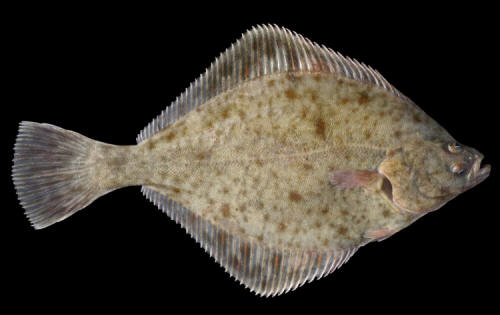



There's no reason to take seriously any party hatched from the barren mind of Jeremy Corbyn.
There's no reason to take any more seriously the Green Party.
Green Party councillors and MP's: a bunch of losers who have won an election.
'Political losers:' politicians not worthy of respect, pretty poor political specimens,
politicians who can't defend themselves, political failures who have won an election.
Winning an election: only a start, not necessarily an achievement of a high order -
leading often to political achievement of a very low order.
Renaming the Green Party. One possibility:
'The Dummy-Suckers Party' [DSP] is one possibility, combining ridicule and criticism from various directions. Dummy: 'fake, substitute,
counterfeit ' ... baby's dummy / pacifier ... the party's infantile antics, not a party based on adult values ... sucking on a baby's dummy ... dummy as 'stupid person,
idiot, fool, blockhead, numbskull, dimwit, moron, dud, dolt, wally, twit, crackpot, driveller, airhead, nincompoop,' (The riches of the English language.) Sucker: 'a
gullible person, easily deceived.'
The Green Party uses a green rectangle as a background for its pleas for votes, in the hope of conveying freshness and vigour. How can a party which uses the
colour green in this way be anything but fresh and vigorous? The Green Party is anything but fresh and vigorous. It's unable and unwilling to defend its policies,
which amount to a pile of contradictions in so many cases. Scratching beneath the surface reveals a party guided by robotic, inflexible dogmatism, a stale party,
a mixed-up party, a party in a mess.
The Green Party: the grim-green, grime-green party.
The nature which the Green Party claims to support is much more complicated than they suppose, not perfection at all, not a model to be followed automatically,
harmonious in large part, very cruel in large part. The problems of the world don't all arise from the 'environmental crisis' - far from it. So many of them can't
easily be solved and not all problems can be solved at all. Environmental problems can't possibly be solved by simply adopting Green Party policies. Many of
the policies have nothing to do with the environment. As a matter of strict fact, the Green Party gives a higher priority to Trans issues and opposition to Israel than
to environmental matters. Many, many environmental problems require approaches which make use of scientific advances, large-scale engineering, on knowledge
and skills which are in very short supply in the party.

The boxer and political equivalents: is Zack Polanski a political heavyweight? No, obviously not.
Is he a kind of political middleweight, then? Or a political lightweight, featherweight, bantamweight?
A political flyweight, perhaps? Even sub-sub-sub-flyweight doesn't convey his level of understanding
and skill (abysmal.) The truth is that Zack Polanski the puny pugilist doesn't believe in fighting -
effective fighting, fighting calculated to win, fighting which is useless without armaments - fighting
against the Nazis, supporting Ukraine's fight against the armed forces of Putin, fighting against terrorism -
Hamas, Hezbollah, all the terrorists supported by Iran. He views with complacency the terrorists who pose
such a threat to democracies.
Green Party Charlatan-in-Chief Zack Polanski is 'the gift that keeps on giving,' 'an unwanted,
persistent problem which refuses to go away ...' The Party has so many similar 'gifts.' If the Party
had any sense it would 'Sack the Zack' but the Green Party is the clueless party, a party with an
acute shortage of able, well-informed, politically astute replacements with outstanding leadership potential.
The Green Party: ignoring realities, practicalities, complexities, evidence, common sense.
The Green Party: distorted views of nature and human nature.
The Green Party: general indifference to industry and technical advance, to so much of the world of work.
The Green Party: so many happy-clappy members talking claptrap.
The Green Party: 'Green' meaning 'immature, unsophisticated, gullible.'
The Green Party: feeble, damaging fanaticism.
The Green Party: tolerance of dangerous fanatics, its own fanatics and so many others.
The Green Party: playing at politics, playing with fire.
The Green Party: the smug ignoramus party.
The Green Party: the toxic party.
The Green Party: the flavour of the month party.
The Green Party: The Pariah Party.
Voting for the Green Party: vote in haste, repent at leisure.
The Green Party: dumbing down relentlessly in a downwards spiral.
The Green Party: helping to reverse the decline of British comedy. The Green Party is hilarious and ridiculous
but also debased and deeply disturbing (correction: 'shallowly disturbing.)
Does the Green Party have a reputation? A reputable reputation,
or a reputation for stupidity?
Are there interesting differences of opinion in the Green Party?
Or are Green Party members directed and controlled, led by the
nose - and not against their will - to ensure that they stick to Party doctrine and dogma?
The Green Party: an ideology, not a responsible political party
The Green Party: the party that takes Zack Polanski seriously - and takes so many infantile members seriously.
The Green Party: not an evidence-based party. It should not be supported by responsible environmentalists.
My own stance: not 'anti-green' but Anti-Green-Party.
Below, list of Green Party candidates for Sheffield wards, election of 7 May 2026
* indicates an elected councillor seeking re-election
These are candidates who signed the ideological, grossly biased 'Pledge for Palestine' (all the candidates apart
from one). Critical profiles of many of these people (and some 'Ward Contacts / Campaign Organizers) to be added to
the new page 'Green Party Feeble Fanatics.'
Already added, a profile of Andy Davies, successful in the election but no longer a Councillor.
He left after a few months, citing the pressures of the job. Information too on Lauren Jones, Walkley Ward
Contact and his Campaign Organizer. Lauren Jones is also the campaign Organizer for the replacement
Green Party candidate, Sebastian Van Bilsen Irias. The by-election for Walkley Ward, Sheffield takes place
September 17, 2026. The election took place. Sebastian Van Bilsen Irias lost.
Most of the candidates who 'signed the pledge' were Green Party candidates. There were a few representing the
Labour Party and many more from the Trade Unionist and Socialist Coalition, a far left coalition which fights
'capitalism.' No candidates from this group were successful in Sheffield or nationally: not a single seat gained.
The Green Party were relatively successful but a degree of success in politics is no guarantee that the policies
are reasonable, rational, supported by evidence, not based on delusion and illusion, and no guarantee that
political practice will be based on sane foundations.
The list of Green Party Candidates and Signers of the Pledge. I confidently state that not a single person on this list
has gone beyond grossly inadequate condemnations of Israel - often one- word condemnations, words such as
'apartheid,' and 'genocide.'
The documentation available is vast, but these are lazy-minded, easily satisfied, ideological, routine, mediocre
people - but not necessarily in every respect. I recognize that there are likely to be devoted parents amongst them,
or people whose lives are far from easy in one way or another, people who may well be facing very great difficulties.
But they chose to sign a hideously misguided pledge. Again, I confidently state that these people haven't bothered
to find out more, much more. They have no knowledge of the fact that Nazi Germany and Japan, which had already killed
millions of people, including the millions of Jews killed in the Nazi extermination camps and concentration camps,
were determined to continue fighting even when it was obvious that they had lost, that the victory of the allied forces
was certain. So, allied aerial bombardment from the air continued. This was essential to put an end to the German
and Japanese atrocities, civilian killings which vastly outweighed the civilian killings of the allies. For year after
year, Hamas has been launching rockets against Israel and breaking ceasefires. Israel, a democracy, could no more
continue to accept these actions than Great Britain, a democracy, could put up with Nazi aggression. But to end
Nazi aggression or Hamas aggression has required very strong action, not naive platitudes of the Green Party kind.
The most elementary knowledge of the Nazi genocide, the killing of 6 million Jews, should have persuaded them to
find out more, far, far more, before signing this deluded pledge. Similarly in the case of another abuse, one which
is not at the same level of cruelty. South African apartheid was a serious injustice but any attempts to find linkages
between the South African practice and the practice in this part of the Middle East are facile. The circumstances are
vastly different.
More on the accusation that Israel is a 'apartheid regime, an extract from my page 'Amnesty International Discredited.'
As I point out in various places in the site, I was a member of Amnesty International and the death penalty co-ordinator
for the Sheffield Amnesty group for twenty years. I became more and more disillusioned with Amnesty and more and
more disturbed by shifts in policy - which seemed designed to maintain the flow of donations and membership money
from certain groups and not in accordance with evidence.

Amnesty International repeatedly accuses Israel of being an 'apartheid state.'
Amnesty International is calling on the International Criminal Court
(ICC) to consider the crime of
apartheid in its current investigation in
the OPT and calls on all states to exercise universal
jurisdiction to
bring perpetrators of apartheid crimes to justice. [Comment: calls on
all states ...
to bring perpetrators of apartheid
crimes to justice? Including the Iranian state and the North
Korean
state and Russia? This is deranged.]
Richard Goldstone, who had been a South African judge, had been
critical of Israel in a United
Nations report of 2009 but went on to
modify his view significantly. In a letter published in the New
York Times, he addressed the claim that Israel is an 'apartheid state.'
Extracts:
' ... it is important to separate legitimate criticism of Israel from assaults that aim to isolate,
demonize and delegitimize it.
One particularly pernicious and enduring canard that is surfacing again is that Israel pursues
'apartheid' policies. In Cape Town starting on Saturday, a London-based nongovernmental
organization called the Russell Tribunal on Palestine will hold a 'hearing' on whether Israel
is guilty of the crime of apartheid. It is not a 'tribunal.' The 'evidence' is going to be one-sided
and the members of the 'jury' are critics whose harsh views of Israel are well known.
While 'apartheid' can have broader meaning, its use is meant to evoke the situation in
pre-1994 South Africa. It is an unfair and inaccurate slander against Israel, calculated
to retard rather than advance peace negotiations.
...
In assessing the accusation that Israel pursues apartheid policies, which are by definition
primarily about race or ethnicity, it is important first to distinguish between the situations
in Israel, where Arabs are citizens, and in West Bank areas that remain under Israeli control
in the absence of a peace agreement.
In Israel, there is no apartheid. Nothing there comes close to the definition of apartheid under
the 1998 Rome Statute: 'Inhumane acts ... committed in the context of an institutionalized regime
of systematic oppression and domination by one racial group over any other racial group or
groups and committed with the intention of maintaining that regime. 'Israeli Arabs — 20 percent
of Israel’s population — vote, have political parties and representatives in the Knesset and occupy
positions of acclaim, including on its Supreme Court. Arab patients lie alongside Jewish patients
in Israeli hospitals, receiving identical treatment.
...
The situation in the West Bank is more complex. But here too there is no intent to maintain 'an
institutionalized regime of systematic oppression and domination by one racial group' ... the deep
disputes, claims and counterclaims are only hardened when the offensive analogy of 'apartheid' is invoked.
Those seeking to promote the myth of Israeli apartheid often point to clashes between heavily armed
Israeli soldiers and stone-throwing Palestinians in the West Bank, or the building of what they call an
'apartheid wall' and disparate treatment on West Bank roads. While such images may appear to invite
a superficial comparison, it is disingenuous to use them to distort the reality. The security barrier was
built to stop unrelenting terrorist attacks; while it has inflicted great hardship in places, the Israeli
Supreme Court has ordered the state in many cases to reroute it to minimize unreasonable hardship.
Road restrictions get more intrusive after violent attacks and are ameliorated when the threat is reduced.
...
Jewish-Arab relations in Israel and the West Bank cannot be simplified to a narrative of Jewish discrimination ...
Israel, unique among democracies, has been in a state of war with many of its neighbors who refuse to accept
its existence ... '
Below, the list of Green Party candidates in the May election of 2026. People identified as 'councillor'
are those who were elected councillor in May 2026. Highlighted names, with wards: this indicates that
the person has an entry of some length on this page or the page Green Party Feeble Fanatics (in a few cases, an entry is
in preparation.) There is a substantial entry for Seb Van Bilsen Irias, candidate for the Walkley ward, in
the by-election of September 17, 2026: not successful. All entries are subject to revision / extension. More
entries will be added to the page 'Green Party Feeble Fanatics' to provide information / comment on other former
candidates in the list. The reference to 'feeble fanatics:' not an indication that the information / comment is scurrilous
in any way. The content is evidence-based and, I'm sure, fair. Any people named who feel aggrieved are welcome to contact me.
Councillor Richard Tinsley, Hillsborough Hannah Nicklin, Woodhouse Ruth Abbey, Manor Castle
Tessa Lupton, Ecclesall Councillor Maleiki Haybe, Broomhill and Sharrow Vale Luke Hunt, Richmond
Mike Harrison, Firth Park Mohammend Zayed Al-Mahfuz, Darnall Councillor Mustafa Ahmed, Burngreave
John Ronan, Fulwood Councillor Lynsey Angell, Nether Edge Dylan Lewis-Creser, Crookes and Crosspool
David Willington, Stocksbridge and Upper Don Andrew Davies, Walkley Councillor Maia Salman-Lord, City
Councillor Tom Atkin-Withers, Graves Park Councillor Marieanne Elliot, Gleadless Valley Alan Yearsley, Birley
Gill Black, Dore and Totley Stewart Kemp, Beighton Kim Perry, Beighton Jonathan Bagley, Beauchief and Greenhill
Eamonn Ward, Firth Park Julie White, Mosborough Kathy Aston, West Ecclesfield Rose Trevillion, East Ecclesfield
When I was filming in the public space at a pro-Palestinian protest, in the public space next to Sheffield City Hall, members of the Palestine Solidarity
Campaign (which attended the Student Camp at intervals) attacked me. Some members of both groups, the students and the Palestine Solidarity
Campaign, used the tactic of standing in front of me, blocking my way. They tried to prevent the elementary right to walk around in a public space.
One Palestine Solidarity Campaign opponent in particular tried his utmost to put a stop to my legitimate and lawful activities. He didn't succeed.
I experienced hysterical screaming abuse on one occasion, from a student. It was impossible to involve any of them in reasonable discussion.
The Palestine Solidarity Campaign members were dedicated to repetitive slogan-shouting, putting up walls of sound. Sometimes, their
marches brought to mind Nazi Storm Troopers. Their comments on Freedom of Expression and Freedom to Protests in connection with the
banning of the pro-Iranian QUDS protest should fool nobody. In my experience, fanatical suppression of contrary views is what these people engage
in. There are very many timid, lacklustre people in the Green Party who in effect excuse the ruthless and barbaric actions of the Iranian
regime and the terrorists supported by Iran, and the gross excesses of other regimes which torture and execute on a large scale. Far more often
than excusing torture and executions, they show indifference. The one country to which they are far from indifferent, the one country they
single out for obsessive action, is Israel - which, as it happens, has carried out only one execution in the whole of its modern history, the
execution of Adolf Eichmann, who played a leading part in the Holocaust, the killing of six million.
It will be necessary to publish profiles of some of the candidates. The information and comment on the candidate Hannah Nicklin will be
revised and extended. On the evidence available to me, Hannah Nicklin is a particularly distasteful specimen. Before standing for election
in 2026, she was a candidate for the Sheffield South East Constituency, in 2024. Clive Betts, the Labour candidate, was successful, receiving
18,710 votes. Hannah Nicklin received 3,158 votes.
In the election of May 7, 2026 for Woodhouse Ward, the Reform Party candidate was elected, with 1,987 votes. Hannah Nicklin received 678 votes.
In the election for Woodhouse Ward 2 May, 2024 she received 311 votes.
In the election for Woodhouse Ward 28 November, 2024 she received 168 votes.
In her electoral address for the Sheffield South East Constituency, available on the page
she makes this vile comment about reasons for her progressive disillusionment with Keir Starmer's Labour Party:
'The refusal to value the lives of Palestinians alongside those of Israeli hostages in November 2023 was a last straw.
That's what brought me to the Green Party.'
The Israeli hostages taken into Palestinian territory were, of course, survivors of the Hamas attack, the deadliest for Jews since the Holocaust.
IInformation from the Wikipedia page:
Israeli sources reported the launch of 4,300 projectiles from Gaza. Most of the casualties were from the Bedouin community.
'In total, at least 1,195 people were killed by the attacks, at least 828 civilians (including 36 children and 71 foreign nationals) and
at least 367 members of the security forces. 364 civilians were killed while they were attending the Nova music festival and many
more wounded. At 7:a.m. a siren warned of an incoming rocket attack, prompting festival-goers to flee. Attendees seeking refuge ...
in bomb shelters, bushes and orchards, were killed while in hiding ... The militants executed some wounded people at point-blank
range as the crouched on the ground. Militants killed 16 or 17 Thai and Nepalese employees during the Kibbutz Alumim massacre.
The BBC reported, 'Videos of naked and blooded women filmed by Hamas on the day of the attack, and photographs of bodies taken
at the sides afterwards, suggest that women were sexually targeted by their attackers.
251 Israeli and non-Israeli civilians and soldiers were taken as hostages to the Gaza strip. Many of the captives were moved to
tunnels, where conditions were very poor, lacking adequate ventilation, natural light, adequate food and sufficient water.
The objection that Israeli action has killed many, many Palestinian civilians takes no note of the realities of war. I discuss at length
the realities of military action in my page on Israel. There's a short section above which gives some basic information, just before the list
of candidates in the May 2026 elections, which includes Hannah Nicklin.
Some additional information: An estimated 350,000 to 500,000 German civilans were killed as a result of Allied strategic bombing
campaigns alone during World War 2. The allies killed in total a minimum of 1.5 million German civilians and a maximum of 3 million.
This was not due to any allied 'genocide' but the result of military action which was successful in defeating the Nazis, the
perpetrators of genocide, which killed 6 million Jews. There was Nazi military action right up to the last day of the war, in some cases,
beyond that date.
Japan's military actions during World War 2 killed an estimated 10 million to 20 million people across Asia and the Pacific.
To defeat the Japanese, the U.S. undertook a bombing campaign which destroyed major Japanese cities, including Tokyo and, of
course, Hiroshima and Nagasaki, killing hundreds of thousands of civilians. Japanese forces fought on even when the atomic bomb
had been dropped on Hiroshima. The atomic bomb dropped on Nagasaki finally ended their resistance. If bombing had failed to
bring about this end to hostilities, the Americans would have had to invade Japan. The Japanese were ready to oppose American
military action, necessitating a campaign which would have killed very large numbers of American troops and very large numbers
of Japanese troops and civilians.




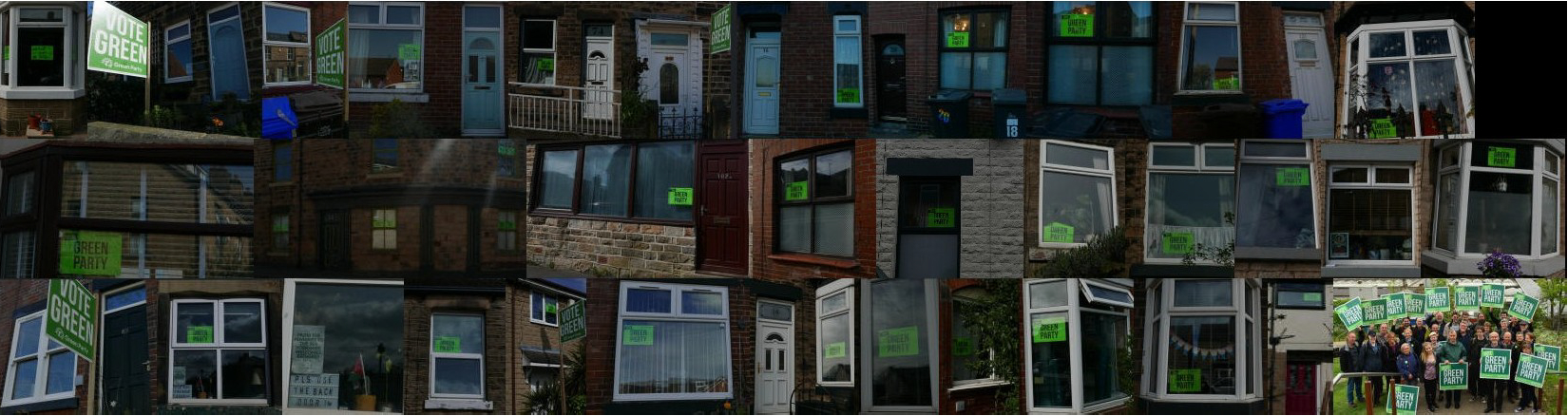

Above, publicity material in support of the Green Party in the Walkley and Crookes Wards, Sheffield, May
election, 2026. Images published on this page for various good reasons: because this page is amongst
all its other objectives intended to be a careful graphic design, and I view the sequence of images as making
a contribution to the graphic design, in particular, the repetition of the 'Vote Green' posters and placards.
Provision of images - many images - is important to me, even though text is the most important part of the site.
There are hardly any images available to me to illustrate the sections and pages concerned with the Green
Party. I observe copyright and don't use images freely. Since the pictures of the properties were published,
I've been able to take photographs of Sheffield Green Party gatherings and councillors but they are still
restricted in scope. I hope to take more party photographs and photographs of councillors and candidates
for election. Photographic documentation supplements the more important text documentation. At one
property, the householder became very angry when he found me taking a photograph of the placard
outside the house - even though the law of the land allows it. He told me that he would be contacting
South Yorkshire Police and I've good reason for thinking that he did just that. Weeks after the election,
I walked past his property. He was outside the house and I told him that according to electoral law,
placards have to be taken down within a two week period after the election, and his placard was still
there quite a long time after the deadline.
This is a trivial matter, in sharp contrast to much of the material on the page, which includes massive
human achievement and massive atrocities and barbarities. But there are many, many acts of kindness
and human goodness which I've experienced, not to be classed as major events but so important
to me. Important to me also is range, breadth - the inclusion of precious but obscure events, the massive
contributions of supposedly 'unimportant' or 'negligible' people.
Appearances are often amongst the least important aspects of a person or a place: very attractive people
and places may have severe disadvantages - the may be ethically dismal or disgusting, as a whole or in part,
just as very unattractive people and places may be dismal or disgusting. But at the local level as well as the
national or international level, giving some idea of what a person looks like or a place looks like is surely a
reasonable objective.
Important to me also is thoroughness. For this
reason, I'll provide here the names of the members of the
Sheffield
Green Party Executive Committee: Kim Perry, Magid Magid, Matthew McGuire,
Maz Hamilton,
Agnes Wozna, Cai Newbold, Logan Robin, Georgina Mayhew, Nyama Keyworth, Matt Lambert, Grace Glevey.
I contacted individual members of the Committee on 7 October to draw their attention to the issues - and got
nowhere. No replies received. Thoroughness, like so much else, can have disadvantages, be subject to
restriction. I regret and resent the detail I've supplied concerning some people. I've decided to spend time on
them which could have been spent far more constructively. But I take the view that opposing such people is
a constructive act, not a minor one, whilst regretting involvement in work which isn't congenial or interesting.
a
Below, copy of an email sent to me by Eamonn Ward, 17.03.2026, followed by further
information and comment: more work which isn't congenial or interesting in the least.

Dummy
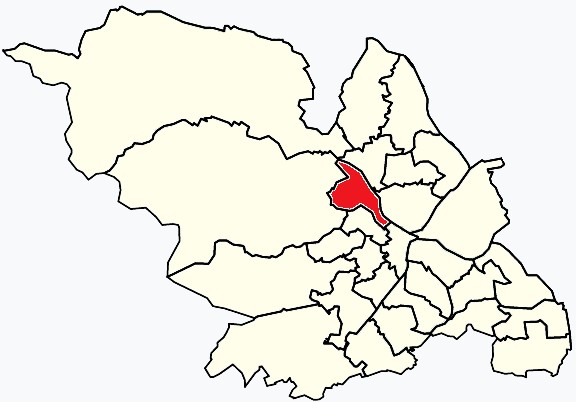
Richard Tinsley
Richard Tinsley is one of three Green Party Councillors for Hillsborough. The others are Christine Gilligan Kubo,
profiled below, after this profile of Richard Tinsley, and Tobias Mallinson, profiled on the page Green Party Feeble Fanatics.
All these profiles will need to be revised and extended, particularly the ones of Councillors Kubo and Mallinson.
Below, location of City Ward in Sheffield.
Profile of Richard Tinsley
Councillor Tinsley writes (sloppily and superficially) about adaptation to climate change on a page of the
Sheffield Green Party site.
He only mentions one way of achieving this, installation of shutters:
'Retrofits for homes is an equality issue with poorer households unable to find the money for
shutters etc. Changing planning regulations is not enough. We need funding from central
government to ensure that the poorest in society are not left behind again. Adaptation needs
to be delivered at pace with the required resources and funding there to back them up.'
But shutters can make only a negligible contribution to combatting climate change. They are
inherently inefficient. Below, some other disadvantages of shutters, including their prohibitive
high cost for the purpose he intends. This is a local politician who has obviously made no attempt
or hardly any attempt to get to grips with the issues, someone who seems to think that the financial
and other resources he thinks would be a good idea - vital for society - are available in large quantities,
to further one of his not at all promising ideas. He sees the need for rapid action but sees no need to
investigate the issues in detail, sufficient to separate realistic objectives and methods from ones
which are unrealistic. Massive amounts of money are spent on such disguised 'vanity' projects,
supposedly purely altruistic. I mention shutters and many more effective ways of adapting to climate
change in the information in a section of this page, my Newest Window-Door System.
From the Google Overview of the disadvantages of shutters:
Exterior window shutters have several notable disadvantages, ranging from high costs and maintenance
needs to operational inconveniences and sizing challenges
High Costs and Installation
Expensive upfront investment: Purchasing and professionally installing exterior shutters carries a high
initial price tag compared to standard indoor blinds or curtains.
Complex fitting: Precise measurements are critical. Inaccurate sizing or out-of-square older windows
lead to gaps, misalignments or clumsy aesthetics.
Maintenance and Durability Issues
Weather and material wear: Exposure to rain, UV rays and temperature changes causes wood to rot,
warp or split near mounting points. Vinyl and composite materials can also crack, shift or fade over time.
Regular upkeep: External shutters require ongoing cleaning, repainting or sealing at least once or twice
a year to keep them looking good and functioning properly.
Operational and Practical Drawbacks
Cleaning inconvenience: Operable exterior shutters require you to open windows and lean outside -
or unhinge the hardware - to clean both the glass and the shutter slats.
Richard Tinsley's election address, issued before the May 7 local elections, has multiple problems,
contains multiple misleading remarks, perhaps none quite as blatant as this, in the section
'YOUR CHOICE ON 7th MAY.' It presents the decision in a simple-minded way. It contains claims
which he doesn't attempt to justify in the least. This isn't an evidence-based writer. We're informed
that 'A Labour Councillor ... is told how to vote by party bosses.' Whereas Richard Tinsley is an
'Independent-minded campaigner.'
But Richard Tinsley represents the Green Party, which imposes its dogmatic views and attempts to
suppress contrary opinions - succeeds in stamping out contrary opinions all too often. All the Green
Party candidates, Richard Tinsley included, signed an anti-Israeli pro-Palestinian pledge before the
May 7 election. Were all the candidates thinking independently and just happened to agree to sign?
Did Richard Tinsley, independent thinker, decide that signing the pledge was the right thing to do,
after taking into consideration in a fair-minded way a wide range of evidence, pro and con?
What does Richard Tinsley think of trans issues and skeptical views of trans issues, as held by
many, many women, and men? The authoritarian Green Party not only actively opposes anyone
with a skeptical view of trans issues (the gender-critical) but removes them. A gender-critical
women's group was barred from the Green Party conference. They were told that the group could
not have a presence at the conference. The group upholds eight principles, including 'sex and
gender identity are different,' 'female-only spaces are necessary' and 'lesbians are same-sex
attracted females.'
The party leadership has given 'guidance' at the 2026 conference concerning use of language.
Terms like 'mothers and fathers' are replaced with the 'gender neutral' 'parents and carers.' (I happen
to be a carer but not a biological parent. Supposing that someone wants to make it clear that a parent
is a mother rather than a father or a father rather than mother? Is there a suitable circumlocution available?
Whatever the case there are penalties attached to the 'guidance'. The guidance document makes it clear
that failure to use the approved terms could be treated as a breach of the party's official code of conduct
regarding bullying and harassment.
My page Green Party Feeble Fanatics gives more information about Green Party intolerance. As a very short, succinct
summary of my view, I regard the Green Party as infantile, ludicrous, unfit for political office at any level,
local or national.
By way of introducing the next topic, a question to Richard Tinsley: do you, Richard Tinsley, believe that
Israel poses a far greater threat to the world than Iran? Have you taken the trouble to examine the wide-ranging
evidence which is relevant? Or do you find repetition of slogans much more congenial? Can you give any
evidence that you really are independent-minded? The word 'campaigning' often conveys the impression
of great activity - but being busy, being active is no guarantee of achievement. As a matter of fact, many
campaigners are wasting their time. They may have no feeling for realities, no common sense (common
sense is far from common in many spheres, of course, including Green Party circles. They may be busy
(and they may be busy-bodies) but they are often lazy-minded, bone idle in important ways, such as gaining
the information relevant to their activities. When campaigners organize protests, they often place the
emphasis on slogan-shouting. They have the feeling whilst planning the protest or taking part in the protest
that they are important people, that taking part qualifies them as important people. They are deluded.
Not all these campaigners are vociferous or aggressive. There are many others who are lacklustre,
drifting from one event to another, achieving nothing.
Part of the industrial suburb of Neepsend, on the Eastern side of the River Don, is in the Hillsborough Ward.
Does Richard Tinsley spend much time (or any time) attempting to further Sheffield industry, in particular
Hillsborough industry? What about the other Green Party Councillors, in this ward and other wards? What
about the national Green Party? Obviously, the daily life of these people involves multiple uses of industrial
products, including the steel products which have immense importance in the history of Sheffield. Can these
people imagine what life would be like without washing machines, without ambulances, fire-engines and tools -
not forgetting cutlery - all made with steel and other industrial products? Obviously, the list could be extended,
almost without limit.
Industry has next to no importance in the Make-Believe Green Party World View. Similarly large-scale
agriculture. It would be completely impossible to feed massive populations with small-scale growing using
only hand tools (which of course need steel for their manufacture.) Tractors, combine harvesters and a wide
range of other machines are essential, together with other products of sophisticated science and engineering.
Their smug assumption of superiority, their assumption that they have insights denied to so many other
people, have to be challenged.
Profile of Christine Gilligan Kubo, Green Party Councillor for Hillsborough
But before the Profile, an extract from my page Advocacy for Israel. It gives in concise form argument
and evidence which signers of anti-Israel pledges and statements and mindless anti-Israel protestors
will know nothing about. This was written not long after October 7.
If, hypothetically, Palestinians were granted a state, is it likely that their relations with their neighbour
Israel would be harmonious? If, hypothetically, Israel were ever to be wiped out, the new state would
be very vulnerable. Its survival could never be guaranteed. It could easily be invaded by a powerful
and ruthless adversary that would like to take its territory. As it is, superior Israeli military power
guarantees the security of the Palestinian territories, just as the neutral Republic of Ireland was protected
against German invasion by the military power of Britain and its allies during the Second World War.
The protection against potential aggressors provided by Israel's superior power is a massive advantage
for the Palestinians.
The practical problems now confronting Hamas were avoidable but Hamas chose not to avoid them.
Hamas has the responsibility of solving, or attempting to solve, the problems it has created In fact,
the problems can only be solved if Hamas is eliminated. Democratic states and organizations should
do nothing which helps to save Hamas, directly or indirectly. There are many, many countries in the
world facing acute problems to do with basic needs. It’s impossible to give effective help to all of them.
The basic economic problem is the problem of scarcity: unlimited wants and finite resources.
Why should Gaza be regarded as not just a deserving cause but a deserving cause which should have
absolute priority? Israel and Ukraine deserve the support of the free world, not so Gaza, or not a remotely similar
level of support. The international community's contribution to the reconstruction of Gaza should only be offered
under the most stringent conditions.
Hamas is a basket case and has ruined Gaza, with the support of far too many Palestinians. But in general,
they don't deserve a regime as bad as Hamas. The 'they' is a generalization, of course, There are deserving
and undeserving Palestinians.
If, with the aid of the horrific Iranian regime (which sentenced 51 people to be stoned to death for adultery in 2022),
Palestinians in Gaza (which, incidentally, punished homosexuality with imprisonment for up to ten years) had been
able to amass a formidable force of multirole combat aircraft, then there can't be the least doubt that they would
have done everything in their power to use them for the destruction of Israeli hospitals, homes and schools, as
well as Israeli Defence Force positions, without the least concern for 'International Law.' Although Israeli fighter
aircraft would have rendered any attempt at an attack suicidal for this hypothetical Palestinian Air Force.
Palestinians have been able, with the aid of the horrific Iranian regime, to equip themselves with rockets
and they have used them to attack Israeli civilians on many, many occasions in previous years.
Since 2001, Palestinian militants have fired tens of thousands of rockets from the Gaza strip to Israel. Over the years,
the main groups responsible have been Hamas, Islamic Jihad, the Popular Front for the Liberation of Palestine and
Fatah, amongst others. In June 2007, Fatah was replaced by Hamas as de facto governing authority in the Gaza strip.
Below,
Row 1, Image 1. The aftermath of a Hamas rocket attack on the maternity ward of Barzilai Medical Centre, October 7.
This is the Centre nearest to the Gaza strip. It has been directly struck by rockets fired by Hamas on multiple occasions.
Image 2. A Qassam rocket displayed in the town hall of Sderot, the Israeli city closest to the Gaza Strip. On the wall,
photos of residents killed in rocket attacks.
Image 3. Rockets fired from a civilian area of Gaza towards civilian areas in Israel, grey vapour trails visible.
Row 2, Image 1. A rocket attack on Sderot, 2014.
Image 2. A Grad missile hits Beersheba, 2009.
Image 3. Kindergarten classroom in Beersheba hit by a Grad rocket.
Image 4. Map showing approximate ranges of rockets fired from Gaza in relation to populations in southern
Israel. Also shows the approximate time people have to take cover, taking account of the varying distances.
In the band closest to Gaza: distance 10 km, warning time 15 s
In the band furthest away: distance 40 km, warning time 1 minute.
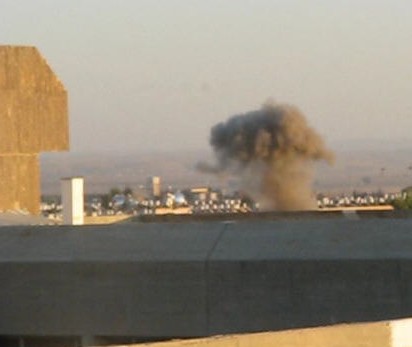
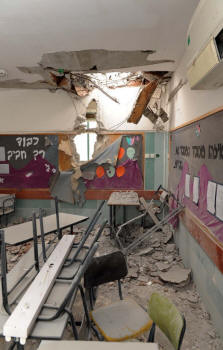
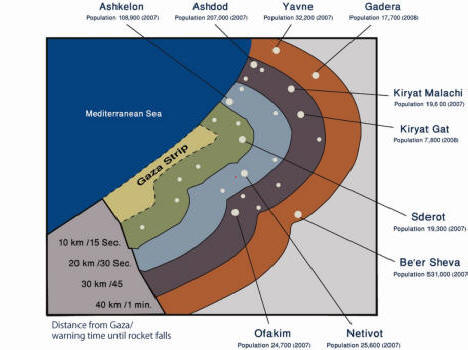
The damage from Israeli counter-attacks against Gaza after previous rocket attacks should have taught
Hamas this simple lesson. If you don't want war damage in Gaza and want to protect civilians in Gaza, stop firing
rockets and stop breaking ceasefires. But Hamas are very slow learners. There were claims and counter-claims
regarding the hospital in Gaza, but the claims made by Hamas aren't supported in the least by the expert opinion
I've seen, including their claims of the number of casualties. Outrage in connection with the claim that Israel was
responsible seems to be unaccompanied by concern for the men, women, children and babies held hostage in
Gaza or massacred in Israel on October 7.
If it wanted to, Iran, a big country, could aid the Palestinians not just by providing them with supplies but by
offering them some Iranian territory for a new Palestinian homeland. Would the Palestinians be glad to go there,
to live in a place free of Israeli influence? I doubt it. If the barbarity of Hamas (and the Iranian regime) is obvious
to anyone with any sense, the stupidity of Hamas (and the Iranian regime) should be obvious to anyone with any
sense too. Palestinian refugees are not welcomed by many countries, if not all countries. It would not be excessive
to claim that they are not held in high regard in many countries not so distant from the Palestinian territories - but
regarded as wonderful, intrinsically virtuous, people by large numbers of people in many other countries.
The profile:
I ask the question, 'Is Councillor Gilligan Kubo a moderate?' and give the answer 'No.' I compare
Christine Gilligan Kubo with a Sheffield Green Party councillor who seems to me an obvious fanatic,
Councillor Dimond - I give the evidence on this page and other pages - and find her not in the same
category but severely lacking. I find that Councillor Kubo herself has obnoxious, damaging and
harmful opinions.
A political party (or branch of a political party) which values its reputation doesn't allow fanatics to ruin
its reputation. Moderates in a political party (or branch of a political party) have a responsibility to
take effective action to curb the excesses of fanatics and if necessary see that they don't control
the party and cause serious damage to the party. Obviously, not all the moderates need to take action
but there must be enough of them to ensure that the action is effective. Mainstream parties have leaders
who can be replaced if they fail badly in this task. The Green Party has a different view of leadership.
They view strong leaders with disfavour. Strong leaders can cause damage if they fail but strong leaders
can take effective action in cases like this, whilst the decentralized Green Party has endemic weaknesses.
If individual councillors choose not to take any action, in cases where firm action is a necessity, then
they can get away with it.
Political parties have competitors, of course, just as businesses have competitors. The political parties
which are the competitors of the Green Party can benefit from any Green Party failures. In Sheffield Green Party,
I'd claim that councillor Alexi Dimond is an obvious fanatic who can inflict serious damage on the party. Moderation
isn't enough. Moderates may have many strengths but if they're ineffectual in matters like these, they lack an
essential strength. Moderates are often well-meaning, wishy-washy people who are often fluent speakers but poor
when it comes to realistic action. Is Christine Gilligan Kubo aware that Alexi Dimond is playing with fire? Is she
concerned, very concerned, that Alexi Dimond's words and actions can cause massive harm to the Green Party?
The same questions could be asked of other 'moderates' in Sheffield Green Party.
The Green Party is very weak in matters of defence. It can't, it won't make an adequate attempt to defend itself.
It won't make even a token effort to defend itself, when faced with argument and evidence. It complacently
assumes that its stance is ethical, beyond criticism. I'd make a rough analogy with defence issues at the
national level. A political party which wants to govern and has a realistic chance of winning an election may
have all kinds of strengths but if its defence policies are weak, then the political party deserves not to win
an election. The world is too dangerous a place to risk electing a party which is ineffectual in matters to do
with defence. A country too weak to defend itself, a political party too weak to defend itself, unable or
afraid to use argument and evidence.
Alexi Dimond's chant:
'Netanyahu, you can't hide, we charge you with genocide.
Biden, Biden, you can't hide, we charge you with genocide.
Rishi Sunak, you can't hide, we charge you with genocide.
Starmer, Starmer, you can't hide, we charge you with genocide.
To confine attention to Rishi Sunak and Keir Starmer, to accuse the former Prime Minister
and the Leader of the Opposition of genocide is gross misuse of a word which should never
be misused, never used casually or thoughtlessly. A party which simply overlooked the
inflammatory language of one of its councillors would be negligent enough. To actually publish
the misuse of the word 'genocide' on its Website is worse still. To accuse the other politicians
of genocide is abject misuse of the word too. Killing of civilians in war is overwhelmingly common.
Only some of the killing deserves to be called 'genocide.' I discuss the issues above, with graphic
images, and in other pages.
But Councillor Kubo herself endorses casual, negligent use of the word 'genocide.' It seems clear to me
that she has failed to think things through, that she's never committed herself to examining the evidence,
that she has been negligent. The Palestine Solidarity Campaign 'in conjunction with vote Palestine 2026 -
is asking all council candidates standing in the May local elections [the year isn't given] to take all appropriate
steps ... to stand up to Israel for its [alleged] crimes of genocide and apartheid.' (The phrase, 'vote Palestine 2026 -
is this election to be dominated by Palestinian issues? The Palestine Solidarity Campaign seems to think so.
What of all the important issues which are central in this election campaign, the ones with a direct linkage with
this country?)
I've personal experience of the Palestine Solidarity Campaign, experience of their hostility to free expression and to
legal safeguards. Whilst recording a Palestine Solidarity Campaign protest in Sheffield - an activity freely permitted
by law - I was attacked by three members of the organization. They tried to take away my camera and damaged it.
Their noisy slogan-shouting mass protests have a far closer linkage to the actions of Nazi storm troopers than to
the methods of liberal democracies.
https://palestinecampaign.org/candidate-pledge-for-palestine/
Councillor Kubo signed the pledge. She had decided that the Israelis must be mass murderers and that the Israeli
state is an apartheid state. This site gives the evidence against both suppositions / dogmatic convictions /
ideological certainties. Councillor Kubo decided on what evidence? I'm contacting Councillor Kubo to provide the
evidence for her supposition / dogmatic conviction / ideological certainty. I'll record her response, if any. If she's
confident that she can explain and justify her signing of the pledge, go ahead.
This isn't all there is to say about the superficial certainties of Councillor Kubo, not in the least. To give a very
short summary of some very important and wide-ranging issues, I would think that the Councillor has a very
defective understanding of the importance of national security. Has she given much thought - or any thought - to
the issues, the realities?
The realities include these: a country may be enlightened, 'environmentally responsible,' may follow all
kinds of 'Green Party approved' practices, but if the country is invaded by a very powerful forces, the country
will be completely unable to follow approved Green Party practices. There are a massive number of invasions
in recorded history. The most hideous example is surely the Nazi invasion of liberal (and some illiberal) countries
before and during the Second World War. Future invasions will involve massive destruction which will delay the
achievement of 'Net Zero' and cause incalculable environmental damage. Green Party certainties include the
certainty that Great Britain will be free to control its own destiny, irrespective of international events. The only
issues that count are environmental issues and some others, such as uncritical acceptance of pro-Palestinian
ideology and uncritical acceptance of 'Trans' promotion.
Councillor Kubo has academic connections but I find evidence that her thinking is lacking in two main areas:
lacking in breadth - she overlooks so many relevant aspects of reality - and lacking in depth. Her thinking is
superficial. I'll be happy to consider - and consider carefully - any contrary views from Councillor Kubo or defenders.
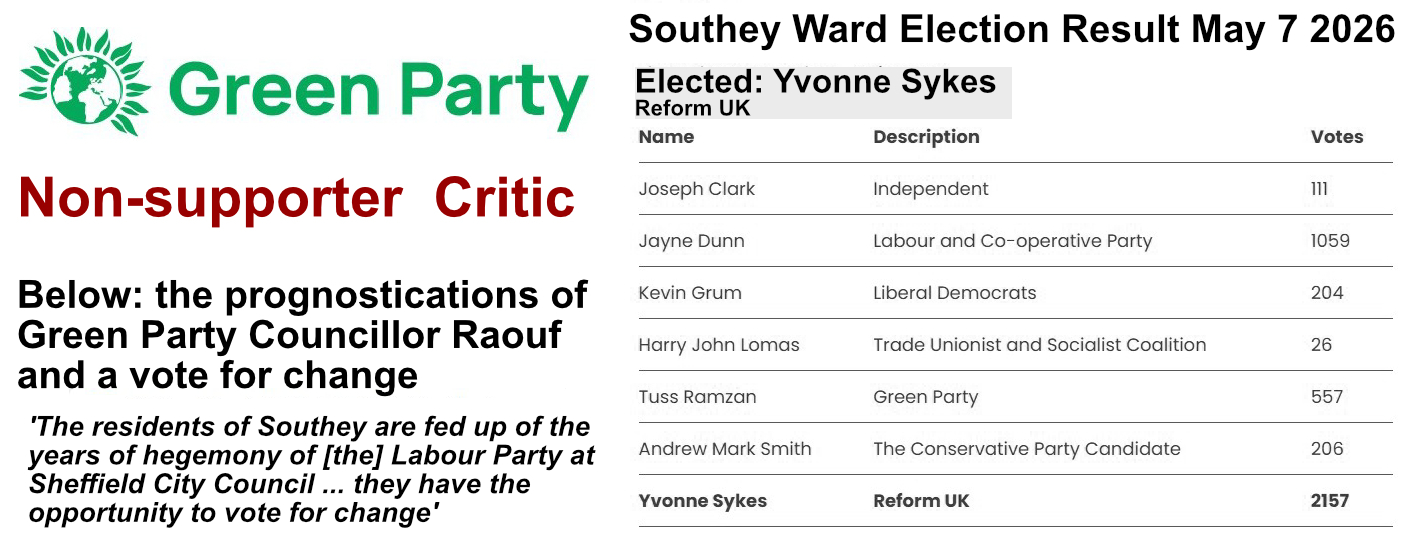
Ecclesall Ward, Sheffield has two Green Party Councillors: Tessa Lupton and Peter Gilbert.
This is the basic page layout and content for the first page of a very short publication, the
Autumn 2025 Ecclesall Green Party Newsletter. I don't give a copy here, to avoid any copyright
infringement. It was published before Tessa Lupton was elected (in May 2026.)
A copy of the original is at
https://sheffieldgreenparty.org.uk/2025/09/20/ecclesall-autumn-2025-newsletter/
Almost a quarter of the surface area is taken up with material on Israeli-Palestinian issues -
Sheffield Green Party's attempt to block sales from Sheffield to Israel,' I'll draw attention to
one startling inclusion on the Green Party page which publicizes this Ecclesall Green Party
Newsletter of 2025. There's a long list of 'People,' mainly Sheffield Green Party councillors
and other people but including Zack Polanski. It's astonishing that one of the people in the
list, still on the list in 2026, is Alison Teal. Her inclusion amounts to bizarre incompetence,
given the circumstances. The fact is that Alison Teal hasn't been a member of the Green
Party for a long time. The reasons - very revealing - are provided on the page, 'Greens in Exile:'
Further information about the Alison Teal case, with a link to 'Greens in Exile' is provided
in the page Green Party Feeble Fanatics.
I learned about the process of selecting a new candidate from a member emailing me to ask if
I minded them standing! No one had the courtesy to formally tell me this decision had been
made. I was devastated. I picketed the meeting with friends and supporters but the hustings
went ahead and Angela Argenzio, one of the councillors who smeared my reputation, was
selected by fewer than 50 votes.
After working very hard for the party over the past ten years it was extremely difficult to come
to terms with how disrespectfully I was being treated. I made the painful decision to resign
for the sake of my dignity and with the encouragement of many people I submitted my nomination
papers to stand as an Independent candidate on 7th June 2024.
Miscarriages of justice have continued in my name with 15 members of the Green Party being
accused of campaigning for me who have now been expelled unconstitutionally by GPRC.
The body intended to protect the reputation of the Green Party, GPRC, continues to
be responsible for bringing the party into disrepute by its own malicious actions.
I have suffered vexatious complaints from six named complainants and some anonymous,
singe 2021. The disciplinary system has created an opportunity for members with strong
opinions on gender identity ideology to harass and bully members who understand the
vital importance of women's sex-based rights and also child safeguarding ...
It's overwhelmingly likely that Councillor Gilbert takes the side of the Sheffield Green Party
councillors who rejected Alison Teal (who, as a matter of fact, shares many of the delusions
of the Green Party, including a view of Israeli-Palestinian issues which is based on simple
prejudice, the regurgitation of slogans and single words, a lazy unwillingness to get to grips
with the available evidence, a view which isn't in the least evidence-based.
If Councillor Gilbert shares the view of Trans issues which other Sheffield Green Party
councillors have, could he explain what is his attitude to the Ecclesall electorate? The majority
are unlikely to share their attitude to Trans issues. They may reject their view or they may view
Trans issues with complete indifference. Does Peter Gilbert condemn these people? Is Councillor
Gilbert a dogmatist? Does he hope to convert others to his beliefs? Can he defend his own beliefs?
Has he taken the trouble to obtain the detailed evidence needed for that?
What are the opinions of Councillor Lupton? Does she share the views of Councillor Argenzio,
outrights trans support, or the views of Alison Teal, or is she a fence-sitter? (A very uncomfortable
and frankly invalid view of things.)
To return to comments on the Ecclesall Green Party newsletter:
Almost a quarter of the surface area is taken up with material on Israeli-Palestinian issues
- Sheffield Green Party's attempt to block sales from Sheffield to Israel.
By signing the Palestine Pledge, Tessa Lupton showed that she shares to a greater or lesser
extent the common, the overwhelmingly common, preoccupation with Israel -
and the corresponding neglect of the many, many regimes which are loathsome and barbaric,
such as Iran.
Why does Peter Gilbert, why does Sheffield Green Party (including Tessa Lupton, it seems)
single out Israel again and again and again? Councillors often have jobs, family responsible,
and, of course, interests other than Green Party work and condemnation of Israel. The people
of the wards they represent have many, many needs. They may contact their Councillors for
help or advice concerning a very wide range of issues. Some of these cases may be complex,
requiring a great deal of time to give effective help.
To be preoccupied with one issue is generally to neglect many others. What does Tessa Lupton
neglect, what does Councillor Gilbert? Is involvement in the issue of Israeli-Palestinian issues
an absolute necessity, one which can justify neglecting other issues? Why are Sheffield Green
Party Councillors generally either silent about Putin's invasion of Ukraine and the plight of Ukraine
or show that they consider condemnation of Israel as a far more importat issue? Why are they
generally silent about the barbaric regime in Iran and its active support for terrorism? If Iran goes
unopposed, then there are consequences for this country. In the future, Iran will have the capacity
to launch rockets against this country. Israel is playing a major role in checking the reckless
ambitions of Iran. Without armaments, this would be impossible. Are Green Party councillors
concerned about Iranian armaments or Iranian nuclear ambitions or Iran's threats to shipping
in the Middle East? It seems that they are not.
All the time spent by Green Party activists on the issue of Israeli-Palestinian issues has
been wasted. Space devoted to one aspect of one issue was a waste of space. It hasn't a
very low probability of altering the course of events in the Middle East but not the least
chance of making any difference.
Green Party activists tend to show abysmally low levels of activity when it comes to
finding out more about the issues. They glibly repeat ad nauseam one-word arguments -
which are no arguments at all. Chanting, shouting, thinking in terms of 'Israeli genocide'
are no substitute for a considered and thorough exploration of the issues.
The Ecclesall newsletter publicizes the sowing of wild flower seeds. . Sowing wildflower
seeds turns out to be not a straightforward matter. The Ecclesall seed-sowers used
containers and a confined space. Growing wildflowers in containers is problematic and
so is sowing wildflowers in confined spaces. Sowing wildflower seeds is easy and an
easy way of claiming virtue: 'Aren't we wonderful?' Church of England parishes sow
wildflower seeds very often, to establish their environmental credentials, or so they hope.
The Green Party and the Church of England are oblivious to the fact that this activity too
is subject to realities. I encourage wildflowers in the land that I rent. There are images of
the wildflowers that I've encourage on the Home Page of the site, with comments, at
www.linkagenet.com/#councillor-gilbert The comments include these, on my own practice and on large-scale farming:
The more space I devote to wildflowers, the less space I can devote to growing food plants,
vegetables and fruit. The more space that farmers devote to wildflowers, the less space
they can devote to growing food plants, including wheat, barley, vegetables and fruit.
If very large areas of Britain suitable for growing crops are used instead for growing
wildflowers and for rewilding, then the food needed for this overpopulated island will have
to be imported - many more food miles.
If, hypothetically - but it will never happen - the Green Party gained an absolute majority of
seats and was in a position to enforce its policies, then the consequences for food production
and food security would be immense - problems without a solution. Allowing anyone who
wanted to move to Great Britain to move to Great Britain without hindrance would need much,
much greater supplies of food. At the same time, Green Party policies would give wildflowers
and rewilding a much higher priority than production of food. Imports of food would need to be
on a vastly greater scale. At the same time, the Green Party's complete neglect of security issues
would have consequences - shipping lanes could be blocked, freedom to transport goods, such
as imported fruit and vegetables, would be threatened by terrorist action and hostile states. Green
Party policies amount to a complete mess, with contradictions which are obvious to so many people,
but not the Green Party.
Brief background information about the Ecclesall ward of Sheffield, provided without any comment,
from the Wikipedia page:
Ecclesall is one of the least socially deprived wards in the entire country ... The demographic consists
largely of white, middle-class families.
Comments on the Green Party Councillors, Maia Salman Lord (elected May 7,
2026) and the long-established Douglas Johnson and Ruth Mersereau.
Maia Salman-Lord
I intend to revise and extend
all the material in this section. The comments on Maia Salman-Lord willneed to be extended considerably. For the time being, they are very brief.
Like other Green Party Councillors standing for election on May 7, Maia Salman-Lord pledged support
'for Palestine' in a scheme organized by the Palestine Solidarity Campaign and recorded on the page
https://palestinecampaign.eaction.org.uk/councillorspledges
One of the aims was to 'stand up to Israel for its crimes of genocide and apartheid.' On this page, there's
a great deal of evidence in opposition to those claims. The background knowledge needed to make
informed decisions about these claims, to make an informed decision before committing to a pledge,
is wide-ranging.
Did Maia Salman-Lord make the effort needed? How much evidence did she consider? Evidence
from only one source - with the risk of 'Confirmation Bias?' If Green Party people would like to
defend their views - and attack my views - then I'll be glad to enter into debate with them, at an
event in Sheffield - although they would have to make the arrangements. They have much better
financial resources than me and many more people available - but we should consider not the
numbers but their competence. Alternatively, there could be an internet debate, much easier to
arrange. The proceedings could be recorded on this Website and a page of the Sheffield Green
Party Website. Maia Salman-Lord could take part, if she has full confidence in her case.
'could be ...' but realistically, this will never happen. These Green Party people and their
Palestine Solidarity Campaign allies far prefer slogan-shouting and slogan-writing. Repetition
of slogans is their substitute for informed stating of a case. They're simply not capable of
putting forward an informed case.
Maia Salman-Lord - any chance of a statement on the vexed issue of [alleged] Transphobia
and the Transphobia issue in general? If you'd like to take a look at my comments on
Councillor Mersereau below, you'll find some statements on the issues, for and against.
If you ever decide to be a candidate for re-election, then a statement would be a good idea,
enabling the electorate to take account of your views as part of informed decision-making.
Douglas Johnson
Douglas Johnson used to be the Speaker for the Sheffield Green Party. Poor party! I've never
heard him speak but if his speaking is as poor as his writing and the recorded comments of
his which I've read, he's a poor speaker, a pitifully poor speaker. But first, a limp, hopeless,
not in the least resounding call from this figure, recorded for posterity by 'The Yorkshire Post:'
'The Green Party has called for an immediate end to the violence in Israel and Palestine.'
I think of some animal rights demonstrations I took part in a very long time ago, the moronic
chants which made me realize that this was no way to achieve the humane objectives:
'What do we want? Animal liberation! When do we want it? Now!' What - now? This minute?
Animal liberation is an unrealizable objective, to secure improvements in animal welfare
needs hard work, realism. Gains can be temporary gains. This is no field for naive people,
except for naive people who want to be thought of as amounting to something, perhaps
even people who would like to be taken seriously - this is yet another unrealizable objective.
An easy way for nonentities to be transformed is to shout - or have published - ridiculous,
unachievable, simple-minded claims.
The conflict between Israel and Palestine is deep seated and to imagine that it can be solved
by a Green Party call for immediate action is unadulterated garbage-thinking, if it can be called
thinking. This is someone with obviously no understanding of harsh realities, or certain
categories of harsh realities - with not nearly enough understanding of life and its limits, the
barriers to fulfilment, personal fulfilment and the intractable problems posed by defective states.
Douglas Johnson is a reliable person, a very reliable person, someone you can depend on. He
can be relied upon to endorse ringing slogans that sound good - to politically tone-deaf people.
He can't be relied upon to produce argument and evidence for his views. That would be asking
too much, too much trouble.
So, when he was asked, 'Do you agree with the finding of the Government's Sewell Report stating
the UK is no longer institutionally racist? The box he ticked - but of course - was the box 'Strongly
Disagree.' Of course, he ignored all the contrary evidence. But what does factual evidence matter
to ideologists like him? The mass of legislation which exists to safeguard the interests of racial
minorities, the warmth and understanding of ordinary people - not all ordinary people, of course.
There are ones with views that could be called toxic. But I'd describe the views of Douglas Johnson
on Israeli-Palestinian relations as toxic.This response of D.J. was recorded on the site https://whoismycouncillor.co.uk/
Ruth Mersereau
Extract from my page Green Party Feeble Fanatics. Ruth Mersereau was one of the councillors
criticized by Alison Teal, her name one of the ones cited by Alison Teal.
A link to a page of the Website 'Greens in Exile.'
https://greensinexile.org.uk/exile-alison-teal
On 10th October [2022] five Green councillors: Martin Phipps, Brian Holmshaw, Alexi Diamond, Angela
Argenzio and Ruth Mersereau tweeted: “I am a member of Sheffield Green Party and I support trans
rights. I will not campaign for any candidate who discriminates against trans people”. This was perceived
as an allegation that I discriminate against trans people, which I do not, however, my former colleagues
made this deeply distressing claim and it was widely understood to be about me.
No-Fault Suspension on me but eight months passed before I was given a reason why. The reasons were justI received a formal complaint from the Green Party on 20th October from Cllr Martin Phipps alleging
that I had made transphobic tweets. On 25th October I was told by the party that GPRC had imposed
a
as spurious as the complaint.
The facts are that none of my tweets are transphobic and I have never discriminated against a transgender
person. I have been expressing concern about the impact of gender identity ideology since 2017, starting
with a critique of Self-ID and the potential unintended consequences this practice could have.
illustrated by the incident of double rapist, self-identifying woman Isla Bryson being sent to a women’s prison in Scotland
Multiple failures in the disciplinary and governance process,
mostly the result of the flagrant practices of GPRC,led to the continuation of my NFS through to the time that the next GE was called on 22nd May 2024.
Because of my NFS status, I could not be removed, according to the constitution, by any means other
than a deselection process. This did not take place. However, GPRC saw fit to tell the Sheffield Green
Party to go ahead and select a new candidate for Sheffield Central.'
Will Councillor Mersereau and the other councillors involved take the same condemnatory approach
to the people of Sheffield in their own ward and other wards who share the views of Alison Teal? There
are many of them. Obviously, they won't publicly criticize these Sheffield folk but their private thoughts
are likely not to be approving or tolerant in the least. These are councillors who aren't outraged by such
cruelties as the ones perpetrated by Iran and a very large number of other states. They confine their
attention to much smaller matters. (Trans activists who claim that 'transphobia' is one of the worst
excesses in contemporary life - or the worst - can safely be disregarded.
Councillor Mersereau was one of the councillors who abstained from voting for paragraphs of a
'Substantive Motion' at a Sheffield Council meeting.
https://democracy.sheffield.gov.uk/mgAi.aspx?ID=19840
These were the paragraphs. I would have thought that they were uncontroversial. What reasoning -
or obscure action on impulse - led councillor Mersereau to abstain? I'm puzzled. Perhaps she can explain
- or perhaps she'd prefer not to explain. In my own experience, the Green Party finds explanation
uncongenial. It prefers evasion. Of course, grand pronouncements of thiskind generally achieve very
little and usually nothing at all. At any one time there are many of these circulating, preserved by the Internet.
The EU monitoring system will achieve nothing to reduce let alone eliminate antisemitism. Councillor Mersereau
is an experienced signer of pledges and other documents. For some reason, she decided that this document
would not benefit from her weighty and obviously important partication in furthering it.
That this Council:
h) recognises that, in 2005, the EU monitoring centre on Racism and Xenophobia (now the EU Agency for
Fundamental Rights) adopted the following working definition of antisemitism:
“
Antisemitism is a certain perception of Jews, which may be expressed as hatred toward Jews.Rhetorical and physical manifestations of antisemitism are directed toward Jewish or non-Jewish
individuals and/or their property, toward Jewish community institutions and religious facilities.”
|
|
|
|
|
|
|
|
(i) notes that the working definition has become the standard definition used around the world; (j) notes that this definition has been adopted by the European Parliament, the UK College of Policing, the US Dept of State, the US Senate and the 31 countries comprising the International Holocaust Remembrance Alliance; |
|
|
|
|
|
(k) recognises that, in 2016, the British Government also formally adopted this working definition of antisemitism; |
|
|
|
|
|
(l) in view of recent controversy over the precise definition of antisemitism, this city with its proud history of religious tolerance and the first UK City of Sanctuary proclaims its support for the published international definition of antisemitism; and |
|
|
|
|
|
(m) directs Sheffield City Council to formally adopt the official and international recognised working definition of antisemitism for this city.
Needed: much closer scrutiny of the claims made for Sheffield as a City of Sanctuary, the successes claimed and the problems and difficulties not addressed. |
Th
This is an extract from the profile of Councillor Richard Tinsley of Hillsborough Ward. Although City Ward
has significant differences, the material is relevant to these City Ward Councillors.
Does Richard Tinsley spend much time (or any time) attempting to further Sheffield industry, in particular
Hillsborough industry? What about the other Green Party Councillors, in this ward and other wards? What
about the national Green Party? Obviously, the daily life of these people involves multiple uses of industrial
products, including the steel products which have immense importance in the history of Sheffield. Can these
people imagine what life would be like without washing machines, without ambulances, fire-engines and tools -
not forgetting cutlery - all made with steel and other industrial products? Obviously, the list could be extended,
almost without limit.
Industry has next to no importance in the Make-Believe Green Party World View. Similarly large-scale
agriculture. It would be completely impossible to feed massive populations with small-scale growing using
only hand tools (which of course need steel for their manufacture.) Tractors, combine harvesters and a wide
range of other machines are essential, together with other products of sophisticated science and engineering.
Their smug assumption of superiority, their assumption that they have insights denied to so many other
people, have to be challenged.
Material on Sheffield University and the pro-Palestinian student encampment at Sheffield University -
I show that it was potentially a death trap. Severe fire risks had gone unnoticed or were ignored.
A page of the Green Party's Website, giving a Green Party councillor's views on the encampment
and the students who took part. He claims they were 'brave and dedicated ... the university should
be proud to have such principled students.' The councillor is Alexi Dimond. A photo shows him in action.
There's brief information about the fire risk below. I point out that campsites ensure that tents are
a minimum of 6 metres apart, to prevent the spread of fire from tent to tent. The tents making up the
Sheffield University pro-Palestinian encampment were touching or very close to each other. There
were tents very close to the student union building. Any outbreak of fire would have rapidly spread and
would probably have set the building alight, with many fatalities and injuries likely. Combustible rubbish
had been allowed to build up in many tents, particularly the larger ones. This would have been a catastrophic
event, causing severe and lasting damage to Sheffield - and a catastrophe which was entirely avoidable.
The basic reason for the inertia, the dangerous failure to take action in this case for so long was the deluded
belief that the students were acting ethically and should be allowed to continue or, more likely, fear of the
probable consequences of taking action to shut down this death trap of a camp - criticism / action from the
vested interests, the students taking part, the ideologists of the UCU (University and College Union) and
assorted far-left political outfits, essentially powerless but very vocal. There are many individuals and
groups which are regarded as intrinsically virtuous, in no need of scrutiny and informed comment. They
are capable of very damaging behaviour. The consequences of trusting them can be very damaging.
a
More on the encampment on the page The Pro-Palestinian Camp at Sheffield University: the case against.






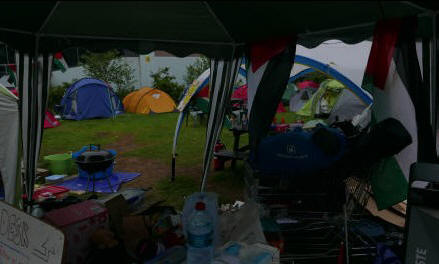
The fire at Crans-Montana, Switzerland has shown that neglecting fire safety can have horrific consequences. In 2024, I sent an
email to Professor Koen Lamberts, Vice Chancellor of Sheffield University. (20 May, not long after the camp had been set up.) I visited the
pro-Palestinian encampment frequently. I documented conditions at the encampment. I drew his attention to the acute problem to do with
fire
risks at the camp. I had photographic evidence to illustrate these
issues. An extract from my email:
' ... the tents at the Pro-Palestinian
Camp in Sheffield University Concourse, near the Student Union building,
are very closely spaced.
Very often, the tents - the smaller ones and the much larger ones - are touching or almost touching. The recommendation, made again
and
again by Fire and Rescue Services and camping organizations, is this:
Tents should be at least 6 metres apart, to avoid the spread of fire.
At this camp, a grossly excessive number of tents have been packed into
the available space. A tent can be consumed by fire in
60 seconds and at this camp, fire would spread from tent to tent with dramatic speed. Tents are waterproof, not flameproof. Flammable
materials abound in the large tents for substantial periods and I have seen no fire extinguishers. Fire regulations have been ignored at this camp.
This
camp isn't a 'Safe Space' but a dangerous one.
'Sheffield Campus Coalition for Palestine,' the organizers, and
Sheffield University have been risking disaster. In the event of fire,
the closeness of
the tents would not only have accelerated the spread of fire but limited the ability of tent occupants to get out of the tent and get out of the area. The
occupants would have got in each others' way, increasing the possibility of a high fatality rate and a high injury rate - a nightmarish scene which
could involve students trapped in an inferno in the middle of the night. [One of the images above shows that the tents extended right up to a main
entrance (and exit) of the Student Union Building. Fire would very likely have spread to this building and perhaps others in the area. If so, the exit
shown in the photograph could not have been used by any occupants in the building.] There would have been very severe legal consequences,
very severe general consequences, the University suffering catastrophic harm, its reputation suffering catastrophic harm - and many dead and
injured students at the
encampment.
What was the response? The students were allowed to 'Carry On Camping.'
They were instructed to take more care but the fire hazard remained.
It took quite a long time - far too long - before they were evicted. A possession order was granted by a judge at Sheffield County Court on 26 July,
more than two months after I contacted the university. The reasons for enforcing the closure of the camp released to the media gave prominence
to the fact that there was a fire hazard at the encampment and that requests concerning health and safety had 'largely been ignored.' I think I can
claim that if I hadn't pointed out some obvious facts concerning fire hazards and health and safety, it would probably never have occurred to the
Vice Chancellor and so many others that there was a serious risk. This was an avoidable risk, like so many fire risks. Instead of delaying, he should
surely have acted
very quickly.
A decision to put a stop to
the camp would have been strongly opposed by groups with a vested (and
ideological) interest in supporting the camp,
such as the Green Party and UCU (University and College Union). Would the Green Party, UCU and others have promoted the continuation of the
camp in view of the danger - to university staff and the general public as well as students in the Concourse area? A response from the Vice Chancellor,
or other senior staff of the university, the Green Party and the UCU would be very welcome but very unlikely. I take the view that evasion can be damaging -
in fact, very damaging, in itself, even if not nearly so damaging as a catastrophic fire. Complete silence can be worse than inadequate excuses. The record
here is in the public domain and the complete absence of answers is, in a sense, also in the public domain.
The university failed to consider the effect of the encampment on Jewish students. The encampment amounted to demonization of Jews and suppression
of evidence. The university was part of the process which led to the hideous state we find ourselves in now, with attacks on Jews commonplace: insufficient action,
delayed action.
The literature on genocide in vast: the genocide which led to the deaths of millions of Jews during the Second World War, and other genocides. Killing of civilians in
war doesn't amount to genocide in many cases - as when the allies killed large numbers of German civilians to defeat Nazi Germany. There's a vast amount of material,
academic and non-academic, concerned with these issues. Sheffield University didn't take into account this vast body of material. It uncritically accepted or did nothing
to scrutinize and criticize the ignorant views of the students at the encampment. When it eventually did take action, the action was based on good reasons, the fire risk,
no doubt the spread of graffiti, the evident futility of the protest - but the action should have been taken long before and taken account of a much wider range of evidence.
The university failed in matters to do with academic virtues.
Also relevant: my page presenting the case for Israel. The 'brave and dedicated students' (in the words of Green Party Councillor Dimond)
who took part in the futile protest were nothing of the kind. This is misuse of words. They needed no bravery.
The young people of this country who risked their lives and lost their lives, or risked horrific injuries and suffered horrific injuries in
the defence of freedom against Nazi aggression and Japanese aggression showed genuine bravery and dedication. In my experience,
these students showed no dedication to liberty. In my experience, they refused to discuss the issues, they attempted to suppress
honest debate. If the Green Party would like to engage in honest discussion with me about the issues and are ready to begin debating
the issues, then I'm ready to discuss and debate, to answer any objections to my views.s
Councillor Dimond also claims, ' ... the university should be proud to have such principled students.' They were part of a movement
which avoids and evades evidence, making obsessive use of slogan-shouting and slogan-writing (often in the form of crude graffiti),
a movement incapable of defending itself against reasoned opposition. On the subject of graffiti, the photographic documentation I
have available from my frequent visits to the student encampment in 2024 makes it clear that more and more concrete surfaces in the
Concourse area of the university were being covered in graffiti. From the students' 'Palestine Camp Bulletin, Issue 1, 6 May 2024:
'We want to cover every surface we can with chalk and banners demanding liberation.' This public area rapidly became a hideous
mess and what these students imagined to be 'demands for liberation' were simply crude, mindless slogans.
Another demand made by these students in the same issue of their 'Palestine Camp Bulletin:' 'We will remain camping until our
demands are met.' The camp ended with none of their demands met. The camp had achieved nothing, but ex-camp members,
Green Party members, UCU members, Palestine Solidarity Campaign members or other members of
the public who object to my view are welcome to contact me with any contrary evidence they can produce. I'll be happy to publish
it on the site.


The 'Sheffield man' is, of course, myself.
Design and construction of furniture are amongst my activities. One of the bookcases shown above is a new design, constructed from oak panels,
which are fitted together without the use of any woodworking joints or any screws, nails or other fixings. This allows for rapid assembly and
disassembly and the system has much wider use, for general shelving as well as for books. This is a very concise description of this radical
new system, which can be used to construct very large shelving systems. Whether the shelving system is large or small, it will be found that
construction is simple and straightforward. The design, however, despite the appearance of the shelving, is far from being straightforward.
Below, a larger image of the bookcase and a summary in images of the visit by two South Yorkshire PC's to my house: a fool's errand and a
stupid, completely unjustifiable use of police time.
The police car below is a South Yorkshire Police vehicle. I've obscured the number plate for
obvious reasons. I make it clear that the majority of visits made by police cars aren't in the
the least 'pointless ... with no chance of success.' All criticism of South Yorkshire Police on
this page is 'appreciation-criticism' and 'admiration-criticism.' The benefits vastly outweigh
the harm done - but some of the harm done is staggering in its stupidity. Information about
the staggering stupidity of this particular visit and its consequences is provided below.
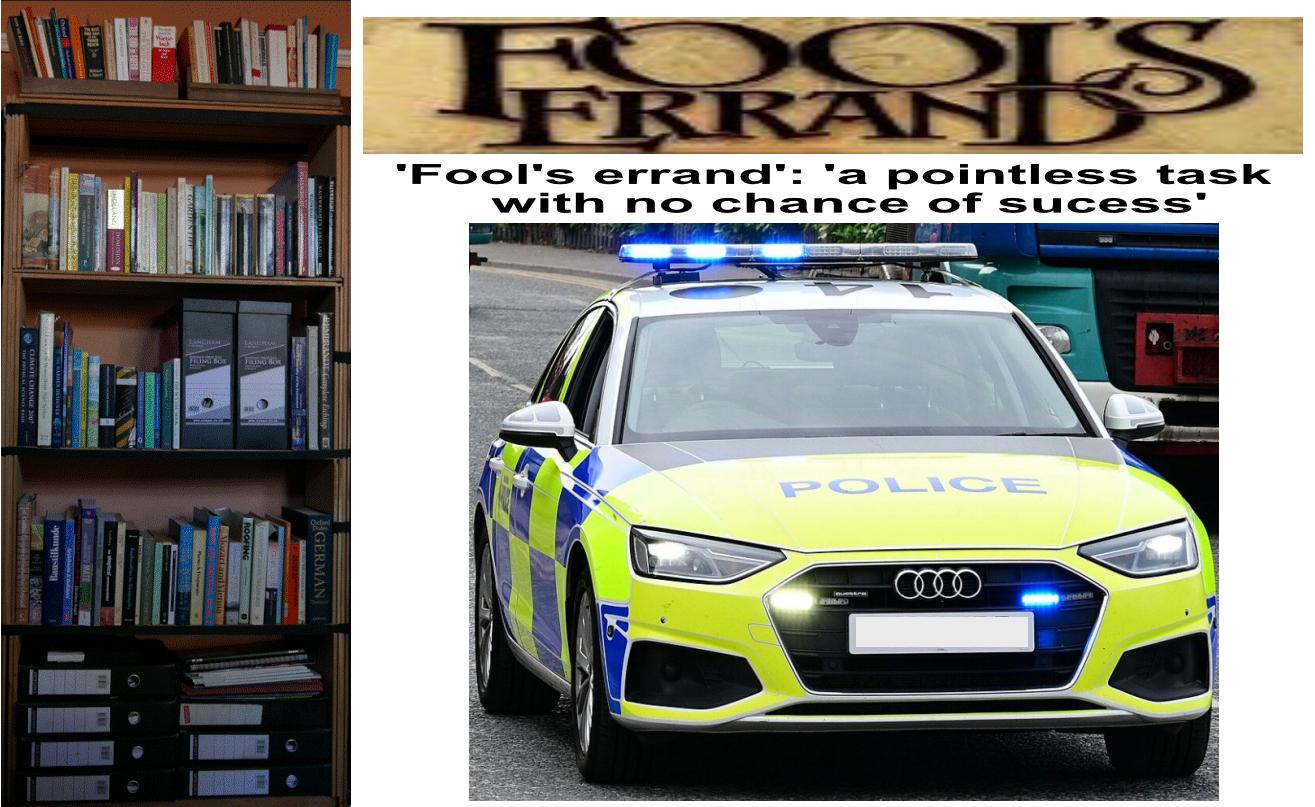
As a
result of the visit, further
allegations were made, including the allegation that I was 'mentally ill.' A
member of staff at Sheffield Adult Social Services came to visit
me. She found no evidence at
all of 'clutter' and 'hoarding' and no evidence of mental health issues.
Later, a letter from Tim Gollins, Assistant
Director, Safeguarding, Mental Health and Wellbeing at Sheffield City
Council informed me that her visit to my house 'was prompted by a
'Vulnerable Persons Form'
submitted by SYP [South Yorkshire Police] to the Multi Agency Safeguarding
Hub (MASH.) The letter also included this:
'The MASH worker visited your
property ... During the visit, no evidence of a mental health crisis was
observed. The worker had no concerns
regarding your mental capacity and noted
that you are a highly intelligent man and you are passionate about your
views and values.'
Google gives this information about
MASH: 'In Sheffield, the Multi-Agency Safeguarding Hub (MASH), often
referred to as the Sheffield
Safeguarding Hub, serves as the joint,
co-located service involving South Yorkshire Police, social care, health,
and other professionals to manage,
screen, and respond to risks.'
South
Yorkshire Police has a very different view of me, a view that I can show has
led to reckless action, to repeated reckless action, a view that I
can show is grotesque, bizarre
and based on active falsification. I take the view that South Yorkshire
Police is unfit to remain a member of MASH,
that it should only be allowed
to rejoin MASH after a period of exclusion. I have the documentation, the
detailed evidence, to support this view.
A
significant omission: the letter from Tim Gollins failed to mention that
before the visit by the MASH worker to me took place, MASH had already
contacted my medical centre with a
request to view or make use of some of my medical records, to provide, it
seems, further information about the
false allegation that I was
'mentally ill.' The doctor refused to comply with the request, rightly so.
According to the information available to me, if
the
doctor had complied, the doctor would have broken the law relating to
confidential information in a patient record and would have been
potentially liable to proceedings for
professional misconduct. MASH acted on the basis of information from only
one source, South Yorkshire
Police. Recently, I requested a
copy of the Vulnerable Persons Form which had prompted the very misguided
MASH request to view documents
documents relating to me at the medical centre. I made the request but the police document I requested wasn't made available, in whole or in part.
What I received instead was something very different - the records relating to me on the police computer, in heavily redacted form, so that
there were many, many gaps. The information was astonishing, largely amounting to scattered, semi-coherent, semi-incoherent bits and pieces, almost
random bits of irrelevant information - and information which should never have reached the official data of the police and been selected for
storage, although no rational system of selection was discernible. Amongst the many, many ludicrous but grossly unfair claims was this: 'He has
extreme opinions.' No evidence was provided at all for this allegation, no examples of any 'extreme opinions, no extracts from a single spoken or written
statement of mine. There were mentions of 'harassment' on my part, completely false allegations. Again, no evidence was provided. There were no extracts
from spoken or written statements of mine, no actions of mine were cited. There were no spoken or written statements of mine, no actions of mine, which
they could have used, none whatsoever. This didn't stop them from including the one-word accusation in their records. Their methods were arbitrary
and thoughtless. Do the data records of South Yorkshire Police contain many more examples of this ignorant method of data collection?
South
Yorkshire Police has assumed very wide ranging powers, such as the power to
sanction alleged 'clutter' and 'hoarding' in houses if they feel
like
it, the power to act as amateur psychiatrists. The finding that my house is
cluttered and shows evidence of 'hoarding' was based on a visit to
one
single room. In this section are some images of the one room. At the time of the
police visit, the bookcases were the same, with one difference. The
trolleys in various configurations were not there. I use the room sometimes
for temporary prototyping - structures installed for a short time and
then dismantled, structures which it would be
inconvenient or impossible to erect in other rooms. The trolleys were part
of a display and
presentation system I was working
on, with facilities for transportation of the components.
The visit of
the police was unannounced, unexpected. They were calling less than
two hours after I left the
Headquarters of the
Church Army in Sheffield. I had called there the previous day to request the
opportunity to talk with Faye Popham, the
'Associate Director of Organisational Development,' who had sent me a letter
which was cause for concern. I was told that she was not present on
the day. I called on the next day, the day of the police visit, and was told
that she was at a meeting. I had sent copies of correspondence
concerning some activities of the Church Army to
Church Army Trustees. The correspondence is made available on this site. The
main issue
discussed was to do with patronage of
the Church Army and the benefits likely to result from this patronage. Faye
Popham wrote, 'I am aware that
the police have
been notified of this correspondence being sent ... ' The correspondence is
made available on this site. It was courteous,
reasonable and certainly concerned the Trustees who received copies. The
response of the Church Army was drastic. I was told that the building
was private property. I was ordered to leave the building. The Church Army
obviously informed the police and the police sent a patrol car to my
house very quickly. The time of two police constables was unavailable to the
public for an hour: not in the least a good use of police time. In that
time, I explained why I found their visit unacceptable and why the visit by
two police constables on a previous occasion unacceptable - these
PC's had called to deliver the 'Community Protection Notice.' At one point,
PC Sarah Forsythe, on of the PC's in attendance, said abruptly, 'And
you called at Snig Hill Station"' This is the main police station in
Sheffield. I had called there to try to resolve some of the issues involved
in that
previous police visit. Visiting a police
station for such a reason is a perfectly reasonable activity. Sarah
Forsythe's comment gave the impression
that this
wasn't so at all. During the visit to the police station, I mentioned that
the police had been penalizing reasonable free expression on my
part, expression which is allowable in this
liberal democracy. The response of the woman: 'What does free expression
have to do with the police?'



South Yorkshire Police took decisive action in the case of a Sheffield man some years before, sending two PC's to his house to issue a 'Community
Protection Notice - Written Warning.' From the document: ' ... your conduct is having a detrimental effect, of a persistent or continuing nature
on the quality of life of those in the locality ... if from this time and date the conduct is still having a detrimental impact on the quality of life of
those in the locality, you will be served a Community Protection Notice. It is a criminal offence not to comply ...' Absolutely no evidence was
provided of any 'detrimental effect' in the locality. On the other hand, I can produce evidence of beneficial effects in the locality, evidence
that I've made efforts to enhance the locality, even: the photographs on this page and other pages showing my use of some land in this locality.
.This grossly unjust document was issued when the Chief Constable was Stephen Watson and Alan Billings was Police and Crime Commissioner
for South Yorkshire. I take the view that they failed to exercise adequate oversight. More recent developments, which have become more and more
bizarre and grotesque as well as being grossly unjust, have taken place when oversight has been exercised by Lauren Poultney and, after the role of
Police and Crime Commissioner in the county was abolished, by the Mayor of South Yorkshire, Oliver Coppard. The Chief Constable is supposed to hold
members of South Yorkshire Police to account and the Mayor has wider powers, holding South Yorkshire Police to account, the Chief Constable included.
I take the view that these people too have failed to exercise adequate oversight. My experience is that throughout this period, the police have done
what they wanted to, unchecked by these well-paid functionaries. From the reports I've read, Stephen Watson has been far less compliant, far more
energetic since he became Chief Constable of Greater Manchester.
Sheffield City Council takes decisive action against the same Sheffield man for alleged failure to cultivate the land rented from the Council in the
locality (Plots 111 and 112, Morley Street Allotments, shown in many images on this page and others. 'I recently completed a formal inspection of
the above Allotment Site [Morley Street] I observed no significant improvement in the condition of your plot (s), which remain overgrown and substantially
uncultivated, despite recent correspondence. As a result I enclose a formal Notice to quit your plot (s) ... all the property and effects must be removed.'
(Jane Bullimore, who perhaps had her reasons for her comments. The allegations were false. There was plentiful evidence of cultivation and evidence of growing,
more than sufficient to meet the Council's criteria.
The Notice to Quit: I, Rowan Longhurst, Countryside Services Manager, duly authorised agent of the SHEFFIELD CITY COUNCIL ... HEREBY GIVE YOU
NOTICE TO QUIT and deliver up on the 19 October 2024 the possession of the plot numbers 111 and 112 and premises, which you now hold of the Council
situated at Morley Street Allotments. Dated this 18/09/2024. I was successful in having the decision overturned. The decision to issue a 'Notice to Quit' was
a bad one, for many different reasons, with substantial implications - and continuing repercussions.
My attitude to Sheffield has changed markedly as a result of events, in particular, actions of the police and the Council documented on the site. I don't generalize.
The criticisms are sharply focused. I regard Sheffield as a place where I now find it difficult to work in the way I'd like to work, an adverse environment for my
environmental work and work on other innovations, a very adverse environment for free expression. The events include many which are grotesque and ridiculous,
many involving gross unfairness, gross bias, outright falsifications, failures to produce any evidence at all for allegations, disregard for the detailed evidence
I've provided.
Payback Time
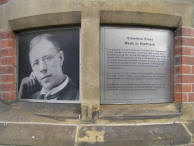
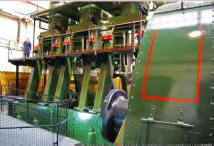
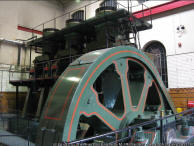
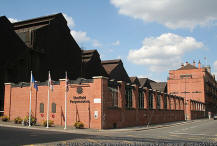
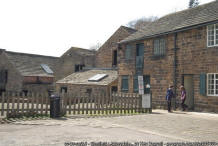
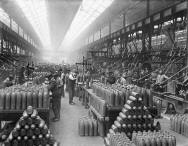
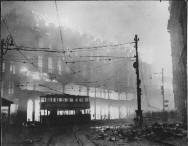

Above, images illustrating Sheffield industry - Sheffield industry is one of the reasons why I think of myself as privileged to have been born
in Sheffield. My admiration for the massive achievement of Sheffield Forgemasters , as for so many other Sheffield companies, past and present,
will be obvious, but of course, no endorsement for this page or any other material on the site on the part of Sheffield Forgemasters (or any
other Sheffield company) is claimed or implied.
F
An outstanding video concerned with Sheffield industry: https://www.youtube.com/watch?v=ov9jR7IC7tw Another outstanding video from the same producer,
British Time Capsule,on the history of industry in Middlesbrough: https://www.youtube.com/watch?v=v0TsDxJCayo My appreciative page on aspects of
Sheffield, Sheffield Dales.
My approach to growing is broadly based. Aesthetic values are very important to me and these values underlie my use of the land rented
from Sheffield City Council. From the introduction to Jane Grigson's 'Vegetable Book,' 'In my most optimistic moments, I see every town
ringed again with small gardens, nurseries, allotments, greenhouses, orchards, as it was in the past, an assertion of delight and human
scale.' The claim that I've had 'a detrimental effect, of a persistent or continuing nature on the quality of life of those in the locality' (the
land I rent happens to be in 'the locality') is not just false but vile. I made determined efforts to have cleared a large heap of fly tipped rubbish
near to the land I rent, shown below, but no action was taken by the Allotment Officer, or by the so-called 'Lower Walkley Community Garden' who
were using the area when the heap appeared or the Garden Church which took over the land later. As I see it, the Allotment Office, a branch of
Sheffield City Council, which owns the land, has favoured these groups far too much, acting in a biased way. I emailed the allotment officer
on 21 September 2021, drawing the flytipped rubbish to her attention. I emailed her again on 21 September 2021 about various matters and
reminded her of the fly tipped rubbish, which was still there. I've emailed her since then, reminded her again, and got nowhere. The pile was
removed in autumn, 2025, four years later.
The page Shambolic Sheffield contains an extract from one of the emails I've sent to Rowan Longhurst, Service Manager - Countryside. The email is
long but it would take a much longer email to do justice to the issues. Justice, elementary fairness, have been lacking in the pathetic, inadequate
responses I've received - particularly in the case of South Yorkshire Police, which includes in its repertoire of responses failure to give any
responses at all.
I practically never assume that anyone receiving an email from me will consult this Website. Very often, I'm writing about matters which are
already explained in detail on a page of this site. Very often, the issues need detailed coverage. Often, then, the email sent will necessarily
be a long one. Emails are a useful form of documentation, important as evidence. I regard documents of this kind as important, but they
have drawbacks. I spend a great deal of time revising material on the site, but it would be impossible for me to find the time to revise
many, many pages and parts of pages adequately. There are whole areas which need revision to a greater or lesser extent. This includes
quite a number of the gardening pages. Most of the pages concerned with literature don't require much revision at all but very many do
require extension - they're too short to satisfy me. Emails, once sent, can't be revised, of course. When the emails have documentary use,
potentially, then this is a disadvantage. I may feel that nuances haven't been conveyed, or I may feel that some important information has
been omitted. If the email is added to a page of the Website, then this isn't in general a problem. I can add corrections, amplifications,
revisions in general. The written record of my work on design and construction is far too concise to do justice to the issues. This is one area,
but not the only area which needs far more attention. To attend to one thing is necessarily to neglect others.
The land I rent from Sheffield City Council has an important part to play in the mistaken actions of South Yorkshire Police, Sheffield City
Council allotment office and some other agencies / organizations. There are many, many photographs showing my work in growing and
construction and encouragement of wildlife on these allotments. They are near to my house, they are in my 'locality,' the word used in
the 'Community Protection Notice - Written Warning' which was issued to me: '... your conduct is having a detrimental effect, of a persistent or
continuing nature on the quality of life of those in the locality.' Absolutely no evidence was provided of anti-social behaviour on my part in
the locality or anywhere else. I do have evidence of efforts to make the locality one in which plants and wildlife can flourish. I do have
evidence that I made determined efforts to have fly-tipped rubbish removed from an area n the locality - evidence of a desire to benefit
the locality, surely.
These images were included in the email sent to Rowan Longhurst. After the images is 'an extract from an extract,' a short section of
he email extract on the page Shambolic Sheffield.


Dear Rowan Longhurst, I refer to] ... the enormous heap of fly-tipped rubbish. The enormous heap was placed there whilst the allotment land was
being 'cultivated' by the 'Lower Walkley Community Group.' This is the group which had been given use of the land, initially rent free. The 'Garden
Church' was given use of the land later. (I think this would be an opportune time for some information to be made available: the Garden Church was
obviously
recognized by the Allotment Office. Under what terms? … There are further
questions which it would be beneficial to answer.)
Jane
Bullimore obviously knew about the enormous heap of fly-tipped rubbish and
had known about it well before I communicated this information.
She will have seen it during inspection visits to the site. Or was it thought unnecessary to inspect the site, to exempt these groups from the inspection
process? In my case, the inspection process led to blatantly unfair and deeply disturbing results last year. Certainly, after this communication from me,
she should not only have inspected the site but carried out action to have the rubbish removed. Surely it would have been essential to carry out this further
action: to end the use of the site by the Lower Walkley Community Group and the Garden Church. These groups had been grossly irresponsible in doing
nothing to have the pile removed. According to information I received, the rubbish had been put there by the Lower Walkley Community Group, with one
member named as directly responsible. If a pile of rubbish of this size or much smaller in size had been seen in any other allotment sites, then the allotment
holder would have been given Notice to Quit. To me, this disparity is worse than simple bias ... Jane Bullimore has questions to answer concerning her
failure to act. I take the view that you have questions to act concerning your failure to so much as mention this very important issue in your reply to my email
of 31 October when I had drawn your attention to the heap …

In the row above, execution sites for some states of the U.S. The Nazi Goering in the dock. Lethal injection chambers
and an image of the electric chair. Goering, when he became Minister-President under Hitler, took on the prerogative
of clemency in Prussia. It's an extraordinary fact that when the condemned had been sentenced to death for any
length of time he hesitated about allowing the execution to take place. The historian Richard J Evans writes in
'Rituals of Retribution: Capital Punishment in Germany 1600 - 1987,' Goering, a man not generally known for his
sensitivity to human suffering, indeed went on to grant reprieves to a number of these prisoners, precisely on this
ground; a telling contrast to the equanimity with which other judicial authorities, in other places and at other times,
have regarded the confinement of condemned prisoners on death row not for months, but for years, while awaiting
a final decision on whether they should live or die.' On 5 May 1933, Goering pointed out that in all the cases which
are now before me, it is extraordinarily difficult to allow justice to take its course after the condemned, as a result
of the uncertainty under which they have already been labouring, some of them for an extraordinarily long time.
[this was perhaps a few years at most, not two decades or far more than that, commonplace in the United States.]
The danger of executing the innocent is a common objection to the death penalty (I talked to three men who were
on death row and released when it was found that they were innocent.) Another danger: the danger of executing
those who were guilty but who were treated as babies or children in a hideous way, beaten, abused, suffering
gross neglect. It seems that Christa Pike, subjected to a botched attempt at execution, was in this category. She
had been on death row for thirty years.

Above, image 1, the face of W. Lee, the governor who refused clemency to Christa Pike and decided that
the execution should go ahead, thirty years after she was sentenced to death.
Image 2, an attempt to depict the inner state of the governor, or some aspects, in particular its
hideousness, conveyed, I hope, not by means of words but by an image - the photograph of
Sloane's viperfish, Chaudiolus sloani. The fish has very large teeth and when the jaw is closed,
they fit together to make a cage which can trap the prey. Not the most charming of creatures, then.
Image 3, The Dalek Davros as he appears in 'Doctor Who.' The resemblance between the Dalek
and the Governor of Tennessee is uncanny, again, referring to his inner state - although the robotic
governor and the Dalek do have some linkage of appearance. The emotional life of the Daleks is
severely restricted. From the Wikipedia entry for Dalek: 'The Daleks are a made-up alien race of
mutants from the British science fiction television series Doctor Who. Daleks are aliens from the
planet Skaro, integrated within a tank-like metal casing ... they have no pity, feelings or guilt (as
all their emotions were removed except hate.) ...They cry 'EX-TER-MIN-ATE' when they are about
to kill somone.' In the case of the Tennessee Governor, give the order to kill.
To me, the governor - and all the others who share his views on these aspects of penal policy - seems
alien, monstrous. I hold the view that atrocious crimes have to be punished adequately, more than adequately
in so many cases, punished severely. In the case of Nazi War criminals, I take the view that their crimes were
so many, so horrific, that many more of them should have been sentenced to death in the trials which took
place after the Second World War. Many more Japanese war criminals should have been sentenced to death -
and executed, of course. My page on the death penalty gives more argument and evidence.
So far, Tennessee Governor Bill Lee has not responded to repeated calls from Pike's attorneys and
death penalty observers to commute her sentence to life in prison. That leaves open the possibility
that Pike will face a second execution ... This cruel specimen (the governor, not the fish) worships
at Grace Chapel near Nashville, described as a 'non-denominational evangelical megachurch.'

New Creations:
a reference to the (untrue) claim of 'St' Paul, 2 Corinthians 5:17, 'Therefore, if anyone is in Christ,
he is a new creation: old things have passed away; behold, all things have become new.'
Below, not Grace Church but something similar: Gateway Evangelical Megachurch, Texas.
The founder of Gateway Evangelical Megachurch is one James Morris, yet another 'New Creation.'
President Trump named him is spiritual adviser and he became a member of his evangelical
advisory committee.
Some brief extracts from the BBC report, 3 October 2025 https://www.bbc.co.uk/news/articles/cqxz19lyredo
'A Texas pastor who founded one of the largest megachurch congregations in the country
pleaded guilty on Thursday to sexually abusing a girl of 12 in Oklahoma in the 1980s ...
the former leader of Gateway Church was handed a 10-year sentence but will
only serve six months in jail and be on probation for the rest of the time. He must also register
as a sex offender ...'
The victim, Cindy Clemishere, said that he abused her for four years. 'She said she had first
told her parents and leaders at the church [a church in Oklahoma] about the abuse in 1987 but
no one called the police ... Morris founded Gateway Church in 2000. At its peak, the group had
100,000 active attendees, with nine locations in Texas and surrounding areas, according to the church.'
There are various Youtube videos concerned with the man, matters not to do with his 'spirituality,' not
to do with James Morris as New Creation but with James Morris as sex offender. One of them:
https://www.youtube.com/watch?v=QqnhaCk5mXI
This photograph shows James Morris in 2022:
Texas has executed 603 people since executions resumed in 1982 - over a third of the U.S. total.
Below, the Huntsville Unit, site of the Texas execution chamber. A significant number of states
executed juvenile offenders in the 20th century - a 14 year old offender electrocuted in South Carolina
in 1944 (it was later found that he was almost certainly innocent - the sentence was overturned in 2014.)
Another offender 14 years old at the time of the offence was executed in Mississippi in 1947. An offender
who was 15 at the time of the offence was executed in Louisiana in 1948. A 17 year old at the time of the
offence was executed in Maryland in 1959. Since the reinstatement of capital punishment in 1976, 22
people have been executed for crimes committed when they were under the age of 18. More than a
quarter of these juvenile offenders have been executed at the Huntsville Unit.
There was a public hanging in Kentucky in 1936 and of course President Trump wanted a resumption
in 2026. The United States is far from being the most barbaric state in matters to do with the death
penalty but its overall record is a record of backwardness - with many significant exceptions. This
shows a public hanging in 2008 in Shiraz, Iran:
Images below, Row 1, Image 1, the beautiful Tennessee River flowing through the beautiful Tennessee
River Gorge. The river flows through a tainted state, a state that I myself would avoid. I did visit
Tennessee a very long time ago and found the parts I visited very compelling, a vivid memory.
Image 2, Nashville: a modern, ultra-modern, primitive place.
Image 3, Vanderbilt University, Nashville, the Wond'ry Center for Innovation and Design, not so
wondrous in some respects. From its Linkedin profile: 'The Wond'ry ... plays a pivotal
role in building and strengthening creativity across campus, which fosters innovation in all fields
[Hyperbole: ALL fields?] ... The Wond'ry is the epicenter for creativity, innovation and entrepreneurship
on campus where discovery and learning are unleashing in an inclusive environment. Students and
faculty are encouraged to build, innovate, explore and care.' [Care? Obviously there will be exceptions,
perhaps many exceptions, but it seems very likely that they couldn't care less about some basic
humanitarian issues.]
Row 2, Knoxville, yet another advanced / primitive hybrid. Christa Pike was sentenced to death there.
This is a town I've visited. At Sharp's Ridge, north of downtown Knoxville, the Great Smoky Mountains
can be seen rising in the distance.
Row 3, the sublime Smoky Mountains as seen from Mount Le Conte, Tennessee.
The Great Seal of the state.
The location of Tennessee in the United States. The execution site is at Riverbend
Maximum Security Institution, Nashville.
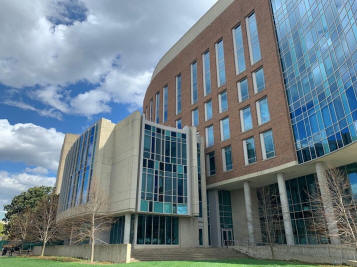

A few more hints to help and possibly convince those unsure if the current Governor of Tennessee is as
clueless and hideous as I claim, specifically, his clueless and hideous Evangelical beliefs. There are many
pages on the site which give much more background information, not only on evangelical beliefs but other
manifestations of dogma.
Extracts from the page 'Core beliefs of Grace Community Church, https://gccnashville.org/about/our-beliefs/doctrine/
'The Bible ... is truth without error. It reveals the way of salvation and is the full and final authority on all
matters of truth and discipleship ... Jesus Christ will return personally to the earth. Christ will judge all
people. Unbelievers will be separated from God in hell, which is the place of everlasting punishment.
Believers will receive their reward and will live forever in heaven with the Lord, according to his gracious will.'
Perhaps the folk at Grace Church, perhaps even the Governor of Tennessee himself, could give some further
information and explanation - or perhaps not.
According to this neat but lunatic scheme, all the people in Tennessee, past and present, are sentenced to
Hell for ever and ever, Amen, if by any chance they are unbelievers. According to this horrible, hideous
scheme, owners of slaves in Tennessee before abolition - including ones who flogged or otherwise mistreated
slaves - were rewarded with heaven, provided they had belief in Jesus as saviour. Slaves in Tennessee (and
all other places) were punished with hell. If it's claimed that Christianity transformed the relationship between
owner and slave, so that mistreatment never occurred, the facts give a very different picture. There are the
evangelical beaters and floggers of the present day to take into account. Slave owners who never mistreated
their slaves were in a position which was fundamentally unjust. Owners were free to separate family members,
to sell babies and children at the slave market, to separate mothers from fathers. The American civil war was a
necessary conflict and victor for the confederacy would have been a disastrous outcome. Slavery had to end
and it should have been ended long before.
Any comments on those who found it impossible to believe in Christianity because they were abused by
Christians? There's a very large body of evidence concerning evangelical abusers and abusers who are
followers of other Christian schemes. How does the God these people believe in deal with the problem of
people who lived before the Christian era? How does this God deal with the problem of people who live or
did live in countries with no Christian influence, or hardly any?
The notorious evangelical John Smyth of the Church of England abused more than 100 children and young men.
He identified pupils from leading public schools, including Winchester College, and took them to his home near
Winchester. He carried out lashings with a garden cane in his garden shed. Eight of the boys received a total of
14,000 lashes. Two more boys received 8,000 strokes between them over three years. The Iwerne Trust, which
ran evangelical camps attended by John Smyth. The Trust reported his activities as an abuser in 1982 but the
report was not made public until 2016. During this time, officers in the church 'knew of the abuse and failed to
prevent further abuse.' A later review commissioned by the Church of England stated, 'The conclusion of the
review is that he committed criminal acts of gross abuse.'
Issues to do with abuse occur and have occurred in many other churches and the abusers have been non-evangelicals
as well as evangelicals. Chris Brain, the founder of the Nine O' Clock Service in Sheffield was found guilty in 2015
of 17 charges of indecent assault.. Very recently, at a second trial, a jury found him guilty of one count of rape
against a woman in the Nine O' clock congregation and four counts of indecent assault against other women.
Of the various branches of the United States military 407,316 were killed. Of those who lost their lives on the
beach at Omaha, in the Atlantic, in the liberation of Europe, in the fighting on the Japanese-occupied Pacific
islands and all the other theatres of war, only a minority were believing Christians. The fighting on Iwo Jima
and all the other places was too intense and deadly to think about becoming a Christian, to examine the
evidence. They were killed too early for them to contemplate that. What of the Jews who were gassed in the
extermination camps, shot by the Einsatzgruppen or beaten to death or burned alive? Does the Governor
really believe that these non-believers are doomed to hellfire for eternity? His own action in refusing clemency
was bad enough but if the dogmas of Grace Church are to be believed (no rational person could or should
believe them, surely) then God's punishment is vastly more unfair and cruel.
What of babies and children? I've developed a challenge for Christians. Can they explain what is the fate of
babies and children in this horrific scheme of salvation? Is there an age limit? No damnation for those under
the age of 18 or 15 or 10 or 5? What of babies and children with very serious medical conditons? Or adults
with similar conditions, for that matter? Does God take into account extenuating circumstances?
What of the people who qualify for salvation according to this scheme but who would seem to be undeserving
of eternal bliss, such as the flogger John Smyth. Is the evangelical / Christian view that the sins of these
people are simply forgiven? What of the Nazis who tortured and executed but adopted Christian beliefs later,
or the Nazis who combined Nazi beliefs with Christian beliefs? Forgiven too?
The Governor, and his co-religionists at the Grace Church, haven't thought things through, obviously. At least
it's obvious to me. President Trump hasn't thought these things through - President Trump hasn't thought
many things through, in a more or less rational manner, in so many areas of life. His business dealings will
be an exception, some of them or many of them at least. Some of his instincts are surely sound. He isn't wrong
about everything, far from it, but the common sense and the good decision-making and the strengths and
virtues he does have are grafted on to an abject apology for a person. He has a notorious tendency to drift.
His good decisions are so often transient, undone by stupidity. His strengths and virtues aren't in the least
constant. To summarize, he isn't a fit person to be the President of the United States.
If I seek a representation of Donald Trump which does justice (partial justice, obviously) to his startling
and bizarre incongruities then I would have recourse to the figure of a 'Jenny Haniver,' a ray or skate that
has undergone modification by hand before drying, intended to be a representation of a creature such as a
dragon. Below, left, one of these hybrids on display at Mashhad Museum, Iran.
If it's objected that these look nothing like President Trump, I'd state again that this has to do with mind and
the interior, not with externals. President Trump seems to me a shrivelled, dried up husk, in one of his aspects.
I realize that he has others. On the right, a very different Jenny Haniver. The President could end up in a much
worse state than his present condition - many people would claim that this is impossible - he couldn't possibly
get much worse than he is already. I think that further decline is perfectly possible. He could end up in a state
suggested by the image on the right. Attendance at the freak-shows provided at envangelical mega-churches
would reveal many more grotesques of this kind, the inner self not concealed by outer appearance. These
freak shows take place in many other settings, such as Church of England and Roman Catholic services.
I stress the obvious fact that these reflections are obviously subjective, and the fact that grotesque
weaknesses can be accompanied by massive strengths: the extreme contrasts which human nature
can present, but not always, not in the least. There are specimens with next to no redeeming features
or no redeeming features whatsoever.


In 1860, 25 % of Tennessee's total population were slaves. (In South Carolina, 57% of the total population
was enslaved. In Mississippi, it was 55%.) The Southern states, like the Northern states, were solidly
Christian but in the middle of the nineteenth century, after so many centuries of slavery, slavery
persisted. In the churches, there were prayers, sermons, bible readings, hymns and the rest - and abject
ethical failures. Jesus never found problematic the flogging of slaves, the torture of slaves, the execution
of slaves, the selling of slaves in slave markets, including the selling of babies and children. Similarly,
'St' Paul. They never objected to executions, even though the executions often took revoltingly cruel forms.
Their minds were on other things. The minds of their followers have mainly been on other things - such
as persecution of non-believers - throughout the Christian centuries.
Is the Bible really inerrant? Is it completely without contradictions and worse? If information about the
contradictions and impossibilities of the Bible is a non-existent field for the Governor and his brethren, for
people without those certainties, the field is a massive one. I'll just mention a single aspect now, Noah's Ark.
The Governor and his mates seem to me to lack an essential or at least a valuable asset, a healthy sense of
the ridiculous. Also lacking, of course: an inquiring mind. A little imagination would also help - have the
people at Grace Church tried to imagine the animals going into the ark, elephants, lions, tigers, deer, mice,
rats, rabbits - have they tried to imagine the sheer numbers of animals, the difficulties of separating the
carnivores from their prey, the difficulties of feeding all these animals, the enormous amounts of food
needed? How did they manage the enormous amounts of dung, droppings, faeces? This is a 'Bible fact'
which can't possibly be true, but is still believed by large numbers of Americans and credulous people
in other countries.
Only land animals were admitted, according to the ridiculous fiction, which is just as well. No doubt the
governor believes in special creation. If so, he could ask himself the question (or perhaps not), Why did
the God he believes in create such a mixture, with a large number of hideous forms, such as the
viperfish shown above?
Christians have neglected such questions as these whilst indulging in rampant sentimentality. The
viperfish is one of those small creatures mentioned in this Church of England hymn:
All things bright and beautiful, all creatures great and small, all things wise and wonderful, the lord god made them all. Each little flower that opens, each little bird that sings, he made their glowing colours, he made their little wings.
The words were first published in 'Hymns for Little Children,' 1848. The little children at that time
will have been able to witness public hangings. The adults saw no reason to protect children
from such sights. It was almost twenty years before public executions were abolished in this country.
The third verse written by the poetess Cecil Frances Alexander is usually omitted from performances
of the hymn and has been omitted from 'The English Hymnal' and 'Hymns Ancient and Modern:'
The rich man in his castle,
The poor man at his gate,
God made them, high or lowly,
And ordered their estate.
The last two lines of the last verse of this fiction:
How great is God Almighty,
Who has made all things well.
If so, why did God make childbirth so dangerous - the risks only removed in large part due to
human ingenuity? Why did God determine that in most cases, infant mortality claimed the lives
of vast numbers of babies and young children?
In the 1840s, infant and child mortality rates were very high. One in six babies died before their
first birthday and about one in three failed to reach the age of five.
15% to 40% due to puerperal fever and limited medical knowledge and facilities.
- Severe bleeding during or after labor, combined with prolonged, obstructed labor, could quickly
- cause fatal shock.
- There were no antibiotics, no safe blood transfusions and no effective antiseptics for much of the decade.
- Caesarean sections were almost always fatal.
Now, as in the past, people spend so much time on Bible study and neglect studies which would transform
their attitude to the Bible and their Christian belief - inconvenient and shocking facts, a massive number of
facts, includingincidental facts such as these. The First Crusade (1096 - 1099) was the first of a series of
religious wars. The aim of the church was to end the occupation of the Holy Land by Moslem rulers and return it to
Christian rule. The church's action was enthusiastically supported in Western Europe. The 'People's Crusade'
marched through Germany on the way to the Holy Land and took part in extensive anti-Jewish activity, including
the Rheinland massacres. In 1096, on the way to the First Crusade, Gottschalk (a local priest) led a mob
of crusaders who attempted to force the mass conversion of Jews in Regensburg [now in Germany]. They
then killed all those who resisted.' The Crusader armies reached Jerusalem and besieged the city. It was
captured and they massacred a large percentage of the residents.
The amount of material available is practically inexhaustible - Christians killing Jews, Protestants
killing Catholics, Catholics killing Protestants, men, women and children, Catholics and Protestants
killing supposed heretics, in long conflicts (the Hundred Years' War and the Thirty Years' War), on a mass
scale and individually, killing with torture and killing without torture, killing with weapons and killing by
burning alive. Reading 'St' Paul's epistle to the Romans or Galatians will do nothing to provide the
believer with some essential background knowledge.
Historiography is more than collecting 'historical facts,' but a more sophisticated approach can follow.
The painting below, by the American folk Painter Edward Hicks, shows animals on their way to Noah's Ark.
The Ark supposedly contained all land animals, entering the Ark and housed in the Ark in pairs. The Ark was
supposed to save some animals from 'Noah's Flood,' shown in the third image below, a painting by Leon
Comere. Speculation that this was impossible, that the Ark could not possibly contain all land animals,
was resisted with dogmatic insistence that it must be so. The Bible could not possibly be wrong.
The 'Ark Encounter' is a Christian theme park in Kentucky operated by 'Answers in Genesis,'
pseudoscience and creationism. According to 'Answers in Genesis,' the universe is not nearly as old
as scientists maintain, and in actual fact, humans and dinosaurs have co-existed. They have been
very energetic in promoting their beliefs.
The second image below shows the very large representation (not replica) of Noah's Ark. The Governor
of Tennessee has the same beliefs, unless he's secretly a skeptic as regards some aspects of 'Bible
Truth.' Meanwhile, not far away, at Vanderbilt University, the scientists will uphold the scientific view
of the age of the earth and the rest, even if some students and faculty or many students and faculty will
agree with the Grace Church view of things. My view is that the Grace Church view is the view of
indoctrinated indoctrinators.
Below, assorted fish. The animals supposedly taken into the Ark were land animals. There are many
bizarre land animals but the most bizarre are, perhaps, fish and particularly deep sea species. Many
of these can challenge a believer's belief, unless the believer is incurious and self-protective. These
challenge creationist belief in particular. If God created all living things, how to account for the massive
diversity of living things and the existence of so many strange, distasteful and savage forms? Believers
who accept evolution have less of a problem - evolution involves chance - but the differences with the
Biblical account are extreme.
An outline of a fish was used by Christians to represent their faith early in the second century.
ΙΧΘΥΣ
is the Greek word for 'fish.' The letters of the word are the first letters
of these words:
Ἰησοῦς
Χρῑστός ΘεοῦΥἱός Σωτήρ
These are the Greek for 'Jesus Christ, God's
Son, Saviour'.
Ichtheology: new branch of theology, devised by me. The study of the linkages between theology and
ichthyology, the study of fish.
The word 'fishy' has an established meaning: doubtful, suspicious, questionable.
Below, a diagram and photographs of assorted fish, with fanciful comments


Row 1,
Image 1. A female anglerfish with smaller males attached. The look on the fish face seems
apprehensive, suggesting, perhaps, a female member of the clergy with some undefined problems.
Image 2. A black swallower. This fish face, on the other hand, suggests a narrow-minded
dogmatist with a cruel streak, or one of the dangerous dogmatists from a previous century.
Image 3. Another dangerous dogmatist from a previous century, or perhaps not - a Christian
with more bark than bite, a bloated buffoon, even.
Image 4. An outline of a fish is a common symbol for Christian. I use a fish outline for another
purpose, opposition to Christianity. Ichtheology can have a speculative, unimportant branch, linking
particular fish with particular versions of Christianity and even individual Christians, as with the linkage
proposed above between the Governor of Tennessee and Sloane's viperfish.


Row 2, Image 1. Great white shark. Very dangerous. The clerical counterpart, a persecutor or executioner.
Image 2. A barreleye. This suggests a half-awake theologian or a cleric in an obscure parish with
few members of the congregation and few cares. Perhaps someone who has lost his faith, even?
Image 3. A scalloped hammerhead shark. The associations of hammer - hitting hard - are absent
here. This seems to suggest a Christian who is giving himself a hard time rather than hitting out, dazed
by experience.
Row 3, Image 1. Lizard fish. Rather lazy, content with very little, perhaps gaining a reputation for holiness.
Image 2. Probably not at all an athletic or sporting type, in fact, a member of the clergy who probably
doesn't take very much exercise.
Image 3. Pachystomias microdon, one of the bioluminescent fish. A rather odd looking individual,
very impulsive, fond of sermons on Christ as the light of the world.
Image 4. The owlfish. A linkage with a studious Christian, young rather than old, seems quite likely,
someone who spends a great deal of time reading, but not necessarily reading the Bible.
In the Americas, only the United States carries out executions. In Europe, only Belarus still executes.
In this respect, the United States is the Belarus of the Americas and Belarus is the United States of Europe.
Public executions took place in the United States well into the twentieth century. The last public execution
took place in 1936, in Kentucky. According to Michael Trotti, post-Civil War public executions in the South
often drew massive, mixed race crowds ... ministers transforme the scaffold into a site of religious
devotion and vocal expression. Executions of offenders under the age of 18 continued in the United States
into this century. The last juvenile offender was executed in 2003, in Oklahoma, not one of the more advanced
states. Executions of juveniles were abolished by the Supreme Court in 2005. A broad consensus is emerging
that adults aged 18, 19 and 20 may well display cognitive immaturity similar to or the same as adults. Since 2020,
an average of only one adult in this age group in the entire country has been sentenced to death. Christa
Pike was 18 at the time of the offence and was sentenced to death at the age of 20 in Knoxville.
In the technologically advanced United States, so often a force for good, executions are so common that they
have become a matter of routine, actively opposed by only a small minority. The time is long overdue to ensure
that Texas and other backward [more accurately, partially backward] states which have continued to execute
execute no longer. In some respects, the United States is more in thrall to tradition than this country. One
tradition which persists in the United States but not here is tolerance for the barbaric relic of capital punishment,
not just tolerance but often an enormous appetite for judicial killing. There are Americans - and not few in number -
who actually want executions to be slow and horrible. (But the quick executions are horrible too.) Apart from its
many attractions, its massive achievements and massive strengths, America is a hideous country with some
hideous people, e.g. the current Governor of Tennessee, nutty as a fruitcake, and Frank Strada, the state's prison
chief. According to lawyers, Frank Strada has now overseen a fifth botched execution since 2022. Of course, all
countries have some hideous people and some countries have had and some countries still have hideous people
in very large numbers. Nazi Germany was one of these. The United States isn't remotely comparable to Nazi
Germany and neither is Israel (which never executes.) To suppose otherwise is disgusting falsification.
More material on the death penalty.
From a Google Overview: rOn his personal website ... thinker and writer Paul Hurt details his strong yet nuanced
stance against the death penalty.
eHis Core Stance: Strongly Against, But Not Always
Hurt outlines his position on a page titled 'The death penalty: reasoned revulsion' ...
General Opposition: Opposing capital punishment in almost all modern circumstances. n
gThe Nazi Exception: His primary exception applies to historical justice. He explicitly states
that the use of the death penalty was fully justifiable against Nazi war criminals and that far more
of them should have been executed after the Second World War.
Background and ActivismB
aHurt's position is backed by decades of human rights work:
He was a member of the Sheffield Amnesty International group for twenty years ... For most of that
time, he served as the group's death penalty co-ordinator ... and speaking at national Annual General Meetings. criticis m -
cHe eventually left the organization, stating that he found Amnesty International's campaigning techniques lef
stto be 'demonstrably ineffective' and grew increasingly critical of the organization.
End of this Interlude



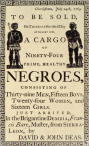

The evils of slavery have a prominent place in this site but I strongly oppose payment of massive reparations - the payment of any reparations at all - to countries affected by slavery. In this
case, strong opposition won't be needed to prevent the action. Payment of reparations is completely unrealistic, plans to pay reparations are completely unworkable. The Trans-Atlantic
slave was massive but the general trade in slaves was far more massive than that. Many of the countries from which slaves were taken dealt in slaves themselves. Remembering the slave
trade is one thing, payment for events which took place so long ago is another. In the twentieth century, this country and this country's allies fought German aggression heroically. This
country and others paid a high price in lives lost and a crippling financial cost. A modest suggestion: the Church of England could be encouraged to pay reparations, after debating the
issues in the General Synod. The issues debated should include the ones mentioned next, including the 'teaching' of the church and its founder or co-founders - Jesus and 'St' Paul and
the practice of the Church during the many many centuries of ecclesiastical history.he
The 'teaching' of Jesus and 'St' Paul made no
mention of the evils of slavery. During most of the history of
Christianity, almost all Christians ignored the evils of slavery. During the
Roman
Empire, Christians failed to oppose the separation of babies and
children from their mothers and fathers, the selling of babies and children
in the slave markets, to become the property of
new owners - who had the
legal power to torture slaves, to use slaves for sexual gratification, to
abuse them emotionally and physically. In recent times, Christian
clergy and other Christians
have
carried out gross acts of abuse, including
rape. Only a small proportion of these cases have come to general public
attention. If this can happen in societies with strong legal
safeguards,
the abuse in slave societies must have been far, far worse.
Before taking part in a Communion service at St Mary's Church, Walkley,
Sheffield (more information on this church in the row below),
Alan
Billings referred to me in a minor, obscure Youtube video, one of a long
series of videos recording services at St Mary's. He made it clear that he
took exception to my views on slavery and
the role of Christian churches in slavery. My view is that the evidence against the churches is overwhelming. His view is obviously very different. I've provided detailed evidence for my views,
on pages of the site. He hasn't provide any evidence for his views. Alan Billings is the former Police and Crime Commissioner for South Yorkshire. On this site, pages with evidence that
his record is much worse than inadequate, that he was a feeble Police and Crime Commissioner, that all too often, his policies were damaging ones
.In 1835, James Pratt and John Smith were executed in public. They had been convicted of 'sodomy,' 'same-sex carnal offences' in this country. A chaplain was in attendance and prayed
for them. They were the last people to be hanged for this reason, but the death penalty for this 'crime' was not to be repealed until 1861. Homosexuality was decriminalized in England
and Wales more than a century later, in 1967. It legalized private acts between men over 21 years old. In January 2017, Pratt an Smith were amongst those posthumously pardoned by the
'Alan Turing Law.' This is a long and shameful chapter in British history and far from an isolated case. Of course, the 'teaching' of Jesus did nothing to deter persecution of these men but
the 'teaching' of Paul was even more misguided.
a
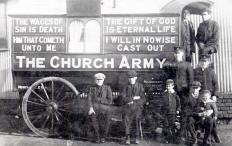







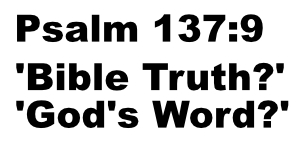
End of the Interlude
(4) Below, a very large number of general images, with reduced text. The most
varied section of the site.






















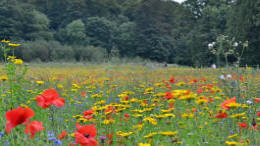
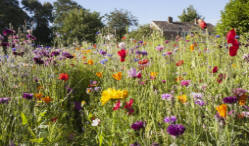








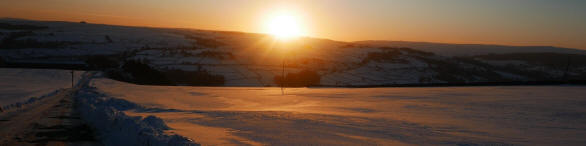





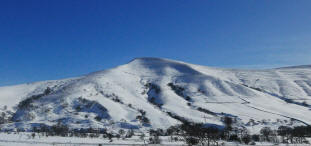
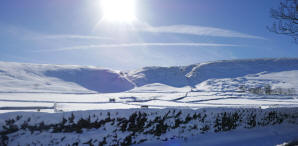

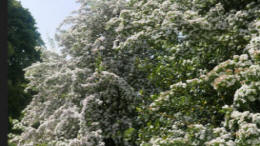
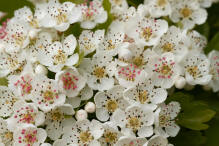
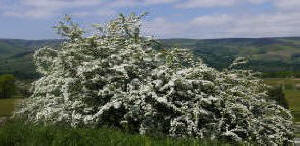
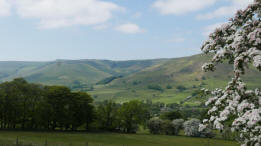






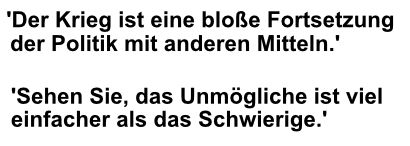







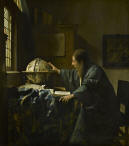
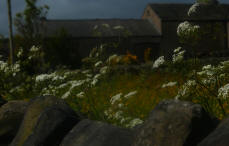


 oooooooooooooooooooooooooo



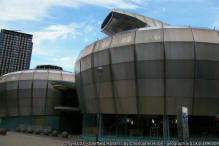
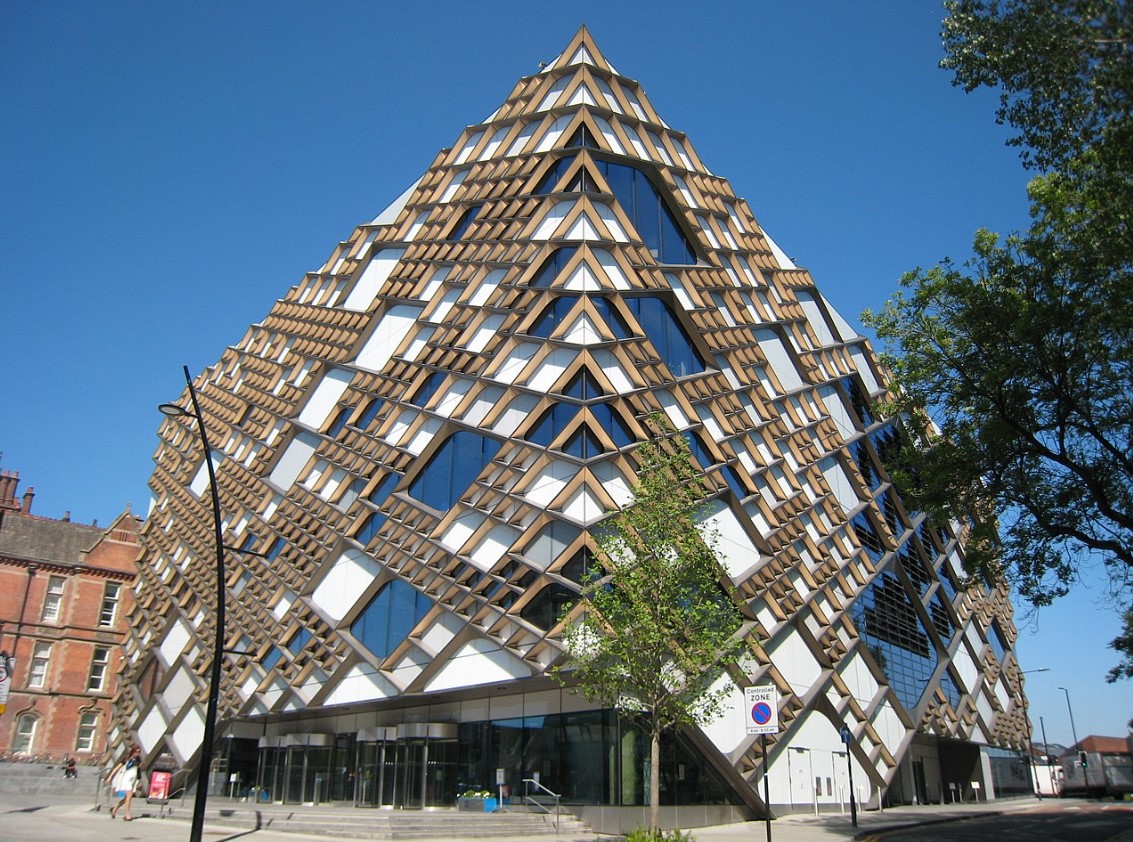
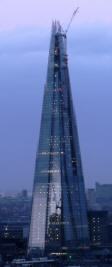











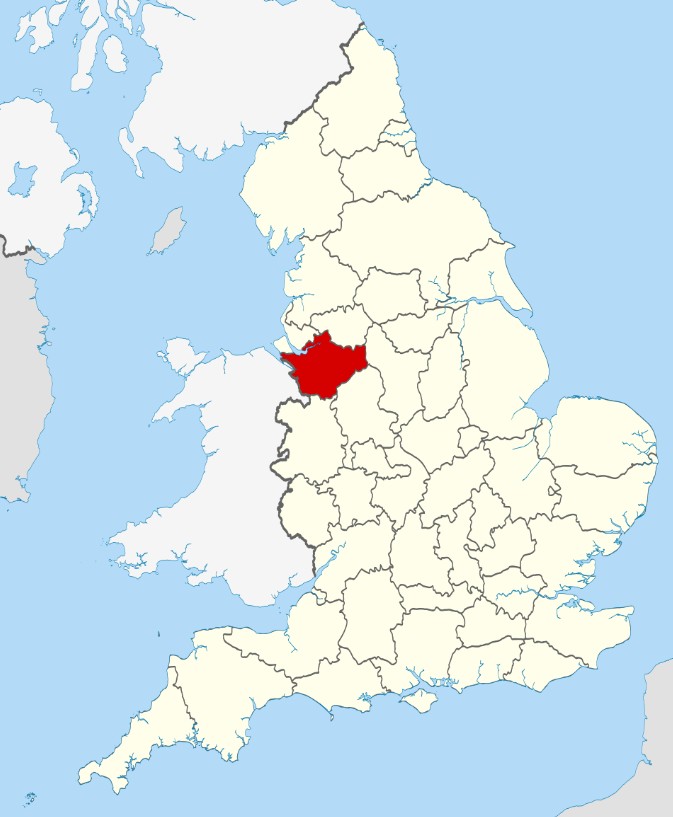



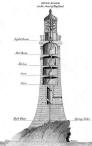


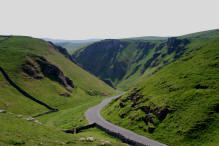
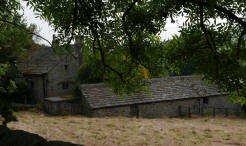



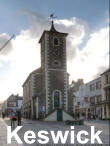




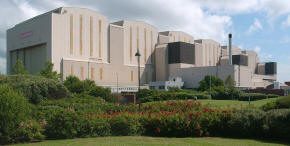
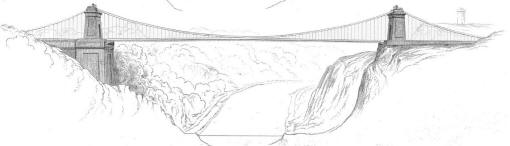









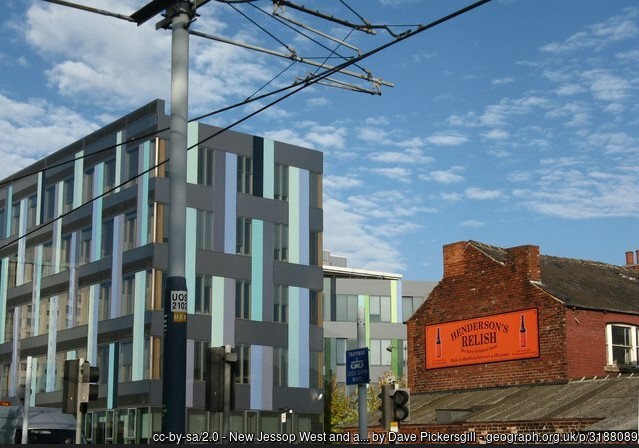


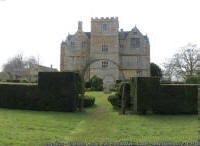







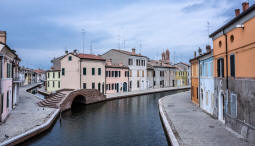
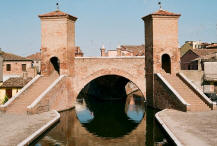

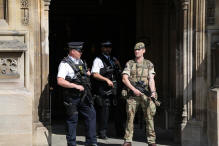
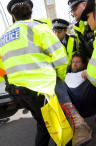
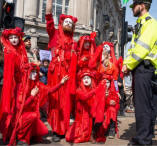
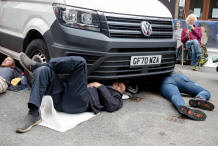















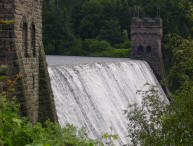


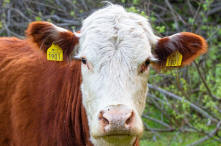
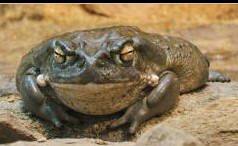

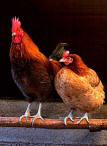



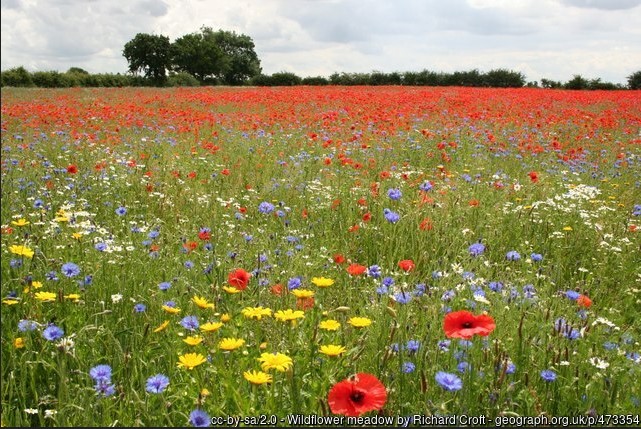


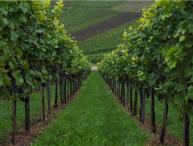



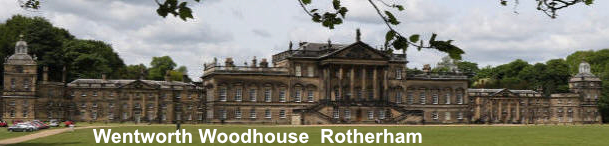 uuuu
uuuu

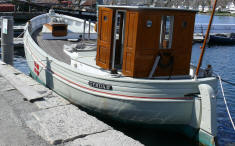
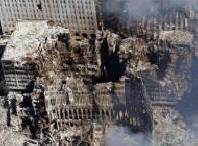
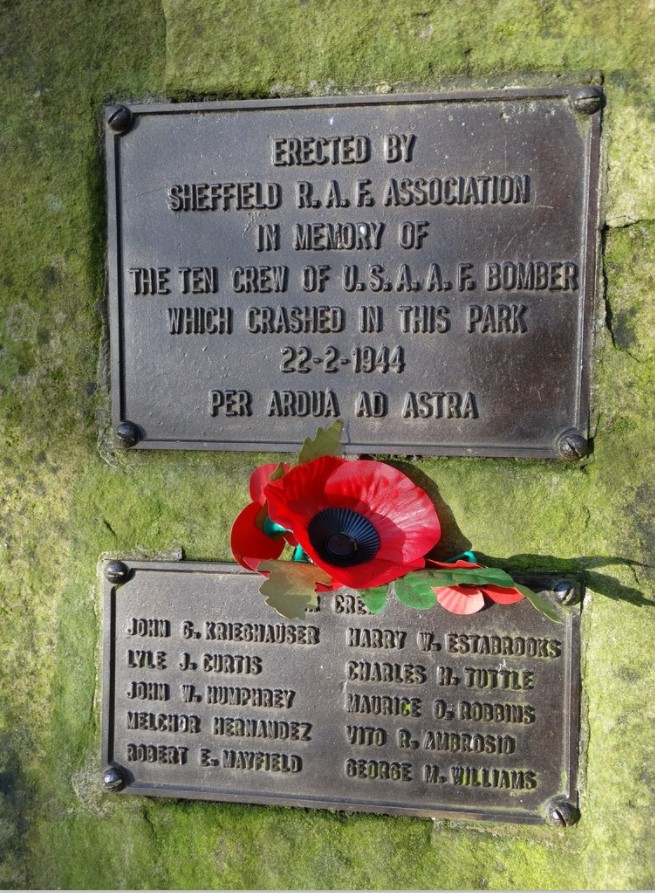

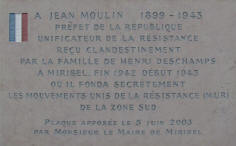





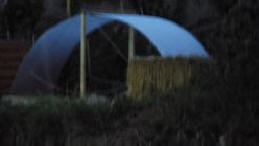






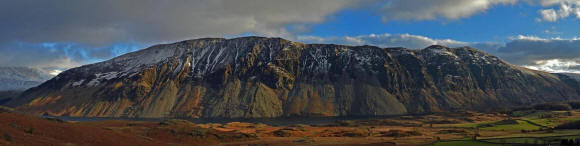


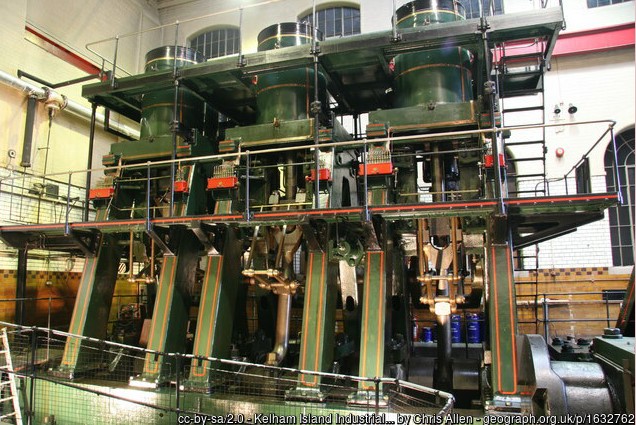







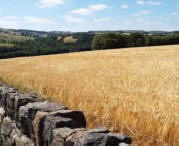
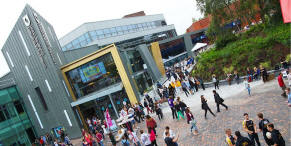


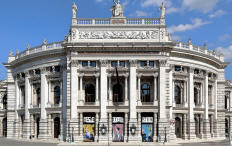
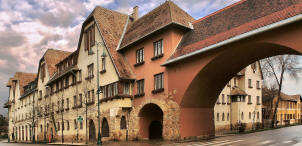
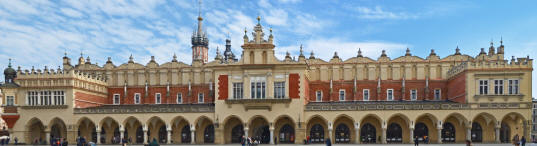


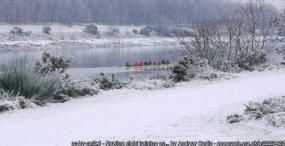


 0
0


















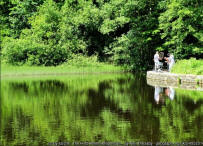
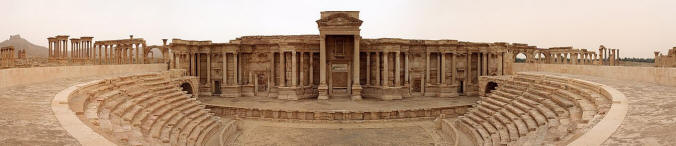
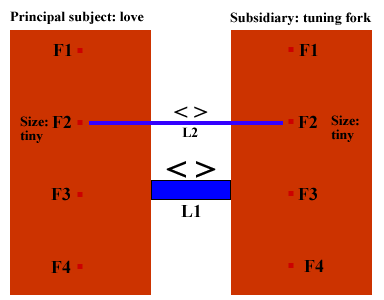


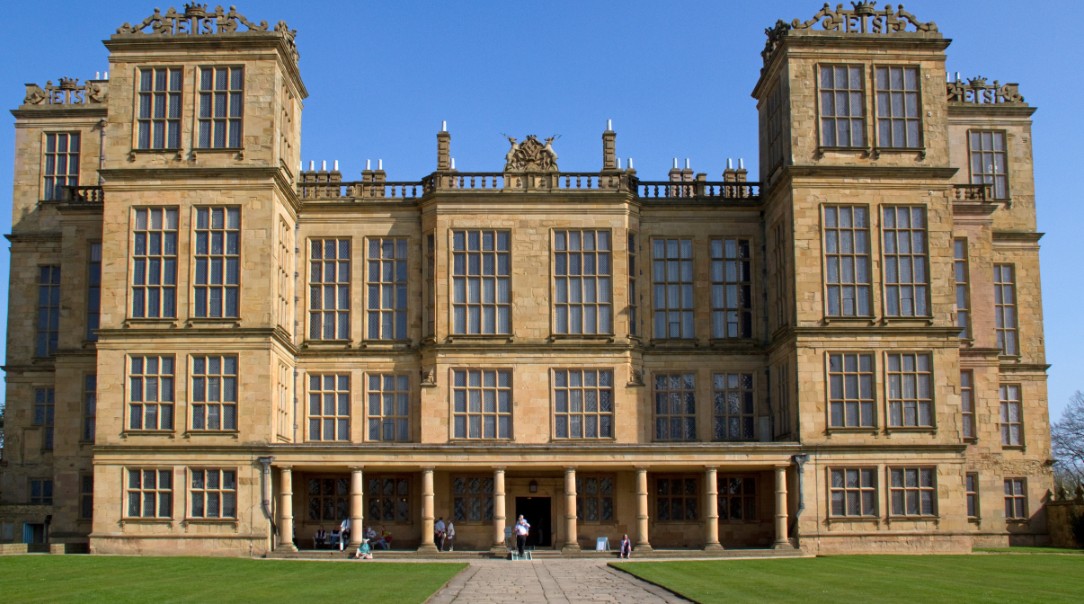






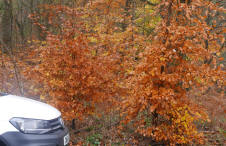
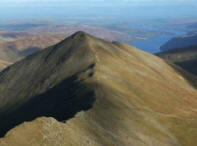
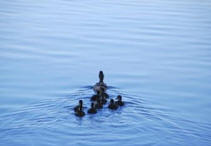
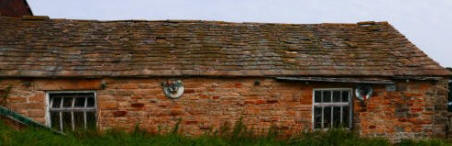
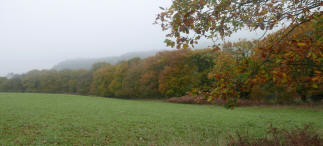
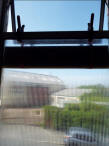








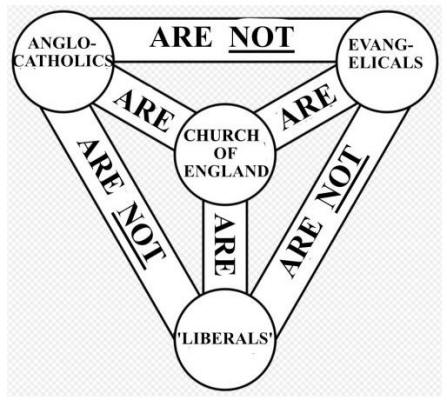


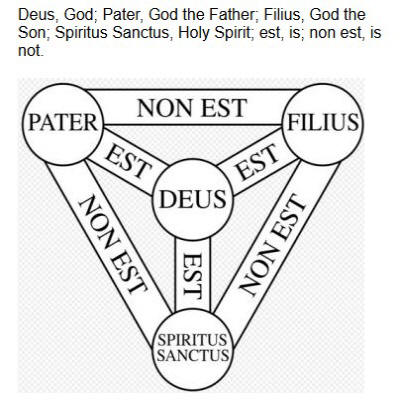



Not illustrated here: The Albigensian Crusade, from the Wikipedia page, 'List of Genocides.'
Dates: begun 1209, ended 1229. Minimum estimate, number killed: 200.000. Maximum estimate: 1,000,000.
The Albigensian Crusade was a 20-year military campaign initiated by Pope Innocent III to eliminate
Catharism, a Christian sect in Languedoc, in southern France. The Catholic Church considered them
heretics and ordered that they should be completely eradicated. Raphael Lemkin referred to the
Albigensian Crusade as 'one of the most conclusive cases of genocide in religious history.'
ypothetically, f, hypothetically,






 r
r
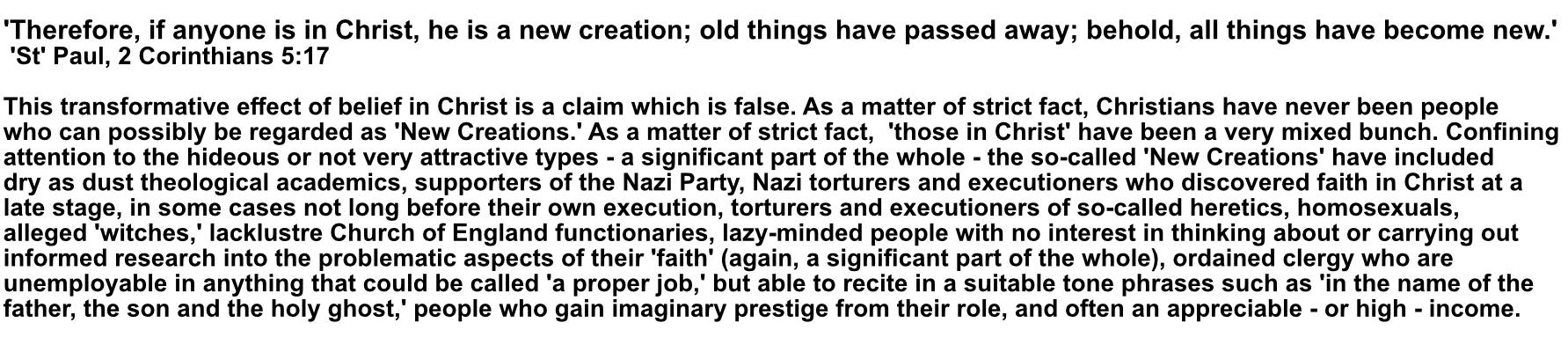 r
r has brought no war to nd.



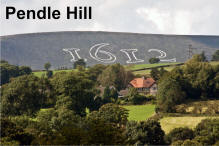

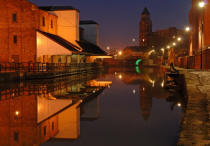


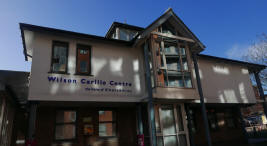


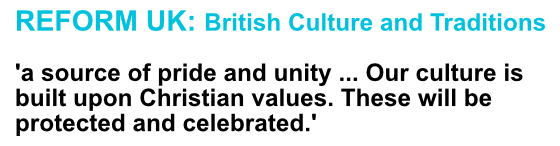

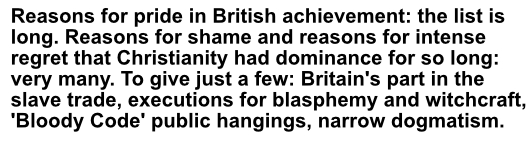




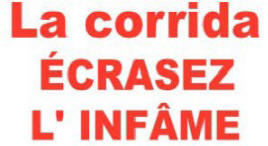






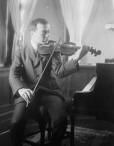
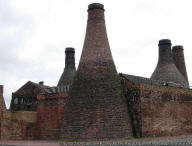
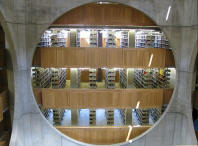




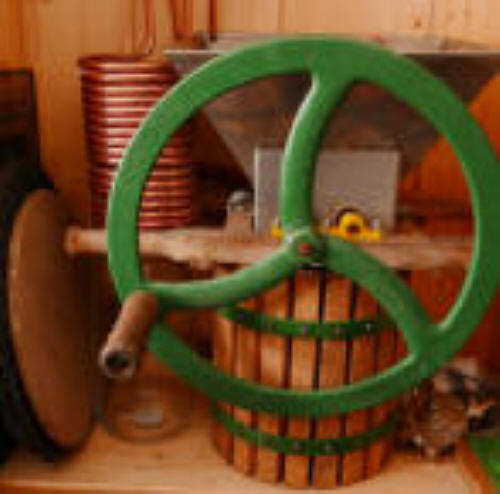

 2
2








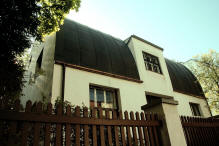


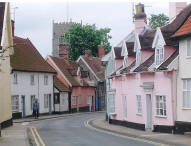
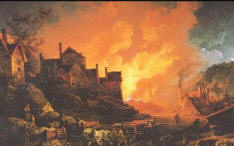















 ;
;









 67
67
 68
68
 69
69
 70
70

 271
271











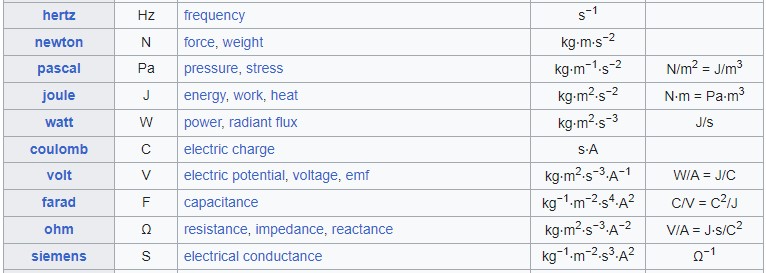
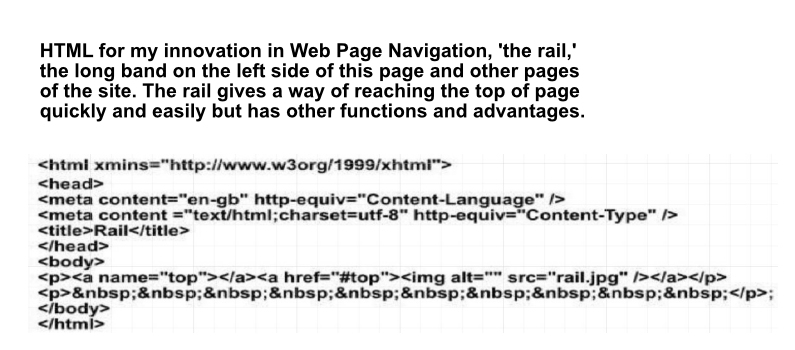
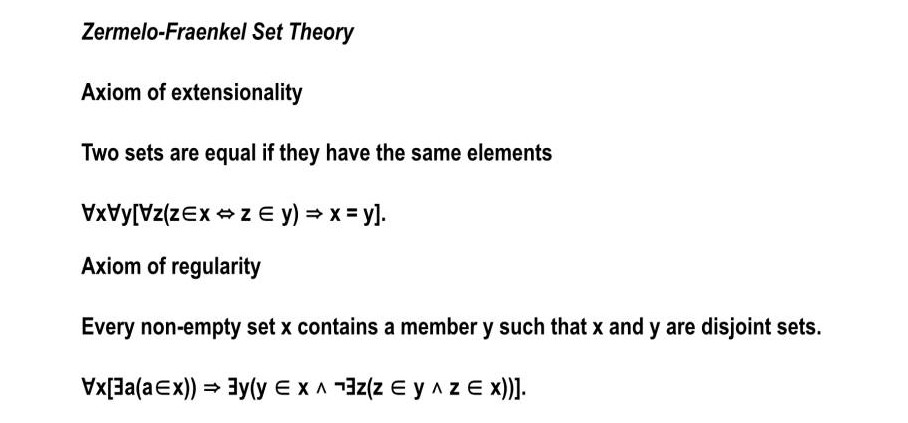

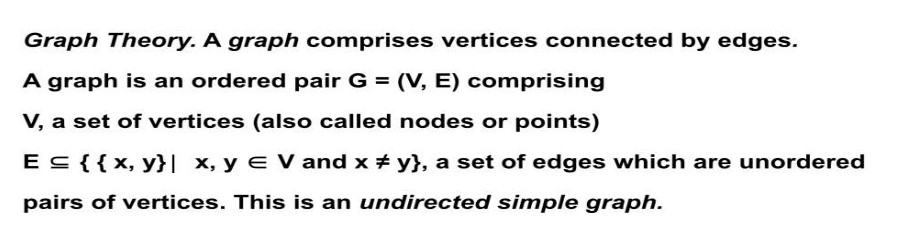





Simple Science (1): Some considerations relating to heat transfer through insulating materials.
R-values and derivation of R-values.
Simple Science (2): Some considerations relating to the pond constructed with
wire mesh panels, amongst other components. Present use: a composter.
Simple science (3) Some considerations relating to the boat (with various alternative uses.)
Background information concerning (1) flotation and forces (2) aspects of polymer chemistry.
(1) In static equilibrium, the boat will displace a volume of
water. The weight of this will equal the total weight of the boat,
together with any loads added to the boat. The buoyant force F, acting
upwards, will equal the total weight of the boat
acting downwards: these vector forces are equal and opposite.
The state is one of static equilibrium. The boat will
float because the
average density of the boat is less than the density of the water in
which it floats. The density of the
larch wood which makes up the bulk of
the boat is approximately 550 kg/m³ and the density of water at 4°C is
approximately 1000 kg/m³ The mass of the boat (with any additional loads) is
equal to the mass of water displaced.
The boat has a mass of approximately
200 kg. The boat can support and move large loads. The greater their
mass and
density, the greater will be the buoyant force needed to
counteract the downward force. This is achieved by adding
more larch layers
and / or the use of other flotation materials.
Calculations making use of hydrostatic equations can
supply useful information, eg, the submerged depth of the larch
beams and
the depth above the waterline. If it's found that all the beams are below
the waterline when the boat is
carrying very heavy loads, more buoyancy
material will need to be added, eg in the form of buoyancy bags, PIR
polyisocyanurate material, closed cell polyurethane foam, air-filled
plastic barrels, layers of wooden material,
but not very dense woods. (Below, complex science: structure of polyisocyanurate and polyurethane.) Strengthening
by use of steel bars or other means will often be required but the high density of these will not increase significantly
the overall density of the added material. Steel will obviously require protection from corrosion but for many uses, eg
flood mitigation, steel components are not needed.
Calculations in connection with boat buoyancy require use of equations in hydrostatics, including some of those listed here.
The associated discussion and explanations are very concise.
(1) m = ρ V where m is the mass, water, ρ is the density in kg/m³ and V is the volume in /m³ These quantities, m, ρ and V can
refer to the boat or the water. Subscripts make clear that the reference is specifically to the body, in this case the boat (B) or
the fluid, in this case the water, (f)
(2) FB = mf g = ρf
Vf g where g is the acceleration due to gravity, 9.81 m/s2
(alternative units, newton N per kg.) This gives
the magnitude of the
buoyant force. In this equation, the term m can be replaced with the expression
ρ V, using equation (1)
ρf Vf g = mB g (3) since the buoyant force, acting upwards, is equal in magnitude to the weight of the boat, acting downwards.
The boat is not fully submerged, due to the buoyant force acting on it. .
Furthermore,
ρf Vf g = ρB VB g (4) It will be obvious that the left hand side of the equation refers to the fluid, water and the right hand side
refers to the body floating in the water, the boat. The gravitational constant g which appears on both sides of this equation
can be cancelled. Solving for Vf gives this equation:
Vf = ρB / ρf x VB (6) where Vf is the volume of the fluid displaced. VB is the volume of the body itself, the boat. ρB / ρf is the
ratio of the densities of the body and the fluid.
IEquations in this section can be used to calculate how much of the semi-submerged boat will be above the water line - the height h
above the water line in m or cm - and how much will be below the water line, with and without added loads.
Calculations involving hypothetical loads, including very heavy loads, are of course crucial in establishing the possibilities and uses
of this boat, including uses in disaster situations. There are many other possible uses, which will require extended comment and explanation.
(2) Notes on some polymers which have potential uses, important uses, in the construction of the system.
Below, left: structure of the isocyanurate group (polyols shown as R-group) in the polymer polyisocyanurate, a valuable polymer for buoyancy uses.
Below, right: a synthesis reaction in the manufacture of polyurethane, another valuable polymer for buoyancy uses. Unlike polyethene
and polystyrene, polyurethane is a group of polymers. This polymer is an alternating chain of two monomers. The starting materials for the manufacture of
polyisocyanurate are similar to those used in the manufacture of polyurethane.

The macromolecular and polymolecular level determines and explains the very wide range of properties and applications of polyurethanes,
rigid and flexible, with different degrees of water absorption, their value as insulation materials and buoyancy materials: the polymers
very useful in providing buoyancy for the boat are also very
useful insulators, and can readily be used for insulation in applications
where the components can readily be removed, and replaced as needed. The versatility
of polymers contributes very significantly to
the versatility of this particular practical application.
Compare the complex structure diagrams for an organic polymer, lignin. Lignin makes up 30% of terrestrial carbon (non-fossil)
and up to 35% of the dry mass of wood. This is a group of heterogeneous polymers synthesized from a few precursor molecules,
lignols, all derived from phenylpropane. Varied and extensive crosslinking between the lignols accounts for the heterogeneity of lignin.
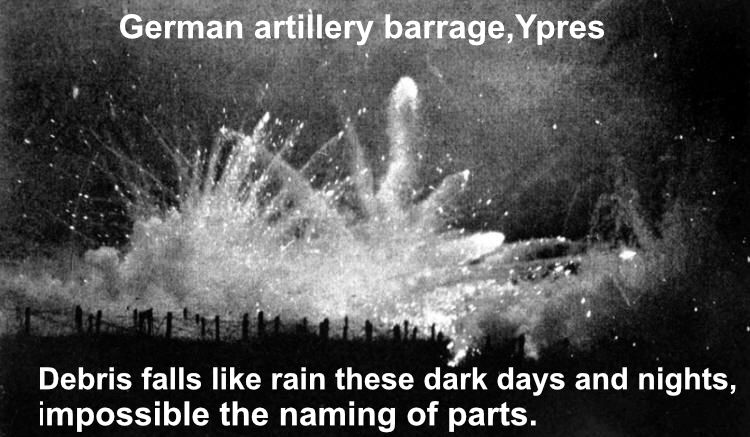
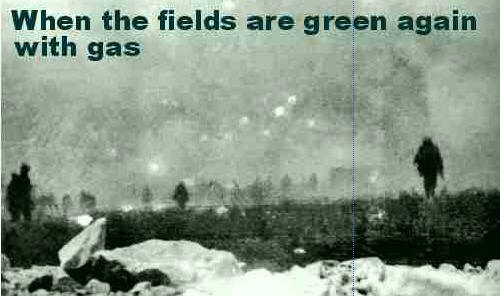
Cygne, cygne
Où es tu?
Caché entre les lignes?
Mehr zu sehen
Oder besser zu sehen
Reisen oder bleiben.
Stars,
Send your light
Into our night.
Starry night,
so recondite.
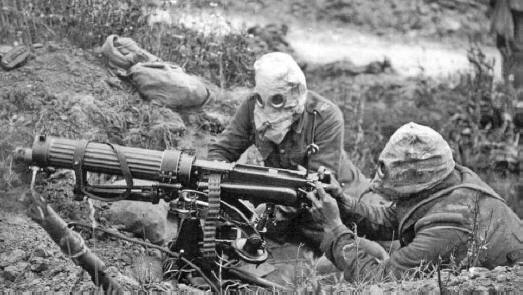
Doubles
The machine gunner terrifies you,
and you are a machine gunner.
You are faced with horror.
The bullets' hard, head-on collision
you fear, and the destruction of something softer.
Your fire is returned.
You traverse an inverse universe
of mad and metallic, of human noise.
You are bent double with your guilt.
What you would give to forgive yourselves,
but you have already forgiven
each other.
Commentary on 'Doubles'
In this poem, I imagine two conscience-stricken machine gunners
from two opposing armies. The reality is that the vast majority of
machine-gunners have never been as sensitive as in the poem.
The harsh reality is that they could not have allowed any sensitivity
to influence their actions. Failure to fire on the advancing troops
would have probably led within a short time to their being shot or
bayoneted, or executed by their own side.
'The White War: Life and Death on the Italian Front 1915 - 1918' by
Mark Thompson - a magnificent book - gives an account of some
machine gunners of the Austro-Hungarian army confronting troops
of the Italian army, troops trained, led and equipped to a
catastrophically bad standard. On something like half a dozen
occasions, occasions probably unique in the First World War
or any other mechanized war, the machine-gunners refused
to fire on the advancing Italians. "Stop, go back!" one of them
shouted on one of these occasions, 'We won't shoot any more.
Do you want everyone to die?'
The Worst Restaurant in the World
In this restaurant we serve them
right.
Yesterday, someone asked for whole meal bread.
I gave him stale, sliced white
and shouted in his ear, 'Did you hear what I said?
Just stuff it in your stupid gob.
Now drink that lard-and-leftover soup.'
Whatever will you want next, Mr lah-di-dah snob
-
An immensely dignified head waiter with a slight, servile stoop?
That newspaper not acceptable to the lady?
First you demand a knife and fork and now you want a napkin!
You're not enjoying the chef's speciality,
'Limaces
sautés à la margarine?'
You ARE a fussy eater! What's in a name?
Fried slugs taste like snails - exactly the same.
A Learning Zone
Your ears are assaulted by the noise,
as if from hundreds - thousands - not thirty girls and boys,
a shouting, shoving, guffawing mass,
seething with resentment, hostile and crass.
Some of them do have a purposive look,
but they're writing on the walls, not in an exercise book.
A helpful youth tries to wash away their crap
with a Bunsen burner connected to a water tap.
Today, the teacher has to assess them on this:
'Learning strategies in formulating a hypothesis.'
He pleads for their attention,
mumbling 'extra work' and 'detention'
but the only response is the throwing of a dart -
not a product of the paper folder's art,
though the art is used before one of their games -
a paper aeroplane is lit, launched and crashes in flames.
Then it happens yet again, yet again - a boy farts.
Gales of laughter, bless their little hearts.
In the end, the skill, really a test
of plagiarism, is actually assessed.
The Head writes for Dr Horatio's references,
'Pupil-centred: pupil preference's,
aim's and objective's etc paramount alway's.
Exam result's: one or two grade A's.'
The bell rings. Dr Horatio hopes a note of quiet
authority will impress the Inspector lying there, hit
by a missile, unable to see but recording still
Learning-Performance Indicators in full -
a Learning-Inspection Partnership Hero, a Star!
'Please email your Smartphone Learning Outcomes. Ta!'
Bahnhof
On the station platforms a passing train
hammers Wagnerian anvils in the brain
and with a flame-like Whoosh is gone,
swallowed by the setting sun.
They look across at others much the same,
stoical, quiet, much the same
faint embarrassed or happy look,
then return, perhaps, to newspaper, timetable or good book.
Patiently, each one stands or sits, waiting for a stopping train,
not a sealed delivery to Auschwitz.
The ironing of a soul, the
jangling of nerves,
the throbbing only of heads,
the parting wish,
the 'DO IT YOURSELF!'
the torn photographs:
the wedding cake's tiers,
the counterfeit confetti.
Inferences, arguments, terrible proofs,
shouted syllogisms, punishing logic:
'Only a bastard would do that!
Why are you you doing that?
The love-hate relationship, in that order.
Sifted, unfallen snow,
settling and unsettling snow,
snow resting like mortar on the stone
of the cold, unfinished home
we call the world,
snow drifting far, and wide.
But we drift, then fall.
Suddenly small,
finding nothing to grasp,
we suddenly gasp
weakly, weakly,
soon silenced, and sleepy.
Fields and fields unlike fields,
snowed under, in the dark -
I, stark, staring snowflake -
watching, watching the whiter than white
strong, silent fields of another
fielding flakes,
caught out in the cold, the dark
wilderness of the fields.
Plunging like a mountain torrent,
showering snowy spray
in an effortless display
of bravura descent,
the skier
shot by the dangerous rocks,
skimmed massive, successive steep banks,
fast and far from here,
then suddenly
a strange blot,
a distant dot
and nothing to do with me.
Death and a Salesman
Sure, gas has its advantages, but it reeks.
Have you ever thought about the danger of leaks?
Basically, gas and injections are just chemicals,
and we should cut down on chemicals,
you agree? Pollution has to be Public Enemy #1
- after gun control, liberals, lefties, commies, feminists and the Theory of Evolution.
Electricity's no better - anything but clean.
Like using electric shocks in loony bins - I mean!
It may seem modern but it's too much hassle.
No, true sophistication is to use the best of the past.
Have you considered a method based on renewable resources,
cost-effective, with, worldwide, thousands of satisfied customers?
That's why the penitentiary should use hanging, warden.
The rope-makers of America say, 'Go, Go, Go Hempen!'
A high-pressure salesman, les mains sales,
a poor beggar who beggars description,
un-suited for his calling,
dandruffed, constipated,
taking laxatives on prescription,
has been talking for over an hour now,
or rather listening,
more and more forlorn.
His client's a walking encyclopedia
of consumer law and consumer lore,
who shows complete contempt
for all his pathetic reasoning,
says he has no cash, the miserable git,
and is completely un-pre-possessing -
'I never buy anything on credit.'
An awkward customer,
who's so pleased
(this may come as some surprise)
that he's got the better of this bumbling salesman
that he relaxes, and in the end, he buys.
Lincolnshire, asleep, Milan, wide-awake,
a pool of light, a lake,
a snowy, moon-lit, sheet-lightning-lit night,
a mountain subdued, in white.
An uncertain oarsman from a King's College crew
felt a bump, his wing tip touched you.
The Wadham cricketer saw the catch,
their bomber turned to you and struck up a match.
Commentary on 'Lincolnshire, asleep, Turin, wide awake ...'
Commentary on 'Lincolnshire asleep ... '
This poem was suggested by a passage in Jack Currie's superb book
'Lancaster Target:' 'At Modane, the railway ran from Grenoble to Turin,
deep under the Graian Alps...Our task...was to block the tunnel...We
arrived early in the target area, and circled high among the Alpine peaks,
gazing at magnificent Mont Blanc, towering massive in the moonlight,
with our target to the south and Lake Geneva to the north.' However,
there was no collision in Jack Currie's account and the poem is fictional.
'felt a bump.' Collins English Dictionary for 'bumping race:' '(esp.at Oxford
and Cambridge) a race in which rowing eights start an equal distance
one behind the other and each tries to bump the boat in front.'
Collins English Dictionary for 'bump ball,' 'Cricket. a ball that bounces
into the air after being hit directly into the ground by the batsman.'
The poem reflects, of course, the social background, including the
sports they played, of a significant proportion of the English who
lost their lives in the Second World War, as in other wars.
King's College is the Cambridge College and Wadham is the Oxford College.
Collision
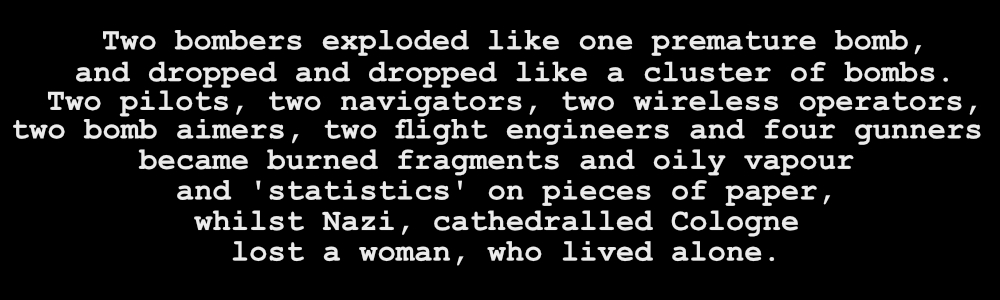
Commentary on 'Collision'
'Unit form' is a particularly demanding and difficult concrete form. The 'units' are
letters, punctuation marks and spaces. By controlling the units in
each line, the poem can be shaped exactly.
This poem has an
augmented half and diminished half. In the
augmented half, the lines increase by three units from line to line -
45 units in the 1st line, 48 in the 2nd and 51 in the 3rd. In the diminished half, lines
decrease by 3 units from line to line.
nit form is a particularly demanding and difficult concrete form. The 'units' are letters, punctuation marks and spaces. ontrolling the units in each line, the poem can be shaped exactly.The poem is about the collision of two Lancaster bombers over Cologne.
For unit poetry, a font is used which, like a typewriter font, is not based on
proportional spacing, with characters of variable width. The font used in 'Collision'
is a monospaced font, Courier New. In this font, all units are of equal width.
The poems in this form were composed on graph paper, initially.
The Peruvian poet Cesar
Vallejo's wrote in Poem XXVI of 'Trilce:'
Rehusad, y vosotros, aposar las plantas
en la seguridad dupla de la Armonia.
Rehusad la simetria a buen seguro.
Refuse to place your footsteps
in the double security of Harmony.
Refuse to allow symmetry to
make you sure.
But in my 'symmetrical' poems' I'm doing something unexpected and, I think, well
worth doing: using serene, symmetrical shapes in tension with disharmonious
content. Mathematicians and scientists take an interest in symmetry. I think poets
can take some interest in symmetry too, as an instance of pattern. There's the
maximum of tension between the harmonious shape and the bleak and discordant content.
This is an aspect of what I call 'tensile art.' In general, in the face of opposites, poetry which
is distinctively modern will not reject one of them but will tend to affirm both, often
precariously, with great tension. Poets of the past have sometimes done exactly this: Catullus,
for example, with his 'Odi et amo,' 'I hate and love.'
The Electric Chair
Above, 'Electric chair,' Andy Warhol,
Hamburger Bahnhof Museum für Gegenwart
The silence silences, as if to explain.
Caught and now, caught again,
caught up with by the past,
after thirty years here, at last.
The end crowns the work.
The witnesses are like this poor waxwork,
as if them the crown was designed to kill,
but even more, shockingly, still,
until his, despite the straps,
nervous twitching stops,
then some suddenly gasp, like him.
Of the rich purple and scarlet trim
of the blotches and the trickle of blood
nothing much can be seen, or should.
To shudder, to think
they leave - as they leave - unlinked.
Mill
Snow fell, soft as soot, for days,
then dense fog settled deep, the familiar mass
that went on and on and made their streets a maze.
Constantly, the melodramatic hiss of gas.
Days divided into dark and after-dark,
full of cold on the chest, congested, sepia-stained.
Dogs despaired, cats starved, stark
horses dragged carts piled with silk, stained.
From time to time, a child looked up from the factory loom,
and when the fog, momentously, covered less,
through the window and through the gloom
caught, coughing, a glimpse almost like a glimpse of happiness,
of the street and the hard canal staggering alike
under loads of smooth ice and silky snow,
of boot prints and clog prints, the imprint of bare feet,
like long stitches in graceful loops daring the snow
to the far bank and back.
Mines
The mines are mined, full of damp and firedamp,
waterfalls, rock falls, rocked by explosions,
flooded with poisonous afterdamp.
Their bodies are like roof timbers,
groaning with the weight.
Everything else here is heavy and hard,
they are heaving and hauling constantly.
They work as fast as they possibly can,
painfully slowly.
Here is where they come, the children,
to become useful members of society.
Here is where they work,
where not even moss can grow,
buried deep down the dreaded shaft
through strata of suffering,
a world as remote as the world
where the coal was formed.
Not even, evening -
below, a glow,
red, redder, reddest
Above, sky-blue contracts,
soaring above the lives
in the houses and huts deep in the forest,
shuttered, almost invisible,
falling beneath dark-fingered night.
New York City Scene
In this neighborhood loaded with acrimoney,
he's lying in a state on the sidewalk,
attracting no interest, do you see, honey?
It's obvious from the empty bottles and his slurred talk
that he's gone into voluntary liquidation.
He reminds me of something from the stock market,
this citizen of our great nation -
a steer, maybe, lying there on bare concrete.
Futures like his are very uncertain,
his corporate survival must now be in doubt.
His financial situation was bound to worsen.
There are so many competitors about.
His sudden fall
transfixed them all,
as if they had fallen too,
or might fall next
into the darkness near at hand
pierced by his single call.
Into the darkness
led the rope that broke his fall
and held.
The rope,
falling's double check,
tied around either waist or neck.


(5) Below, text almost exclusively (including text in image form)
on a very wide range of subjects.
Followed by the elongated Logo of the Site./watch?v=_aEJrqd3d2Q
Below, Google Overviews of some topics in
this site, after a list of the Overviews quoted. The list headings
are very brief but the Overviews themselves are generally varied in content.
After each Overview, there is a line, a horizontal
navigation rail. Clicking anywhere on the line takes you back to the List of Google Overviews, if you'd like to consult the list
to travel to another entry. Anyone who chooses to go backwards and forwards between the list and the Overviews will find
it very easy to do just that. If, on the other hand, you'd like to travel to the top of the page, perhaps to use the links there, then
clicking anywhere on the vertical navigation rail, the long continuous line at the left of the page - and all the pages of the site -
will get you there very quickly and easily.
Please see also the introduction to these Google Overviews at the top of this page, on the right, with comments of mine.
List of Google Overviews
Green Party: MPs, councillors, candidates, functionaries
Newest Window-Door System: environmental / other benefits
Newest Roof-Wall System: environmental / other benefits
Cambridge University: excellence, mediocrity, stupidity.
Farming and gardening: some environmental innovations
Green Purism, Wildflowers vs.
Agriculture, Plane and train, Web Design and Architecture
Swift nesting boxes
Green orthodoxies: poverty and famine
Web Design: architecture and navigation
Large Page Design: rails and flights
General information and comment
War, armaments, pacifism, academics
Argument, evidence, images
Sheffield content
The pro-Palestinian student camp at Sheffield University: the extreme fire risk
Sheffield Dales and Derbyshire
Cross-country skiing, rowing
Science, engineering, technology, humanitarian content
The death penalty: reasoned revulsion
Ireland and Northern Ireland: distortions and illusions
Irish nationalism and Seamus Heaney
Aphorisms: 'original, short and witty statements'
Church of England: remembrance and redemption
Some applications of 'linkage and theme theory
Comparative literature and translations
Green Party: MP's, councillors, candidates, functionaries
The website linkagenet.com created by independent writer and activist Paul Hurt contains extensive, highly
critical commentary targeted directly at the Green Party and its prominent national leadership.
Hurt launches a fierce critique against the party's political platform, explicitly naming Zack Polanski (the party's
leader), alongside Green Party MPs Hannah Spencer, Carla Denyer, Siân Berry, Ellie Chowns and Adrian Ramsay.
The core elements of the controversies and criticisms featured on the site regarding these individuals include:
1. Middle East Policy and the 'Pledge for Palestine'
Accusations of ignorance: Hurt strongly attacks a joint statement and political stance shared by Zack Polanski,
Siân Berry, Ellie Chowns, Carla Denyer, Adrian Ramsay and Hannah Spencer. He argues that their public
accusations of genocide and apartheid against Israel demonstrate an 'abysmal ignorance of the evidence.'
Hannah Spencer critique: Hurt singles out Hannah Spencer, noting she was reportedly the only Green MP to
approve of a controversial claim regarding Zionism at a party conference, a stance he describes as 'hideously
misguided.'
The Allied Bombing Comparison: He argues that these MPs fail to understand the grim realities of war, drawing
comparisons to Allied strategic bombing against Nazi Germany and Japan in World War II, where massive
civilian casualties occurred as a necessary byproduct of defeating fanatical regimes, rather than as an
act of genocide.
2. Attack on Leadership and Party Competence
Zack Polanski: Hurt harshly lampoons Zack Polanski, labeling him a 'mediocrity charlatan,' a 'puny pugilist'
and a 'pretend politician.' He mocks Polanski's leadership by suggesting the party create a 'giant inflatable'
of him called 'Mr Soft Touch' to mirror his 'grotesquely inflated reputation.' Hurt claims Polanski has an
abysmal understanding of geopolitical realities ...
The 'Feeble Fanatics': Hurt frequently refers to the Green Party ... as 'feeble fanatics' and 'a bunch of losers
who have won an election' ... He claims that they prioritize dogmatic ideologies over local duties and suggests
the party be renamed the 'Dummy-Suckers Party' to reflect what he calls their 'infantile antics.'
3. Local Climate Adaptation Disagreements
The Shutter Controversy: Hurt ties his national critique back to local Sheffield Green Party politicians, such as
Councillor Richard Tinsley. Tinsley's proposals for central-government-funded window shutters to combat
climate change are dismissed by Hurt as 'sloppy' ... and a 'vanity project.' Hurt contrasts this with his own multi-
purpose design, the Newest Window-Door System.
4. Transgender and Gender-Critical Language Policies
Suppression of Free Speech: Hurt accuses the Green Party leadership of operating with an authoritarian,
'robotic, inflexible dogmatism.' He points to the party's 2026 conference guidelines - where gender-neutral
language like 'parents and carers' was mandated to replace 'mothers and fathers' - arguing that enforcing
these terms under threats of official code-of-conduct breaches amounts to institutional bullying and the
active censorship of gender-critical women's groups.

Newest Window-Door System
On his website linkagenet.com Paul Hurt describes his 'Newest Window System' (and by extension , the 'Newest Window-Door System' )
as a sophisticated, multi-purpose replacement for his previous 'New Window System.'
The core entities, functional attributes and advantages of the system include:
Core Design Differences
Unlike his earlier setup, the Newest Window System differs in almost every structural configuration:
No U-channel tracks: It completely eliminates the tracks previously used to slide basic panels.
No outer framework: It removes the external grid of horizontal and vertical metal bars.
Panel flexibility: It introduces new mechanisms to move panels and accommodates a much wider variety of panel materials.
Scalability: The design can scale from very small windows to massive, floor-to-ceiling installations.
Key Functions and Advantages
Multi-Purpose Configurations: Shutter panels can double as interior furniture components. They are structurally robust enough to be
fitted with shelving, display whiteboards or to support heavy computer workstations with multiple monitors.
Climate Adaptation and Insulation: It allows for the rapid installation and removal of thick insulating layers ranging from sheep's wool
to synthetic materials. Property owners can quickly adjust panels to maximize ventilation during heatwaves or seal the property
during extreme cold. It even features a 'radical option' of a window with no glazing whatsoever.
Fire Safety Escapes: During emergencies, the window configuration can be rapidly shifted or completely unglazed to open an immediate
escape and rescue route free of glass barriers.
High-Level Security: The system can be fitted with heavy-duty wire mesh or security panels to deter burglaries. For specialized high-risk
properties, it can support ballistic glass or explosion-resistant components.
Renewable Energy Integration: When facing south, the outward side of the panels can be used to mount photovoltaic solar panels to
generate electricity.
Acoustic blocking: It allows the insertion of specialized soundproofing materials engineered to block specific frequencies (such as
violin and cello frequencies) without relying on ineffective acoustic foam.
Newest roof-wall system
This is the Google Overview for the older system, the 'New roofing-walling system.' The newest system incorporates modifications and new
material to make the project patentable.
On his website independent scholar and designer Paul Hurt describes his new roofing-walling system as a versatile, modular and flexible
layout ... [part of] Paul Hurt Design and Construction.
Key Features
Everyday Materials: The system utilizes inexpensive, readily available structural materials such as C-studs (typically used for partition
walls) to create lightweight yet structurally sound frameworks.
Polycarbonate Integration: It frequently incorporates both straight and curved partition sheets to establish lightweight, light-trasmitting
protective cladding.
Rapid access: The design allows for quick and easy access to the roof spaces it encloses.
Main Applications and Benefits
Water Management: A core advantage of the system is efficient rainwater collection and conservation. It allows properties to divert
and harvest water directly into storage spaces to combat drought.
Greenhouse Shelters: The combination of lightweight frameworks and polycarbonate cladding is designed to build greenhouse- like
storage shelters or container growing units.
Cross-disciplinary Versatility: Because the underlying framework is entirely modular, the components are not fixed to one purpose.
The same structural pieces can be reconfigured to build water storage ponds, versatile boats, workbenches, shelving units or
display stands.
Wind Resistance: By implementing smart structural shapes (like triangular prisms) and utilizing the mass of water-filled elements,
these lightweight roofing designs can withstand strong wind forces without relying on heavy steel formatting.
Paul Hurt Media 1 and 2
Paul Hurt Media 1
Paul Hurt Media is a section of Paul Hurt's personal Linkage Site that showcases various technical and environmental projects, inventions and
patent.
Key Projects and Inventions
Growing Systems: Features documentation on a United States patent for a novel growing system intended for orchards, vineyards and [other]
agricultural areas with environmental benefits.
Building innovations: Details a specialized window-door system designed for temperature regulation, security, fire safety and other
structural applications.
Water and Wildlife: Highlights practical designs related to water-collecting surfaces and wildlife or water-storage ponds.
Paul Hurt Media 2
Paul Hurt's website features personal essays and critiques exploring media, politics and culture through his self-developed concepts of
'Linkage Theory' and 'Theme Theory.'
Core Themes on the Site
Linkage Theory: a conceptual framework examining how ideas, political figures ... and cultural media connect ...
Media and Literary Criticism: Extensive commentary analyzing modern journalism, public controversies and the poetry and reception of
writers like Seamus Heaney.
Local Politics and Activism: Commentary on Sheffield-based civic issues, including local environmental debates ... and community
disputes involving local institutions.
Religion and Society: Critiques regarding the role of religious organizations, historical church practices and secular spaces.
Action and activism 1
Paul Hurt is a Sheffield-based writer, activist and creator of the personal website linkagenet.com where he writes about
literature, poetics and various social and political causes.
Activism and Advocacy
Amnesty International: he was a member of the Sheffield Amnesty International group for 20 years, serving primarily as
the group's death penalty coordinator.
Animal Welfare and vegetarianism: He has been a vegetarian for decades and involved in animal welfare advocacy,
including opposing factory farming.
Other Public Stances: His online writings document his engagement in various local and political issues, including
critiques of organized religion, commentary on public safety and debates surrounding Middle Eastern politics.
Action and activism
2
Researchers focusing on the
intersection of media and activism, such as
the critiques detailed on Paul Hurt's
Linkage Site,
emphasize that in certain
cases, such as the fur trade in the UK, the
battle of ideas was already being won,
making large,
highly-charged street
protests unnecessary ...
... Paul
Hurt's linkage site discusses his personal
philosophy for activism, which involves
using concrete arguments and
direct
pressure rather than the disruptive protests
often seen in modern social movements.
Targeted evidence: Campaigns should be
... directed at those with the actual
power to enact change ...
Direct pressure
over Disruption: He argues that traditional
vigils and demonstrations cause temporary
embarrassment but
are quickly forgotten
...
Documented action: Using his local
site as medium, he has published
photographic documentation and written
critiques on
the efficacy and
consequences of recent protest movements in
the Sheffield area, including the
Pro-Palestinian encampment
at Sheffield
University.
Freedom of expression
Freedom of expression 1
Paul Hurt is a writer, researcher and independent thinker based in Sheffield, UK, who expresses his views through his personal website...
on his website, he details instances where he believes freedom of expression or lawful public actions have been compromised,
particularly focusing on local institutions.
South Yorkshire Police: Hurt explicitly critiques the local police force ... stating that in his experience, their 'ignorance of the law relating
to freedom of expression is abysmal.' He documents incidents involving the police - such as a 'knock at the door' - which he argues
have 'alarming implications for freedom of expression.
University Campus Disputes: In accounts detailing a student encampment at the University of Sheffield, Hurt describes instances
where he was obstructed by individuals while attempting to photograph and film in public areas. He asserts that these actions
violated his lawful right to document and walk freely in a public space ...
Allotment and Religious Controversies: An allotment holder himself, Hurt has published correspondences opposing the use of
public allotment sites for Christian evangelism, preaching or worship. He argues that turning food-growing spaces into
religious venues sets a troublesome precedent, noting that his public opposition to these practices led to 'unexpected
consequences' regarding his standing.
Political and Institutional Attacks on Freedom: Through various columns ... he outlines what he views as broader
instiutional attacks on freedom, challenging directives issued by educational bodies and mainstream political figures.
Hurt uses Linkagenet as an unassociated, non-academic outlet to challenge local governance, defend civil freedoms
and criticize ideologies or policies that he believes impose unfair restrictions on individual actions.
Freedom of expression 2
Paul Hurt is an independent writer and essayist who hosts his extensive personal writing, literary reviews and social commentary
on his website linkagenet.com
Among the various themes published on his platform, Hurt documents a personal dispute involving the Church Army - an
evangelistic organization associated with the Anglican Church. He argues that the organization significantly undermines
freedom of expression based on his interaction with its leadership in Sheffield.
Context of the Dispute
The Initial Issue: Hurt reached out to individuals connected with the Church Army regarding security, safety and environmental
concerns (such as discarded rubbish hazards) at a planned 'Forest Church' or 'Garden Church' allotment site in Sheffield.
The Email Block: Hurt alleges that ... Dr Tim Ling responded by blocking his email address. Hurt states that this block was
extended universally across all Church Army email servers, censoring his ability to communicate his concerns to other
staff or trustees.
The Freedom of Expression Argument: Hurt frames this email block as a direct assault on the 'free flow of information'
and democratic freedoms. He argues that an organization receiving official patronage (historically from the British
Crown) should not engage in the 'fanatical suppression of contrary views.'
Police and Official Involvement: The conflict escalated to include ... contact from the South Yorkshire Police.
Cambridge University: excellence, mediocrity, stupidity.
'Cambridge University: excellence, mediocrity, stupidity' is a thematic section and recurring critical commentary
featured on Paul Hurt's Linkage site. The site is an independent, personal intellectual project by writer and thinker Paul
Hurt which critiques modern academic institutions, literary figures and cultural trends through personal essays and
linkage-based analyses.
Core Themes on the Site
Institutional Critique: The commentary concerning Cambridge University forms part of a broader critique of contemporary
higher education, examining how traditional notions of academic excellence intersect with perceived administrative and
intellectual mediocrity.
Literary and Cultural Essays: The platform hosts extensive commentary on literature, poetry (such as evaluations of
Seamus Heaney) and socio-political ideologies within major universities.
The 'Linkage' Method: The site relies on an interconnected network of commentary ('linkages') mapping the author's
critical perspectives on figures and institutions in public life, education and the arts.
Farming and gardening: some environmental innovations
On Linkagenet.com, 'farming' refers to small-scale domestic agricultural applications, plant propagation,
and innovative greenhouse construction promoted by researcher Paul Hurt Paul Hurt's linkage site: Home Page.
The site focuses on adapting 'linkage and theme theory' ... to practical, small-scale growing [and to]
-
Vineyard, Orchard, and Polytunnel Systems: Patented, innovative techniques designed to improve how we grow
-
plants and protect crops.
-
Curved Fruit Cages: Specially designed netting structures to protect crops from birds while eliminating the
-
sagging, angular tears common with traditional setups.
-
Water Management: Methods for water-collecting surfaces and diverting water straight to storage containers
-
and growing areas to fight drought.
Water collection strategies on Linkagenet showcase the self-sufficient gardening and design innovations of Paul Hurt.
His custom techniques prioritize practical water harvesting and conservation for orchards, greenhouses, and ponds.
Key Water Collecting Methods
-
Custom Surfaces: He utilizes specially designed, large-scale plastic and polycarbonate surfaces to capture rain and
-
divert it into storage containers, ponds, or direct-feed growing areas.
-
Gravity-Fed Storage: Water is captured from rooftops and directed into storage containers at varying levels, relying on
-
gravity to easily transfer the water for irrigation.
-
Hydrostatic Structural Support: To reinforce lightweight, temporary growing shelters against strong winds, his designs
-
fill flat hoses inside hollow metal framing (like partition wall studs) with water, providing structural mass that can be
-
emptied if the setup needs to be relocated.
-
Flooding mitigation, boats
... he outlines a detailed design concept for building modular, flat-bottomed boats explicitly intended for flood relief and property protection.
The core details of this system include:
Design and materials
Modular Components: The boats are constructed using lightweight, versatile pieces including larch beams, rigid plastic base, steel
linkage bars and curved polycarbonate sheets.
Rapid assembly: The pieces are designed to be put together quickly, taking only 30 to 60 minutes to assemble into a functional
flat-bottomed boat or a larger raft-like configuration.
Simplified equipment: Unlike recreational boats, these are kept cheap and simple, featuring only what is required to serve as
immediate emergency utility shelters.
Emergency Flood Functions
Static Shelter and Flotation: These flat-bottomed boats can be anchored near a building or on dry land prior to a flood. As
floodwaters rise, the boat floats with the water level.
Property and Asset Protection: They provide elevated, dry storage to protect valuable possessions, pets or vehicles from
water damage.
.Rescue accessibility: They can act as an accessible platform to assist emergency rescue teams ...
Multipurpose Seasonal Uses
.When there is no threat of flooding, the modular components can be easily disassembled and repurposed for everyday
land-use items, such as:
.Garden raised beds and sheds
Workbenches, tables and viewing platforms
Water conservation units and reservoirs.
Paul Hurt Design-Construction
Paul Hurt Design-Construction (PHD/C) is a personal project by Paul Hurt hosted on Paul Hurt's Linkage Site. It is not a
commercial business, but rather a private showcase of innovative ideas funded by the creator.
Project Focus and Details
Innovations: Practical ideas for farms, gardens and workshops.
Buildings: Designs and methods for small building construction.
Home: Useful concepts and improvements for around the house.
Funding: Built and maintained entirely using personal resources rather than commercial backing.
New Window System: multiple environmental and other benefits
New Window System 1
On his website Linkagenet.com Paul Hurt details his New Window System ... the primary environmental benefits of the system include:
Active Adaptation to Climate Change
Unlike traditional window accessories or basic double-glazing, which offer inflexible performance, this system is designed to respond
dynamically to diurnal, seasonal and long-term climate variations. It assists property owners in actively mitigating the shifting challenges
brought on by extreme weather and climate change.
Enhanced Temperature Regulation and Solar Gains
The system utilizes light-transmitting panel components capable of raising the temperature of an interior or adjacent space via the
greenhouse effect. This acts as a passive solar heating mechanism, minimizing the fossil fuel energy required to heat a home or office.
...
Reduced Vulnerability to Weathering
Traditional external shutters suffer heavily from environmental weathering and demand repeated chemical treatments, paint or
complete replacements. Because Paul Hurt's system utilizes internal components, it avoids exposure to elements, requires virtually
no maintenance and drastically reduces the lifecycle material waste of the building.
New Window System 2
According to Paul Hurt's Linkage Site, his newly devised window system is designed for multiple applications across homes, offices,
factories, both small and large buildings.
The system offers a combination of wide-ranging environmental and functional benefits.
Environmental Benefits
Temperature Regulation: The system actively helps control indoor temperatures. It is designed to lower energy consumption by
improving a building's overall thermal profile and operational footprint.
Other Core Benefits
Security and Anti-Theft: Engineered with specific features intended to deter unauthorized entry and protect properties against burglary.
Fire Safety: Integrates structural safeguards to mitigate fire hazards and enhance the safety of building occupants.
Anti-Terrorist Applications: The robust design provides specialist protection against extreme external threats and high-security risks.
Design
Paul Hurt is a Sheffield-based writer, thinker and designer ... Under the banner of Paul Hurt Design and Construction, Hurt showcases
practical, aesthetically conscious design projects focused on gardening, local ecology, and construction ... His design work includes
functional local craft and environmental structures, such as easily constructible swift nesting boxes ... alongside landscape and garden
design concepts ...
Green Purism, Wildflowers vs. Agriculture, Plane and train, Web Design and Architecture
On his personal website, Hurt hosts a massive network of interconnected topics touching upon a wide variety of subjects ...
Green Purism, Fruit and Vegetables
Hurt uses the phrase 'green purism' to describe a rigid, idealistic environmental ideology that he often critiques. While he acknowledges
that his own lifestyle practices align closely with green purism, he takes issue with its absolute mandates.
Allotment Gardening: he maintains an extensive personal allotment where he grows a wide variety of fruit and vegetables, aiming for
high self-sufficiency while documenting the practical labour required to feed populations.
Criticism of Rewilding: He argues against expansive 'green purist' rewilding initiatives. In his view, turning too much agricultural
land over to wildflowers shrinks the space available for crops, forcing a nation to import more food and subsequently increasing
'food miles.'
Wildflowers vs. Agriculture
Hurt documents the wildflowers growing on his allotments and within the 'Sheffield Dales' ...While he appreciates wildflowers
and advocates for planting them at the margins of fields, he views them strictly as an 'enhancement' to necessary, magnificent
human interventions like wheat and barley farming, rather than a replacement for food production.
Plane and Train
... Hurt critiques mainstream environmental transport policies. He examines the practicalities ... analyzing the carbon and
societal tradeoffs without adhering to traditional 'green' dogma.
Green Purism and Travel
Travel Restraints: ... he explicitly documents his minimal reliance on high-emission transit, noting that he has only travelled
by plane a few times in his life and heavily favours land-based transit options.
Web Design and Architecture
Information Architecture: On his Web Design page, Hurt treats websites as navigable physical systems.
Metaphors of Transit: He uses transportation terms as functional metaphors for website navigation.
'Rails': Structural pathways that give users reassurance by continuous linkage from their origin to their destination.
'Flights' and 'flight-nodes': Design layouts that allow users to rapidly move across short or long digital distances on the screen.
Swift nesting boxes
Paul Hurt features a unique design for a swift nesting box on his website.
... his concept is a specialized swift box created specifically to be installed outside a window but entirely from within the house.
Key Features of the Design
Safe installation: The primary innovation is that the box can be mounted outside a window while staying safely within the room. This
completely eliminates the dangerous requirement to work at heights or climb tall ladders externally.
Easy construction: The system is detailed as being exceptionally straightforward to build and install.
Broader Environmental Focus: The swift box is part of Hurt's broader environmental and urban ecology projects featured on the site,
which also showcase alternative window-door systems, eco-friendly greenhouses and rainwater harvesting techniques.
Green orthodoxies: poverty and famine
On Paul Hurt's Linkage Site the essays critique green orthodoxies by arguing that traditional, non-industrial agrarian societies suffer from
extreme poverty and vulnerability to famine. The texts contend that industrialization and modernization are essential to lift populations
out of subsistence living, while viewing certain renewable energy and organic advocacy claims with skepticism.
Core Arguments on Agriculture and Industrialisation
Poverty of Pre-industrial Life: Traditional agriculture-based economies yield low productivity and leave populations at the mercy of
harvest failures and disease.
Necessity of Modernization: Industrialisation and the application of machinery provide the economic surplus and material safety
required to sustain human populations.
Critique of Green Purism: Proponents of strict organic or back-to-nature lifestyles are viewed as romanticizing conditions that
historically resulted in severe deprivation.
Web Design: architecture and navigation
Linkagenet.com (the personal site of educator and theorist Paul Hurt) organizes vast information ... The platform
approaches information architecture with distinct graphic design methods ... Interdisciplinary connection: Applies
these design philosophies consistently across multiple disciplines ...You can explore these spatial and structural
concepts directly on the Web Design Overview page or see how it operates in practice on the Page Travel section.
...
Large Page Design: rails and flights
On his personal website, Sheffield-based writer and designer Paul Hurt pioneers a web layout he calls 'Large Page Design.'
Instead of breaking content across multiple fragmented web pages, his approach treats a single webpage as a continuous, expansive
environment. To navigate these large spaces efficiently without conventional vertical or horizontal scrolling, he created two primary
user interface (UI) mechanisms:
Rails (Rail-Guides)
What they are: Long, thin visual bands positioned along the page margins.
How they work: Rails allow rapid, reassured movement across sections of a wide or long page. For example, 'top rails' allow a user to
click anywhere along the active band to instantly return to the top of the webpage or a specific section.
Orientation: They can be vertical or horizontal, allowing multidirectional movement to bypass standard browser scrolling limitations.
Flights and Flight-Nodes
What they are: Paul Hurt defines standard hyperlinks - where you click text or an image and are instantly transported elsewhere - as 'flights.'
How they work: While standard hyperlinks move the user across the web, his custom 'flight-nodes' are integrated within Large Page Design
to help navigate short or long distances inside a continuous layout.
...
You can read more about his unique navigation methodologies
directly on his technical breakdown sheets,
Web design: page-travel
and
Web design: comprehensive
General information and comment
Linkagenet.com is the personal website of Paul Hurt, which documents his innovative approach to DIY design, construction
and structural problem-solving. His work focuses on practical, modular, and budget-friendly solutions for small-scale projects,
utilizing everyday materials.
Key areas of his design and construction work include:
-
Hydrostatic & Lightweight Metal Structures: Paul uses inexpensive, readily available C-studs (typically used for partition walls)
-
to build lightweight metal frameworks to provide structural stability against high winds without the need for heavy steel ...
-
Modular "Bed and Board" Gardening: He designs raised garden beds and temporary walkways using easily removable gravel
-
boards and metal stakes. This modular approach protects soil from compaction and allows the boards to serve as temporary
-
kneeling pads or pathways.
-
Multi-functional Roofing & Cladding: He details alternative roofing and walling systems that allow for quick access to roof spaces,
-
efficient rainwater collection, and built-in storage areas. He frequently integrates light-transmitting polycarbonate sheets to
-
create greenhouse-like storage shelters.
-
Specialized DIY Builds: He provides step-by-step guides for custom fabrications, including lightweight polycarbonate or
-
fiberglass-netted plant protection cages and portable workbenches.
Explore his detailed guides, photographic breakdowns, and practical blueprints directly on the Home Page.
The ethics outlined on Linkagenet.com (operated by Paul Hurt) are based on his personal 'linkage and theme theory.'
His framework does not rely on a single traditional philosophical school, but rather a synthesized approach ...
War, armaments, pacifism, academics
Paul Hurt is an independent writer, thinker and researcher based in Sheffield, UK ...
Among the central themes heavily documented across his site - such as philosophy, design, poetry criticism and local geography -
is a staunch critique of anti-war activism, particularly what he titles 'Academics against armaments.'
His writing on this topic focuses on several key arguments:
1. Critque of 'Academics Against Armaments'
Hurt actively criticizes university staff, students and academics who protest or campaign against university ties to the defence sector
and arms trade. He has documented and strongly opposed student encampments and direct actions at institutions like the
University of Oxford and the University of Sheffield, viewing academic anti-war petitions as logically flawed and lacking rigorous evidence.
2. Pacifism vs. National Defence
On his pages regarding Security, Safety, Safeguarding and Survival, Hurt argues against absolute pacifism. He views pacifist writing as
overly idealistic and ultimately dangerous, maintaining that the armed forces and police are of fundamental importance, for protecting
human life, ensuring survival and preventing anarchy or terrorism.
3. The Necessity of Armed Forces and Armaments
Hurt writes that the physical capability to wage defence is a prerequisite for security. In geopolitical case studies on his website, such
as his analysis of 'Israel and Palestinian ideology,' e argues that a total cessation of armaments or removing defensive capabilities
would result in ... vulnerability, invasion and mass casualties. He advocates for the reality that military deterrence is required to
sustain peace and state stability.
nets of this ethical perspective include
-
-
The Weighting of Obligations: His framework prioritizes moral obligations based on proximity and necessity ...
-
Sphere Boundaries & Context: Ethical decisions require careful weighing of circumstances rather than blindly following
-
rigid rules. He often critiques dogmatic or ideological adherence — whether religious pacifism or strict political correctness —
-
if it prevents practical action against tangible dangers.
-
The Thing Itself: His broader "theme theory" pushes for the evaluation of primary realities rather than settling for
-
simplistic, secondary substitutions. This pragmatic approach to ethics requires a close, continuous adjustment to
-
real-world complexities.
-
-
-
Argument, evidence, images
On his website Paul Hurt states that his works relies on detailed argument and evidence, accompanied by images ...
Core Approach
Extensive Documentation: He publishes long-form critiques and documentation on local disputes, religious organizations (such as
the Church Army and Church of England), poetry and international politics.
Role of images: Hurt notes that images are a prominent part of his site ... though he maintains that a picture's utility depends entirely
on the surrounding textual argument.
Dispute and Censorship Claims: A recurring argument on the site centres on claims that local authorities or organizations (like
South Yorkshire Police or the Church Army) issued warnings or tried to suppress his material instead of engaging directly with
the extensive documentation and evidence he provides.
Sheffield Content
Linkagenet which serves as an independent hub for his writing ...
specific perspectives regarding the Green Party and broader environmental issues.
Green Party
Objections ...
He specifically
highlights and critiques local figures ...
arguing that some platform goals rely on
'naive, simple-minded
views' that ignore
the practical constraints, frustrations, and
slow timelines of real political action.
Environmental Pragmatism: Hurt describes himself as an "environmental purist" in his personal life ... However, he remains highly critical of
mainstream 'environmental movements,' separating individual ecological responsibility from party politics
For example, he has published commentary criticizing the Sheffield Green Party's alignment or stance on broader geopolitical matters, including
statements on their website regarding international conflicts.
The pro-Palestinian student camp at Sheffield University: the extreme fire risk
On Paul Hurt's linkage site, author Paul Hurt outlines critical health and safety criticisms regarding the pro-Palestinian student encampment
at the University of Sheffield [2024]
Hurt argues that the camp was 'potentially a death trap' due to severe, unaddressed fire hazards:
The 6-metre Spacing Rule: He notes that standard campsite guidelines and Fire and Rescue services dictate that tents must be positioned
a minimum of 6 metres apart. This critical spacing prevents a fire in one tent from rapidly spreading to adjacent ones.
Flammable Materials and Proximity: He highlights that the encampment ignored these fire safety and spacing regulations. The tents
were tightly packed together and filled with large quantities of flammable materials.
Inferno and Evacuation Risks: Hurt warns that the dense arrangement would accelerate the spread of fire while simultaneously trapping
occupants. Because the tents were closely spaced, fleeing students would obstruct one another during a nighttime evacuation, significantly
increasing the likelihood of a high fatality and injury rate.
Structural Threat: He also notes that the tightly packed, flammable tents extended right up to the main University of Sheffield Students'
Union building, placing the permanent campus infrastructure at direct risk of catching fire.
These independent assessments mirror the legal arguments used by the University of Sheffield during the July 2024 possession order
hearing, where the university successfully argued for eviction on the grounds that protesters had 'largely ignored' critical health and
safety concerns.
Sheffield Dales and Derbyshire
On Linkagenet, writer and thinker Paul Hurt proposes the conceptual idea of the 'Sheffield Dales' as a counterpart to the famous Yorkshire
and Derbyshire Dales. The personal website uses this concept to explore the local landscape bridging South Yorkshire and the nearby borders.
Core Themes on Linkagenet
Local scenery: Explores fields, moors, woods, ponds, dams and rocky gritstone edges near Sheffield and Derbyshire.
Nature and Wildlife: Features local observations on wildflowers, seasonal changes (e.g. autumn colours) and swift nesting box designs.
Rural and industrial mix: Highlights the interplay of stone cottages, local heritage and historic industry around the fringes of the city.
Cross-Country Skiing, Rowing
... Described by the author as a relaxed page about intense activities
Cross-Country Skiing: His reflections focus primarily on his past experiences using Telemark skis for uphill, downhill and level-ground
exploration in the Alps - Chamonix - and the Pennines, rather than racing on narrow tracks.
Rowing: His background as a rower connects directly to his practical and theoretical interest in water systems and boat design. Elsewhere
on his site, he details the construction of modular, flat-bottomed dual-unit boats designed to carry heavy loads and assist with flood
mitigation, noting that they can be easily propelled by rowing or punting.
The 'Linkage' Connection: Hurt applies his self-developed 'Linkage and Theme Theory' to these activities, using them as cross-disciplinary
examples of how the human mind creates structural relationships, connects distinct physical systems and maps concepts across different
personal experiences.
Concise general comments
linkagenet.com is the personal commentary and essay Website of Paul Hurt, featuring writings on local Sheffield
issues, culture, religion and political opinions. It is not an extremist political organization or platform ... it contains
commentary critiquing various modern political movements, activist groups and ideological stances.
On Paul Hurt's linkage site, 'linkage and theme theory' is applied across diverse fields like philosophy, ethics, literature
and science. Within this framework, scientific and engineering concepts are interpreted through overarching cognitive '
themes' (such as linkage, substitution, completion and direction) that describe how the human mind makes sense of reality.
Key Interpretative Themes for Science and Engineering
Linkage: The foundational theme where connections, correlations and relationships between distinct phenomena or
data points are established, mirroring how scientific correlations and mathematical relations operate.
Substitution: The practical and theoretical replacement of complex realities with simplified models. For example, treating
geometric points as having dimensions for visibility, or using theoretical assumptions in scientific models that are subject
to adjustment or replacement.
Modelling (Material and Conceptual): The activity of creating physical or theoretical representations - such as a constructed
physical model of a DNA helix versus conceptual frameworks.
Directions and Vectors: Explored via trends, directed lines and physical principles like entropy and ferromagnetism ...
Intersection with Technology and Humanity
Technological progression: Technological and engineering innovations are viewed through a humanitarian lens as
critical human achievements that actively lessen the harshness and dangers of the natural world (such as safety advances
in industrial or mining environments.)
Animal welfare and activism
Paul Hurt's linkagenet site is a personal and independent website created by writer and researcher Paul Hurt. It features dedicated commentary
on animal welfare activism, anti-bullfighting campaigns and critiques of certain activist methodologies.
Key Animal Welfare Topics on Linkagenet
Activism and arrest: Discussions detailing personal experiences and reflections on high-profile animal welfare and rights protests.
Anti-bullfighting: Extensive arguments and action-oriented critiques focused on opposing bullfighting and the suffering inflicted on animals
during these events.
Critical Perspectives: Evaluations of mainstream green politics, vegan dietary frameworks and distinctions between animal welfare and wider
activist movements.
The Death Penalty: reasoned revulsion
... refers to the essay ... hosted on Paul Hurt's Linkage Site.
Core Arguments on the Site
Reasoned revulsion: The author outlines a nuanced opposition to capital punishment, focusing on moral revulsion rather than
absolute unconditional dogmas.
...
Critique of Absolute Stances: The site separately critiques absolute positions - such as unconditional stances held by certain
activist groups - arguing instead for context-driven ethical evaluations.
Ireland and Northern Ireland: distortions and illusions
On Paul Hurt's Linkage Site, the Ireland and Northern Ireland section features personal reflections and personal commentary
by Paul Hurt regarding his time living in Northern Ireland during the height of the Troubles, alongside essays discussing
Irish history, landscape and literature.
Key Topics on the Site
The Troubles: Personal recollections of living in Northern Ireland and crossing the border into the Republic of Ireland.
Literary Criticism: Analyses of Nobel Laureate Seamus Heaney, examining his poetry and responses to the political
conflict in Northern Ireland.
Historical perspectives: Commentary on historical events, societal changes and the role of religious institutions in Ireland.
Irish nationalism and Seamus Heaney
On his personal website Paul Hurt's Linkage Site, independent writer and critic Paul Hurt features extensive commentary and critical essays
targetting Irish nationalism, historical narratives regarding British rule and the political and ethical dimensions of Irish poet Seamus Heaney.
Core themes on Linkagenet.com
Critique of Nationalist ideology: On pages such as Ireland and Northern Ireland: Distortions and illusions, Hurt challenges traditional
nationilist interpretations of Irish history, arguing that standard narratives oversimplify historical complexities, exaggerate historical oppression
and misrepresent international alignments.
Seamus Heaney and Politics: Hurt's literary analyses - such as Paul Hurt on the Poetry of Seamus Heaney: Flawed Success and Seamus Heaney:
Ethical Depth? - scrutinize Heaney's relationship with Irish republicanism and nationalism during the Troubles, faulting the poet for what Hurt
perceives as an insufficiently critical stance towards political violence and nationalist sentiment.
Music
Linkagenet.com is a personal website created by writer and philosopher Paul Hurt ... it contains several specialized sections devoted to
music, performance and poetry metre.
Key musical topics and essays hosted on the site include:
String Instrument Performance: Personal insights and accounts regarding cello, violin and viola playing.
Linking Metre and Meaning: A deep dive into the structural intersection betwee poetry and classical music, including analysis of the
rhythmic parallels between Wilfred Owen's poetry and Beethoven's Pastoral Symphony.
Poetry timings: The site explores concepts of rhythm and metre by treating poetry much like recorded audio tracks, assigning specific
track-like timings to poems.
Sound Linkage and Centred Rhyme: Analytical frameworks explaining how structural 'sound gradients' function in both aural and
written compositions. Detailed breakdowns are available ...
Aphorisms
The aphorism collection on Linkagenet features original, short and witty statements written by site creator Paul Hurt. These pithy comments
explore serious topics through a personal and direct lens.
Church of England: remembrance and redemption
On the website linkagenet.com (an online repository of essays and commentary authored by Paul Hurt), the concepts of the Christian
religion, remembrance and redemption, are subjected to rigorous philosophical examination. Rather than analyzing these themes from
a traditional theological perspective, the site critiques the historical legacy and modern assertions of institutional Christianity - specifically
focusing on the Church of England ...
1. Critiques of Institutional Redemption and Exclusivity
Hurt evaluates how traditional Christian entities handle the concept of redemption. On essays such as those covering the Durham Diocese,
he notes a critical tension in the dogma: the underlying belief among many orthodox churchgoers hat only individuals who hold explicit
Christian faith will be 'redeemed.' He challenges the ethical implications of an exclusive salvation model that leaves outsiders or historical
non-believers condemned.
2. Historical Remembrance vs. Modern Apologetics
On his page dedicated to The Church of England: religion, remembrance, redemption Hurt argues that modern religious institutions often satitize historical
memory. He stresses the importance of remembering historical realities - such as the centuries during which the Church and Christian
nations actively participated in, benefited from, or justified slavery, torture and the execution of heretics - rather than allowing these facts
to be obscured by contemporary spiritualized narratives of institutional goodness.
Philosophical Deconstruction of Faith Mechanics
In related sections, such as his essay Nietzsche: contra the site critiques how historical theologians altered text and memory to fit doctrines of
redemption. For instance, he points out how Martin Luther dismissed the biblical Epistle of James as an 'epistle of straw' because its
emphasis on good works conflicted with his strict doctrine of justification and redemption by faith alone.
Summary Comparison: Linkagenet vs. Traditional Theology
Redemption: Traditional Christian Theology
Spiritual liberation from the bondage of sin and death, achieved through the sacrificial death and resurrection of Jesus Christ.
Paul Hurt's Linkage Site Perspective
Critiqued as an exclusionary doctrine that historically ignored or justified real-world atrocities while condemning non-believers.
Remembrance: Traditional Christian Theology
Sacramental and spiritual recall of God's saving acts (e.g. Passover, Holy Communion / the Eucharist) to ground current faith.
Paul Hurt's Linkage Site Perspective
An ethical demand to remember the historical failures, violence and institutional complicity of the Church throughout history.
A separate Google summary: remembrance
On Paul Hurt's Linkage site the intersection of Christianity, remembrance and redemption is critically examined regarding the Church of
England's role in public war memorial and Remembrance Sunday services.
Critique of Public Remembrance
Theological exclusion: The commentary questions why civic remembrance services assume universal Christian theological alignment.
Doctrinal implications: It argues that orthodox teachings on salvation mean that fallen soldiers and attendees are viewed as redeemed
only if they explicitly accepted Jesus as saviour.
Public spaces: The essays challenge the appropriateness of conducting exclusive denominational rites in shared public spaces for
national commemorations.
Some applications of 'linkage and theme theory.'
.... linkagenet.com refers to the personal academic Website of Paul Hurt, which hosts his self-developed conceptual
frameworks known as 'linkage and theme theory.' The site applies these cross-disciplinary ideas to interpret concepts
across science, mathematics, engineering, philosophy, literature and the arts.
Core Focus Areas on linkagenet.com
Linkage and Theme Theory: Explores conceptual and material connections ('linkages')
that cross traditional boundaries between distinct academic disciplines, sensory spheres and physical systems.
Scientific and mathematical Interpretations: Reinterprets classical scientific principles (such as Newton's laws of motion),
mathematical mappings and functions, and physical properties like inertia through thematic analysis.
Cross-disciplinary Essays: Contains commentary and structural critiques stretching from literature (such as analyses of
Seamus Heaney or Kafka) to education, history and institutional critiques of universities.
Poetry and themes 1 and 2
Poetry and themes 1
Linkagenet.com is an independent website created by Paul Hurt, a writer and researcher based in Sheffield, UK. The site acts as
a collection of his personal essays on various topics ...
The phrase 'linkagenet.com poetry poetics' refers to the literary and metrical theories of Paul Hurt, outlined on his
website. He explores poetry through structured analysis, focusing on the connection between sounds, line lengths
and a unique 'theme theory' ... Hu
t's poetic philosophy and analyses emphasize several key elements:
Linkage and Sound: A distinct method for examining poetic components like rhyme and alliteration. He looks at
how consonant and vowel relationships, repetition, and even musical principles like metrical momentum dictate
poetic rhythm and cadence.
Line Length and Modulation: The study of how poetic lines, phrases, and sentences connect. He explores how
modulating rhythms - or the lack thereof - impact the pacing and temporal experience of reading a poem.
Theme Theory: This broader critical framework investigates how concepts - such as restrictions, distance or filtering -
crossover between different mediums (including poetry, prose, and scientific modelling).
Concrete Poetry: Hurt delves into how concrete poetry - much like graphic design - can visually communicate
diverse emotional states and human experiences.
Critical Reviews: The site features extensive literary criticism and analysis of renowned poets, most notably his
critiques of Seamus Heaney’s [poetry].
spectives and content related to
Science, engineering, technological, humanitarian content
On Paul Hurt's Linkage Site, poetry is analyzed through the lens of structural relationships - specifically, how poetic
elements connect and disconnect. The site treats contrast and repetition as fundamental tools for building tension,
meaning and rhythm ... The site's approach to these concepts includes
Contrast: The site emphasizes that contrasts bring distinct, highly organized or even free elements into collision.
This can involve contrasting phrase lengths (like short phrases playing off longer ones), shifting metres, or 'continuum
contrasts' that map elements across a spectrum rather than in exclusive categories.
Repetition and Sound: In traditional prosody, repetition is highly valued (such as in rhyme schemes and alliteration).
However, the site notes that repetition does not serve the same structural or dynamic purposes as it does in music.
Linkage by Meaning: Hurt champions innovative techniques like 'linkage by meaning'. This involves linking the
final words of different lines by their meaning rather than a traditional rhyme, and developing 'meaning schemes'
to parallel conventional rhyme schemes.
hi
Linkagenet.com ... explores concrete poetry as a visual art form akin to graphic design, where typography, spacing
and the structural arrangement of letters convey emotional states and meaning.
The site breaks down concrete poetry into specific techniques and formats:
Centred Rhyme and Symmetrical Shaping: The site details poems with centred rhymes where the first and last lines
rhyme and the second and penultimate lines rhyme, expanding and contracting the poem visually.
Concrete Unit Poetry: A method utilizing complete control over the precise number of characters, punctuation marks
and spaces to dictate the visual shape of the poem.
Strata Poetry: The site illustrates how word placements visually mimic physical spaces, such as creating 'word tunnels'
to describe the dangerous hard reality of historical coal mines.s topic on the website include:
Comparative literature and translations
Paul Hurt's independent website, Linkagenet.com contains extensive, deeply critical essays on poetry translation, with a particular
focus on examining the accuracy of Seamus Heaney's versions and translations of classic texts.
Hurt uses his platform to meticulously cross-examine translated verses against their original source languages, including Latin,
Greek, German, Dutch, French and Italian.
Key Translation Analyses on Linkagenet
...
German: Analysis of Heaney's translations of Rainer Maria Rilke ('After the Fire' and 'The Apple Orchard' from 'District and Circle.'
Italian: Critiques of Heaney's engagement with Dante Alighieri, including the first stanza of the 'Inferno' and 'The Crossing' from
'Seeing Things.'
Latin: Examination of Heaney's translation of Horace ('Anything Can Happen' in 'District and Circle) ...
Classical and Modern Greek: Analysis of Sophocles' 'Philoctetes' ('The Cure at Troy') and the modern Greek poetry of C.P. Cavafy.
Dutch: Critique of Heaney's translations of the Dutch poet J.C. Bloem ('The Spirit Level.)
French: Evaluations of supplementary translations of Stephane Mallarme ('Le vierge, le vivace et le bel aujourd' hui') and
Charles Baudelaire ('The Albatross.')
Hurt's broader literary essays frequently target what he perceives as linguistic inaccuracies ...
The two sections which make up Paul Hurt Media
are very different.
Media 1 is about practicalities,
such as computing, monitors, keyboards, in particular
the Dvorak keyboard I use, not the QWERTY layout,
microphones, cameras, inkjet and laser printers,
general office use, including office storage, display
units, shelving, in particular bookshelves, ergonomic
seating, the layout of the office I use, some furniture
with multiple advantages, use of the office space for
prototyping, why I make practically no use of a smartphone.
A separate section in Media 1 is concerned with portable
applications, out-of-office applications, such as mobile
display / presentation units with optional photographic
equipment facilities. Most of the information in this
section is far from detailed.
Media 2 is about cultural matters, journalism, graphic
design of posters and placards and other surfaces,
planning and carrying out campaigns.
This is a very new section. For the time being, much
of the material is limited.
Paul Hurt Media 1
The computer keyboard I use is a standard UK keyboard -
a QWERTY keyboard. I bought a computer and began to learn
how to use it quite early in the history of home computers.
I found at a very early stage that the QWERTY keyboard had
severe disadvantages, ergonomic disadvantages. Even in those
early days, changing the layout presented few problems and I
changed the keyboard configuration to the vastly superior Dvorak
keyboard. I taught myself to touch type and before long I could type
as fast as the average secretary. I typed documents for a staff member
of the Woodland Trust. She recorded spoken word documents which
I converted into printed form. This was before the advent of email.
The Wikipedia page on the Dvorak Keyboard (full name, 'Dvorak
Simplified Keyboard') can be recommended. This is the layout of the
Dvorak UK keyboard:
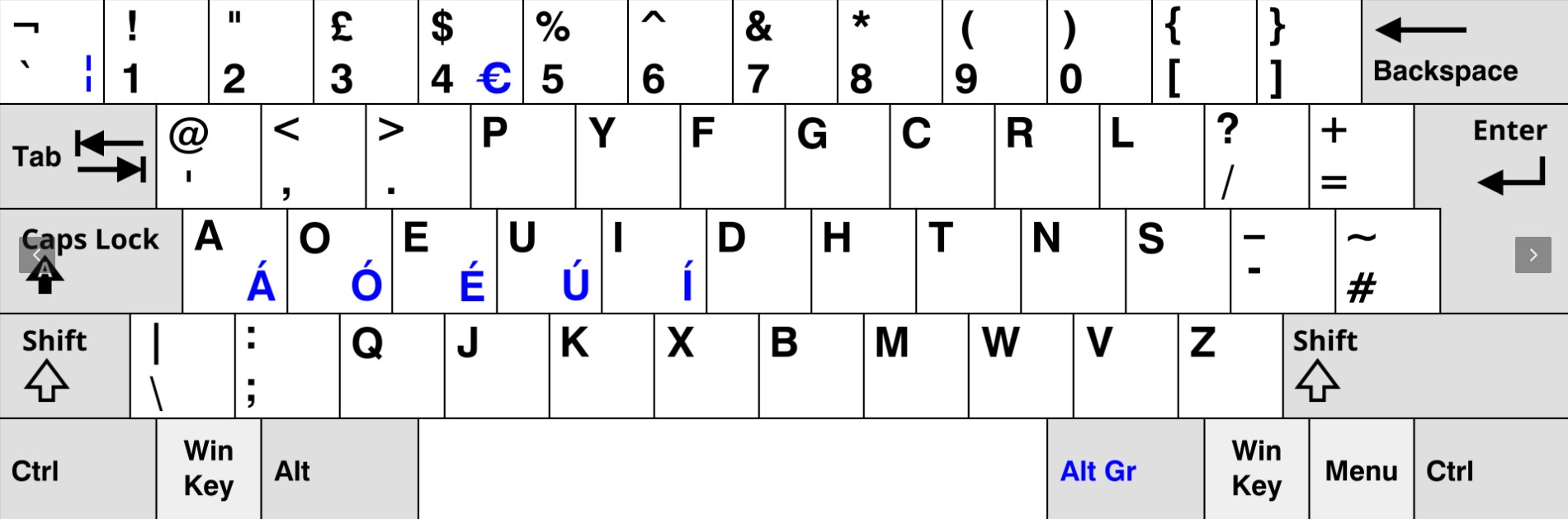
Below, images showing a 'sack-truck-system:' a set of applications with similarities ('linkages') and contrasts. (The system which includes boats, growing and water conservation
units is another example.
The boats form a sub-system - they vary in size and are very varied in their
possible applications.) In the sack-truck-system, the possible
applications
are very varied too. They include carrying loads, as a shopping trolley and
a trolley for transporting tools. These applications are common enough but
the system has a
higher degree of versatility. It includes display
and presentation facilities which can be used for portable advertizing and
for use in protests. I've taken part in many protests myself but
I think
that many public protests have become over-used and misused, heavily
dependent upon slogan shouting and practically never providing argument and
evidence sufficient to
defend the cause against reasoned objections. I
find it essential to distinguish argument against and action against
opponents with few or no redeeming features and action against
people
and organizations which have great strengths, in some cases massive
strengths. In the first category I include Christian belief, but there are
many other examples. In the
second category, I include police forces
such as South Yorkshire Police, whose strengths are accompanied by some
bizarre, disastrously misguided shortcomings. There are other
examples of
this second category described on this page and other pages. I refer to
action in these cases as 'appreciation-protest.' Another use for the
sack-truck-system is as a
replacement for a tripod. The system incorporates a monopod which has the stability of a tripod and which has various advantages.




Above, images from left to right. The
lightweight sack-truck
in folded position, easily carried. There are three small wheels on each
side, which facilitate moving the trolley up steps and stairs.
Despite the small size of the wheels
(which enable the truck to be readily moved up stairs) it can be moved over
quite rough
ground.
The sack-truck used as a shopping trolley, an adaptation which followed the loss of my van, which had suffered catastrophic engine damage and can't realistically be replaced.
The sack-truck used to support two white boards. The boards can be used for information hand-written with a pen and for displaying paper documents. Larger white boards can be used.
Image showing possible use for a
(non-appreciative) protest. People making use of the system for protest,
appreciative or non-appreciative, or using the system for other purposes,
may well bring the trolley and associated equipment in a car or van.
This system is a convenient way of transporting these things from a vehicle
to the place where the system will be used.
Image showing the reverse side of the trolley system. White boards, of this size or larger, can be installed on this side, to make a double-sided system.
Image showing folded chair supported on the reverse side of the sack-truck.
Image showing chair erected after removal from
storage position on reverse side. If the system is used for long periods of
time, then a chair is very useful.
Image showing use of sack-truck to
transport a tool-box. Tool boxes and other storage containers can be piled
high on the trolley, secured by straps. Once the various containers have
been removed, the white boards are visible
again and can be used to advertise the business carrying out the work, if
the trolley is being used by a business.
Image showing monopod fixed in
position and supporting a video camera, with image visible on the screen of
the
camera. The system can obviously be used for still photography also, and for
transporting photographic equipment in containers, and many other pieces of
non-photographic equipment / food / drink etc. The monopod is as stable as a
tripod and has the advantage,
when used in this way, that any
objections (generally invalid) raised against use of a tripod in crowded
places - as causing obstruction - aren't applicable to this system. It can
be
moved much more readily than a tripod and photographic activities can
be resumed. Tripods are much more unwieldy than the complete system here.
Not all photographers favour
lightweight cameras. This system can
accommodate heavy cameras, including heavy film cameras.
Image showing the camera
and the head of the monopod in more detail, larger. The head is flexible and allows
the camera to be fixed in many different positions, or rotated to follow
movement.
Two monopods, supporting two cameras, can be installed on the
system-trolley. Sound equipment can also be readily carried.
Not shown in any of these images: the provision which the
design makes for security, including the use of heavy duty chain to prevent
theft of a camera attached to the system, to
prevent theft of
containers stored on the trolley and provision to prevent the trolley from
being taken away.

Above, some uses for two of the foldable sack-trucks.
Image 1, two trucks form a horizontal surface
which can be covered with rigid boards. Image 2, another view of the linked
trucks. The two truck system in this configuration can be used
to
transport quite heavy loads. Plastic containers placed on the horizontal
support can contain a wide range of goods - manure, compost, straw bales,
bricks, building stone, timber and, of
course, many other things. Some
of the paths I've constructed have smooth strips which make movement of
single containers much easier, pulled up the slopes by straps, but the
system
here is preferable, since there are wheels at
the ends of the linked trolleys and less frictional force to overcome. It's
essential when using this wheeled system to have safety measures in
place which would make impossible downwards, possibly out-of-control
movement. This could be ensured by straps fastened securely to a person,
with checks to ensure that the person
could not be thrown off balance.
Image 3, the two trucks in a vertical position. The distance between the two trolleys is obviously adjustable, to fit various lengths and heights for polycarbonate sheet, when used.
Two uses for the two truck system: a
lightweight container growing system, in which the trucks act as
horizontal supports for the containers, as a lightweight water collecting /
conservation
system and as a lightweight shelter. The shelter can
protect the trucks from the effects of rain, protect users from the rain -
as when the system is used for displays / presentations - and protect
the displays / presentations from the rain, for example the magnetic white
boards shown in Image 4, and the colour-printed sheets attached to the
boards with clamps or magnets shown in Image 5.
Here, the displays are unsympathetic to Christian belief but there is obviously nothing to stop an end-user of this system using it to promote Christian belief, evangelism.
Lists-section In the lists below, the links are highlighted. Clicking on the link takes you to the page. Each page has a list
of entries, with links to the entries on the page. The entries are short, fairly short or very short, with some longer ones.
Many
of the entries are not concerned with established subjects. All the entries,
to a greater or lesser extent, offer new concepts,
new techniques, new
ways of looking at the subject matter, often, new ways of looking at the
world. The entries vary widely in scope
and technical difficulty. Interpretations is the page which contains the most difficult material.
My page
Linkage and
Theme Theory provides an introduction to the subject. The theory has a
very extensive range of applications,
including practical applications.
For example, I make use of it in my design and construction work very often
- to a greater or lesser
extent in most of my work.
Categories below (shortened titles):
4. Literature: new ideas, techniques
5. Aphorisms
12.1.
1.{themes}: Some applications
Pseudo-science
Commercial pressures
Nietzsche
Goya and violence
Pseudo-science
Mathematical proof
Truth tables
Digital electronics
Biological taxonomy
Aristotle's 'telos'
Generalized linkage connective
Implication
Material conditional
Teleological arguments
Trends
Vectors and directed lines
Ferromagnetism
Entropy Tractatus Logico-Philosophicus 3.144
Key system in music
Modulation in poetry
Unities of drama
Narrative {distance}
'Du' and 'Sie' in German
Edward Bullough's aesthetic {distance}
Wordsworth's boy at Windermere
Subjunctive and optative in Thucydides iii, 22
Web design and {distance}
Law of negligence
The Journey
James Connolly and the Easter Rising
Innovation
Nietzsche
Transformation in Rembrandt and Rilke
Mind, body and the rest of the world
George Orwell: capital and corporal punishment
Activism and opposition
{modification} by {diversification}
The necessary, the impossible and the contingent
Invariance
Variables and pretensions
Corroboration and falsification
Typography and action
Modal properties
Ethical decision-making
Digital technology
Military medicine: triage
Priorities in politics
Dependence
Nietzsche
{ordering} and {grouping}
The mind and concentration
Limitation and limits
Disappointment and imperfection
Exemption: slavery
Quantum mechanics
Jokes
Linkage schemata
((surveys))
Framing
Linkage isolation
Isolation and 'The Whole Truth'
Isolation and distortion
Poetry and prose
Kant and the limits to knowledge
Allowing and disallowing
Thermodynamic reversal
Elastic deformation
Negation
Undoing
Inversion and musical intervals
Of people: Shakespeare
Of people: Auschwitz-Birkenau
Commuters
Between past and present
Vegetables and fruit
Human characteristics and versatility
Thermodynamic separation
{separation} and application-sphere
{separation} and separability
Causation
Areas of competence
Evaluating the thing itself
Mathematical and scientific {substitution}
2. {themes}:
Some
interpretations, making use of Linkage and theme theory
Commutative operators
Demarcation: science-metaphysics
Endothermic and exothermic reactions
Foundationalism and coherentism
Implication
Induction
Inertia
Infininitesimals
Interchangeability
Intervals
Inverses of functions
Mendelian factors
Meta- and para-studies
Newton's First Law of Motion
Newton's Third Law of Motion
Particle in a box
Polish (prefix) notation
Referents
Regions
Selection: natural and artificial
SI units
Thermodynamic systems and partitions
linkage and {theme} theory: glossary
Abbreviation
{adjustment} and alignment
Allowing and disallowing
Assuming a linkage
Atypical linkage
Close
linkage and close contrast
Common interface
Constraints
Context-sensitive term
Contrasts of contrast
Deleted linkage
Distortion
Diversification
Elements
Enclosure
Evaluation
Evaluative
linguistics
Exemption
Factors and factorization
Genus and
species
Homoiolinkage and heterolinkage
Incommensurable linkage
Indeterminacy
Isolation
Layers
Limitation
Linkage diagrams
Linkage lines
Linkage schemata
Obverse linkages
Opposites linkage
Orwell's Search
Parnassian contrast
Philosophy and linkage
Primary and secondary elements
Prior linkages
Redeeming contrast
Redrawing
Reduction of contrast
Re-scaling
Restatement
Scaling: primary, secondary, tertiary
Separate worlds
Semi-precise linkage
Substitution
((survey))
{theme}
Unification
Volume
Weighting
4. Poetry: New Ideas, NewTechniques
Contrast and
repetition
Directionality
Fragmentation and faulting
Inter-line
poetry
'Linguistically innovative poetry'
Linkage by meaning
Modulation
Pulse poetry
Rearrangement and restoration
Regions
and zoning
Sectional analysis
Semantic force and significance
Strata poetry
Tensile art
Timing
Transept poetry
Unit poetry
Image-lines
The Set
Intra-linkages and intra-contrasts
Inter-linkages and inter-contrasts
Frames
5. Aphorisms
Religion, ideology and honesty
Ethics
Power and justice
Nature and the universe
Life and death
Happiness and suffering
The arts
Miscellaneous topics
A short introduction to the aphorism form
Discussion of the aphorism form
Below, the Home Page elongated Logo
(found also on many other pages). It shows the layout
of the page in miniature, the different regions of the page
and the varied mixture of text and images. The components
of the current Home Page differ from this less recent version.
The logo can be in different sizes, with the same aspect ratio.