Cesare Beccaria, the author of 'On Crimes and Punishments' (Dei lelitti e delle pene), is magnificent, astonishing. His work has had an incalculable effect, wholly for the good. At a time when the criminal justice systems in most European countries were hideously barbaric, he cut through all the traditional arguments and traditional complacency and attacked the death penalty and other abuses, such as torture.

Attribution: Sailko, CC BY 3.0 <https://creativecommons.org/licenses/by/3.0>, via Wikimedia Commons
Below, Leopold (left) with his brother Emperor Joseph II by Pompeo Batoni, 1769, Kunsthistorisches Museum, Vienna

Leopold II was an early proponent of Beccaria's ideas. He was King of Hungary and Bohemia and Archduke of Austria from 1790 to 1792 and Grand Duke of Tuscany from 1765 to 1790. On 30 November 1786, Leopold promulgated the reform of the penal code in Tuscany which abolished the death penalty, as well as torture. Schroeder called him 'one of the most shrewd and sensible monarchs ever to wear a crown.'.
Extract from the Wikipedia entry:
' ... his steady, consistent, and intelligent administration, which advanced step by step, brought the grand duchy to a high level of material prosperity. His ecclesiastical policy, which disturbed the deeply rooted convictions of his people and brought him into collision with the Pope, was not successful. He was unable to secularize the property of the religious houses or to put the clergy entirely under the control of the lay power.However, his abolition of capital punishment was the first permanent abolition in modern times. On 30 November 1786, after having de facto blocked capital executions (the last was in 1769), Leopold promulgated the reform of the penal code that abolished the death penalty and ordered the destruction of all the instruments for capital execution in his land. Torture was also banned.
...
Leopold also approved and collaborated on the development of a political constitution, said to have anticipated by many years the promulgation of the French constitution and which presented some similarities with the Virginia Bill of Rights of 1778. Leopold's concept of this was based on respect for the political rights of citizens and on a harmony of power between the executive and the legislative. However, it could not be put into effect because Leopold moved to Vienna to become emperor in 1790, and because it was so radically new that it garnered opposition even from those who might have benefited from it.
Leopold developed and supported many social and economic reforms. Smallpox inoculation was made systematically available, and an early institution for the rehabilitation of juvenile delinquents was founded. Leopold also introduced radical reforms to the system of neglect and inhumane treatment of those deemed mentally ill. On 23 January 1774, the "legge sui pazzi" (law on the insane) was established, the first of its kind to be introduced in Europe, allowing steps to be taken to hospitalize individuals deemed insane. A few years later Leopold undertook the project of building a new hospital, theBonifacio Hospital. He used his skill at choosing collaborators to put a young physician, Vincenzo Chiarugi at its head. Chiarugi and his collaborators introduced new humanitarian regulations in the running of the hospital and caring for the mentally ill patients, including banning the use of chains and physical punishment ... '

Above, 'Electric chair,' Andy Warhol, Hamburger Bahnhof Museum für Gegenwart

Above, cartoon by George Cruikshank
In 1689, 50 offences could be punished with the death penalty in England and Wales. By 1776, the number had increased to almost 200. By the end of the eighteenth century, 220 offences were punishable by death. Most of the laws were concerned with property offences. The Church of England made no objection to the savage punishments inflicted disproportionately on the poor. In various cathedral cities such as Durham and Lancaster, the public hangings took place near to the cathedral.
An Act of 1832 reduced the number of capital crimes to about 60. Between 1832 and 1837, the govenment introduced Bills to reduce the number of capital crimes further. Hangings remained public.
Extract from 'Timeline of Capital Punishment in Britain
1533. An Acte for the punysshement of
the vice of Buggerie was passed making sodomy (buggery) a
capital crime. This Act stayed in force until 1828 but
buggery remained a capital crime until the Offences against the person
Act of 1861 removed the death penalty. The last executions
for this offence occurred in 1835 when John Smith and James Pratt were
hanged outside Newgate.
1542. Witchcraft becomes a felony in
1547. This statute is repealed by Edward VI.
1563. Witchcraft again
classed as a felony in
1566. First confirmed hanging for witchcraft - that of Agnes
Waterhouse at
1571. The "Triple Tree" introduced on
the 1st of June as
a permanent gallows at Tyburn - for the execution of John Storey who was
hanged, drawn and quartered for treason.
1612. The “Pendle Witches” (eight women and two
men) are hanged at
1624. The Infanticide Act of King James I makes infanticide
and concealment of birth capital offences. Full title “An act to prevent
the destroying and murthering of bastard children”.
1649. 23 men and one woman executed at Tyburn on
the 23rd of June for burglary and robbery requiring eight carts. This
was almost certainly the largest number of ordinary criminals put to
death in a single execution in
1682. The Bideford Witches, Temperance Lloyd,
Susanna Edwards & Mary Trembles were hanged for witchcraft at Heavitree
gallows
1699. The Shoplifting Act defined shoplifting to
the value of five shillings (25 pence) as a capital crime.
1706. Abolition of literacy test for Benefit of
Clergy.
1713. An Act of Parliament of this year made
stealing from a dwelling house in the value of 40 shillings (£2) a
capital crime.
1723. The
1727. Janet Horne becomes the last person to be
burned at the stake for witchcraft at Dornoch in
1751. Parliament passes an Act “for better
preventing the horrid crime of murder” which specified that a person
convicted of murder was to be kept in chains and fed on only bread and
water and to be hanged within 48 hours, unless that would have been a
Sunday in which case the execution was carried out on the following
Monday. This Act mandated the dissection or gibbeting of the murderer's
body after execution. Gibbeting was not applied to women prisoners. The
bodies of murderers were not permitted to be buried in consecrated
ground.
1783. First hangings outside at Newgate (in the
Old Bailey) take place on the 9th of December. Edward Dennis and William Brunskill hanged
nine men and a woman at once on the "New Drop." It was
quite usual to hang prisoners in large batches at this time, men and
women together. The largest number executed in one day was on
1784. Mary Bailey becomes the last person to be
burned at the stake for the Petty Treason murder of her husband at
1789. The last burning at the stake in
1790. Burning at the stake for women convicted of
High Treason and Petty Treason was abolished by the Treason Act on the
5th of June and replaced by drawing to the place of execution and
hanging.
1810. English and Welsh law listed 222 capital
felonies at this time. This huge number is reached because English law
subdivided many offences, e.g. there were at least seven offences of
capital arson defined.
In practice, there were only about 20 offences
for which people were actually executed. Scottish law had just 16
capital offences, although these were only reduced to four in 1887.
1814. The last hanging under the "Waltham Black
Acts" took place on
1814. The Treason Act of 1814 removed the
disembowelling and quartering requirements from the male punishment for
High Treason.
1820. The Cato Street conspirators became the last
to suffer hanging followed by decapitation for treason outside Newgate
on the 1st of May. (See hanged,
drawn and quartered)
1822. Last hanging for stealing in a shop
(shoplifting) William Reading at Newgate on the 27th of November.
1823. The Judgment of Death Act of the 27th of
November allowed judges the discretion to immediately reduce mandatory
death sentences for crimes other than treason and murder to lesser
punishments of imprisonment or transportation. The death
sentence was still recorded.
1827. The last of the Black Acts were repealed.
The Offences against the Person Act of 1828
re-classified the crime of Petty Treason to ordinary murder.
1829. Last hanging for forgery - Thomas Maynard at
Newgate on the 31st of December. This crime was reclassified as non
capital in 1836.
1830. Last hangings at Execution Dock, Wapping -
George Davis and William Watts executed for piracy on the 16th of
December. In all, 26 men were hanged at Execution Dock during the 19th
century, mainly for murder and piracy, after conviction in the High
Court of the Admiralty. (See Execution
Dock)
1831. A boy of just nine was reputed to have been
hanged at
1832. The Anatomy Act came into force on the 1st
of August, ending the dissection of murderers. At the same time, it was
enacted in Section 16, that the bodies of those executed “shall be
buried within the precincts of the prison in which they were last
confined”, unless they had been ordered to be hanged in chains.
1832. James Cook was the last man to be hanged in
chains (gibbet irons) for murder at
1832. The Punishment of Death, etc. Act 1832
reduced the number of capital crimes to around 60.
1832-1837. Sir Robert Peel's government introduced
various Bills to reduce the number of capital crimes. Shoplifting,
sheep, cattle and horse stealing removed from the list in 1832, followed
by sacrilege, letter stealing, returning from transportation (1834/5),
forgery and coining (1836), arson, burglary and theft from a dwelling
house (1837), rape (1841) and finally attempted murder in 1861.
The
last hangings for robbery took place at
1834. Hanging in chains or gibbet irons after
death was abolished by the Hanging in Chains Act of 1834.
1835. Last executions for sodomy. James
Pratt and John Smith hanged at Newgate on the 27th of November.
1836. The Murder Act of 1752 was repealed. A
period of 14 – 27 days between sentence and execution then became
normal.
1836. The Prisoner’s Counsel Act required a proper
defence counsel for those charged with serious crimes.
1837. The Offences against the Person Act of 1837
removed the death penalty for the crimes of shooting at and cutting and
maiming. It was now only available for only 16 crimes.
1837. The Recorder's Report was abolished and Old
Bailey judges could commute the sentence of death on non murderers.
1837. The Piracy Act imposes the death penalty for
offences of piracy involving "assault with intent to murder." It
was last used in 1860, although five men were to be hanged at Newgate
for murder and piracy on the 22nd of February 1864.
1843. The M’Naghten Rules were introduced in
the wake of the murder of Sir Robert Peel the Prime
Minister’s private secretary by Daniel M’Naghten. These
rules gave the first proper legal definition of insanity. M’Naghten was
acquitted on the basis that he was suffering from delusions. For a
detailed discussion of insanity and the M’Naghten Rules click here.
1845. John Tawell, a Quaker, became the first man
to be caught using the electric telegraph. He was hanged at Aylesbury on
the 28th of March for the poisoning murder of Sarah Hart.
1853. The Penal Servitude Act of 1853 introduced
the modern concept of prison as a punishment in itself rather than
merely as a place to hold people awaiting trial, execution or
transportation. Section 9 of the Act provided for the freeing on licence
of convicts after serving a suitable period of the sentence.
1856. Pinioning the legs of male prisoners was
introduced in the wake of the problems encountered by Calcraft at the
hanging of William Bousfield on the 31st of May 1856.
1861. The Home Secretary takes over the power of
reprieve/commutation of death sentences from the judiciary and Privy
Council.
1861. Criminal Law Consolidation Act reduced the
number of capital crimes to four: Murder, High Treason, Arson in a Royal
Dockyard, (this was a separate offence, not High Treason) and Piracy.
1861. Last execution for attempted murder when
Martin Doyle suffered at
1861. The Offences Against the Person Act states
in section 3: “The Body of every Person executed for Murder shall be
buried within the Precincts of the Prison in which he shall have been
last confined after Conviction, and the Sentence of the Court shall so
direct.”
1864-1866 Royal Commission on Capital Punishment
sat. One of its recommendations was the ending of public
hangings.
1868. Last fully public hanging in
1868. Last public hanging of a woman - Francis
Kidder at
1868. Third reading of The Capital Punishment
within Prisons Bill by parliament on the 11th of May.
1868. Last nominally public hanging in
1868. Last fully public hanging in
1868. Parliament passes the Capital Punishment
(Amendment) Act on the 29th of May, ending public hanging and requiring
executions to be carried out behind prison walls. However
the Act did allow the sheriff of the county in which the execution took
place the discretion to admit newspaper reporters and other witnesses,
including the victim’s relatives to the hanging.
1868. First nominally private hanging, that of 18
year old Thomas Wells executed at
1533. An Acte for the punysshement of
the vice of Buggerie was passed making sodomy (buggery) a
capital crime. This Act stayed in force until 1828 but
buggery remained a capital crime until the Offences against the person
Act of 1861 removed the death penalty. The last executions
for this offence occurred in 1835 when John Smith and James Pratt were
hanged outside Newgate.
Circa 1540, during the reign of Henry VIII, there
were 11 capital crimes defined : High treason, including
counterfeiting coin, petty treason, murder, rape, piracy, arson of a
dwelling house or barn with corn in it, highway robbery, embezzling ones
master’s goods, horse theft, robbing churches and robbing a person in a
dwelling house.
1542. Witchcraft becomes a felony in
1547. This statute is repealed by Edward VI.
1563. Witchcraft again
classed as a felony in
1566. First confirmed hanging for witchcraft - that of Agnes
Waterhouse at
1571. The "Triple Tree" introduced on
the 1st of June as
a permanent gallows at Tyburn - for the execution of John Storey who was
hanged, drawn and quartered for treason.
1612. The “Pendle Witches” (eight women and two
men) are hanged at
1624. The Infanticide Act of King James I makes infanticide
and concealment of birth capital offences. Full title “An act to prevent
the destroying and murthering of bastard children”.
1649. King Charles 1st beheaded in
1649. 23 men and one woman executed at Tyburn on
the 23rd of June for burglary and robbery requiring eight carts. This
was almost certainly the largest number of ordinary criminals put to
death in a single execution in
1671. The
1682. The Bideford Witches, Temperance Lloyd,
Susanna Edwards & Mary Trembles were hanged for witchcraft at Heavitree
gallows
1684. Alice Molland was probably
hanged at Heavitree,
1685. The "Bloody Assizes" began on the 26th
August in the aftermath of the Monmouth Rebellion. Some 320 people were
executed as a result. The men being mainly hanged, drawn and quartered.
The first execution was that of 67 year old Lady Alice Lisle who was
beheaded for treason at
1699. The Shoplifting Act defined shoplifting to
the value of five shillings (25 pence) as a capital crime.
1706. Abolition of literacy test for Benefit of
Clergy.
1712. Jane Wenham becomes the last woman to be
condemned for witchcraft in
1713. An Act of Parliament of this year made
stealing from a dwelling house in the value of 40 shillings (£2) a
capital crime.
1714. The Riot Act is passed, coming into force on
1718. The Transportation Act allowed the courts to
sentence those who had been convicted of offences with benefit of clergy
to be transported to
1723. The
1727. Janet Horne becomes the last person to be
burned at the stake for witchcraft at Dornoch in
1736. Witchcraft ceases to be a capital crime in
1751. Parliament passes an Act “for better
preventing the horrid crime of murder” which specified that a person
convicted of murder was to be kept in chains and fed on only bread and
water and to be hanged within 48 hours, unless that would have been a
Sunday in which case the execution was carried out on the following
Monday. This Act mandated the dissection or gibbeting of the murderer's
body after execution. Gibbeting was not applied to women prisoners. The
bodies of murderers were not permitted to be buried in consecrated
ground.
1752. The Murder Act, as the 1751 Act became
known, came into force on the 1st of June.
1752. On the 22nd of June, 17 year old murderer,
Thomas Woolford, became the first person to be hanged (at
Tyburn) and then dissected (anatomised) at Surgeon's Hall.
1760. Lawrence Shirley the Fourth Earl
of Ferrers is hanged at Tyburn on the 5th of May for
the murder of a servant using the "New Drop" for the first time. (The
only Peer of the Realm to hang for murder) The "Triple Tree" was removed
from Tyburn and replaced with a portable gallows.
1776. Transportation as an alternative punishment
is temporarily ended by the American War of Independence. Executions
rise considerably as a result.
1783. John Austin becomes the last person to be
hanged at Tyburn on the 7th of November for highway robbery.
1783. First hangings outside at Newgate (in the
Old Bailey) take place on the 9th of December. Edward Dennis and William Brunskill hanged
nine men and a woman at once on the "New Drop." It was
quite usual to hang prisoners in large batches at this time, men and
women together. The largest number executed in one day was on
1784. Mary Bailey becomes the last person to be
burned at the stake for the Petty Treason murder of her husband at
1788. Transportation resumes, this time to
1789. The last burning at the stake in
1790. Burning at the stake for women convicted of
High Treason and Petty Treason was abolished by the Treason Act on the
5th of June and replaced by drawing to the place of execution and
hanging.
1804 -1813. Prisoners convicted of a first time
felony (other than murder, treason, forgery and arson) frequently had
their death sentences commuted to transportation and this practice
carried on until 1867 by which time no one was hanged for a crime other
than murder. The minimum time of transportation was two years, however,
criminals could also be sentenced to 5, 7, 10, 14, 20 or 21 years or for
life. Only about 5% of those sentenced to transportation actually ever
returned to
1810. English and Welsh law listed 222 capital
felonies at this time. This huge number is reached because English law
subdivided many offences, e.g. there were at least seven offences of
capital arson defined.
In practice, there were only about 20 offences
for which people were actually executed. Scottish law had just 16
capital offences, although these were only reduced to four in 1887.
1814. The last hanging under the "Waltham Black
Acts" took place on
1814. The Treason Act of 1814 removed the
disembowelling and quartering requirements from the male punishment for
High Treason.
1820. The Cato Street conspirators became the last
to suffer hanging followed by decapitation for treason outside Newgate
on the 1st of May. (See hanged,
drawn and quartered)
1822. Last hanging for stealing in a shop
(shoplifting) William Reading at Newgate on the 27th of November.
1823. The Judgment of Death Act of the 27th of
November allowed judges the discretion to immediately reduce mandatory
death sentences for crimes other than treason and murder to lesser
punishments of imprisonment or transportation. The death
sentence was still recorded.
1827. The last of the Black Acts were repealed.
The Offences against the Person Act of 1828
re-classified the crime of Petty Treason to ordinary murder.
1829. Last hanging for forgery - Thomas Maynard at
Newgate on the 31st of December. This crime was reclassified as non
capital in 1836.
1830. Last hangings at Execution Dock, Wapping -
George Davis and William Watts executed for piracy on the 16th of
December. In all, 26 men were hanged at Execution Dock during the 19th
century, mainly for murder and piracy, after conviction in the High
Court of the Admiralty. (See Execution
Dock)
1831. A boy of just nine was reputed to have been
hanged at
1832. The Anatomy Act came into force on the 1st
of August, ending the dissection of murderers. At the same time, it was
enacted in Section 16, that the bodies of those executed “shall be
buried within the precincts of the prison in which they were last
confined”, unless they had been ordered to be hanged in chains.
1832. James Cook was the last man to be hanged in
chains (gibbet irons) for murder at
1832. The Punishment of Death, etc. Act 1832
reduced the number of capital crimes to around 60.
1832-1837. Sir Robert Peel's government introduced
various Bills to reduce the number of capital crimes. Shoplifting,
sheep, cattle and horse stealing removed from the list in 1832, followed
by sacrilege, letter stealing, returning from transportation (1834/5),
forgery and coining (1836), arson, burglary and theft from a dwelling
house (1837), rape (1841) and finally attempted murder in 1861.
The
last hangings for robbery took place at
1834. Hanging in chains or gibbet irons after
death was abolished by the Hanging in Chains Act of 1834.
1835. Last executions for sodomy. James
Pratt and John Smith hanged at Newgate on the 27th of November.
1836. The Murder Act of 1752 was repealed. A
period of 14 – 27 days between sentence and execution then became
normal.
1836. The Prisoner’s Counsel Act required a proper
defence counsel for those charged with serious crimes.
1837. The Offences against the Person Act of 1837
removed the death penalty for the crimes of shooting at and cutting and
maiming. It was now only available for only 16 crimes.
1837. The Recorder's Report was abolished and Old
Bailey judges could commute the sentence of death on non murderers.
1837. The Piracy Act imposes the death penalty for
offences of piracy involving "assault with intent to murder." It
was last used in 1860, although five men were to be hanged at Newgate
for murder and piracy on the 22nd of February 1864.
1843. The M’Naghten Rules were introduced in
the wake of the murder of Sir Robert Peel the Prime
Minister’s private secretary by Daniel M’Naghten. These
rules gave the first proper legal definition of insanity. M’Naghten was
acquitted on the basis that he was suffering from delusions. For a
detailed discussion of insanity and the M’Naghten Rules click here.
1845. John Tawell, a Quaker, became the first man
to be caught using the electric telegraph. He was hanged at Aylesbury on
the 28th of March for the poisoning murder of Sarah Hart.
1853. The Penal Servitude Act of 1853 introduced
the modern concept of prison as a punishment in itself rather than
merely as a place to hold people awaiting trial, execution or
transportation. Section 9 of the Act provided for the freeing on licence
of convicts after serving a suitable period of the sentence.
1856. Pinioning the legs of male prisoners was
introduced in the wake of the problems encountered by Calcraft at the
hanging of William Bousfield on the 31st of May 1856.
1861. The Home Secretary takes over the power of
reprieve/commutation of death sentences from the judiciary and Privy
Council.
1861. Criminal Law Consolidation Act reduced the
number of capital crimes to four: Murder, High Treason, Arson in a Royal
Dockyard, (this was a separate offence, not High Treason) and Piracy.
1861. Last execution for attempted murder when
Martin Doyle suffered at
1861. The Offences Against the Person Act states
in section 3: “The Body of every Person executed for Murder shall be
buried within the Precincts of the Prison in which he shall have been
last confined after Conviction, and the Sentence of the Court shall so
direct.”
1864-1866 Royal Commission on Capital Punishment
sat. One of its recommendations was the ending of public
hangings.
1868. Last fully public hanging in
1868. Last public hanging of a woman - Francis
Kidder at
1868. Third reading of The Capital Punishment
within Prisons Bill by parliament on the 11th of May.
1868. Last nominally public hanging in
1868. Last fully public hanging in
1868. Parliament passes the Capital Punishment
(Amendment) Act on the 29th of May, ending public hanging and requiring
executions to be carried out behind prison walls. However
the Act did allow the sheriff of the county in which the execution took
place the discretion to admit newspaper reporters and other witnesses,
including the victim’s relatives to the hanging.
1868. First nominally private hanging, that of 18
year old Thomas Wells executed at
Below, Arthur Koestler in Tel Aviv, Jerusalem, 1949

George Orwell, who fought in the Spanish Civil War, is a wonderful, wide-ranging writer, but it's surprising that he wrote so little on the death penalty, in full force throughout his life, from a critical perspective. He did write 'A Hanging,' which makes use of his service as a Police Officer in India. This may have been only a 'story,' the hanging he writes about a fiction, although probably not. He refers to the 'unspeakable wrongness' of cutting a life short in this way but never supported the abolitionist movement of his day by writing much more about the degrading practice of hanging by the neck (I take the view that the execution of the Nazi war criminals, far from being degrading, was absolutely justifiable. I take the view that many more of them should have been executed.)
The Hungarian Arthur Koestler was also in Spain during the Spanish Civil war, was arrested by the Franco Nationalists and sentenced to death. During that time, a large number of his fellow prisoners met their end.
His book 'Reflections on Hanging' was published in 1956. There was an American edition in 1957. This is an extraordinary, intense, unforgettable treatment of the subject and the many people who kept the system in force, at a time when already, there were countries which had abolished the death penalty or never used it. The book is polemical but can't be categorized so easily, containing, as it does, scathing remarks on judges, deeply sensitive comments on the condemned - not all of them were sensitive people, obviously, there were monsters amongst them, but none of them had carried out atrocities on the scale of the Nazi atrocities - vivid comment, vivid factual information, unwavering in its force.

See also
Ethics: theory and practiceThis abolitionist page is rather different from most other abolitionist pages on the Web.
My approach to death penalty campaigning here is more abrasive in some places than the approaches used by many campaigners, although I've written a large number of letters to governors of states, the boards which have power of clemency and other recipients which have been ultra-polite and restrained. I don't give here any elaborate arguments against the death penalty - the risk of executing the innocent, the arguments and evidence showing that the death penalty isn't a unique deterrent, and the rest. These are readily available on many other Web sites and in print form. I do, though, discuss the risk of executing the damaged, an argument which deserves to be far better known.
This is also a personal response to the death penalty - gratitude for people, organizations, governments opposed to the death penalty, and disgust, disappointment, puzzlement as regards people and countries supporting the death penalty (with, sometimes, admiration and appreciation for their better side.) The focus of attention here is 'The Land of the Lethal Injection,' the USA, a country which certainly calls for this complex response of admiration, appreciation, disgust, disappointment and puzzlement. My response is above all one of admiration and appreciation.
I mention on this page only a few of the very impressive people and organizations active in the abolitionist cause, now and in the past. I mention on this site, and give links to, very few of the abolitionist Websites which I admire so much and mention hardly at all the books and the newspaper, magazine and journal discussions which I admire so much. It's a heartening fact that the abolitionist cause has become so wide-ranging as to make an adequate appreciation impossible, even when the coverage is far more extensive than here. This has not always been the case.
This abolitionist page is different from many other abolitionist pages in its rejection of a common argument: that the death penalty should be opposed because it represents a denial of the right to life. I maintain that there's no such right, for the reasons given in the section Amnesty International: appreciation, criticism. Many other alleged human rights - and animal rights - I regard as spurious too. I've worked extensively in the field of animal welfare, without ever regarding it as work for animal rights. my work for 'human rights' has taken up more of my time, but I regard the concept of human rights as very problematic, with genuine uses but a concept which is over-used and misused.
I oppose unnecessary killing, not justifiable killing. I also claim that opposition to unnecessary killing has to take account of many more practices than the death penalty, and that the states which never execute may not always be the states which are the most effectual in combatting unnecessary killing, or torture and other cruelties: not nearly as much can be expected from enlightened Sweden (sometimes, alarmingly naive Sweden) as from the far less enlightened United States of America (or the disconcerting mixture of contradictory impulses, good and bad, which constitutes the United States.) The United States is a far more important force for good (as well as harm) than Sweden - but I also write about the tiny state of San Marino, important, very important for its humanitarianism.
For twenty years, I was a very active member of Amnesty International and the Death Penalty Co-ordinator for most of that time. Amnesty International opposes the use of the death penalty in all circumstances. I think that there have been circumstances in which the death penalty has been justifiable, in particular in the years after the Second World War. I take the view that the extreme brutality of so many Nazis demanded the execution of very many Nazis found guilty of extreme acts - I even think that many more Nazis should have been executed than were actually executed. I take the view that to imprison high-ranking Nazis rather than execute them would have been very dangerous. There could well have been circumstances which led to their release, with very damaging consequences.
I oppose uniform, mechanical responses. I see the need for {adjustment}. Why should conservatives, including right-wing conservatives, be hard, much harder than 'progressives,' for all issues? I see the need for a tough response to terrorism, which can destabilize a state to the point of destruction, and uncontrolled, unsustainable immigration, but imprisoning rather than executing has no adverse consequences, in fact it has benefits, such as the fact that it's generally much cheaper to imprison than to execute. Intelligent conservatives should recognize that the abolition of the death penalty doesn't threaten or undermine society. A conservative without any liberal and progressive tendencies is a robot rather than a free person.
Stalin, Goering and governor Arnold Schwarzenegger of California: astonishing facts

Above, California's lethal injection chamber at St Quentin State Penitentiary, now renamed.

Above, the former gas chamber at the former San Quentin Penitentiary, converted into a lethal injection chamber.
It's astonishing to discover impulses to humanity in two of the worst monsters of the Twentieth Century, Stalin and Goering, and none, in one restricted sense, to someone who wouldn't be regarded as a monster at all: Arnold Schwarzenegger, a former Governor of California, replaced by Jerry Brown. An opponent in one respect may well be an ally in another, and so it is here. I criticize him in this section but commend him for his support for the Israel Defence Force (IDF). He attended the Western Region Gala on November 6, 2014 which raised over $33 million for the Friends of the Israel Defense Forces. See also, on my page on Israel.
Goering, when he became Minister-President under Hitler, took on the prerogative of clemency in Prussia. It's an extraordinary fact that when the condemned had been sentenced to death for any length of time he hesitated about allowing the execution to take place. The historian Richard J Evans writes in 'Rituals of Retribution: Capital Punishment in Germany 1600 - 1987'
'Goering, a man not generally known for his sensitivity to human suffering, indeed went on to grant reprieves to a number of these prisoners, precisely on this ground; a telling contrast to the equanimity with which other judicial authorities, in other places and at other times, have regarded the confinement of condemned prisoners on death row not for months, but for years, while awaiting a final decision on whether they should live or die.'
To await death for any length of time seemed to Goering intolerable. On 5 May 1933, Goering pointed out
'that in all the cases which are now before me, it is extraordinarily difficult to allow justice to take its course after the condemned, as a result of the uncertainty under which they have already been labouring, some of them for an extraordinarily long time [this was perhaps a year or two, not two decades or more, as it sometimes is and has been in the United States], have in any case had to undergo spiritual martyrdom.'
Compare this with...
Arnold Schwarzenegger, the former Governor of California, who denied clemency to Clarence Ray Allen, who had been on death row for - 23 years! Justice Stephen Breyer had earlier filed a dissent, pointing out that the man had not only been on death row for 23 years but 'is 76 years old, blind, suffers from diabetes and is confined to a wheelchair.' So, Clarence Ray Allen went to his death.

Another case comes from the state of Georgia, USA (Georgia the former Soviet republic is much more enlightened in this respect.) In September 2008, Jack Alderman was executed after an even longer stay on death row. Some facts about the case. His codefendant, John Brown, confessed to the murder but then changed his story to implicate Alderman, in accordance with a deal made with prosecutors. This allegation was the only evidence against Alderman. Forensic evidence was completely lacking. Both Alderman and Brown were sentenced to death but Brown later pleaded guilty in return for a prison sentence but was freed after serving only 12 years. Jack Alderman, on the other hand, was given an execution date after being on death row for - 34 years. What is it about the 'Justice' system in Georgia, what deranged and disgusting state can it be in, that it could consider an action that would have troubled even the Nazi Goering? Stalin's punishment for murder after abolition of the death penalty was imprisonment for a maximum term of 25 years. In Georgia, USA, on the other hand, the punishment can be much, much harsher: imprisonment for 34 years followed by execution.
In Alabama, Thomas Whisenhant
was executed in May 2010 after 32 years on death row.
Back to Schwarzenegger. Environmentalists, green campaigners - and I do favour
the green cause myself, but with very critical tendencies
- will support Arnold Schwarzenegger's efforts to curb emissions, to
minimize the contribution California makes to climate change. But even if environmental protection is
one of the most important of all issues, there are issues of humanity and
human decency which are even more important. 'If, in twenty years, all Californians
are riding in electric vehicles, vehicles powered by biofuel, if Californians
are recycling, reusing, reducing the products they use on an unprecedented
scale, but the killing centre at San Quentin is still in operation, then the
state will be grotesquely at fault.' This was what I wrote in an earlier
version of the page. Gavin Newsom, the governor of California, issued a
moratorium on the use of the death penalty in 2019 - a heartening, wonderful
decision.
Stalin, surely the second worst monster of the Twentieth Century, after Hitler, abolished the death penalty in the Soviet Union on 26 May 1947. (Richard J Evans, 'Rituals of Retribution,' Page 806. Also mentioned in Solzhenitsyn, 'The Gulag Archipelago 1,' Page 439.) The death penalty was replaced with a maximum term of imprisonment of 25 years. The law didn't apply in occupied Germany, but even here, "the Soviet Military Administration in Germany declared its extreme reluctance to pass or carry out death sentences from this moment on." (Page 806.) The death penalty was reintroduced in 1951 for treason and espionage. It wasn't restored for murder until 1954, after Stalin's death.
This is a striking demonstration, I think, of the power of tradition and history, not of Stalin's humanity. Long after the death penalty was abolished in the United Kingdom, there were frequent calls to reintroduce it, particularly in England. The long period of legal neck-stretchings had entered into popular consciousness. Now, though, the calls to 'bring back the rope' are far fewer and weaker, aided, perhaps, by high-profile cases in which the wrong person was sentenced, even executed. In the United States, this particular tradition is still strong, though. Only the method of execution has changed - instead of the call to 'fry the bastards,' the call to 'inject the bastards.' But Russia has a very long history of abolishing the death penalty and opposing it. See the information in the 'Admiration' section of this page, about the Empress Elizabeth, who in the middle of the 18th century never once made use of the death penalty. The Empress Catherine made no use of the death penalty for non-political offences. Solzhenitsyn: '...the yielding up of one's God-given life because others, sitting in judgment, have so voted simply did not take place in our country even for crimes of state for an entire half century - from Pugachev to the Decembrists.' [that is, from 1775-1825] In Tsarist times, the death penalty was used very sparingly. When the Provisional Government came to power after the Russian Revolution, it abolished the death penalty completely. It was reinstated but abolished again in 1920. Stalin had this tradition and history to draw upon.
Arthur Koestler, the Hungarian who played a leading part in the campaign to abolish the death penalty in this country (he was under sentence of death himself during the Spanish Civil War) wrote in his book 'Hanged by the Neck:' 'There is a poisoned spray coming from the Old Bailey [where many of the death sentences were passed] which corrupts and depraves; it can be stopped only by abolishing its cause, the death penalty itself. Two centuries ago, visitors to this country were puzzled to find the road to London dotted with grisly gibbets. They are still puzzled by the same contradiction between the Englishman's belief in the necessity of hanging and his proverbial virtues of toleration to man, kindness to animals, fussing over plants and birds. They fail to understand the power of tradition, his reluctance to abandon any of his cherished prejudices.
'Tradition has a hypnotic effect which commands blind belief, an instinctive recoil from any new departure as a 'dangerous experiment', and an unwillingness to listen to reasoned argument.'
I share Arthur Koestler's view that the death penalty amounts to moral pollution, in effect, that not all pollution consists of chemicals and radiation.
Friendly fire: the abolitionist Clive Stafford-Smith
Some pages of this site have a section, 'Friendly fire ...' So, my anti-feminist page has a 'Friendly fire' section where I criticize some anti-feminist sites. Here, I criticize just one person, the abolitionist Clive Stafford-Smith.
Clive Stafford-Smith is right about some things, such as the hideous cruelties of the death penalty, and radically wrong, about others, such as conservative politics and Islamism. From my page Aphorisms: 'Allies include opponent-allies.' Agreement on one issue is no guarantee of agreement on another issue, an instance of cross-linkage. the
He represented Edward Earl Johnson, who was facing execution in the gas chamber of the state of Mississippi. He was one of the few people he represented who were executed. He has won 294 death penalty cases and lost only six. Edward Earl Johnson was executed in May, 1987 and the hideous event and its hideous preliminaries were the subject of a superb documentary directed by Paul Hamann. I watched the film
'Welcome to Hell: Letters and Writings from Death Row' by Clive Stafford-Smith, Helen Prejean, Jan Arriens and death row inmates, is just as impressive. The Amazon description:
'Welcome to Hell vividly conveys daily life on death row. Ranging from simple descriptions of cockroach races and a typewriter repaired with rubber bands and a toothbrush, to profoundly affecting glimpses into horrific abusive childhoods, to eloquent, emotionally powerful statements about facing execution, these remarkable letters reveal the human side of capital punishment.'
Clive Stafford-Smith is British born but worked in the southern states of the USA. He returned to this country and became the legal director of Reprieve, which gives legal assistance to death row inmates in the USA. I gave monthly donations to Reprieve, despite reservations, but I decided to stop my donations. Reprieve also supports detainees at Guantanamo Bay and I think that Reprieve, and Clive Stafford-Smith, are badly mistaken. In humanitarian work, as in other spheres, delegation is essential and division of labour is essential. The prisoners at Guantanamo Bay include dangerous fanatics, contemptible people, as well as people who should never have been imprisoned there. Of course, even the dangerous fanatics and the contemptible people have a right to humane treatment, but it should be Moslem organizations which support them.
He claims that the dangers of Islamist terrorism are vastly exaggerated. In this country, Islamist terrorists have killed very few people. This is true enough, but worldwide, it poses a massive threat, and he overlooks the fact that as well a threats to life, there are threats to free thought and threats to cultural life.
He doesn't hide his dislike for conservatives, but his political views are undeveloped. I'd describe them as negligible.
Lord Justice Goddard's trousers
Justice Renhquist, Justice Scalia and Justice Thomas of the United States Supreme Court voted for the death penalty for juveniles and for mentally ill defendants. What goes on in the minds of such people? The Clerk of Lord Chief Justice Goddard, here in England, who sent many prisoners to meet the hangman, not in the middle ages but in the twentieth century, records that when a man was due to be sentenced to death, he would bring in a spare pair of trousers. Why? Because Justice Goddard used to have an organism when he was passing sentence of death and ejaculated into the trousers he was wearing. At the time, corporal punishment as well as capital punishment was allowed by the law of this country. He used to ejaculate too when he sentenced a prisoner to be whipped.
When corporal punishment was allowed in schools in this country, by such means as the cane, STOPP, the Society of Teachers Opposed to Physical Punishment, didn't hesitate to claim, surely rightly, a sexual-pathological motivation for some of the teachers who administered corporal punishment.
I don't suppose that Justice Rehnquist, Scalia or Thomas ever ejaculated whilst voting to refuse clemency to the juvenile offenders or other capital offenders whose cases came before them and I don't of course have any proof that their motivation included a sexual-pathological component. But I do think it very likely that Lord Justice Goddard isn't unique in his sexual pathology, that there are linkages between administering the death penalty and sexual pathology which have so far been largely ignored.
Here, naturally enough, I concentrate on Obama and the death penalty, in full awareness of other issues. A central duty of the government of the United States, as of Britain, is defence and national security. There's growing and increasingly disturbing evidence that President Obama is adopting a policy of appeasement - of Islamism and Islamic terrorism - even if the killing of Osama bin Laden was very much to his credit.
President Obama called for the death penalty for child rape before he was elected. The arguments I use in the section 'the risk of executing the damaged' I use again here. A close study of many, many death penalty cases has convinced me that one generalization is far from risky. It's more likely that people who have raped a child were raped as a child themselves or subjected to gross abuse as a child than that they grew up in anything like a 'normal' family. It's more likely that the diseased individuals who collect internet images of children being raped were raped as a child themselves - or hired out to strangers for sex, or subjected to incest or subjected to another form of gross abuse - than that they grew up in anything like a normal family. Of course, people who were raped as a child may grow up to be law-abiding, hard-working, completely respectable citizens - but the obstacles they face are vastly greater than those who were never raped, or beaten, or burned as children. To sentence to death even one person who was raped as a child, to make them wait for execution for perhaps twenty years, to give them a stay perhaps an hour before the execution, to eventually bring them into the execution chamber - this is the act of a barbaric country. See also on this page the risk of executing the damaged.
Although I have no television, I saw a great deal of Obama and McCain during their electoral campaigns and what I saw was often very impressive, although sometimes more impressive for the manner and the fluency than for the content.
But my respect for Obama's outstanding qualities is accompanied with deep reservations and deep repugnance. Obama's support for the death penalty is far from being a minor issue. There may have been little or no comment in the British media about his support for the death penalty but there certainly was in other parts of Europe. The page
http://www.dw-world.de/dw/article/0,2144,3446397,00.html
is headed 'Germans Disappointed in Obama's Stance on Death Penalty.' This is heartening and impressive. Some excerpts from the article:
'German politicians across the political spectrum have responded with surprise and harsh criticism calling for the death penalty for child rapists.'
'The head of the conservative, Bavaria-based Christian Social Union Erwin Huber, said that although "child rape is one of the most heinous crimes, the ban on the death penalty must be absolute."'
'The foreign policy spokesperson for the Union bloc of conservatives in the German parliament, Eckart von Klaeden, cautioned against upholding a false Obama image in Europe. "With all the Obamania in Europe, many make the mistake of believing they can measure Obama on European standards."'
'The Berlin-based newspaper Tagesspiegel appealed to Germans and Europeans in general to wake up from their Obamania trance and recognize the truth behind the democratic candidate's comments...many in Europe are beginning to realize that the negative aspects they eagerly attributed to Bush are in fact deeply embedded in the land itself: the death penalty, gun ownership, moral conservatism and a dogmatic belief in its own righteousness.'
'The Saarbrücker Zeitung questioned how much still unites Europe with America. 'Among the western democracies, the US is the only country that still applies the death penalty and allows for widespread ownership of guns. This is the America of George Bush. Now we know that this America will hardly change under a President Barack Obama.' In these respects, Obama doesn't mark any advance, as regards health care, of course, Obama marks a decisive shift (ferociously opposed) towards European norms.
More on 'The Land of the Lethal Injection'
Below, some death penalty states and the name of the place where executions take place, with the execution site for the federal death penalty in Indiana




I was at a meeting where the speaker, with great experience of American death penalty work, declared that despite all the chilling and tragic facts, she wasn't anti-American, since she knew just how many Americans there were opposing the death penalty. As for myself, I'm anti-American in some ways, in my disgust, for example, for the American machinery of death, the American treatment of farm animals (which is as bad in so many other countries) and the use of the leg-hold trap for trapping of fur-bearing animals - and passionately pro-American in other ways, many other ways - including American energy in opposing the machinery of death, the treatment of farm animals and the trapping of fur-bearing animals (although in this case opposition seems more muted.)
In almost all the areas that interest me, and they include scholarship, literature, classical music, science, engineering and computing, American achievement is staggering, beyond praise. (To confine attention to classical music, there are the achievements of American instrumentalists, singers and orchestras. American scholarship and comment on classical music are like American scholarship and comment in other areas, of a wonderful standard, in large part.)
The bonds formed between this country and America in time of war, like the bonds formed with Canada, Australia, New Zealand, India, Poland and other countries, are so important to me. On another page, I focus on just one example of the courage of Americans, the crew of a bomber which crashed not far from here during the Second World War.
I'm far from sharing the views of Noam Chomsky and others, according to which American foreign policy is nothing but a story of aggression and injustice. America has a fondness for intervention, when it hasn't been isolationist, and its interventions are sometimes disastrous but very often a force for good. Clive James, in his page on the Austrian writer Karl Kraus, one of many very good pages on his Web site and in his print publications: 'Samantha Power, in her excellent book Genocide: A Problem from Hell, reached a conclusion she didn't want to reach, as the best analytical books so often do. After showing that no genocidal government in the twentieth century had ever been stopped except by armed intervention, she reluctantly concluded that the armed intervention usually had to be supplied by the United States.' http://www.clivejames.com/karl-kraus This, though, is misleading. The worst genocide of all, the Nazi genocide, wasn't stopped by America alone. By one of those hideous paradoxes of history, the most important of the forces that eventually defeated the Nazis was another totalitarian regime, Soviet Russia. An adequate ((survey)) would include, amongst other things, the incalculable importance of Great Britain in standing firm against Germany, the moral and sometimes practical importance of the resistance movements and America's industrial strength, as well as the courage of its troops and the leadership of its commanders.
A country which has civilized values - in which I include lack of a death penalty - may well do not nearly enough to protect and preserve civilized values. Civilized countries which are helpless in the face of ruthless, barbaric organizations or do nothing to aid countries under attack, are to that extent failing civilized countries. On this basis, America is overwhelmingly a force for good in the world whilst European countries are flawed forces for good, some much more than others.
The United Kingdom is failing to devote enough resources to defence but virtually every European country is failing far more comprehensively.
An extract from a fine Leader published in 'The Spectator' (14 February, 2015):
'Britain is forfeiting its position on the world stage. With no national debate, we are surrendering our claim to be a major player in international affairs and undermining the Atlantic alliance that has kept Britain and Europe secure for 65 years. In these circumstances, it is easy to understand why Barack Obama has felt obliged to warn David Cameron of the damage he would be doing to the special relationship and to Nato if he failed to commit Britain to spending the bare minimum on defence.
'The Prime Minister has given several spending pledges — on education, health and overseas aid — so his silence on defence speaks volumes. It fits a trend: European defence spending has fallen by 8 per cent over the last six years despite threats to it increasing dramatically in that period, with the rise of Islamic State and the rise of Russian revanchism. Is it any wonder that the Americans, who find themselves contributing almost 70 per cent of Nato spending, are becoming fed up? What was intended as an Atlantic alliance is becoming a defence welfare state: Uncle Sam pays, European countries benefit.
' ...
'Since 2010, the overall fighting power of the military has been reduced by half. Britain no longer has any maritime patrol aircraft, we have just three squadrons of Tornados to defend the country, and the army is suffering a serious manpower shortage.
'The cuts have hardly begun. A strategic defence and security review this year will almost certainly lead to further reductions in firepower, because whoever wins the election will be forced to reduce the deficit and will hit upon defence as the target which will provoke the least public protest. Observers of defence policy believe that within three years UK defence spending could fall as low as 1.7 per cent of GDP — lower than the 2 per cent minimum set by Nato for its -members.
'Over the next few months we will hear endless promises on the NHS and schools, whose budgets have been ring-fenced, yet nothing on defence. If the main parties have an unspoken consensus to turn Britain into Denmark, a country which prides itself on public services, but with little in the way of armed forces or international influence, we should know about it.'
Writing in 'The Washington Post,' Ernesto Londoño writes (March 26, 2014):
'American officials have warned that defense cuts in recent years by many members of the North Atlantic Treaty Organization have created a two-tiered system in which some nations are freeloading off of those that continue to invest heavily in defense.
'Several capitals have done little more than pay lip service to warnings from Washington, which continues to spend approximately 4 percent of its gross domestic product on defense. The United States has shouldered a higher share of NATO’s defense expenditures in recent years. According to NATO’s 2013 annual report, Washington was paying 73 percent of the alliance’s defense expenditures, up from 68 percent in 2007.'
He provides statistics for European countries - how much of their GDP they spent on defense in 2012 and 2013, based on World Bank statistics. (NATO countries are marked with an asterisk.)
Georgia: 2.9 percent
Britain*: 2.3 percent
Greece*: 2.6 percent
France*: 2.3 percent
Poland*: 1.9 percent
Portugal*: 1.8 percent
Italy*: 1.7 percent
Bulgaria*: 1.5 percent
Finland: 1.5 percent
Denmark*: 1.4 percent
Norway*: 1.4 percent
Germany*: 1.3 percent
Sweden: 1.2 percent
Belgium*: 1.1 percent
Lithuania*: 1 percent
Spain*: 0.9 percent
Switzerland: 0.8 percent
Austria: 0.8 percent
Hungary*: 0.8 percent'
America is the most important participant in the 'War on Terror.' I dislike the religiosity which is far more common in America than here, but even though I dislike American Christian fundamentalists I don't make the mistake of equating them with Moslem fundamentalists, with fanatics, with suicide bombers and apologists for suicide bombers, or with fanatics and barbaric people who have no religious beliefs at all. (I think it's incontestable that secular and non-religious regimes have tortured and killed many more people than religious regimes.) Since this page is about the death penalty and not about my respect for American achievement and values or the warmth of my feeling for America, I have to omit so much here.
Although so much of this page is concerned with the death penalty in America, 'The Land of the Lethal Injection.' I don't suggest that the use of the death penalty in America is uniquely barbaric and indefensible. Not at all. Executions in China far outnumber those in any other country, in all the other countries of the world which still have the death penalty. Executions in China take place for a wide variety of offences other than murder and violent crime. China's success in feeding its people is perhaps its greatest achievement. Its use of the death penalty shows it at its worst, I think. China has to be placed in the lowest category, together with such countries as Iran and Saudi Arabia. The United States I would place not in this category, the lowest of the low, but in the second lowest. Retentionist countries such as India which do execute, but very, very rarely, are in a much higher category. I even include India in the section of this page Admiration and appreciation.
Traditions: bullfighting and the death penalty
Some of this section is adapted from my page on Bullfighting.
Any country with vitality tries to preserve its strengths and reduce its weaknesses. To be unchanging, to be oblivious to the better intellectual and cultural currents of the age, is a sign of weakness and stagnation.
Great Britain, and in particular England, has a very high regard for tradition but it has at least recognized that tradition can be a sign of weakness as well as strength. It's remarkable that Britain, with all its serious faults, has transformed itself from a bull-baiting and bear-baiting and fox-hunting country (although there are arguments in favour of hunting to control foxes, which, like grey squirrels, are pests) one with no real tradition of animal welfare, to one with such a care for dogs, cats, injured wildlife, animal welfare in general. It has achieved a very great deal in the abolition of factory farming, although not nearly enough. For many, many centuries, hanging by the neck was a central tradition. At the time of the 'Bloody Code,' in the late eighteenth and early nineteenth century, punishments in England and Wales - Scotland and Ireland not to the same extent - were more savage in their use of the death penalty than almost anywhere in Europe. After the abolition of the death penalty, there were frequent calls to 'bring back the rope,' but not any longer, or not to anything like the same extent. Britain's role as an abolitionist country is secure.
Countries, as well as people, aren't condemned to repeat the past. Practices that seem deeply embedded in a society, too much a part of its tradition to be reformed or abolished, can be ended. (But I have very great appreciation for so many traditions, ones which cause no active harm. I'm a monarchist, for example, or at least with no wish to see the monarchy abolished.) It might have been expected that Spain's fondness for the death penalty would have been reversed with more difficulty. Not so. Execution by garotte and shooting was ended in Spain in a dramatic way. Not one member of the Spanish parliament voted against abolition. Spain's backwardness in animal welfare is still in evidence but there are very committed activists in the country, a growing number of very committed organizations. The signs are encouraging.
If opinion polls are any evidence, Americans are more attached to executions than Spaniards are to bullfights, but there are reasons for thinking that executions will be ended in America before bullfights in Spain, withering away in advance of legislation. Not all bad practices are ended by legislation. They may dwindle, become regarded as obsolete, an embarrassment. Despite the number of states that retain the death penalty in law, the death penalty has become an irrelevance in the majority. States such as Texas and Virginia - the lowest of the low, as regards the death penalty - will continue to execute for some time, but surely with less and less conviction, less and less faith in what they are doing, more and more prepared to elect politicians who have no faith in the death penalty at all, with the emergence at long last of a concern for reputation in the eyes of the world.
The complexity of America defies over-simple analysis. In its use of the death penalty, America is both backward and forward-looking, shameful and amazingly enlightened. Some states abolished the death penalty a long time ago: Michigan (1846), Wisconsin (1853). Minnesota abolished the death penalty in 1911. Some other states haven't executed for a very long time: Maine (last execution 1887) North Dakota (last execution 1930), Rhode Island (last execution 1930). Compare the United Kingdom, backward in comparison with these states (last execution 1964).
Anyone visiting Michigan or Wisconsin or the other abolitionist states is still in the Land of the Lethal Injection. Federal Law allows the death penalty and this applies to all the states. In the same way, anyone visiting one of the Spanish towns and cities which don't allow bullfighting, such as those in Catalonia, is still in 'The Land of the Bullfight.'
This is the federal lethal injection chamber at Terre Haute, Indiana:

Opposition to the federal death penalty is often very intense. Puerto Rico is an unincorporated territory of the United States and subject to federal law. Puerto Ricans can feel very proud indeed that their island is abolitionist. The consequences of their subjection to federal law are very well expressed in an article by Lance Oliver, writing in the 'Puerto Rico Herald.
'As if Puerto Rico needed one more example of the contortions caused by a colonial relationship, we now have people demonstrating outside a federal courthouse in opposition to a trial that may end in a death sentence for two alleged drug dealers.
'What’s new about that? Don’t people all over the United States peacefully protest the death penalty now and then?
'Yes, Puerto Rico’s constitution prohibits the death penalty. Despite that ban on capital punishment, it is only a matter of time before a federal court in Puerto Rico sentences someone to death.
'The Omnibus Crime Bill passed by the U.S. Congress and signed by President Clinton in 1994 created the possibility of executions in Puerto Rico by adding more than 40 crimes to a list of federal offenses that could be punished by death.
'Under that law, federal prosecutors must get approval from the U.S. attorney general to seek the death penalty. The federal trial that began this week is not the first time Janet Reno has given her approval, but previous cases ended in plea bargains. If this trial goes all the way to a verdict, it could be the one that returns capital punishment to Puerto Rico. If not this one, then another will.
'Wherever the execution takes place (and that’s another story), many people will still feel that Puerto Rican laws and cultural mores have again been ignored and trampled by Washington.
'When protesters stand vigil outside a prison in Texas or Florida or some other state where an execution is occurring, they are hoping to change public opinion. They are trying to reverse the current situation in which a majority in the United States favors the death penalty. They are not suggesting that capital punishment is being imposed on them by outside forces.
That is the feeling in Puerto Rico.
'This is a clash caused by colonialism. Cultural differences mean that while about two thirds of the residents of the 50 states support capital punishment, a similar majority in Puerto Rico opposes it. And while some states do not allow capital punishment to be meted out by state courts, I have never heard, for example, the leader of the Bar Association in one of those states say it is immoral and insulting for the federal government to sentence one of its citizens to death.
'The difference is that the people in those states consider themselves Americans, not just U.S. citizens, so they accept federal rule. In Puerto Rico, most people are happy to be U.S. citizens but do not consider themselves Americans. They wish Washington would let them run things their way, whether that means removing the Navy from Vieques or deciding nobody should be put to death.
'There are two clear routes out of Puerto Rico’s colonial situation: statehood and independence. Yet in this case, as in many others, statehood does not resolve the clash.
If Puerto Rico became a state, the majority opposed to capital punishment would not convert overnight into a majority in favor. The federal courts’ right to execute citizens would be the same. The culture clash would remain.'
This impresses me very much. I include Puerto Rico in the section 'Admiration and appreciation.'
Executioners: some striking facts from German history
These are directly relevant to the use of the death penalty now. From the remarkable 'Rituals of Retribution: Capital Punishment in Germany 1600 - 1987' by Richard J. Evans (praised in the section of the page Admiration and appreciation.)
'Executioners were considered so infamous that it was difficult for any of them to get married except to another executioner's daughter...The extent to which an executioner could be isolated from honourable society was suggested by a case that came up in 1796 in the Bavarian town of Kaufbeuren, when the guilds punished three journeymen weavers because they had danced with an executioner's daughter ... In many towns, the executioner was barred from entering the local inn, or, if he did, had a special mug to drink from, which no one else was allowed to touch. Sometimes a special small room would be reserved for him in a particular inn, to remove him from the rest of the company. In Augsburg, the executioners even had their own special brewer, who had no other customers...Complaints were recorded in Burgau in 1771 and Tangstedt in 1772 about the executioner sitting in the same pew as the other citizens in church; normally a special seat was reserved for him ... In many parts of Germany...the boundaries between the executioner and honourable society began to harden from the late seventeenth century.' (Page 57, 58.)
[By 1900, in Berlin] 'The word 'dishonourable' was no longer employed; but the language used by the state prosecutor in describing them nevertheless expressed feelings that the executioner was not really a normal member of everyday human society.' (Page 386.)
'Executioners were 'seldom able too stand the strain of killing offenders in a society where the very principle of capital punishment was perpetually contested...they succumbed in the majority of cases to drink and got into trouble varying from indebtedness to homicide. Only in the Third Reich did the political atmosphere, with its never ending public cult of hatred and violence, give them a sense of security.' (Page 879)
What of those shadowy figures whose anonymity is well protected, those standing by the button of the lethal-injection apparatus, waiting for the prisoner to be brought in or dragged in?
In 'The Face of Battle,' John Keegan refers to the marked difference between killing in battle and killing by judicial execution. In a judicial execution, there is no call for toughness, courage, daring, all the qualities which Americans have shown in such abundance in the past and still do. This is the killing of someone who is completely helpless, without even the element of risk involved in shooting someone in the back.
And of course, the executioners are all volunteers. It's far, far healthier to show them contempt - but not their children - than to give them any respect at all 'for doing their duty,' for carrying out a 'difficult but necessary task.' The 'duty' is one they can refuse to perform, and it's not at all necessary. If execution was dishonourable in past centuries in Germany, it should be even more dishonourable in twenty first century America.
In 'The Execution Protocol' by Stephen Trombley, a book about executions in Missouri, we learn that while one member of the execution team at the time, Don Roper, goes home after the condemned prisoner is dead, 'the rest of the team holds a party.' Whether the execution teams have a party - a disgusting thing to do after killing someone - or go away to contemplate quietly their own virtue, their selflessness in fulfilling their 'difficult duty,' give them the contempt they deserve.
Show to executioners the contempt they deserve in a twenty first century democracy, not the respect they were given in Nazi Germany. And show contempt for the others who think they're entitled to respect: the members of Boards and Paroles who vote for execution, the judges who deny clemency and set execution dates, the Governors who sign execution warrants, or have signed them (including Bill Clinton.)
These are some of the people and organizations that deserve our gratitude, and some of the countries which come out well in their response to the death penalty. I can't possibly mention here any but a few names.
the author of 'On Crimes and Punishments' (Dei lelitti e delle pene) is magnificent, astonishing. His work has had an incalculable effect, wholly for the good. At a time when the criminal justice systems in almost all countries were hideously barbaric, he cut through all the traditional arguments and traditional complacency and attacked the death penalty and other abuses. From section XXVIII, 'On the death penalty, where he expresses his doubts and the reasons for his doubts.
Questa inutile prodigalità di supplicii, che non ha mai resi migliori gli uomini, mi ha spinto ad esaminare se la morte sia veramente utile e giusta in un governo bene organizzato ... Se mi si opponesse l'esempio di quasi tutt'i secoli e di quasi tutte le nazioni, che hanno data pena di morte ad alcuni delitti, io risponderò che egli si annienta in faccia alla verità, contro della quale non vi ha prescrizione; che la storia degli uomini ci dà l'idea di un immenso pelago di errori, fra i quali poche e confuse, e a grandi intervalli distanti, verità soprannuotano.
'This useless profusion of punishments, which has never made men better, has led me to inquire whether the death penalty is truly useful and just in a well-organized state ... If anyone should cite against me the example of almost all ages and almost all nations, which have assigned the death penalty to certain crimes, I will reply that this is as nothing in the presence of truth, against which there is no prescription, and that human history leaves us with the impression of an immense sea of errors in which a few confused and widely scattered truths are floating.' (My translation.)
If he had confined himself to attacking the death penalty, this would have been an enormous achievement, but his humanitarianism was very broadly based and deserves to be mentioned here. From the introduction to 'On Crimes and Punishments' (Hackett edition, translated by David Young):
'The criminal justice systems of Europe in the eighteenth century were open to criticism on a number of counts. There was often cruelty in the investigation and punishment of crime. Judicial torture was frequently used, and the death penalty was common even for relatively minor crimes. Almost everywhere, the law reflected the common assumption that political loyalty and good behavior were best secured by religious uniformity. Reliance on tradition and ancient custom tended to reinforce the powers of local courts and parochial elites...and to circumscribe the central authority of the state. In most countries, equality before the law was not recognized, even in principle; different rules applied to different levels of the social hierarchy. The law's vagueness, contradictions, and wide scope for interpretation and discretion tended to reinforce the personal dependence of the disadvantaged on those with inherited property and authority.' Beccaria wrote against all these abuses, and his writing had a dramatic impact. It should be read, and remembered, with gratitude.
Leopold II was an early proponent of Beccaria's ideas.He had refused to allow infliction of death sentences for a long time (the last execution was in 1769), On 30 November 1786, Leopold promulgated the reform of the penal code that abolished the death penalty (and torture). In 2000 Tuscany's regional authorities instituted an annual holiday on 30 November in commemoration of this momentous event.
Giuseppe Garibaldi
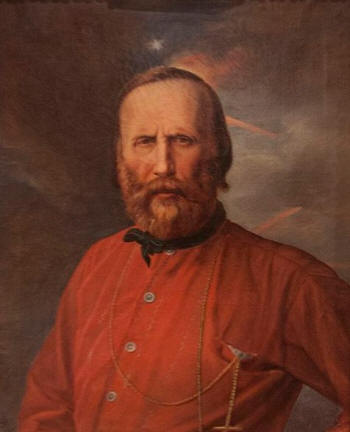
Garibaldi opposed capital punishment and supported liberal causes, but best known for his heroic military campaigns and his inspired leadership in the successful unification of Italy and in other projects, and his extraordinary life.
San Marino, and other countries which are abolitionist for all crimes, or for ordinary crimes
Some of the smallest states have very great cause for pride. For example, San Marino. The Rough Guide to Italy takes a dismissive attitude to San Marino, claiming it 'trades on its falsely-preserved autonomy.' But this distinct jurisdiction hasn't executed for so many centuries. In humanitarian history, San Marino has importance out of all proportion to its size. Only two countries in the world stopped carrying out executions before 1800: Liechtenstein, last execution 1785 and San Marino - last execution in 1468! San Marino was the first country in the world to abolish the death penalty for ordinary crimes, in 1848 and the second country in the world (and the first in Europe) to abolish the death penalty for all crimes, following Venezuela in 1863. During the Second World War, Italy, of course was an ally of Nazi Germany for most of the war but San Marino was neutral. It would have been impossible in practical terms, of course, for San Marino to have declared war on Italy and Nazi Germany. Monaco is another small state which abolished the death penalty long before most others (last execution 1847).
But also larger states: Iceland (last execution: 1830). Portugal (last known execution: 1849), Venezuela (death penalty abolished 1863). Compare with the United Kingdom (last execution: 1964) or France (last execution: 1977).
Israel abolished the death penalty when it became a state. It made one exception - in my terminology, practised limitation in the case of Adolf Eichmann (executed 1962.) I'm in full agreement with the Israelis' decision to execute him. A state which defends itself against suicide bombers without recourse to the death penalty is entitled to our admiration. This is not to overlook its faults, but the faults of Israel - a democracy with a free press - are far, far less than those of a country such as Saudi Arabia or Iran.
American achievement in opposing the death penalty
Some states abolished the death penalty a long time ago: Michigan (1846), Wisconsin (1853). Minnesota abolished the death penalty in 1911. Some states, haven't executed for a very long time: Maine (last execution 1887)' North Dakota (last execution 1930), Rhode Island (last execution 1930). Compare the United Kingdom, backward in comparison with these states (last execution 1964).
The people and organizations active in opposing the death penalty in the USA are very numerous - so I give no names here - and very, very impressive. I'm familiar with a large number of these but obviously not all. The Death Penalty Information Center gives a comprehensive list of US organizations and their Web sites, as well as of organizations outside the USA, at:
http://www.deathpenaltyinfo.org/article.php?did=547
&scid=37#Int%27l/Nat%27l
As always, exclusive reliance upon the Web would lead to a very restricted survey. The American books which oppose the death penalty, and the articles in journals and magazines, include many which are very important contributions. To mention just a single example, the 'Machinery of Death: The Reality of America's Death Penalty Regime,' by the writer Mark Dow and the death penalty lawyer David R. Dow.
I include here Puerto Rico, an incorporated territory of the United States. I give information about Puerto Rico's remarkable abolitionist stance above.
Abolitionist organizations in abolitionist countries
Opposition to the death penalty is strong in many countries which no longer execute, and some of them have notable abolitionist organizations.
Malawi and other countries which are abolitionist in practice
Malawi is one of the countries which is abolitionist in practice: 'Countries that retain the death penalty for ordinary crimes such as murder but can be considered abolitionist in practice in that they have not executed anyone during the past 10 years and are believed to have a policy or established practice of not carrying out executions.' (Amnesty International, http://web.amnesty.org/pages/deathpenalty-abolitionist3-eng)
Years ago, I wrote a letter about the death penalty to a politician in Malawi, the then Minister of Education, and the reply was so heartening that I quote it here:
Dear Mr Hurt,
Thank you for your letter of 9th February. I am encouraged greatly by your kind remarks about the situation in Malawi.
We were indeed very fortunate that Malawi experienced such a peaceful transition from a vicious one-party dictatorship to a multi-party democracy. It was partly because we were convinced that some of the people who had been sentenced to death were not really guilty of the offences that we commuted all death sentences on the president's inauguration day in May 1994.
The death sentence however has not yet been formally abolished in this country. The matter was discussed extensively during the recent Constitutional Conference and the delegates decided to retain it. This decision ties up the hands of the government, much against its own will. We are only hoping that with civic education the body of public opinion will swing towards the abolition of the death sentence.
You can rest assured however that no executions have taken place since the new government took over.
Yours faithfully,
Sam Mpasu MP
Minister of Education
Like Malawi, a large number of the countries on this list are poor. It includes Burkina Faso, Gambia, Mali, Niger amongst others. Africa includes a few states which execute regularly, such as The Sudan and Libya, but generally Africa deserves our admiration for its abolitionist achievement, as does Latin America. Not one of the Latin American countries carries out executions.
India
India deserves praise too, even though it's a country which not only retains the death penalty but executes. Executions, though, are very, very rare. The fact that this country, with its vast population, makes the most sparing use of the death penalty is heartening, but I look forward very much to India becoming an abolitionist country in practice and eventually in law. (India is also one of the more enlightened countries in matters of animal welfare. Compare and contrast a country such as Japan.)
German writers and politicians
such as Carl Joseph Anton Mittermaier (1787 - 1867), described by Richard J Evans as 'the nineteenth century's most influential critic of the death penalty.' 'Mittermaier had already published articles on the subject over a number of years, during which he had steadily worked his way round to a whole-hearted opposition to the death penalty. In 1840 he brought his researches together in a powerful indictment of capital punishment...Mittermaier demonstrated statistically that the reduction or abolition of capital punishment, wherever it had occurred, had not led to any noticeable increase in capital offences. On the other hand, the threat of the death penalty led to many acquittals by courts whose members had been reluctant to use it. With these arguments, Mittermaier not only moved the argument about capital punishment onto a new intellectual plane, but also placed himself at the head of the growing movement to abolish the death penalty in Germany.'
Erich Koch-Weser (1875 -1944) was 'a committed opponent of the death penalty for murder, and on 13 June 1928 he won the backing of his party for a bill to abolish capital punishment.' Although the death penalty remained in force, in 1928 and 1929, there were no executions anywhere in Germany. Koch-Weser 'had issued a circular to all governments in the federated states advising them not to carry out any executions until the new Criminal Code had been voted into effect by the Reichstag.'
- a few of them, that is - have been at variance with a state which continued to use the guillotine until as late as 1977.
Victor Hugo
This information is taken from a report in the newspaper of Georgetown University (Washington D.C.). http://www.thehoya.com/news/092002/news7.cfm
The French senator and former Minister of Justice Robert Badinter spoke to honour Victor Hugo's opposition to the death penalty. Robert Badinter dedicated himself to the abolition of the death penalty after a man he had defended as a lawyer was executed, even though the man had not killed anyone. He was very closely involved in the movement that finally ended the death penalty in France. He continues to fight against the death penalty. Robert Badinter also has a place of honour in this section. He said of Victor Hugo:
'While Hugo is renowned for his literary genius, the French writer also had a lifelong opposition to the death penalty.' He began by noting that Hugo was a man who, unlike many other people, became less conservative with age.
'Hugo's approach to fighting the death penalty was different from both those who preceded him and his contemporaries, in Badinter's view.
'Hugo went beyond the use of intellectual discussion to make his point. He decided that he would put the reader in the condition of a man who was sentenced to death and is waiting for his execution,' Badinter said. An example of this is Hugo's novel The Last Day of the Condemned.
'Literature, however, was not Hugo's only means of expression. Whenever he found out that an execution was to take place or if someone ever requested his help, Hugo immediately took action by giving speeches and writing letters. Badinter said Hugo came to the aid of American abolitionist John Brown when he was sentenced to death.
'What made Hugo's efforts so remarkable, according to Badinter, is the continuity of his struggle. His work was constant and always done with passion. Badinter said that Hugo never had doubts about his position, even when the person sentenced had committed atrocious crimes. "For me, the assassin is no longer an assassin, the arsonist no longer an arsonist, and the thief no longer a thief. He is a quivering human being who is about to die," Badinter said while quoting Hugo's work.
'Later in Hugo's life, he became a senator...His final political move was presenting a proposal for abolishing the death penalty in which he wrote, "happy is he of whom it one day may be said in leaving this world he took with him the death penalty."'
Albert Camus
Two quotations from his
'Reflections on the Guillotine,' (1957):
'An execution is not simply death. It is just as different from the privation
of life as a concentration camp is from prison. It adds to death a rule, a
public premeditation known to the future victim, an organization which is
itself a source of moral sufferings more terrible than death. Capital punishment
is the most premeditated of murders, to which no criminal's deed, however
calculated can be compared. For there to be an equivalency, the death penalty
would have to punish a criminal who had warned his victim of the date at which
he would inflict a horrible death on him and who, from that moment onward,
had confined him at his mercy for months. Such a monster is not encountered
in private life.'
'[The] reply is as old as man; it is called the law of retaliation. Whoever has done me harm must suffer harm; whoever has put out my eye must lose an eye; and whoever has killed must die. This is an emotion, and a particularly violent one, not a principle. Retaliation is related to nature and instinct, not to law. Law, by definition, cannot obey the same rules as nature. If murder is in the nature of man, the law is not intended to imitate or reproduce that nature. It is intended to correct it.'
Whereas 'patriarchal' French writers such as Victor Hugo and Albert Camus made impassioned protests against the guillotine, Hélène Cixous, who was 39 years old at the time of the last execution by guillotine in France, has nothing to say on the subject. Jacques Derrida made public his opposition to the the death penalty, but not Hélène Cixous.
English scholars and journalists
As regards the death penalty, England's record is in general far, far better than America's. I don't give here the exact dates, but the significant dates are much earlier in England than in America for: the last execution (not yet achieved in America, of course), the last public execution, the last execution for offences other than murder, such as armed robbery or rape, the last execution of a juvenile offender. (The state of Virginia marked the new millennium by executing two juvenile offenders.) A similar comparison shows that England's record is far, far worse than the record of many other countries. Some English people, against the general trend, have done a great deal to oppose the death penalty or to shed light on the death penalty. For example, some English scholars have written books which are very significant:
Rituals of Retribution: capital punishment in Germany 1600 - 1987 by Richard J. Evans. The author writes that "The past, as the famous opening to L.P. Hartley's novel The Go-Between says, is a foreign country; they do things differently there. By visiting this foreign country we can enlarge our conception of what it means to be human, and perhaps gain a better understanding of the limits and possibilities of the human condition. One of the aims of this book, therefore, is to restore a sense of strangeness to the past. We have to make an imaginative leap of understanding by which to comprehend mentalities which present-day Europeans may find at first encounter repulsive and bizarre."
This is an astonishing book, a very important contribution to 'humanitarian history.' Reading this book hasn't been, as it were, a matter of duty, simply to make me better informed about the death penalty. It certainly does that - it's massively informative - but it's also so engrossing and readable that I've found myself reading it and rereading it at very frequent intervals. It contains astounding information. I've quoted some of it on this page. Brief comments on the book from the Publisher's catalogue:
http://www.oup.com/uk/catalogue/?ci=9780198219682
The Hanging Tree: execution and the English people 1770 - 1868 by V.A.C. Gatrell. I fully agree with the comment on the cover: "This gripping study is essential reading for anyone interested in the processes which have 'civilized' our social life...Panoramic in range, scholarly in method, and compelling in argument, this is one of those rare histories which both shift our sense of the past and speak powerfully to the present." The author writes, "Late eighteenth- and early nineteenth-century English people were very familiar with the grimy business of hanging. This is so large a social fact separating this era from our own that although it is not the most obvious way of defining modern times, it must be one of them...What they watched was horrific. There was no nice calculation of body weights and lengths of drop in those days; few died cleanly. Kicking their bound legs, many choked over minutes." (Page 6, 7.)
The record of English journalists of the present is generally better than the record of English journalists of the past - although one of these, David Astor, gave unstinting support to the campaign of Arthur Koestler and others to have the death penalty abolished. Some journalists have declared their opposition to the death penalty only very occasionally, or on one single occasion: the surprise, the heartening surprise, is all the stronger for that. Philip Hensher is a novelist as well as a journalist - and a writer who can portray well cataclysmic events and the abysses of the mind (as his wonderful piece 'Brandy' shows.) He has only written about the death penalty once, so far as I know, but on that occasion he wrote that he wouldn't travel to the USA, as a country that inflicted the death penalty. Melanie Phillips has written at some length to oppose the death penalty (when a Conservative politician, David Davis, made known his support for the death penalty) but is far better known as a commentator who is, let's say, not at all left-wing, a reminder that on this issue, the left wing has no monopoly of decency at all.
Arthur Koestler
For further information click here.
I'm far from sharing the cynical attitude to all politicians, displayed in countless comment sections of blogs and Websites. I take the view that MP's in this country are very much underpaid. Anyone can think of mediocre MP's who wouldn't deserve more pay, but in general, an MP's work requires a level of understanding, an attention to detail, often technical and sophisticated detail, over a wide range of issues, of which fatuous commenters show no awareness. Whatever weaknesses an MP may have, by election, the politician has been successful in a very competitive and difficult field: in general, a notable achievement. Worldwide, there are many, many politicians thoroughly deserving of respect and admiration.
Opposing the death penalty may accord with the views of the electorate in some countries but far more often than not, opposition brings no electoral advantage whatsoever or is deeply unpopular. The fact that often, politicians go against the flow is very much to their credit. Here, I give the names of only a very few, from this country and the wider world.
One example is the East Midlands Member of the European Parliament, Bill Newton Dunn. On a page of the East Midlands Liberal Democrats, his opposition to the death penalty is given prominence. He backs the "World Day against the Death Penalty" - 10 October" ...I hope that people will take this opportunity to concentrate their hearts and minds on this issue."
Mark Pritchard is the Conservative MP for The Wrekin in Shropshire. He spoke at the Regional Conference on the Abolition of the Death Penalty, which took place in Sierra Leone in January 2014. The Website of the World Coalition against the Death Penalty includes a report. The Conference was organized by the Italian anti-death penalty organization Hands off Cain. His Website http://www.markpritchard.com/ includes amongst the causes and issues he has supported this striking instance: MP supports Kesri Lehar campaign to end the death penalty in India.
Mark Pritchard's example is a very instructive and a very heartening one. My political views are generally conservative (and in some cases right-wing conservative rather than left-wing conservative.) The recognition of harsh realities, the recognition of the need for {adjustment}, the recognition of the importance of outweighing, explain my reasons in most cases for my political views. Strong control over immigration is a necessity, for many reasons, but bringing back hanging in no necessity at all, offering no benefits.
Gerald Kaufman MP has been a notable campaigner, in particular for abolition of the death penalty in the Caribbean. His speech on the issue in the House of Commons (23 June 1999) is a powerful one. He said on this occasion, 'I have always been strongly opposed to capital punishment.' He speaks about many cruelties and injustices. I quote him on prison conditions here. He discusses many other cruelties and injustices in his speech. He relates his experience of visiting death row in Kingston, Jamaica. To await execution in reasonable conditions is to experience horror.. To await executions in conditons he describes as 'unspeakable' is even more horrific.
The contribution of the French politician Robert Badinter I discuss above.
Nelson Mandela was sentenced to death himself, of course. His lifelong opposition to the death penalty is one aspect of his moral stature, which, even so, was necessarily subject to {restriction}. His attitude to Irish republican terrorism was faulty, for instance.
Taiwan's justice minister, Wang Ching-feng, resigned after failing to win support for her opposition to the death penalty. 'I would rather step down than sign any death warrant," she said.
Didier Burkhalter, the President of the Swiss Confederation, wrote a very well argued and effective article Why I Am in Favor of A Death Penalty-Free World on the occasion of the World Day against the Death Penalty. In the closing paragraph, he writes,
'Today's Joint Declaration, signed by 12 Foreign Ministers from around the world, is an open and respectful invitation addressed to all countries that either have still to start their abolition process or have yet to complete it. Abolition requires well-informed national debates, sustained by objective facts and findings. Several non-governmental organizations, including groups of lawyers, attorneys and judges, already contribute to useful research and investigation. I invite and encourage calm and candid debates, whether in courtrooms, government offices or parliament chambers, in local cafés or family living rooms. Switzerland stand ready to support and shall continue to promote the end of capital punishment everywhere.
The Joint Declaration is signed by these Foreign Ministers of these
(countries). These politicians deserve great credit:
Héctor
Marcos Timerman (Argentina), Julie Bishop
(Australia), Nassirou Bako Arifari (Benin),
Djibrill Yipènè Bassolé (Burkina Faso), Duly Brutus
(Haiti), José Antonio Meade Kuribreña (Mexico),
Luvsanvandan Bold (Mongolia), Børge Brende (Norway), Albert F. del
Rosario (Philippines), Didier Burkhalter
(Switzerland), Mevlüt Çavusoglu (Turkey), Philip
Hammond (United Kingdom).
The World Coalition against the death penalty has a good page on the Declaration,
http://www.worldcoalition.org/foreign-ministers-declaration-world-day-against-death-penalty.html
Pope John Paul II, the Roman Catholic Church and other churches
I'm an atheist, but I don't reluctantly agree, if I'm forced to, that theistic opponents can show humanity. I go much further than that: I warmly admire their humanity. The present-day Roman Catholic Church is a very important opponent of the death penalty world-wide, and in the United States, a far more religious country than this, its opposition is particularly significant. Again and again, Catholic bishops, priests and laity have supported the abolitionist cause. During his lifetime, Pope John Paul II was tireless in opposing the death penalty and in calling for clemency for people facing execution. The Anglican Archbishop Desmond Tutu of South Africa is a notable opponent of the death penalty. The work of the Catholic Community of Sant' Egidio, based in Italy, has been outstanding. I refer to their work on this page.
The European Union and the Council of Europe
Abolition of the death penalty is a requirement for membership of The European Union. The European Union's opposition to the death penalty and the Council of Europe's opposition are not just pursued at the level of policy. They act in particular cases as well, calling for mercy for particular prisoners.
Recognition of {separation} is recognition of contrast, and there may be very marked contrast between good policy and bad policy in an organization, as with the contrast between the good and bad traits of an individual. Appreciation in this instance puts me under no obligation to show appreciation for the policies, laws and ethos of The European Union.
My own view of The European Union isn't uniformly appreciative in the least. It has assumed very wide-ranging, even dictatorial, powers, giving more and more freedom of action to individuals, even when the consequences are disastrous, and less and less freedom of action to member states to prevent or limit the disastrous consequences. The 'right' to move to another state in the union, to work there and to claim benefits there, can give rise to problems which outweigh the benefits to individuals. The European Union's {restriction}:- (national sovereignty) has left to member states one power which has never been undermined by the Union's progressive increase in powers - the power to organize and finance defence. Like every other political grouping, the Union faces potential threats, but only member states carry out action to meet these potential threats. Only a minority of member states meet their obligations with much effectiveness, such as Britain and France.
'The risk of executing the damaged'
See also my reference to the risk of executing the damaged in my discussion of virtue ethics on the page 'Ethics: theory and practice.'
The danger of executing the innocent is one of the most important of all arguments against the death penalty. It led to Governor Ryan of Illinois commuting the death sentences of everyone on death row in the state. Since the resumption of executions in the United States, more innocent prisoners were found to be on death row in the state than had been executed. One of these innocent prisoners had been within hours of execution. The number of death row prisoners released in the USA after their innocence had been established is well over a hundred.
What do I mean by 'the execution of the damaged?' Most of them will be guilty, not innocent, but their execution should arouse as much revulsion as the execution of those who are innocent. This is one example, Johnny Garrett. I tried to place an advertisement in a Texan newspaper to commemorate the anniversary of his death by lethal injection. It included the words 'in memory of Johnny Garrett and his victim,' but the request was refused. His victim was a Nun. The Catholic Church, including Pope John Paul II, made every effort to secure clemency for him. This information, as well as the others in this section, comes from a Web site page of Amnesty International USA, which I warmly commend (the examples I give here are no substitute for reading the whole of this shocking page):
http://www.amnestyusa.org/document.php?lang=e&id=ENGAMR510022006
'Chronically psychotic and brain damaged, Johnny Garrett had a long history of mental illness and was severely physically and sexually abused as a child, which the jury never knew. He was described by a psychiatrist as "one of the most psychiatrically impaired inmates" she had ever examined, and by a psychologist as having "one of the most virulent histories of abuse and neglect... encountered in over 28 years of practice". Garrett was frequently beaten by his father and stepfathers. On one occasion, when he would not stop crying, he was put on the burner of a hot stove, and retained the burn scars until his death. He was raped by a stepfather who then hired him to another man for sex. It was also reported that from the age of 14 he was forced to perform bizarre sexual acts and participate in pornographic films. Introduced to alcohol by his family when he was 10, he subsequently indulged in serious substance abuse involving brain-damaging substances such as paint, thinner and amphetamines. The US Court of Appeals for the Fifth Circuit upheld a state court finding that his belief that his dead aunt would protect him from the chemicals used in the lethal injection did not render him incompetent to be executed (for a murder committed when he was aged 17).'
And another case, that of Curtis Harris, again, executed by the state of Texas:
'Curtis Harris had an IQ of 77 and significant brain damage. Suffered serious head injuries as a child. One of nine children brought up by an alcoholic father who beat the children regularly with electric cords, belts, a bullwhip and fists. On one occasion, Curtis Harris was hit over the head by his father with a wooden board and his cranium was permanently indented by the blow. Sentenced to death for a murder committed at the age of 17.'
Ronnie Lee Gardner was a killer who ought to have been imprisoned for the rest of his life, or confined to a secure facility. Instead, he was executed in Utah in 2010. He was the youngest of Dan and Ruth Gardner's seven children. His father was a heavy drinker who left when Ronnie Gardner was a toddler. When Ronnie Gardner was two years old, he 'was found malnourished and wandering the streets alone in a diaper. [nappy]. Child welfare workers filed a "failure to care" petition and took him into custody, but later returned him to his mother. Gardner's relationship with his father was tumultuous; Dan did not believe he was Gardner's biological father and frequently told his son of his belief. According to Gardner, he was raised by an older sister, and was sexually abused by his siblings. Sometimes he and his sister Bonnie would run away and seek refuge in a "hobo camp." By the age of 10, Gardner was addicted to drugs and permitted access to alcohol.' (Wikipedia.)
When babies and young children are left lying in excrement for weeks or months, or left to scavenge amongst rats, or are beaten to a pulp, or are treated in some other vile way, then they may go on to become law-abiding citizens, but the obstacles are greater than for the ones who have had a loving Mom and Dad at home, who received Christmas presents and birthday presents and were taken on holidays.
Of course, society has to be protected against murderers, no matter what their childhood experiences, whether violent, troubled or idyllic, but protection is secured by imprisonment (a much less expensive option in the United States than death row followed by execution.) A barbaric childhood followed by death row - Americans who see nothing wrong in this are no better than psychopaths.
Since I wrote the comments above there has been the case in this country of Baby P. From the report by Adam Fresco in 'The Times:' 'Baby P's life in a council flat in Haringey, North London, began with gradual and growing neglect at the hands of his mother, who would leave him unattended for hours in his cot.' She 'spent hours trawling the internet for pornography, split from the boy's natural father when he was 3 months old after affairs with two men. When the second lover moved in, Baby P's suffering increased dramatically. The court heard that while his mother gossiped with friends in online chat rooms, her boyfriend took to beating the boy.' He 'forced Baby P to follow commands like a dog. At the click of a finger he would have to sit with his head bent between his legs; 20 minutes later a second click would be the signal that he could sit upright again...Detectives found that after the boyfriend moved in there was not one piece of the boy's clothing that was not spattered with blood...After 17 months enduring abuse of an almost unimaginable cruelty, the boy had been reduced to a nervous wreck, his hair shaved to the scalp and his body covered in bruises and scabs. Physical injuries included eight broken ribs, a broken back and the missing top of a finger...Baby P received a fatal blow to his mouth, knocking a tooth out. After 17 months of agony, the tiny child finally succumbed. The next day he was found dead in his cot.'
There was anger among MPs and charities after Martin Narey the chief executive of the children's charity Barnardo's said that if he had lived to become a teenager, Baby P might have turned into a "feral, parasitic yob." This was an attempt to focus attention on the need to address the causes of abuse, but it was an unwise comment to make about a named child victim.
The comment is, though, realistic in its grim portrayal of the future for many - not all - victims of child abuse. Some of these victims of gross cruelty go on to kill. In an enlightened country, long incarceration is the worst penalty they can face. In the United States, it may be the execution chamber. There are many, many tough-talking Texans, and others who feel proper revulsion when a child is beaten and abused but no revulsion at all when, after an interval, that same person is sent to death row.
A further case, from Sheffield. The crime of Hannah Bonser was atrocious - she murdered Casey Kearney, aged 13, by stabbing. Hannah Bonser has been found guilty of murder and sentence to a minimum term of 22 years. In this country, calls to 'bring back the rope' have become very infrequent. There would have been immense revulsion if a murderer with the upbringing of Hannah Bonser had faced the gallows before the abolition of capital punishment, in the 1950's (in the 1750's, there would have been no objection. In the present-day United States, no matter how barbaric the upbringing of the murderer, the courts are uninterested.)
From the report in the local newspaper, 'The Star' (November 26, 2012) which has the title, 'Horrific conditions of Bonser's home,'
'The horrific conditions in which Hannah Bonser spent her childhood are related in graphic detail by Prof. Cantrill's report.
'Bonser's parents had their own health problems and also lived an 'alternative' life-style which as time wore on amounted to neglect of Bonser and her brother.
'The council's children's services first became aware of the family when Bonser was eight years old, after reports from the family GP, her grandmother and an anonymous family friend all expressing [sic] concern.
Social workers found their house in 'a disgusting state', the parents, who were Mormons, had significant health problems and the children were violent and aggressive.
'Bonser was home educated, the children were eating out all the time, with sacks of rotting food in the house and some of the rooms were 'full of dead cats and excreta'.
'The children did not have clean clothes and when Bonser attended school for the first time at the age of 10 she was alienated from other children because of her personal hygiene and was bullied.
'Bonser's mother died when she was 10 and the deterioration of her father's health meant she was taken into council care.
'Her father died in 2001 when she was 16 and her behaviour was said to have deteriorated. After that she left the council's care system.
'Prof. Cantrill says, 'What is clear is that from 2000 the situation for her began to worsen. Based on available records the quality of practice at the time was inadequate.
'There were a number of missed opportunities to safeguard and protect her against neglect.
'The parents' poor co-operation, deception and combination of plausible and disengaged behaviours added to the focus being on keeping their co-operation and losing sight of the children.'
In my experience - not the experience of someone taken into care as a child but from knowing people who have - even children who were not treated with particular cruelty but who simply had inadequate parents and who were adopted or fostered are changed. The level of anger which results would shock many people who have no experience of all this. Inmates who were fostered or adopted as children make up a disproportionate part of the prison population.
The need for 'reasoned revulsion.' A letter I wrote to the Amnesty Journal:
'In the November/December 97 issue of AMNESTY, in which there was a very welcome article by Pierre Sane opposing capital punishment, there was also a letter by Sylvia Callaghan, practising Christian, member of Amnesty International and supporter of the death penalty (or, in her words, "not opposed to the death penalty.")
'Unfortunately, she gave no arguments or information in the letter as published to justify her support. It does seem overwhelmingly common for supporters of the death penalty to avoid the tiresome little matter of providing actual arguments and evidence.
'The contrast with opponents of the death penalty could hardly be greater. There is a complete disproportion here. I have been a death penalty co-ordinator for some years. In that time, I have received from Amnesty International a large number of documents and urgent action appeals. These have given reasoned arguments and an enormous amount of detailed information about the sentencing to death of the innocent, the mentally ill, those who experienced hideous cruelty as children, those who were too poor to obtain the lawyers who could have secured a lesser penalty - and about so many other aspects of this degrading inhumanity. (They have also shown great concern for the victims of violent crime and their relatives and have made clear the need to punish crime adequately.) There are also, of course, many books which give reasons for opposing capital punishment.
'Where are all the books and articles in favour of the death penalty which demonstrate that it protects society more than alternative punishments, which honestly address such issues as the execution of the innocent, the mentally ill and the abused - and the brutality of the process even if the person concerned belongs to none of these special groups?
'In our death penalty work, I am sure that we ought to make clear this disproportion, that we ought to set a challenge to supporters of the death penalty, and to those directly responsible for carrying out executions: justify, if you can, your support and your acts.'
Of course, supporters of the death penalty include people who have given sustained thought to the issue. But supporters of the death penalty include too a disproportionate number of morons, head-cases, people who've never had an intelligent thought in their lives, emotionally stunted people, near illiterates. If you disagree, by all means do the research, trawl the internet for pro-death penalty views. Then draw what conclusions you like. You could do worse (as well as better) by starting with this page, where supporters of the death penalty for juveniles argue with opponents of the death penalty. Since then, the Supreme Court has sided with the opponents, after siding with the supporters for so long.
It isn't my bias which makes me conclude that here, the opponents use arguments which are vastly more sophisticated and serious than the supporters. It's time that supporters of the death penalty became vastly better informed. If they became vastly better informed, they might well be converted into opponents of the death penalty. On the page whose address is given above, for instance, we find the common misconception that executing someone saves the cost of imprisoning them for the rest of their lives. In the USA, of course, the cost of imprisonment for life is much cheaper than the cost of executing.
David Dow, a lawyer in Texas who has represented many clients in death penalty cases: 'My prediction is that we're going to get rid of it for economic reasons. We spend at least a million dollars more on a death-penalty case than on a non-death-penalty case. In the U.S., where we've executed 1,200 people since the death penalty [was reinstated in 1976], that's $1.2 billion. I just think, gosh, with $1.2 billion, you could hire a lot of policemen. You could have a lot of educational programs inside of prisons, so that when people come out of prison they know how to do something besides rob convenience stores and sell drugs. There are already counties in Texas, of all places, that have said, This is just not worth it. Let's fix the schools and fill the potholes in the streets instead of squandering this money on a death-penalty case. You don't need to be a bleeding heart to make that argument.'
Although I regard some United States Governors, Justices of the Supreme Court and some other pillars of the American establishment as 'scum,' I'm completely willing to describe some criminals - many criminals - as 'scum' too, of course of a very different kind. Their crimes may be so atrocious, so impossible to explain or understand, that protection of society against such people is the overwhelming priority. But protection is always secured by imprisonment for life. When the arrangements are made for the final meal of the 'scum,' for the execution of the 'scum' and the funeral of the 'scum' (whilst the 'scum' is still very much alive) then there may still be outrage at the crime, but now the condemned is, in the words of Victor Hugo, 'a quivering human being who is about to die.'
It suits so many American death penalty supporters to pretend that all the occupants of death row are morons or scum. There are many remarkable, enlightened people to be found there. This is the blog of one of them: William van Pock, on Florida's death row for a long time (even though it's conceded that he never killed anyone):
http://www.deathrowdiary.blogspot.com/
He was executed on June 12, 2013.
The
victims of murder
The attitude of abolitionists to the victim of a murder or violent crime and to the relatives of the victim is the same as the attitude of death penalty supporters. Our only difference, but a crucial difference, of course, concerns our views about the punishment of a murderer. In America, there are relatives of murder victims who publicly and energetically oppose the death penalty.
There are other victims of murder. The Hungarian writer Arthur Koestler was sentenced to death by the Nationalists during the Spanish civil war. Officials 'informed him that a helpful statement praising Franco's thoughtfulness would further ease his situation, but Koestler courageously refused to oblige him.' (From the biography by David Cesarani.) He was eventually released and moved to England. His role in the ending of the death penalty in this country was a central one. This, on the victims of murder, is from his anti-death penalty book 'Hanged by the neck:'
'...there are other victims than the person murdered. There are his wife and family, his dependants and relatives, his close friends - an outspreading circle of people with a poignant claim upon our sympathy...But there are also those who stand in the same relationship with the executed prisoner....Have you ever known the widow or children of a man executed for murder, his fiancee, his parents? This is the experience of many social workers, particularly Probation Officers and those concerned in child welfare. And to know such victims of the death penalty, however casually or slightly, is to acquire a mental burden that is never to be shaken off, never to be lightened by sighing to oneself: 'Such things must be.' '
My account here, as in other sections, can't possibly do even slight justice to the matter. My anti-death penalty work has involved the study of a very large number of cases, and continues to do so. I give very few here. I'd strongly recommend visiting sites which give more comprehensive information.
Sean Sellers
was executed in Oklahoma in 1999. He was executed for murders committed when he was sixteen years old. Since 1990, the United States had executed more juvenile offenders than in the rest of the world combined. In a letter to Frank Keating, the Governor of Oklahoma at the time, Archbishop Desmond Tutu wrote that the U.N. Convention on the Rights of the Child provides that "neither capital punishment nor life imprisonment without possibility of release shall be imposed for crimes committed by persons below 18 years of age."
'Dianna Craun, one of the jurors who sentenced Sellers to death, spoke on his behalf at the clemency hearing. She said that the jury was given two choices of sentencing: a life sentence (with the possibility of parole) or the death penalty. (Oklahoma now has a third alternative - life without parole.) Craun and the other jurors thought that a life sentence would mean that Sean would serve 7-15 years in prison, and that this sentence was too lenient for the murders. She stated that since Oklahoma had not executed anyone for 20 years at the time of the trial, the jurors did not honestly expect that Sean would ever be executed. They thought that the only way to ensure a long prison sentence for him was the choose the death penalty. If clemency had been granted, Sellers' sentence would have been converted to life without the possibility of parole.
'Craun also stated that if the jury had been aware of Sean's mental illness, it would have changed the sentence he was given. "It is very obvious that he's found God, and God has changed his life," she told the parole board. "I was touched...and I truly don't want him executed." As soon as the testimony in the clemency hearing was over and Sellers' was taken from the chapel, all five Board members voted to deny clemency.' (From the Website of the 'Clark County Prosecuting Attorney.')
I made an appeal before the execution but I felt such revulsion that I decided to contact the Chair of the Board after the execution. International Directory Inquiries gave me his phone number without any problem and I phoned. The man said that he hadn't been involved in the case. He'd given up membership of the Board a short time before. He gave me ten minutes of his time and I listened to a chilling account of his work in 'the execution business.' Before deciding whether someone should live or die by casting his vote as a member of the Board, he'd been involved in operating the machinery of death, as a Warden. He was obviously in the mood for reminiscing, and he talked of giving the signal to the hidden executioners so that they could also 'do their duty,' although he didn't use the phrase. He was very courteous to me, and I'm sure he was just as courteous to those he was about to send to their deaths with his signal. By this time, I had long experience of death penalty work and I would have thought that nothing and nobody could shock me, but this man did. I listened in almost complete silence.
Troy Davis
September 20, 2008
Bob Herbert, the New York Times:
'Troy Davis, who was convicted of shooting a police officer to death in the parking lot of a Burger King in Savannah, Ga., is scheduled to be executed on Tuesday...
No one anywhere would benefit from killing Mr. Davis on Tuesday, as opposed to waiting a week to see how the Supreme Court rules. So why the rush? The murder happened in 1989, and Mr. Davis has been on death row for 17 years. Six or seven more days will hardly matter.
Most of the time, the court declines to hear such cases.
If that's the decision this time, Georgia can get on with the dirty business of taking a human life. If the court agrees to hear the appeal, it would have an opportunity to get a little closer to the truth of what actually happened on the terrible night of Aug. 19, 1989, when Officer Mark Allen MacPhail was murdered.
He was shot as he went to the aid of a homeless man who was being pistol-whipped in the parking lot.
Nine witnesses testified against Mr. Davis at his trial in 1991, but seven of the nine have since changed their stories. One of the recanting witnesses, Dorothy Ferrell, said she was on parole when she testified and was afraid that she'd be sent back to prison if she didn't agree to finger Mr. Davis.
She said in an affidavit: "I told the detective that Troy Davis was the shooter, even though the truth was that I didn't know who shot the officer."
Another witness, Darrell Collins, a teenager at the time of the murder, said the police had 'scared' him into falsely testifying by threatening to charge him as an accessory to the crime. He said they told him that he might never get out of prison.
"I didn't want to go to jail because I didn't do nothing wrong," he said.
At least three witnesses who testified against Mr. Davis (and a number of others who were not part of the trial) have since said that a man named Sylvester "Redd" Coles admitted that he was the one who had killed the officer.
Mr. Coles, who was at the scene, and who, according to authorities, later ditched a gun of the same caliber as the murder weapon, is one of the two witnesses who have not recanted.
The other is a man who initially told investigators that he could not identify the killer. Nearly two years later, at the trial, he testified that the killer was Mr. Davis.
So we have here a mess that is difficult, perhaps impossible, to sort through in a way that will yield reliable answers. (The jury also convicted Mr. Davis of a nonfatal shooting earlier that same evening on testimony that was even more dubious.)
There was no physical evidence against Mr. Davis, and the murder weapon was never found. As for the witnesses, their testimony was obviously shaky in the extreme * not the sort of evidence you want to rely upon when putting someone to death.
In March, the State Supreme Court in Georgia, in a 4-to-3 decision, denied Mr. Davis's request for a new trial. The chief justice, Leah Ward Sears, writing for the minority, said: "In this case, nearly every witness who identified Davis as the shooter at trial has now disclaimed his or her ability to do so reliably."
Amnesty International conducted an extensive examination of the case, documenting the many recantations, inconsistencies, contradictions and unanswered questions. Its report on the case drew widespread attention, both in the U.S. and overseas.
William Sessions, a former director of the F.B.I., has said that a closer look at the case is warranted. And Pope Benedict XVI has urged authorities in Georgia to re-sentence Mr. Davis to life in prison.
Rushing to execute Mr. Davis on Tuesday makes no sense at all.'
Troy Davis was given a stay of execution on this occasion, but has now been executed, a monstrous act. The 'Sydney Morning Herald' describes
'His death was marked
by last-minute drama when Georgia officials delayed the execution by an excruciating
three-and-a-half hours as they awaited a final ruling by the US Supreme Court.
'Davis had been about to be strapped to a gurney to be injected, as state
witnesses assembled to view his execution, when the schedule was interrupted.
But the court ultimately denied him a reprieve.
'Hundreds of supporters gathered outside the jail in Jackson, about 60 kilometres
south-east of Atlanta, fell into despair once the decision was known. There
was a huge police presence to quell any eruption of anger.
'The nation’s highest court was Davis’s last chance after Georgia’s
judiciary rejected last-minute appeals from his defence team earlier in the
day.
'It was the fourth time that an execution date had been set for Davis ...
'
Romell Broom
His executioners tried to find a suitable vein in which to insert the tube for the lethal injection chemicals for almost two hours. This search for a vein is common enough in American executions but on this occasion, they gave up. At the time of writing, Romell Broom is still alive in the barbaric state of Ohio, waiting once more - to find out if he's to be subjected for a second time to the search.
Charles Dean Hood
Quoted from http://www.examiner.com
'Texas, highest criminal appeals court ...ordered a lower court to examine why a death row inmate's attorneys waited nearly 20 years before claiming a sexual affair between the trial judge and prosecutor tainted the case.
'Charles Dean Hood's appeal will be considered by the Texas Court of Criminal Appeals after the trial court hearing on the admitted affair.
'Allegations of the affair, an apparent open secret 20 years ago in Collin County legal circles, gained traction in June in the days before Hood was scheduled to die when a former assistant district attorney filed an affidavit saying it was "common knowledge" from at least 1987 until about 1993. The time frame includes Hood's trial.
'Appeals stretched late into the night June 17 when Hood, a convicted killer, was to receive lethal injection and the Texas Department of Criminal Justice ran out of time to meet a midnight deadline to carry out the punishment. When the execution was reset for early September, the Austin-based appeals court stopped the punishment again, a day before the scheduled Sept. 10 execution, because of what it said were questions about jury instructions.
'Hood has maintained his innocence. He was driving Williamson's $70,000 Cadillac at the time of his arrest. Evidence against him included his fingerprints at the murder scene. Hood has said he had permission to drive the car and his fingerprints were at the house because he had been living there.'
Lawrence Reynolds
The degrading preparations for an execution were delayed in his case. When preparations were made all over again to execute him. they were even more degrading. Hours before Lawrence Reynolds in Ohio was due to be prepared for execution, he was found unconscious on his cell floor after an apparent drug overdose.
Reynolds "was found unconscious in his cell at approximately 11:30 pm last night," Julie Walburn, a spokeswoman for Ohio prison authorities said.
"We are suspecting self-injurious behavior, possibly an attempted overdose," Walburn said.
"At this point he is stable, in stable condition, and is showing signs of consciousness," she said. Ohio Governor Ted Strickland ordered Reynolds's execution be delayed for a week while he recovers. He was executed.
'Over recent years, conditions on Mississippi’s death row have been severely criticized, including in relation to the psychological impact of these conditions and the poor mental health care provided. In May 2003, a federal judge ruled that the conditions in the State Penitentiary offended “contemporary concepts of decency, human dignity and precepts of civilization which we profess to possess”. Judge Jerry Davis found that death row inmates were being subjected to “profound isolation, intolerable stench and filth, consistent exposure to human excrement, dangerously high temperatures and humidity, insect infestations, deprivation of basic mental health care, and constant exposure to severely psychotic inmates in adjoining cells.” Among other things, the federal judge found that: the filthy conditions impacted on the mental health of inmates; the probability of heat-related illness was high for death row inmates, particularly those suffering from mental illness who either did not take appropriate steps to deal with the heat or whose medications interfere with the human body’s temperature regulation; the exposure to the severely psychotic individuals was intolerable; the mental health care provided to inmates was “grossly inadequate”; and the isolation of death row, combined with the conditions on it and the fact that its population are awaiting execution, would weaken even the strongest individual. In 2004, the US Court of Appeals “agree[d] that the conditions of inadequate mental health care… do present a risk of serious harm to the inmates' mental and physical health. Again, the obvious and pervasive nature of these conditions supports the… conclusion that [Mississippi Department of Correction] officials displayed a deliberate indifference to these conditions.” While the authorities have recently improved the environmental conditions on death row following the lawsuit brought against them, there has been an ongoing struggle to ensure adequate medical and mental health care."
A long time ago, I wrote a long letter to the Warden of the Mississippi state penitentiary at the time, Don Cabana, who supervised the execution of Edward Johnson. The steps leading up to his execution were shown in the documentary 'Fourteen days in May.' I urged him to turn against the death penalty, giving reasons. Don Cabana did turn against the death penalty, although it's very unlikely that my letter had anything to do with his decision. Since then, he's spoken against it. His change of heart is recorded in his book 'Confessions of an Executioner.'
Innocent: the case of Lucia de Berk
This is the case of Lucia de Berk, a nurse in the Netherlands who was found guilty of multiple murders and later found to be innocent. Lucia de Berk was innocent but Lucy Letby is guilty, according to the evidence.
Preliminary Note: The death penalty in the Netherlands (Dutch: doodstraf in Nederland) was abolished in 1870 in criminal law after the States General stated that it was 'cruel and uncivilized.'
The Reformed Political Party (Dutch: Staatkundig Gereformeerde Partij, SGP), a Christian right wing party, supports the reintroduction of the death penalty in the Netherlands. They base this on the Bible, in particular Genesis 9:6: 'Whoso sheddeth man's blood, by man shall his blood be shed ... ' and Exodus 21:12, 'He that smiteth a man, so that he dies, shall be surely put to death.'
This selective use of the Bible is not so much contemptible as beneath contempt.
The case of the nurse Lucia de Berk. Extract from
https://jessesingal.substack.com/p/why-everyone-should-know-the-story
What incidents from history do you think all decently educated people should know about? Not the big ones, the most important wars and revolutions and innovations, but the smaller, less well-known ones — the stories that aren’t that big a deal in the grand scheme of things, but which are surprisingly rich when you dig into them?
One strong choice, for me at least, is the story of Lucia de Berk, the Dutch nurse who was imprisoned for killing four of her patients.
It started on September 4, 2001. De Berk was working a shift at Juliana Children’s Hospital in The Hague. An infant named Amber “had struggled since birth with a complicated condition involving anomalies of the heart, brain, lungs, and intestine,” writes the mother-and-daughter author team Leila Schneps and Coralie Colmez in the 2013 book
Math on Trial: How Numbers Get Used and Abused in the Courtroom:
At around 11:00 p.m. on September 3, Lucia decided to connect Amber to a monitor to keep close track of her heart rate and breathing difficulties. She also called for doctors to come and examine the baby, who seemed to be growing steadily worse. Amber was wheeled to the examining room, and two pediatricians examined her; the time of the examination was recorded as 1:00 a.m. on September 4. They put her on a drip and diagnosed her with enteritis, an inflammation of the small intestine, but they did not judge the child to be dangerously ill. After the examination, they sent Amber back to her room, where she was reconnected to her monitor by finger cuff.
At 2:46 a.m., little Amber went into crisis. To the horror of the two nurses in the room, the baby’s breathing frequency dropped suddenly and drastically, followed by a slowing of her heartbeat. Her face turned gray. They called for a doctor at once, and he immediately summoned the resuscitation team, but it was impossible to save the dying child. They spent forty-five minutes trying to revive her, but she was declared dead at 3:35 a.m. Her heart had actually stopped beating sometime earlier.
The doctors familiar with Amber’s situation did not find her death suspicious; they knew how ill she had been. But the doctors who were present that night were not the ones involved in her regular treatment. Nevertheless, they signed a declaration of natural death.
The trouble for de Berk began the next day, when one of de Berk’s fellow nurses approached her superior to express her concerns.
Extract from
https://en.wikipedia.org/wiki/Lucia_de_Berk
Between September 2000 and September 2001, there appeared to have been nine incidents, which had then been thought unremarkable but later became considered medically suspicious. De Berk had been on duty at the time of those incidents and responsible for patient care and delivery of medication. The hospital decided to press charges against de Berk.
On 24 March 2003, de Berk was sentenced by the court in The Hague to life imprisonment for the murder of four patients and the attempted murder of three others. The verdict depended in part on a statistical
calculation, according to which the probability was allegedly only 1 in 342 million that a nurse's shifts would coincide with so many of the deaths and resuscitations purely by chance. However, De Berk was sentenced only for the cases in which, according to a medical expert, either other evidence was present or no natural causes could explain the incident.
In her appeal on 18 June 2004, de Berk's conviction for the seven murders and three attempted murders was upheld. The crimes were supposed to have taken place in three hospitals in The Hague: the Juliana Child Hospital (JKZ), the Red Cross Hospital (RKZ) and the Leyenburg Hospital, where de Berk had worked earlier. In two cases, the court concluded that there was proof that de Berk had poisoned the patients.
Concerning the other cases the judges considered that they could not be explained medically and must have been caused by de Berk, who was present on all of those occasions. The idea that only weaker evidence was needed for the subsequent murders after two had been proven beyond reasonable doubt was dubbed chain-link proof by the prosecution and adopted by the court. At the 2004 trial, besides a life sentence, de Berk also received detention with coerced psychiatric treatment,
but the state criminal psychological observation unit did not find any evidence of mental illness.
Important evidence at the appeal was to be the statement of a detainee in the Pieter Baan Center, a criminal psychological observation unit,
where de Berk had said during outdoor exercise, "I released these 13 people from their suffering". However, during the appeal, the man withdrew his statement and stated that he had made it up. The news service of the Dutch Broadcasting Foundation (NOS) and other media following the process considered the withdrawal of that evidence to have been a huge setback for Public Prosecution Service )OM). A series of articles appeared over the following years in several newspapers, including Vrij Nederland and the Volkskrant and raised doubts on the conviction.
Of the seven murders and three attempted murders that were finally attributed to de Berk by the court, it considered two of them to be proven by medical evidence. According to the court, de Berk had poisoned both patients. The court then applied a so-called chaining-evidence argument. If several attempted or actual murders had already been established beyond reasonable doubt, much weaker-than-normal evidence was considered by the court to be sufficient in establishing that eight subsequent "suspicious incidents" were actual or attempted murders that had been carried out by the same defendant.
De Berk's diary
also played a role in her conviction. On the day of death of one of her patients (an elderly lady in a terminal stage of cancer), she wrote that she had "given in to her compulsion". She wrote on other occasions that she had a "very great secret" and that she was concerned about "her tendency to give in to her compulsion". De Berk stated that they were references to her passion for reading tarot cards, which she explained to have done secretly because she did not believe it to be appropriate to the clinical setting of a hospital. However, the court decided the references were evidence that she had euthanised the patients. According to the court, the reading of cards did not accord with a "compulsion" or "perhaps an expression of fatigue," as her diary had described at the time. De Berk's daughter Fabiënne stated in an interview on the television programme Pauw & Witteman that some of her mother's notes in the diaries were "pure fiction," which she intended to use in writing a thriller.
At a session on 9 December 2009, the court stated that new integral medical investigations of the last nine months had confirmed that the cases of Amber, Achmed and Achraf had all been natural deaths/incidents. They were the only cases for which proof had been previously claimed of de Berk's culpability.
The appeal hearing ended on 17 March 2010. Witnesses heard on the final day stated that the deaths at the Juliana Children's Hospital were natural and were sometimes caused by wrong treatment or bad hospital management or sometimes unexpected because of faulty medical diagnosis. The behaviour of the nurses, including de Berk, during a couple of medical crises turned out to have been swift and effective and to have saved lives on several occasions. The Public Prosecution capitulated by formally requesting the court to deliver a not guilty verdict, which occurred on 14 April 2010.